El Amrani Mehdi, Vermersch Mathilde, Fulbert Maxence, Prodeau Mathieu, Lecolle Katia, Hebbar Mohamed, Ernst Olivier, Pruvot François-René, Truant Stéphanie
Department of Digestive Surgery and Transplantation.
Department of Digestive and Interventional Radiology.
Medicine (Baltimore). 2018 Sep;97(39):e12076. doi: 10.1097/MD.0000000000012076.
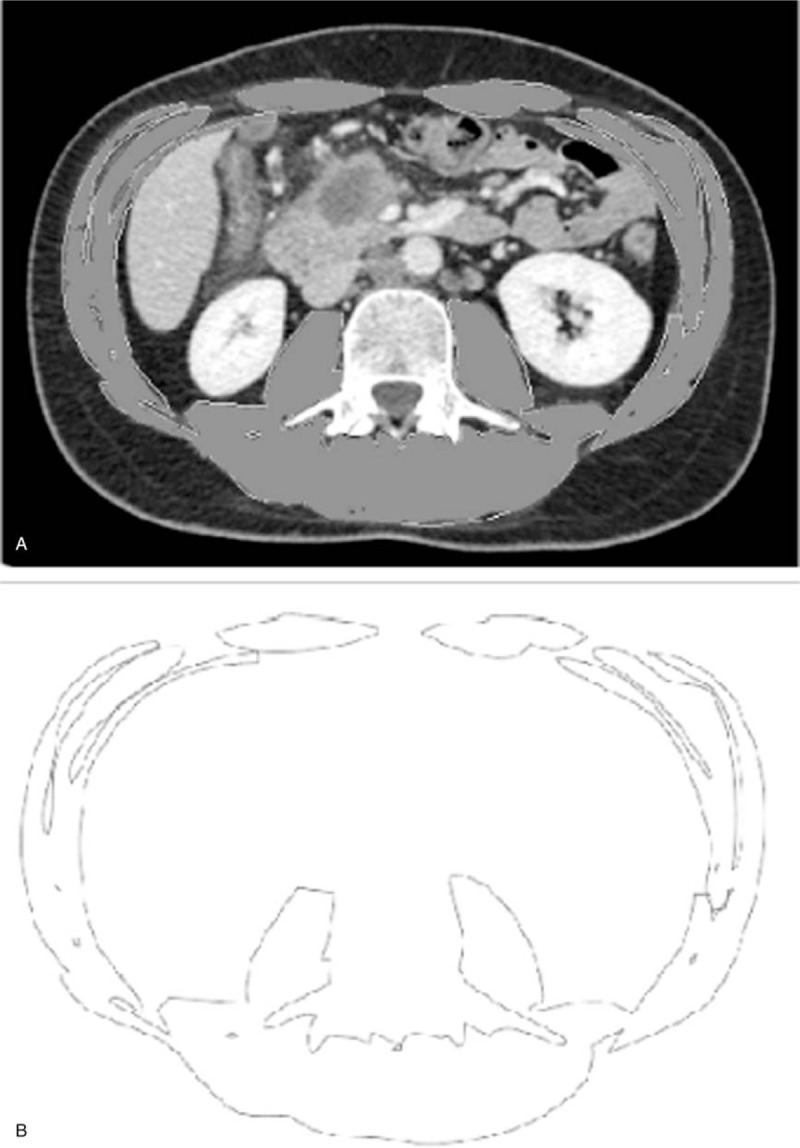
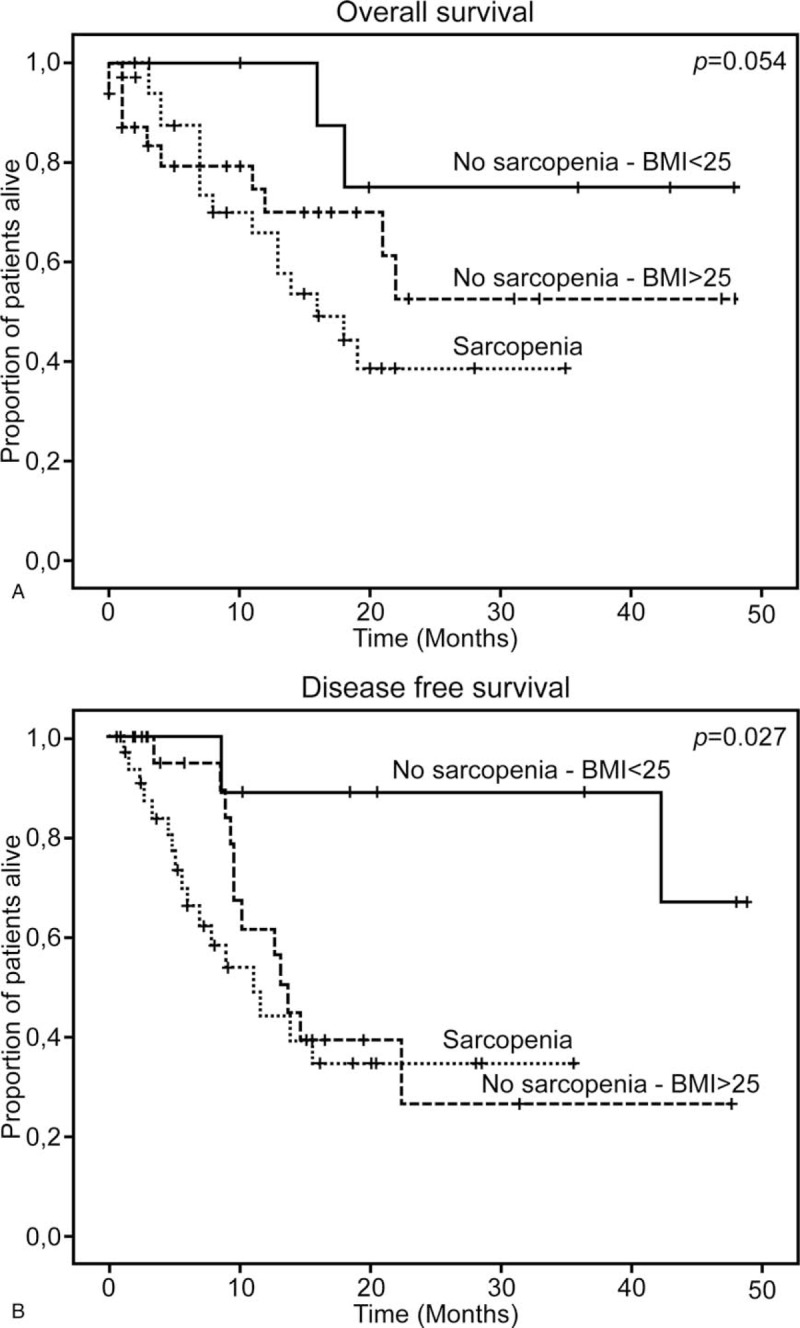
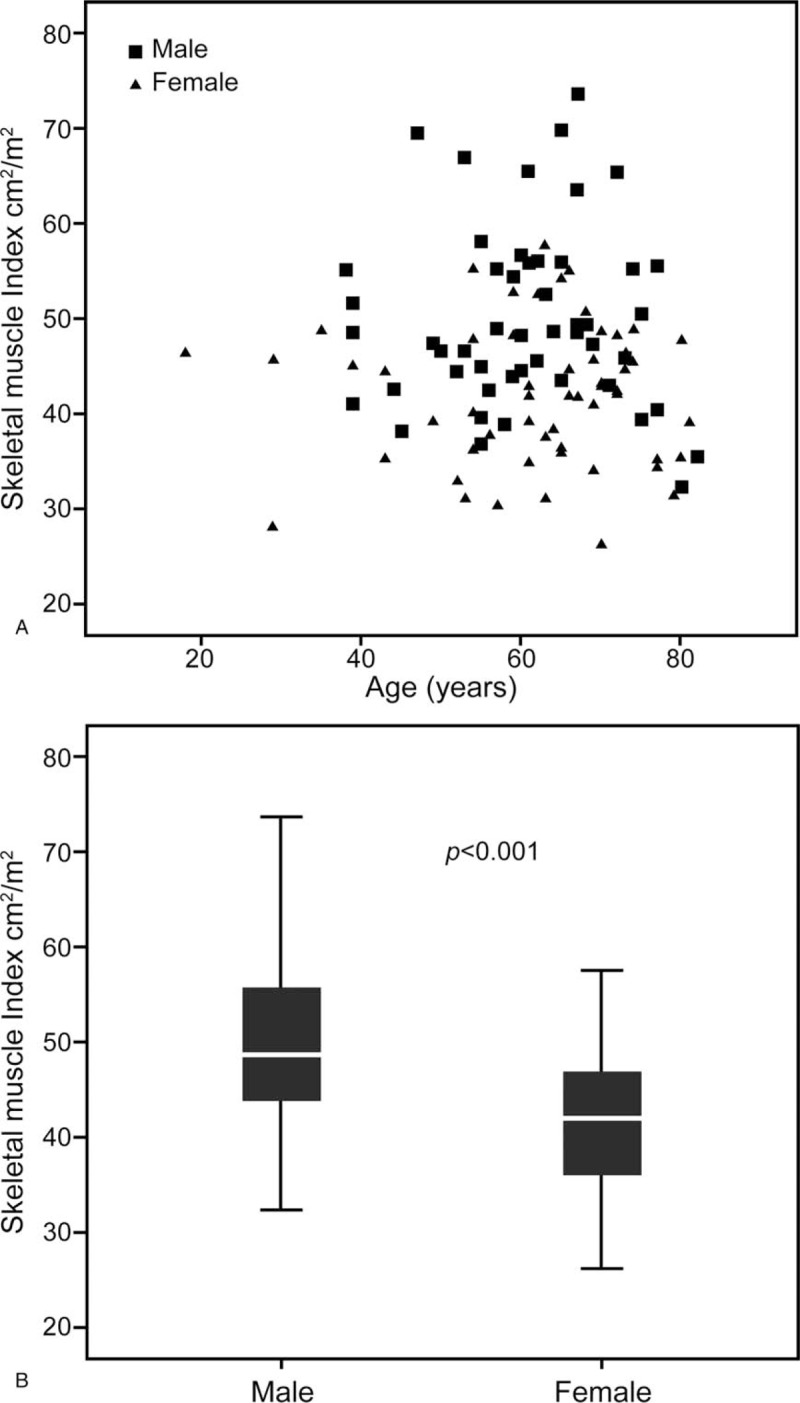
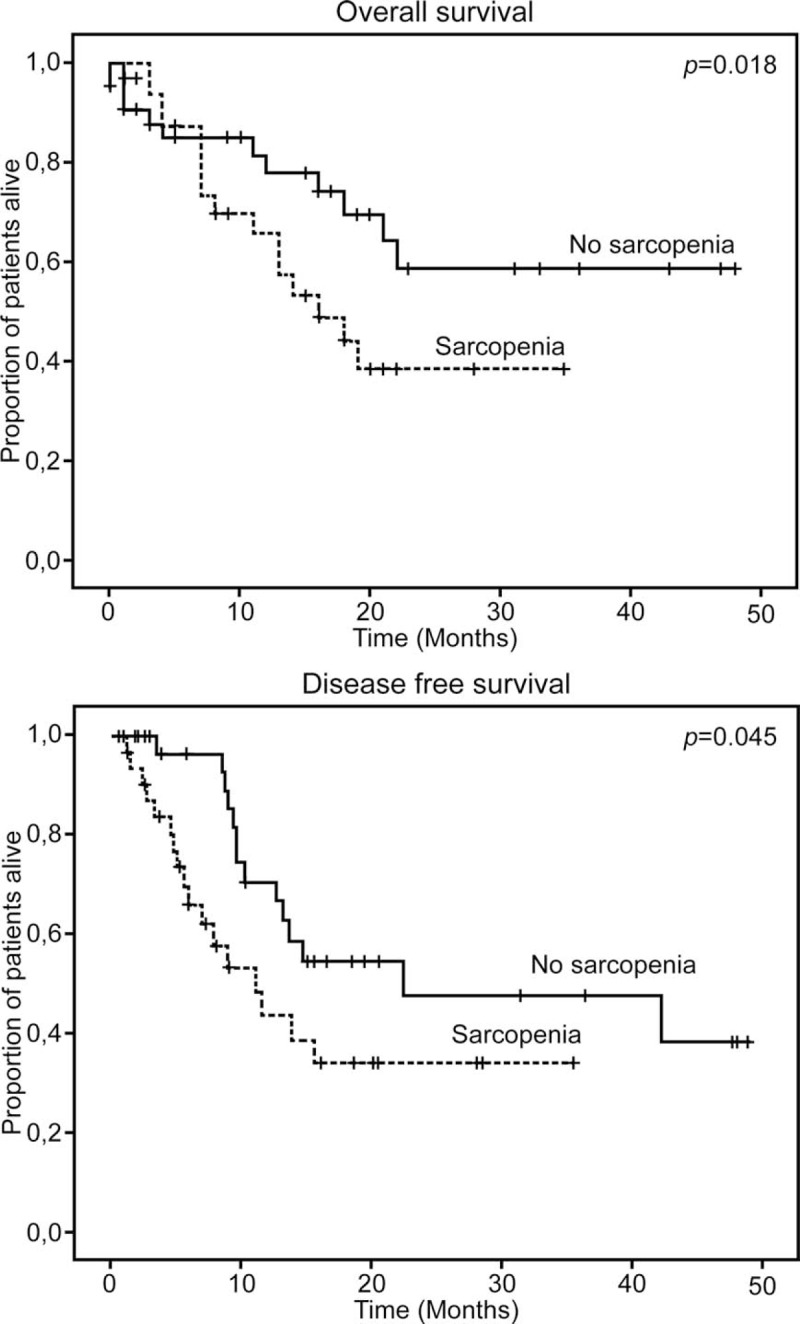
To evaluate the prevalence of sarcopenia in patients undergoing pancreatic surgery and to examine its impact on the surgical outcomes and survival of patients.Skeletal muscle index (SMI) was measured on preoperative CT. A patient was considered sarcopenic if SMI was <38.5 cm/m for a female or <52.4 cm/m for a male. Postoperative pancreatic fistula (POPF) and severe morbidity (Clavien≥3) were analyzed. Survival of patients with cancer was calculated using the Kaplan-Meier method.In total, 107 consecutive patients were included. Among them, 50 (47%) patients were sarcopenic and 65 (60%) were undernourished. The rates of severe morbidity and mortality were comparable between sarcopenic and nonsarcopenic groups. However, all POPF grade B or C and deaths occurred in the sarcopenic or nonsarcopenic overweight group (BMI > 25) with significantly lengthened hospital stays (P = .003). After pancreatectomy for cancer, 31 (40.2%) patients showed postoperative recurrence and 23 (29.9%) died after a median follow-up of 15 ± 13.5 months. Despite comparable histological types and stages, the median overall and disease-free survivals were lower in sarcopenic patients (16 months vs not reached, P = .02 and 11.1 months vs 22.5 months; P = .04, respectively). The multivariate analysis revealed that, sarcopenia trended to increase the risk of death (HR = 2.04, P = .07).Sarcopenia negatively impacted short- and long-term outcomes in patients undergoing pancreatectomy.
评估接受胰腺手术患者中肌肉减少症的患病率,并研究其对患者手术结局和生存的影响。术前通过CT测量骨骼肌指数(SMI)。女性SMI<38.5 cm/m或男性SMI<52.4 cm/m的患者被认为患有肌肉减少症。分析术后胰瘘(POPF)和严重并发症(Clavien≥3级)。采用Kaplan-Meier法计算癌症患者的生存率。
总共纳入了107例连续患者。其中,50例(47%)患者患有肌肉减少症,65例(60%)患者营养不良。肌肉减少症组和非肌肉减少症组的严重并发症和死亡率相当。然而,所有B级或C级POPF及死亡均发生在肌肉减少症或非肌肉减少症超重组(BMI>25),住院时间显著延长(P = 0.003)。胰腺癌切除术后,31例(40.2%)患者出现术后复发,23例(29.9%)患者在中位随访15±13.5个月后死亡。尽管组织学类型和分期相当,但肌肉减少症患者的中位总生存期和无病生存期较低(分别为16个月对未达到,P = 0.02;11.1个月对22.5个月,P = 0.04)。多因素分析显示,肌肉减少症有增加死亡风险的趋势(HR = 2.04,P = 0.07)。
肌肉减少症对接受胰腺切除术患者的短期和长期结局产生负面影响。