Liu Zhenwei, Zhang Na, Zhang Yu, Du Yaoqiang, Zhang Tao, Li Zhongshan, Wu Jinyu, Wang Xiaobing
Institute of Genomic Medicine, Wenzhou Medical University, Wenzhou, China.
Department of Rheumatology, The First Affiliated Hospital of Wenzhou Medical University, Wenzhou, China.
Front Genet. 2018 Sep 18;9:349. doi: 10.3389/fgene.2018.00349. eCollection 2018.
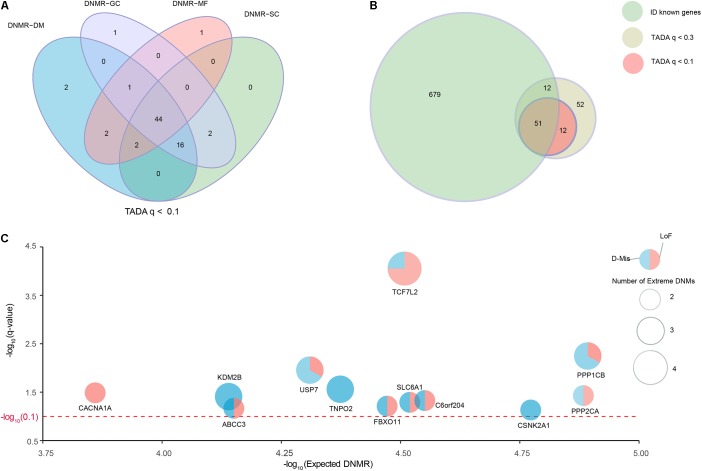
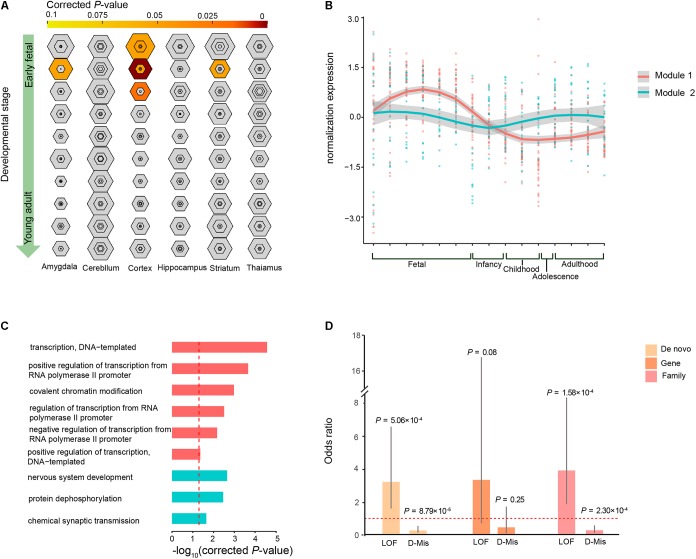
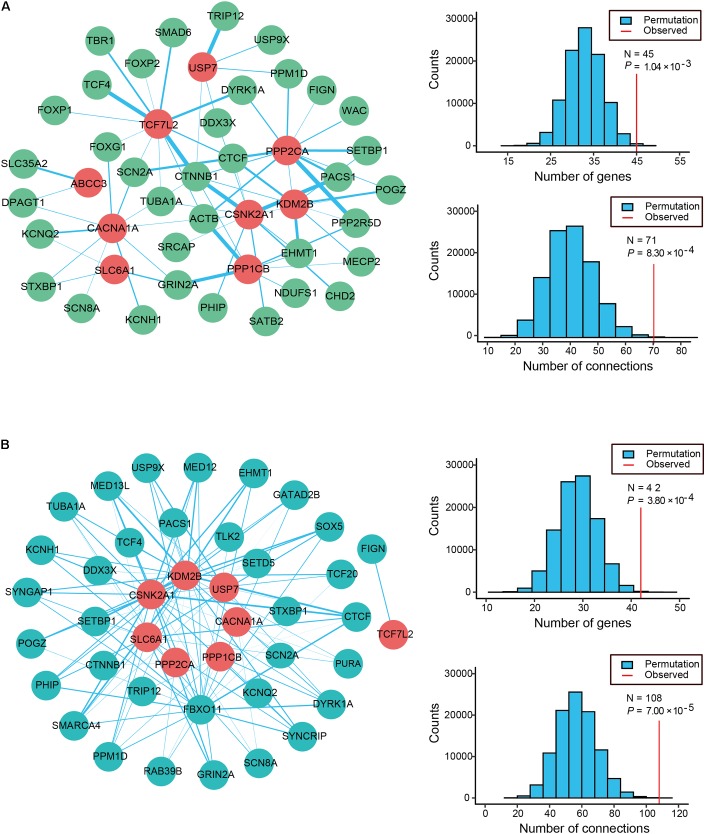
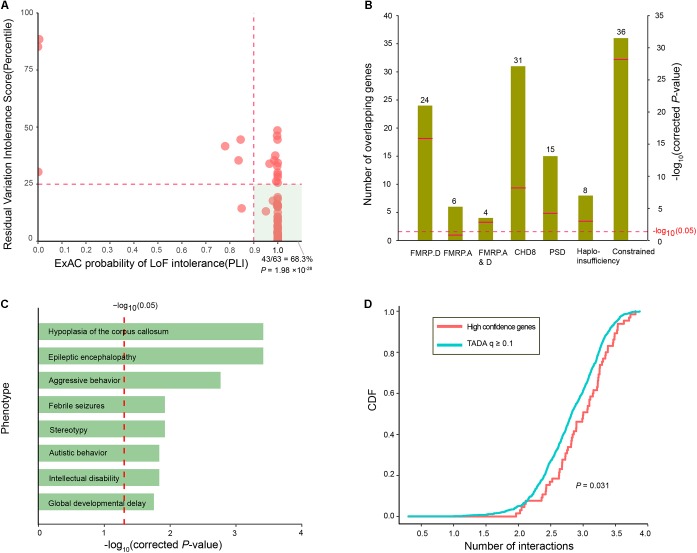
Dissecting the genetic susceptibility to intellectual disability (ID) based on mutations (DNMs) will aid our understanding of the neurobiological and genetic basis of ID. In this study, we identify 63 high-confidence ID genes with -values < 0.1 based on four background DNM rates and coding DNM data sets from multiple sequencing cohorts. Bioinformatic annotations revealed a higher burden of these 63 ID genes in FMRP targets and CHD8 targets, and these genes show evolutionary constraint against functional genetic variation. Moreover, these ID risk genes were preferentially expressed in the cortical regions from the early fetal to late mid-fetal stages. In particular, a genome-wide weighted co-expression network analysis suggested that ID genes tightly converge onto two biological modules (M1 and M2) during human brain development. Functional annotations showed specific enrichment of chromatin modification and transcriptional regulation for M1 and synaptic function for M2, implying the divergent etiology of the two modules. In addition, we curated 12 additional strong ID risk genes whose molecular interconnectivity with known ID genes (-values < 0.3) was greater than random. These findings further highlight the biological convergence of ID risk genes and help improve our understanding of the genetic architecture of ID.
基于新发突变(DNMs)剖析智力障碍(ID)的遗传易感性,将有助于我们理解ID的神经生物学和遗传基础。在本研究中,我们基于四个背景DNM率以及来自多个测序队列的编码DNM数据集,鉴定出63个置信度高的ID基因,其P值<0.1。生物信息学注释显示,这63个ID基因在FMRP靶点和CHD8靶点中的负担更高,并且这些基因对功能性遗传变异表现出进化约束。此外,这些ID风险基因在胎儿早期到胎儿中期后期的皮质区域优先表达。特别是,全基因组加权共表达网络分析表明,在人类大脑发育过程中,ID基因紧密汇聚到两个生物学模块(M1和M2)上。功能注释显示,M1在染色质修饰和转录调控方面有特定富集,M2在突触功能方面有特定富集,这意味着两个模块的病因不同。此外,我们精心挑选了另外12个强ID风险基因,其与已知ID基因的分子相互连接性(P值<0.3)大于随机水平。这些发现进一步突出了ID风险基因的生物学趋同性,并有助于提高我们对ID遗传结构的理解。