Al-Zahrani Khalid N, Cook David P, Vanderhyden Barbara C, Sabourin Luc A
Ottawa Hospital Research Institute, Centre for Cancer Therapeutics, Ottawa, Ontario, Canada.
Department of Cellular and Molecular Medicine, University of Ottawa, Ottawa, Ontario, Canada.
Oncotarget. 2018 Sep 7;9(70):33348-33359. doi: 10.18632/oncotarget.26072.
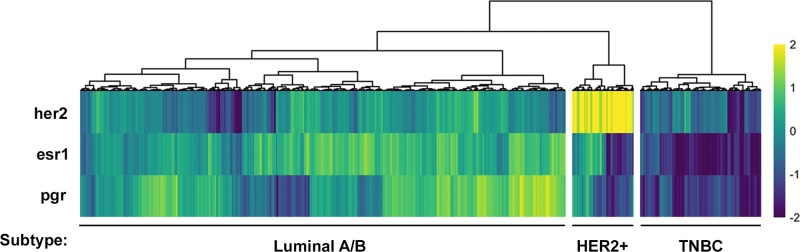
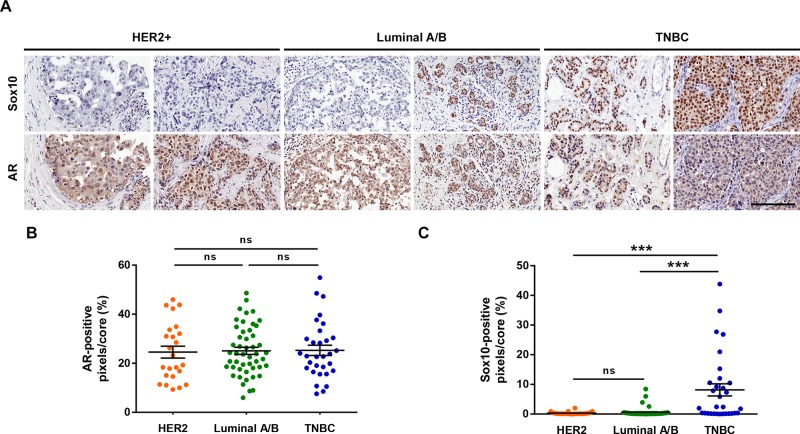
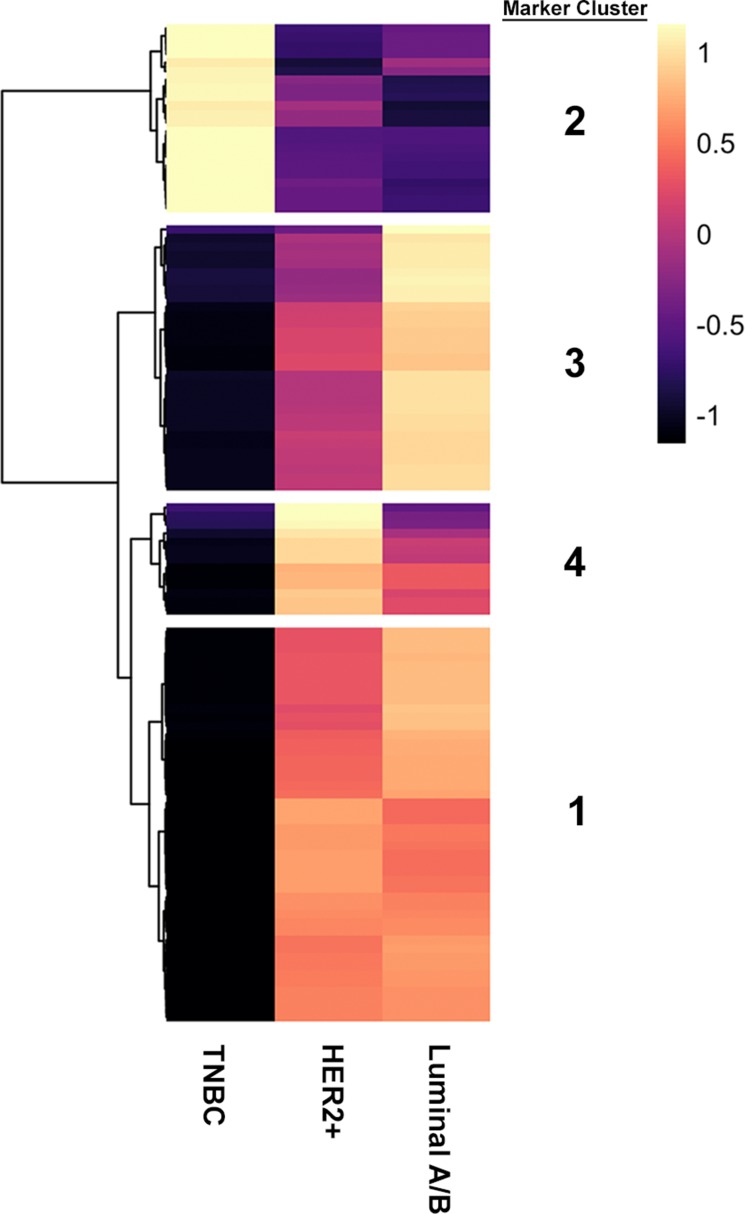
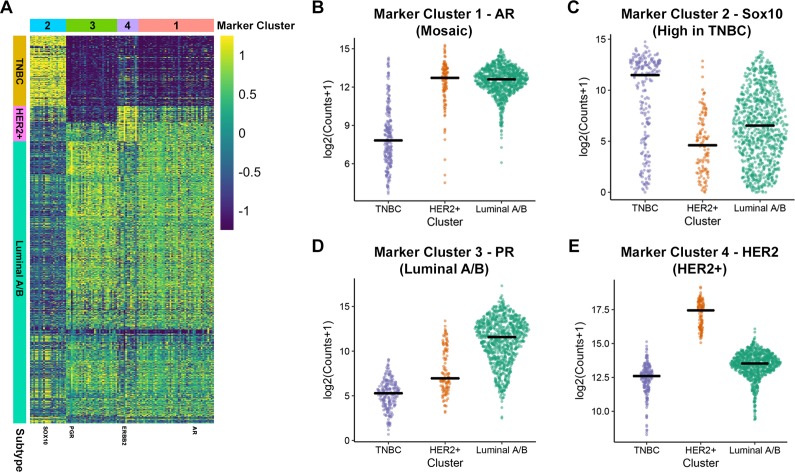
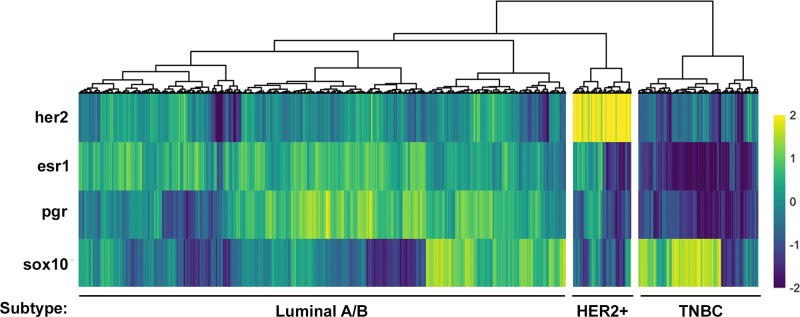
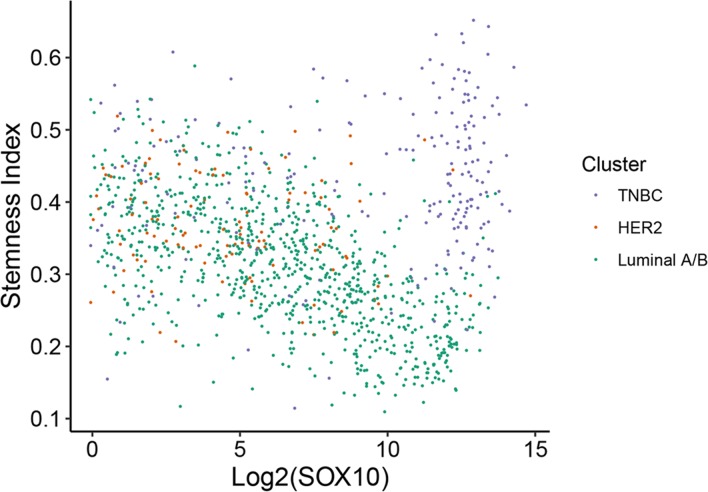
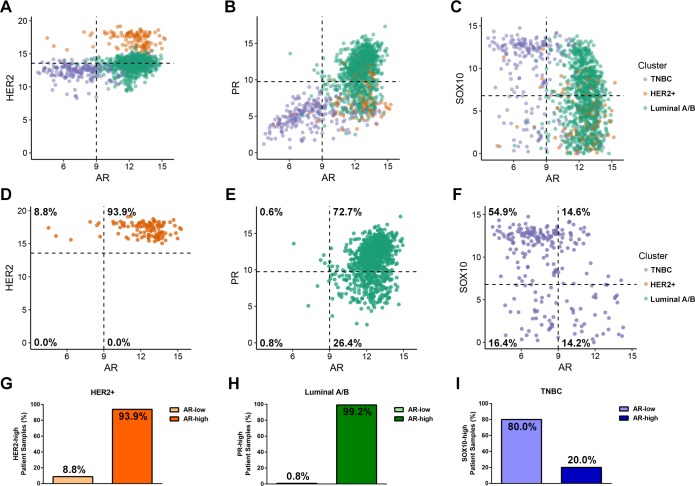
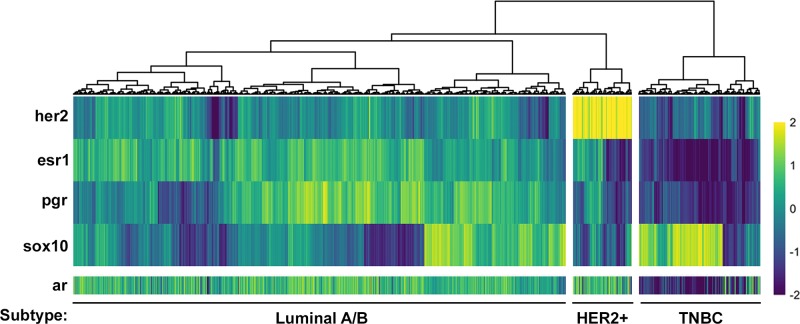
The Androgen Receptor (AR) has recently garnered a lot of attention as a potential biomarker and therapeutic target in hormone-dependent cancers, including breast cancer. However, several inconsistencies exist within the literature as to which subtypes of breast cancer express AR or whether it can be used to define its own unique subtype. Here, we analyze 1246 invasive breast cancer samples from the Cancer Genome Atlas and show that human breast cancers that have been subtyped based on their HER2, ESR1, or PGR expression contain four clusters of genes that are differentially expressed across all subtypes. We demonstrate that Sox10 is highly expressed in approximately one-third of all HER2/ESR1/PGR-low tumors and is a candidate biomarker of the triple-negative subtype. Although AR expression is acquired in many breast cancer cases, its expression could not define a unique subtype. Despite several reports stating that AR expression is acquired in HER2/ESR1/PGR triple-negative cancers, here we show that a low percentage of these cancers express AR (~20%). In contrast, AR is highly expressed in HER2-positive or ESR1/PGR-positive cancers (> 95%). Although AR expression cannot be used as an independent subtype biomarker, our analysis shows that routine evaluation of AR expression in tumors which express HER2, ESR1 and/or PGR may identify a unique subset of tumors which would benefit from anti-androgen based therapies.
雄激素受体(AR)最近作为激素依赖性癌症(包括乳腺癌)的潜在生物标志物和治疗靶点受到了广泛关注。然而,关于乳腺癌的哪些亚型表达AR,或者它是否可用于定义其独特的亚型,文献中存在一些不一致之处。在这里,我们分析了癌症基因组图谱中的1246例浸润性乳腺癌样本,结果显示,根据HER2、ESR1或PGR表达进行亚型分类的人类乳腺癌包含四组在所有亚型中差异表达的基因。我们证明,Sox10在所有HER2/ESR1/PGR低表达肿瘤的约三分之一中高表达,是三阴性亚型的候选生物标志物。尽管在许多乳腺癌病例中会出现AR表达,但它的表达并不能定义一个独特的亚型。尽管有几份报告称,在HER2/ESR1/PGR三阴性癌症中会出现AR表达,但我们在此表明,这些癌症中只有一小部分(约20%)表达AR。相比之下,AR在HER2阳性或ESR1/PGR阳性癌症中高表达(>95%)。虽然AR表达不能用作独立的亚型生物标志物,但我们的分析表明,对表达HER2、ESR1和/或PGR的肿瘤进行AR表达的常规评估可能会识别出一个独特的肿瘤子集,这些肿瘤将从基于抗雄激素的治疗中获益。