Singer Jack W, Fleischman Angela, Al-Fayoumi Suliman, Mascarenhas John O, Yu Qiang, Agarwal Anupriya
CTI Biopharma Corporation, Seattle, WA, USA.
Chao Family Comprehensive Cancer Center, University of California Irvine, Irvine, CA, USA.
Oncotarget. 2018 Sep 7;9(70):33416-33439. doi: 10.18632/oncotarget.26058.
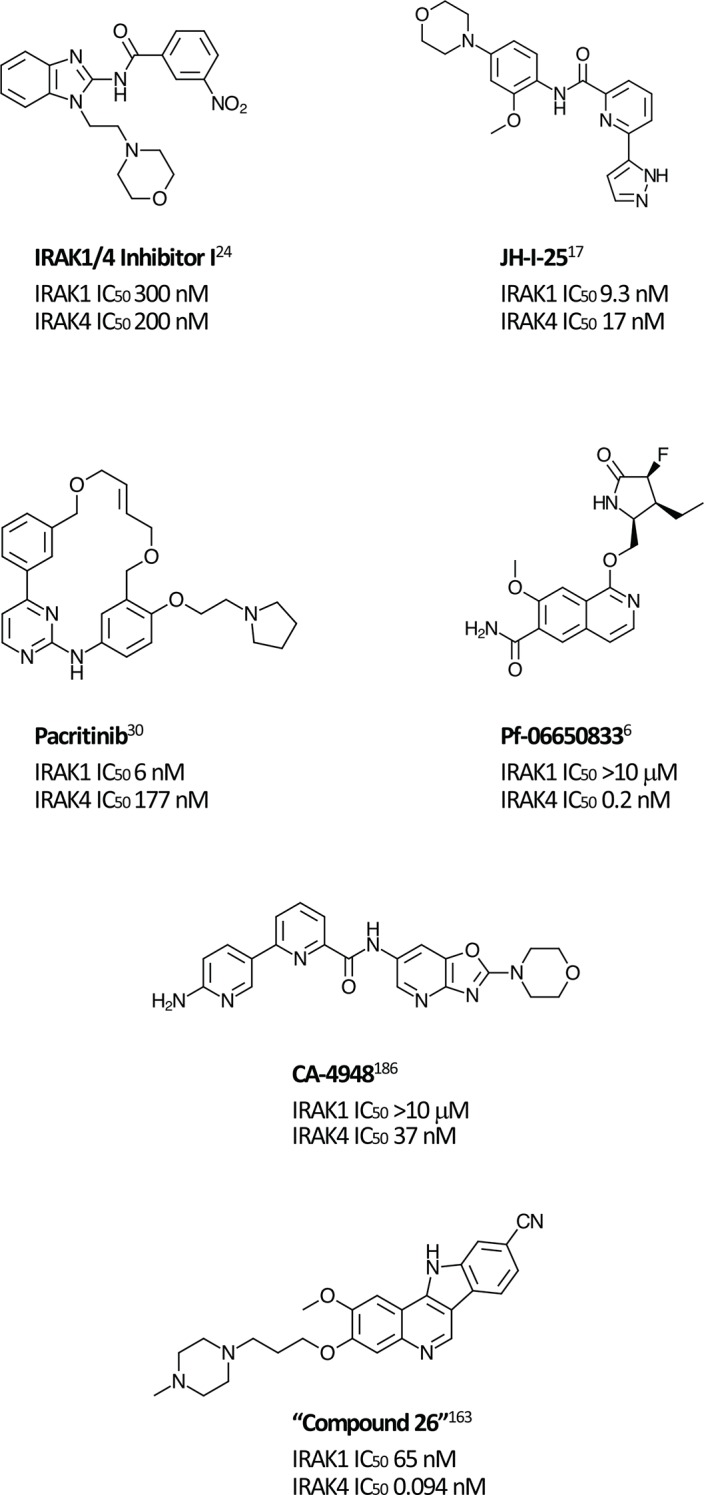
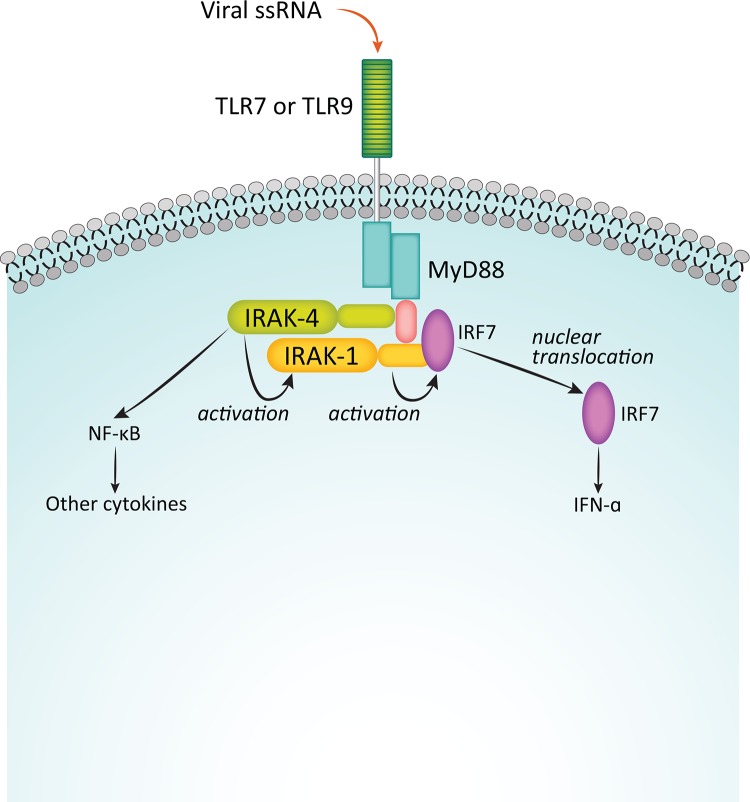
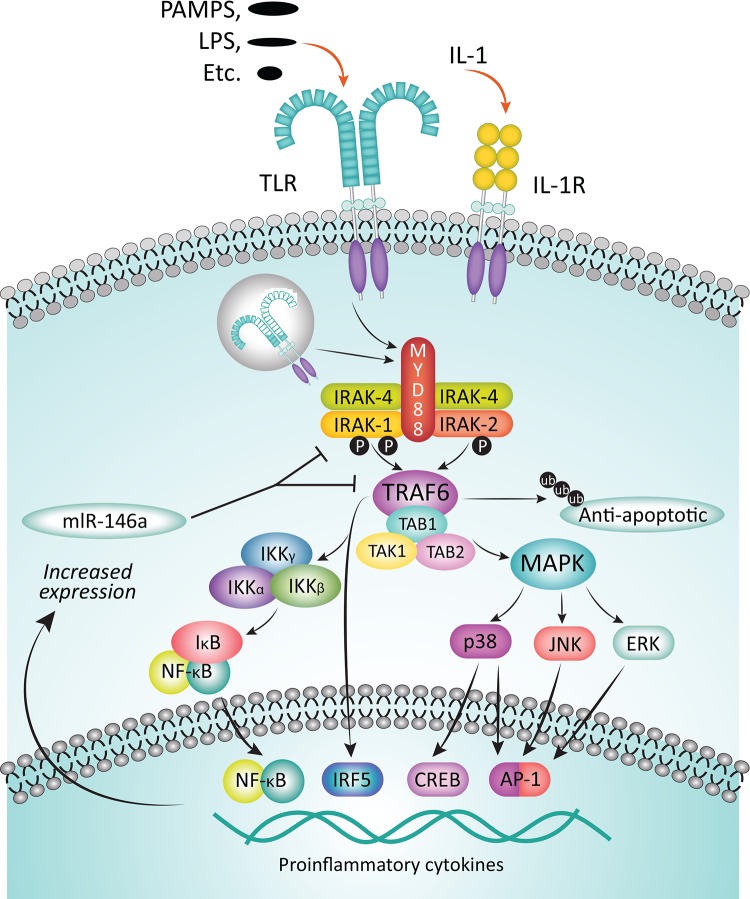
Interleukin-1 receptor-associated kinases (IRAK1, IRAK2, IRAK3 [IRAK-M], and IRAK4) are serine-threonine kinases involved in toll-like receptor and interleukin-1 signaling pathways, through which they regulate innate immunity and inflammation. Evidence exists that IRAKs play key roles in the pathophysiologies of cancers, and metabolic and inflammatory diseases, and that IRAK inhibition has potential therapeutic benefits. Molecules capable of selectively interfering with IRAK function and expression have been reported, paving the way for the clinical evaluation of IRAK inhibition. Herein, we focus on IRAK1, review its structure and physiological roles, and summarize emerging data for IRAK1 inhibitors in preclinical and clinical studies.
白细胞介素-1受体相关激酶(IRAK1、IRAK2、IRAK3[IRAK-M]和IRAK4)是丝氨酸-苏氨酸激酶,参与Toll样受体和白细胞介素-1信号通路,通过这些通路调节先天免疫和炎症。有证据表明,IRAKs在癌症、代谢性疾病和炎症性疾病的病理生理过程中起关键作用,并且抑制IRAK具有潜在的治疗益处。据报道,能够选择性干扰IRAK功能和表达的分子已出现,为IRAK抑制的临床评估铺平了道路。在此,我们聚焦于IRAK1,综述其结构和生理作用,并总结IRAK1抑制剂在临床前和临床研究中的新数据。