Department of Medical Parasitology, Pasteur Institute of Iran, Tehran, Iran.
Department of Medical Parasitology and Mycology, School of Public Health, Tehran University of Medical Sciences, Tehran, Iran.
PLoS One. 2018 Oct 3;13(10):e0203490. doi: 10.1371/journal.pone.0203490. eCollection 2018.
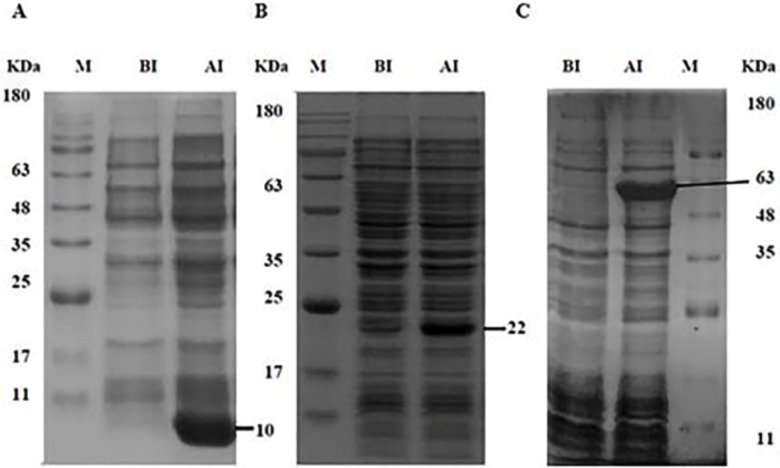
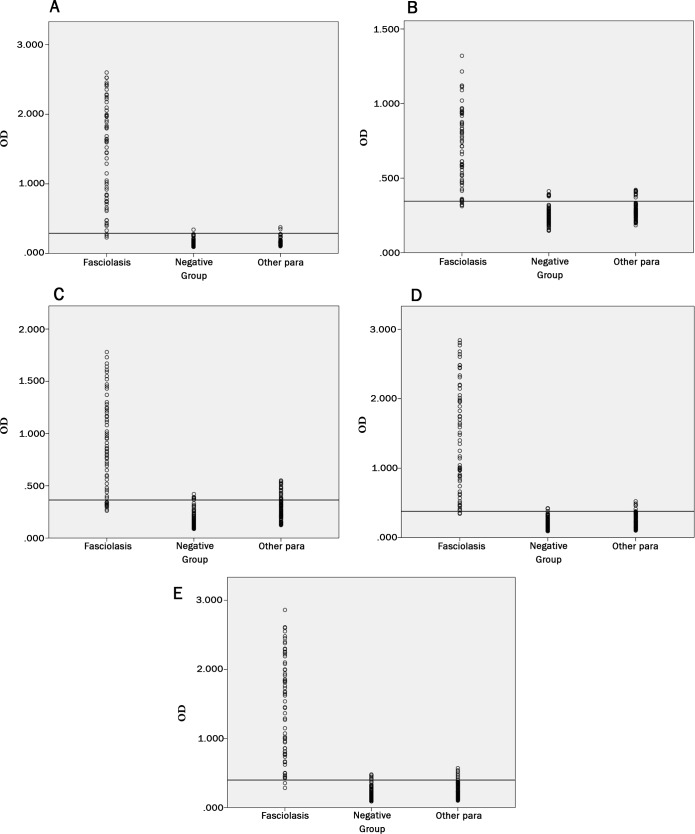
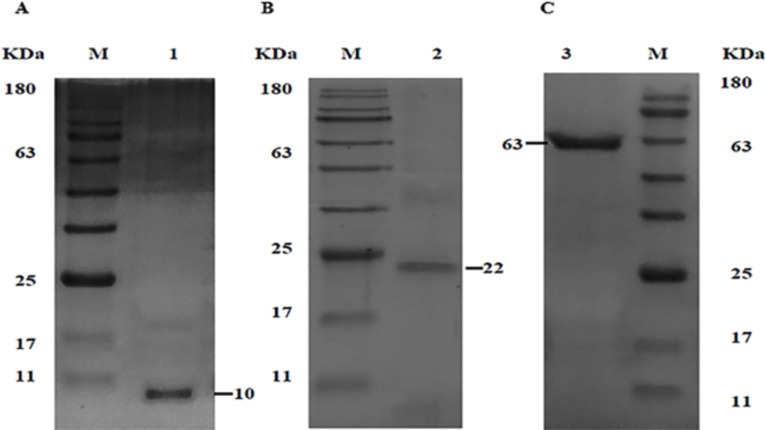
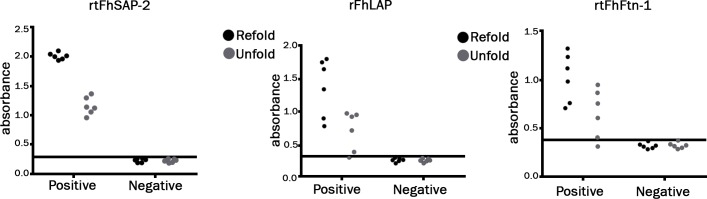
Diagnosis of fascioliasis with high sensitivity and specificity antigens play a vital role in the management of the disease. Majority of commercial serological tests use F. hepatica native antigens and indicate wide diversities in test accuracy. Nowadays, recombinant antigens have been introduced as diagnostic reagents offer better test standardization. A combination of highly pure recombinant antigens associated with correct folding will leads to improve specificity and sensitivity of ELISA for diagnosis of Fascioliasis. In this article, Fasciola hepatica saposin-like protein 2 (SAP-2), ferritin protein (Ftn-1) and leucine aminopeptidase (LAP) recombinant antigens were considered as tools for the detection of F. hepatica immunoglobulin G antibodies in persons with chronic human fasciolasis. The recombinant antigens were obtained as fusion proteins, expressed in Escherichia coli and purified by immobilized metal affinity chromatography (IMAC). The refolding processes of denatured recombinant proteins were performed using dialysis method in the presence of chemical additives, and reduced/oxidized glutathione (in vitro). The immunoreactivity of the recombinant antigens was assessed individually and in a combination compared with excretory/secretory antigen (E/S) in an enzyme-linked immunosorbent assay (ELISA) test. The experiments were optimized using 213 serum samples from humans, including patients with chronic fascioliasis, patients with other parasitic diseases, and healthy subjects. The results indicated 95% sensitivity and 98% specificity for rtFhSAP-2, 96% sensitivity and 91% specificity for E/S, 80% and 83.3% for rtFhFtn-1, 84% and 88% for FhLAP, and also, 96% and 95% for combination of recombinant antigens, respectively. In conclusion, the results of this investigation showed that rtFhSAP-2 with the highest specificity and acceptable sensitivity has a considerable superiority compared to mentioned antigens and even in combination with these antigens in serodiagnosis of human fascioliasis.
用高灵敏度和特异性的抗原进行肝片形吸虫病诊断,在疾病管理中起着至关重要的作用。大多数商业血清学检测使用肝片形吸虫天然抗原,并且表明检测准确性存在广泛差异。如今,重组抗原已被引入作为诊断试剂,提供更好的检测标准化。高度纯化的重组抗原与正确折叠的组合将提高 ELISA 对肝片形吸虫病的诊断的特异性和灵敏度。在本文中,肝片形吸虫 SAP 样蛋白 2(SAP-2)、铁蛋白蛋白(Ftn-1)和亮氨酸氨基肽酶(LAP)重组抗原被认为是检测慢性人类肝片形吸虫病患者肝片形吸虫免疫球蛋白 G 抗体的工具。重组抗原作为融合蛋白获得,在大肠杆菌中表达,并通过固定化金属亲和层析(IMAC)纯化。变性重组蛋白的复性过程通过在存在化学添加剂的情况下使用透析方法进行,并且使用还原/氧化谷胱甘肽(体外)进行。使用来自人类的 213 个血清样本,包括慢性肝片形吸虫病患者、其他寄生虫病患者和健康受试者,分别评估了重组抗原的免疫反应性,并与酶联免疫吸附试验(ELISA)中的排泄物/分泌抗原(E/S)进行了比较。使用 213 个血清样本进行了优化实验,包括慢性肝片形吸虫病患者、其他寄生虫病患者和健康对照者。结果表明,rtFhSAP-2 的灵敏度为 95%,特异性为 98%,E/S 的灵敏度为 96%,特异性为 91%,rtFhFtn-1 的灵敏度为 80%,特异性为 83.3%,FhLAP 的灵敏度为 84%,特异性为 88%,重组抗原组合的灵敏度为 96%,特异性为 95%。总之,这项研究的结果表明,与上述抗原相比,rtFhSAP-2 具有最高的特异性和可接受的灵敏度,在肝片形吸虫病的人类血清学诊断中具有相当大的优势,甚至与这些抗原联合使用也是如此。