Patil Nitin A, Tailhades Julien, Hughes Richard Anthony, Separovic Frances, Wade John D, Hossain Mohammed Akhter
Florey Institute of Neuroscience and Mental Health, the University of Melbourne, Victoria 3010, Australia.
Department of Pharmacology and Therapeutics, the University of Melbourne, Victoria 3010, Australia.
Int J Mol Sci. 2015 Jan 14;16(1):1791-805. doi: 10.3390/ijms16011791.
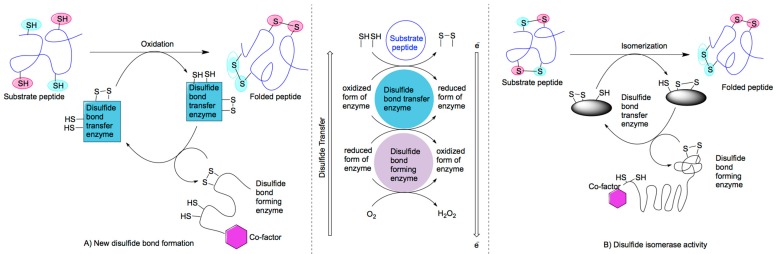
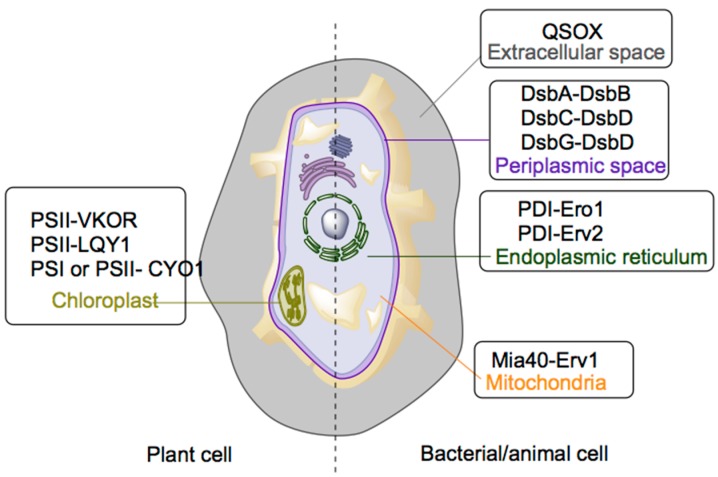
Bioactive peptides play important roles in metabolic regulation and modulation and many are used as therapeutics. These peptides often possess disulfide bonds, which are important for their structure, function and stability. A systematic network of enzymes--a disulfide bond generating enzyme, a disulfide bond donor enzyme and a redox cofactor--that function inside the cell dictates the formation and maintenance of disulfide bonds. The main pathways that catalyze disulfide bond formation in peptides and proteins in prokaryotes and eukaryotes are remarkably similar and share several mechanistic features. This review summarizes the formation of disulfide bonds in peptides and proteins by cellular and recombinant machinery.
生物活性肽在代谢调节和调控中发挥着重要作用,许多生物活性肽还被用作治疗药物。这些肽通常含有二硫键,二硫键对其结构、功能和稳定性至关重要。细胞内发挥作用的酶系统——二硫键生成酶、二硫键供体酶和氧化还原辅因子——决定了二硫键的形成和维持。原核生物和真核生物中催化肽和蛋白质中二硫键形成的主要途径非常相似,并且具有几个共同的机制特征。本综述总结了通过细胞和重组机制在肽和蛋白质中形成二硫键的过程。