Cao Xiaohan, Wang Xiangyu, Lu Lulu, Li Xiaoyu, Di Ran, He Xiaoyun, Hu Wenping, Zeng Xianyin, Liu Qiuyue, Chu Mingxing
Key Laboratory of Animal Genetics, Breeding and Reproduction of Ministry of Agriculture, Institute of Animal Science, Chinese Academy of Agricultural Sciences, Beijing, China.
Department of Bioengineering, Life Science College, Sichuan Agricultural University, Ya'an, China.
Front Endocrinol (Lausanne). 2018 Sep 19;9:512. doi: 10.3389/fendo.2018.00512. eCollection 2018.
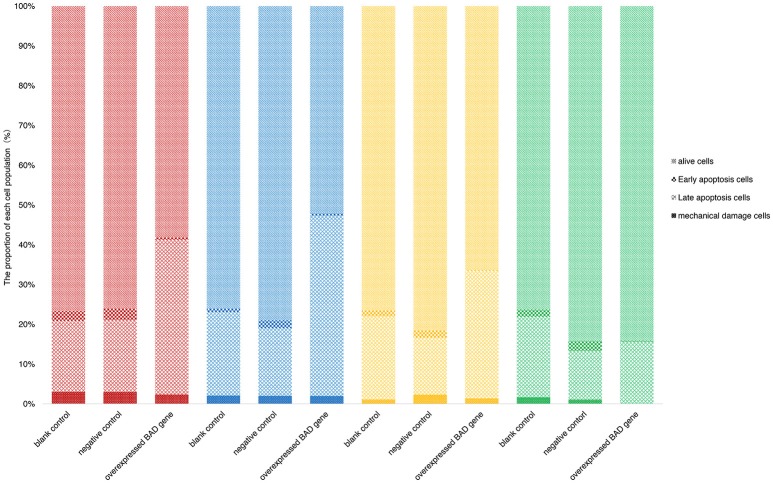
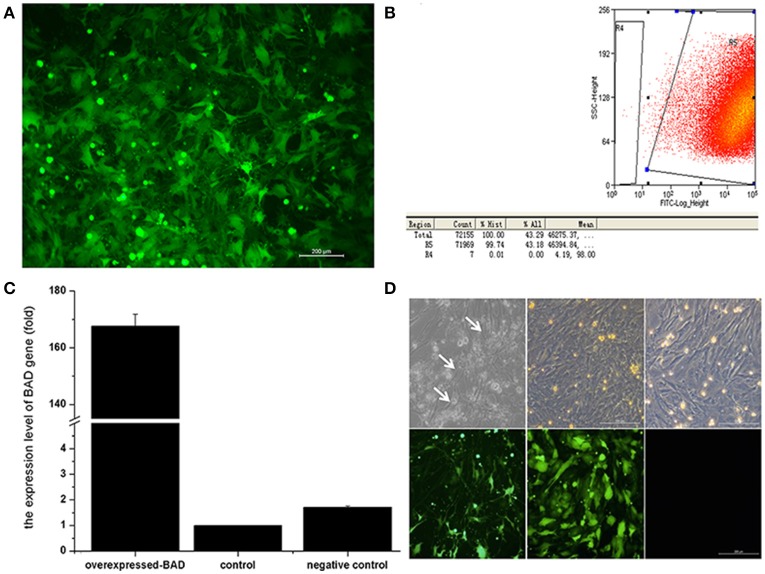
Most ewes in China are seasonally polyestrous with normal ovulatory cycles, which is controlled by photoperiod (length of the daily light phase). These ewes are estrous in the short-day season and anestrus in the long-day season and cannot mate during anestrus. Thus seasonal breeding limits both diversification and intensification of production. If sheep can estrus all round year, it can be mated twice per year, which can greatly improve the economic benefits. To change seasonal estrus at the genetic level and cultivating new sheep breeds, it is important to understand the molecular mechanisms of seasonal breeding trait in sheep. The BCL2-associated agonist of cell death () gene being a regulator of cellular apoptosis was identified by our previous RNA-Seq, which is associated with follicular development in mammalian ovaries. However, the mechanism how can regulate estrus in sheep was poorly understood. In this study, we characterized ovine , including full-length mRNA cloning and protein sequence prediction, as well as expression profile in Small-tailed Han (STH) sheep. The highest expression levels of were observed in sheep hypothalamus, lung, and pituitary, while the lowest expression was in liver. Functional analysis of was performed in primary granulosa cells of sheep. The concentration of P4 was significantly increased after RNAi interference of , while P4 level was shown to be opposite after overexpression . It has been found that can reduce progesterone levels by promoting ovarian GC apoptosis, which might be involved in regulating the estrus cycle in sheep.
中国的大多数母羊是季节性多胎且排卵周期正常,这受光周期(每日光照阶段的时长)控制。这些母羊在短日照季节发情,在长日照季节进入乏情期,乏情期不能配种。因此,季节性繁殖限制了生产的多样化和集约化。如果绵羊能全年发情,每年就可以配种两次,这能大大提高经济效益。要在基因水平改变季节性发情并培育新的绵羊品种,了解绵羊季节性繁殖性状的分子机制很重要。我们之前通过RNA测序鉴定出细胞死亡的BCL2相关激动剂()基因是细胞凋亡的调节因子,它与哺乳动物卵巢中的卵泡发育有关。然而,该基因如何调节绵羊发情的机制尚不清楚。在本研究中,我们对绵羊的该基因进行了表征,包括全长mRNA克隆和蛋白质序列预测,以及在小尾寒羊中的表达谱分析。该基因在绵羊下丘脑、肺和垂体中的表达水平最高,而在肝脏中的表达最低。在绵羊原代颗粒细胞中对该基因进行了功能分析。该基因RNA干扰后,P4浓度显著升高,而过表达时P4水平则相反。研究发现,该基因可通过促进卵巢颗粒细胞凋亡来降低孕酮水平,这可能参与调节绵羊的发情周期。