Computational Biology, Target Sciences, GlaxoSmithKline, Collegeville, PA, 19426, USA.
Open Targets, Wellcome Genome Campus, Hinxton, Cambridge, CB10 1SD, UK.
BMC Bioinformatics. 2018 Oct 1;19(1):345. doi: 10.1186/s12859-018-2392-y.
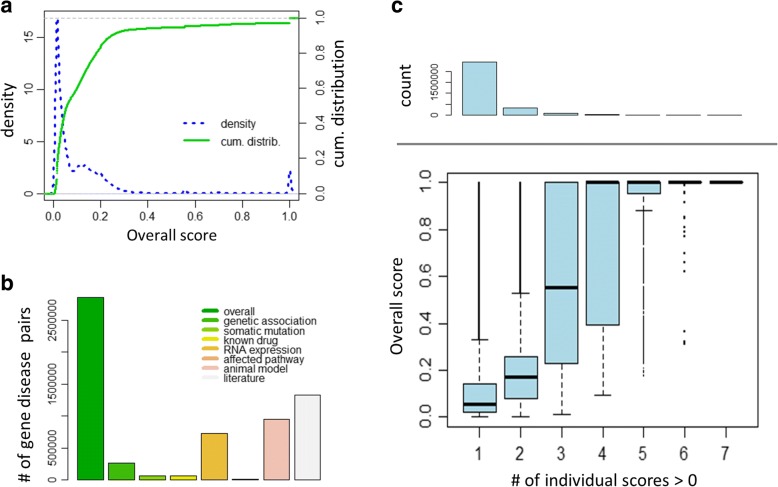
The Open Targets Platform integrates different data sources in order to facilitate identification of potential therapeutic drug targets to treat human diseases. It currently provides evidence for nearly 2.6 million potential target-disease pairs. G-protein coupled receptors are a drug target class of high interest because of the number of successful drugs being developed against them over many years. Here we describe a systematic approach utilizing the Open Targets Platform data to uncover and prioritize potential new disease indications for the G-protein coupled receptors and their ligands.
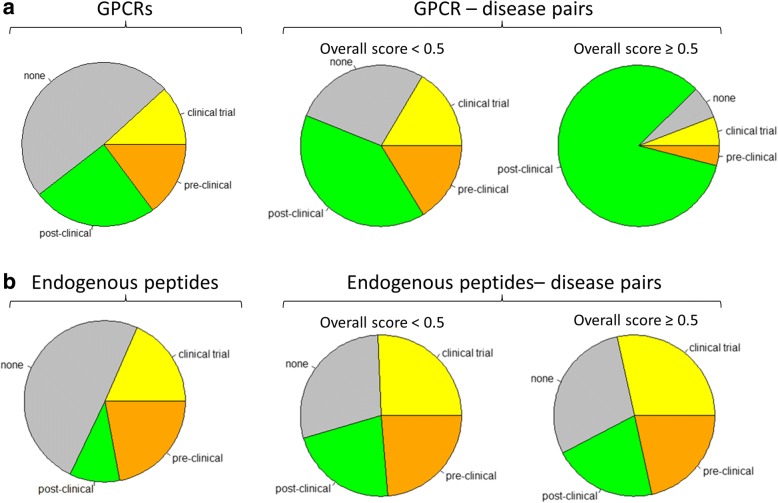
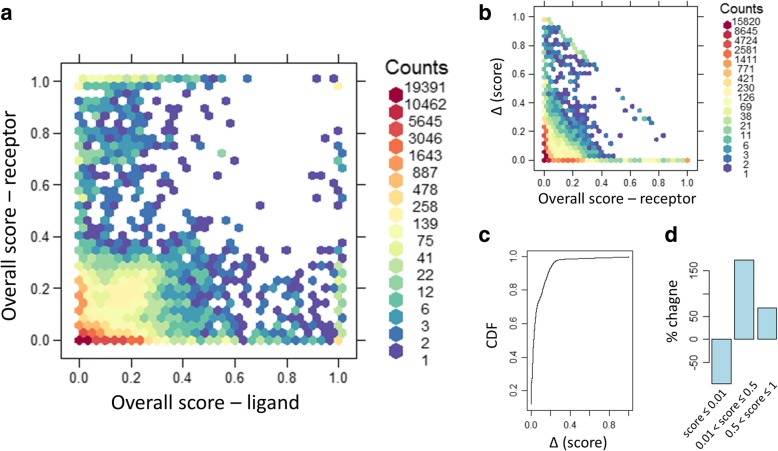
Utilizing the data available in the Open Targets platform, potential G-protein coupled receptor and endogenous ligand disease association pairs were systematically identified. Intriguing examples such as GPR35 for inflammatory bowel disease and CXCR4 for viral infection are used as illustrations of how a systematic approach can aid in the prioritization of interesting drug discovery hypotheses. Combining evidences for G-protein coupled receptors and their corresponding endogenous peptidergic ligands increases confidence and provides supportive evidence for potential new target-disease hypotheses. Comparing such hypotheses to the global pharma drug discovery pipeline to validate the approach showed that more than 93% of G-protein coupled receptor-disease pairs with a high overall Open Targets score involved receptors with an existing drug discovery program.
The Open Targets gene-disease score can be used to prioritize potential G-protein coupled receptors-indication hypotheses. In addition, availability of multiple different evidence types markedly increases confidence as does combining evidence from known receptor-ligand pairs. Comparing the top-ranked hypotheses to the current global pharma pipeline serves validation of our approach and identifies and prioritizes new therapeutic opportunities.
Open Targets 平台整合了不同的数据源,以方便确定潜在的治疗药物靶点来治疗人类疾病。它目前提供了近 260 万个潜在的靶标-疾病对的证据。G 蛋白偶联受体是一个非常引人关注的药物靶点类别,因为多年来针对它们开发了许多成功的药物。在这里,我们描述了一种利用 Open Targets 平台数据来发现和优先考虑 G 蛋白偶联受体及其配体的潜在新疾病适应症的系统方法。
利用 Open Targets 平台提供的数据,系统地确定了潜在的 G 蛋白偶联受体和内源性配体疾病关联对。有趣的例子,如 GPR35 用于炎症性肠病和 CXCR4 用于病毒感染,被用来说明系统方法如何有助于优先考虑有趣的药物发现假说。将 G 蛋白偶联受体及其相应的内源性肽配体的证据结合起来,可以提高可信度,并为潜在的新靶标-疾病假说提供支持性证据。将这些假说与全球制药药物发现管道进行比较,以验证该方法表明,超过 93%的具有高总体 Open Targets 评分的 G 蛋白偶联受体-疾病对涉及具有现有药物发现计划的受体。
Open Targets 基因-疾病评分可用于优先考虑潜在的 G 蛋白偶联受体-适应症假说。此外,多种不同证据类型的可用性以及结合已知受体-配体对的证据,明显提高了可信度。将排名最高的假说与当前的全球制药管道进行比较,是对我们方法的验证,并确定和优先考虑新的治疗机会。