Department of Orthopedic Surgery, 2-69 Medical Sciences, Mayo Clinic, 200 First St SW, Rochester, MN, 55905, USA.
Department of Orthopedics, Shanghai General Hospital, Shanghai Jiao Tong University, Shanghai, China.
J Exp Clin Cancer Res. 2018 Oct 4;37(1):244. doi: 10.1186/s13046-018-0914-0.
Osteosarcoma is the most common bone cancer. Despite advances, molecular mechanisms associated with osteosarcoma have not been fully understood. Hence, an effective treatment for osteosarcoma has yet to be developed. Even though signal transducer and activator of transcription3 (STAT3) has been implicated, its role in pathogenesis of osteosarcoma is not fully determined. In this study, we investigated the antitumor effect of napabucasin (NP) (BBI608), an inhibitor of STAT3 on osteosarcoma in vitro and in vivo and studied the underlying molecular mechanism.
Cell viability, colony formation, apoptosis, tumor growth and metastasis assays were performed to examine the effect of NP on osteosarcoma in vitro and in vivo. Real-time RT-PCR, western analysis, immunofluorescence and reporter assays were used to monitor the expression and activity of proteins and underlying molecular pathways. Protein synthesis, co-immunoprecipitation and CAP binding assays were carried out to understand NP-mediated mechanism of actions in osteosarcoma cells.
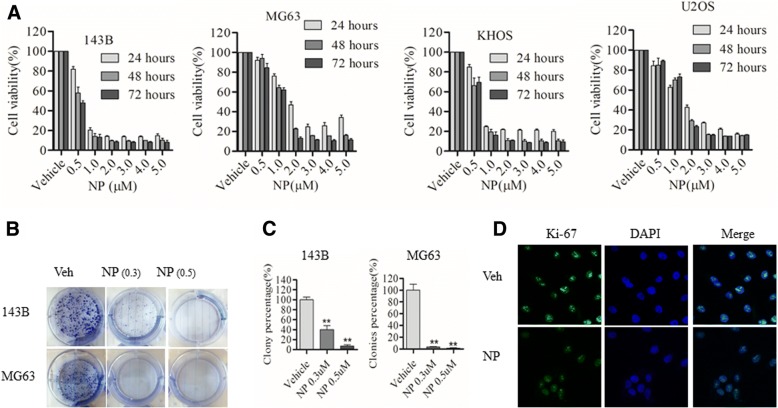
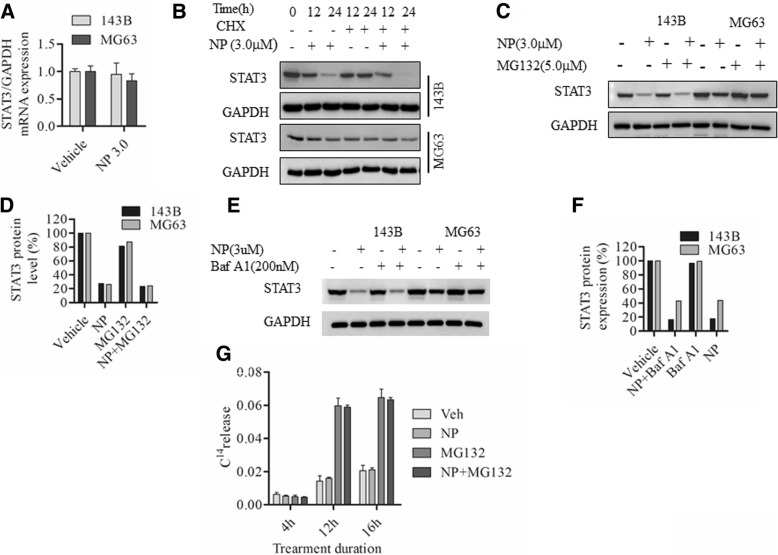
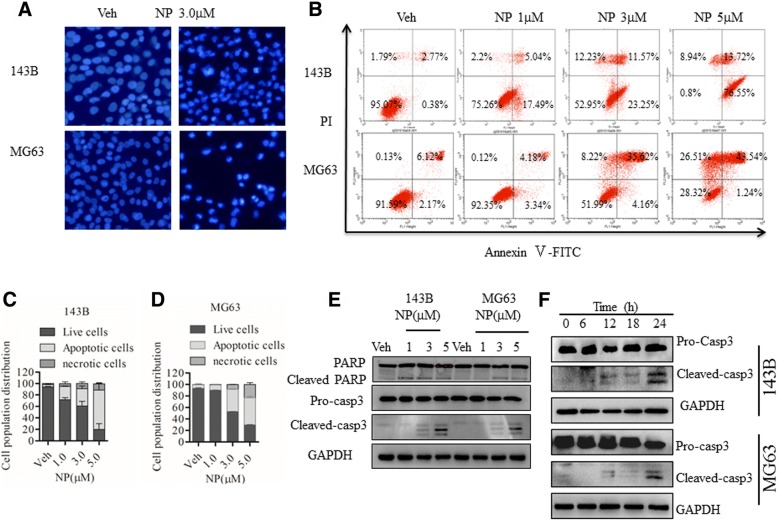
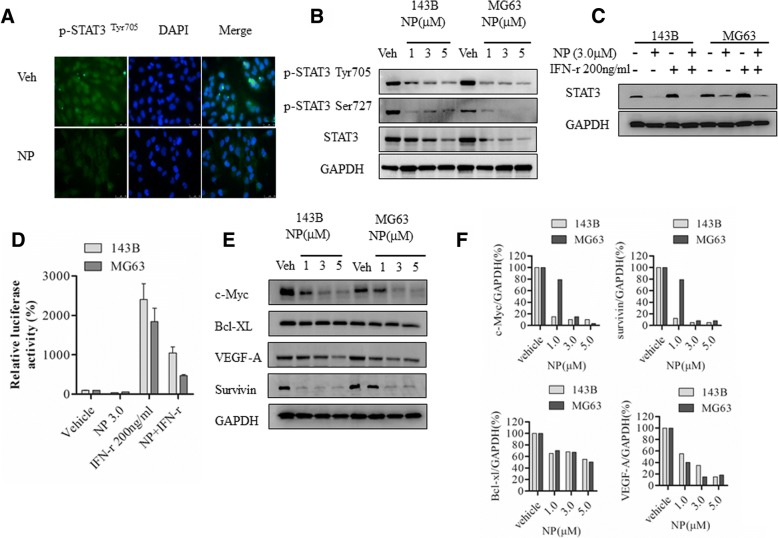
Our results show that NP treatment decreases cell viability and induces apoptosis in several osteosarcoma cell lines. NP treatment suppresses both expression and phosphorylation of STAT3 in addition to blocking STAT3-mediated transcription and downstream target proteins in osteosarcoma cells. Furthermore, NP inhibits protein synthesis through regulation of the eukaryotic initiation factor 4E (eIF4E) and eIF4E-binding protein 1 (4E-BP1). NP also inhibits the progression of osteosarcoma tumors and metastasis in vivo in an orthotopic tibial model of osteosarcoma.
Taken together, our investigation reveals that NP acts through a novel mechanism and inhibits osteosarcoma growth and metastasis, and could be investigated clinically for treating osteosarcoma patients alone or in combination with other drugs.
骨肉瘤是最常见的骨癌。尽管取得了进展,但与骨肉瘤相关的分子机制尚未完全了解。因此,尚未开发出有效的骨肉瘤治疗方法。尽管信号转导子和转录激活子 3(STAT3)已被牵涉其中,但它在骨肉瘤发病机制中的作用尚未完全确定。在这项研究中,我们研究了 STAT3 抑制剂纳巴卡森(NP)(BBI608)对骨肉瘤的体内外抗肿瘤作用,并研究了其潜在的分子机制。
进行细胞活力、集落形成、细胞凋亡、肿瘤生长和转移测定,以研究 NP 对骨肉瘤的体内外作用。实时 RT-PCR、western 分析、免疫荧光和报告基因测定用于监测蛋白的表达和活性以及潜在的分子途径。进行蛋白质合成、共免疫沉淀和 CAP 结合测定,以了解 NP 在骨肉瘤细胞中的介导作用机制。
我们的结果表明,NP 处理可降低几种骨肉瘤细胞系的细胞活力并诱导细胞凋亡。NP 处理除了阻断 STAT3 介导的转录和下游靶蛋白外,还可抑制骨肉瘤细胞中 STAT3 的表达和磷酸化。此外,NP 通过调节真核起始因子 4E(eIF4E)和 eIF4E 结合蛋白 1(4E-BP1)来抑制蛋白质合成。NP 还可抑制骨肉瘤肿瘤的进展并抑制骨肉瘤原位胫骨模型中的转移。
综上所述,我们的研究表明,NP 通过一种新的机制发挥作用,可抑制骨肉瘤的生长和转移,可单独或与其他药物联合用于治疗骨肉瘤患者。