Newcastle Surgical Training Centre, Freeman Hospital, High Heaton, Newcastle upon Tyne, NE7 7DN, UK.
Mitochondrial Research Group, Institute of Neuroscience, Medical School, Newcastle upon Tyne, NE2 4HH, UK.
Knee Surg Sports Traumatol Arthrosc. 2019 Jul;27(7):2238-2250. doi: 10.1007/s00167-018-5164-3. Epub 2018 Oct 4.
A balanced knee arthroplasty should optimise survivorship and performance. Equilibration of medial and lateral femorotibial load requires guided judicious pericapsular ligament release. The null hypothesis was that there would be no difference between use of a tensiometer device and a remote load sensor final load transfer across the joint through functional arc of motion.
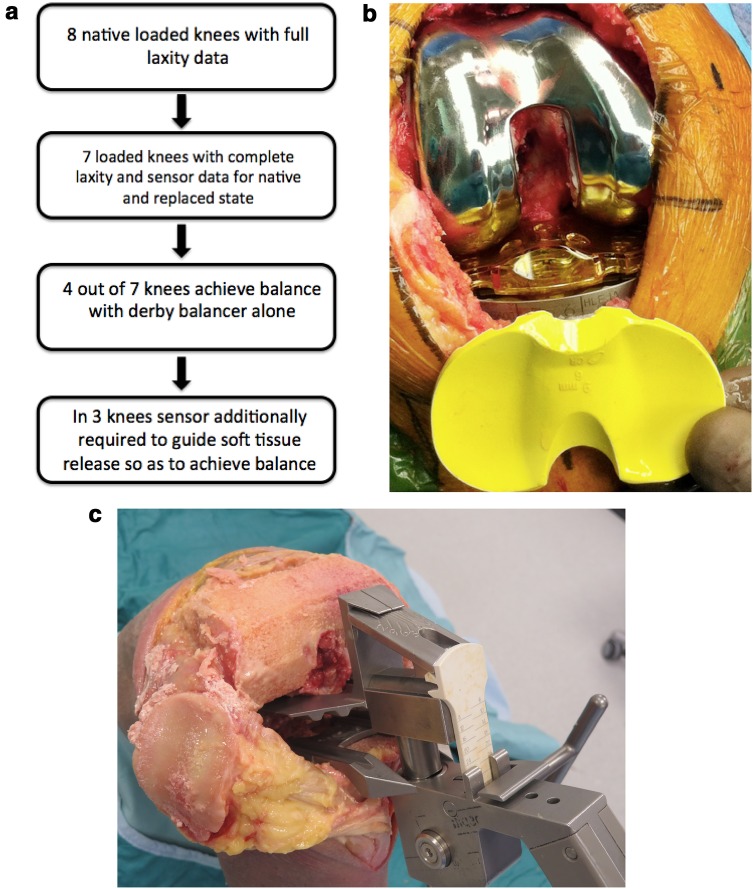
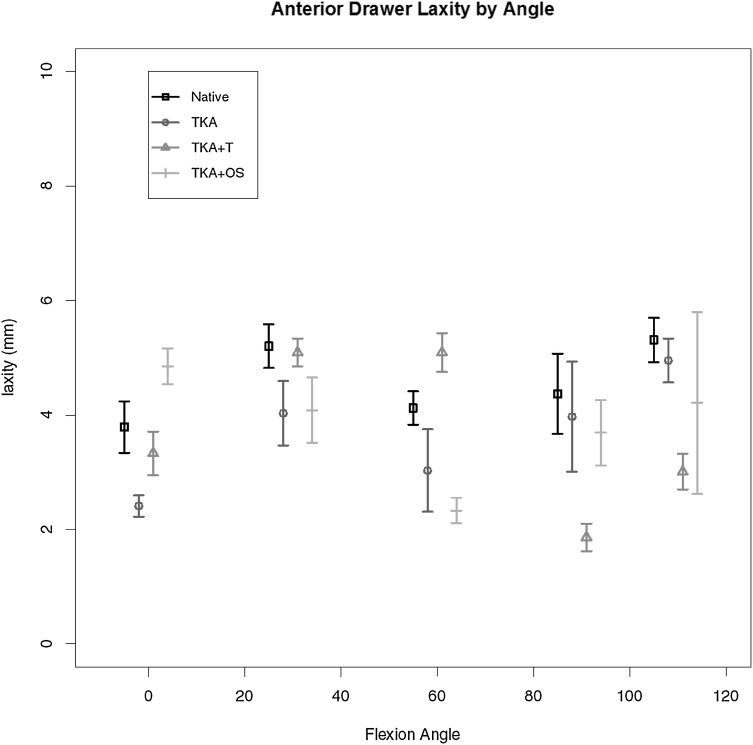
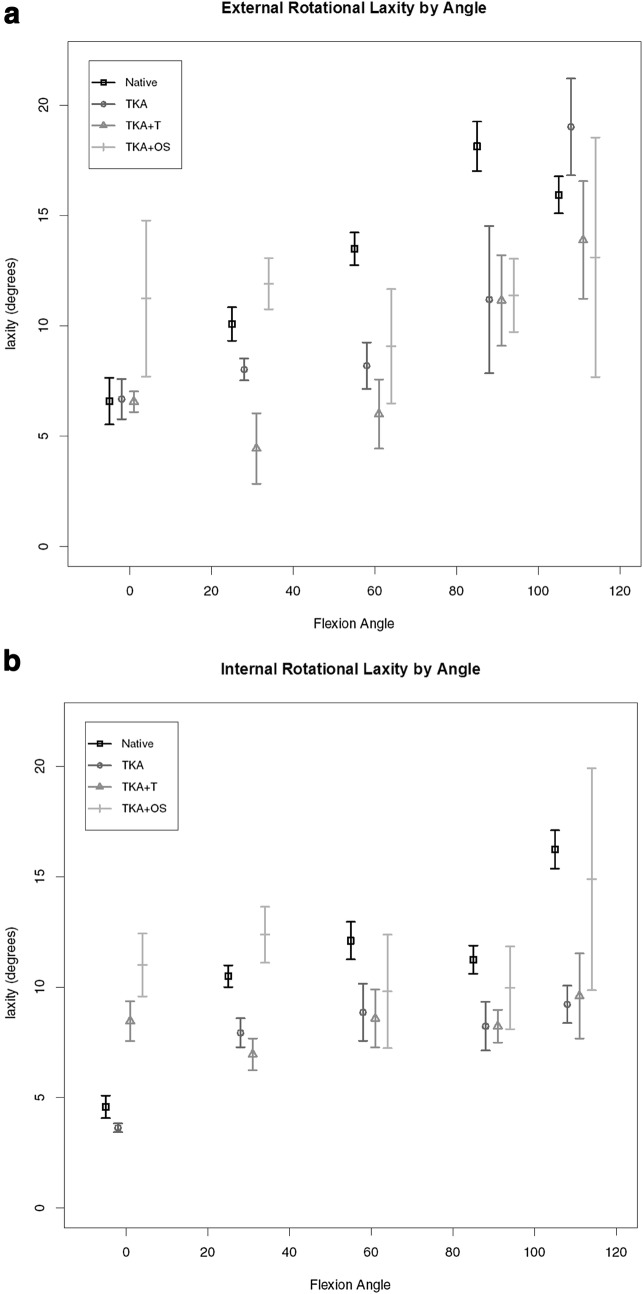
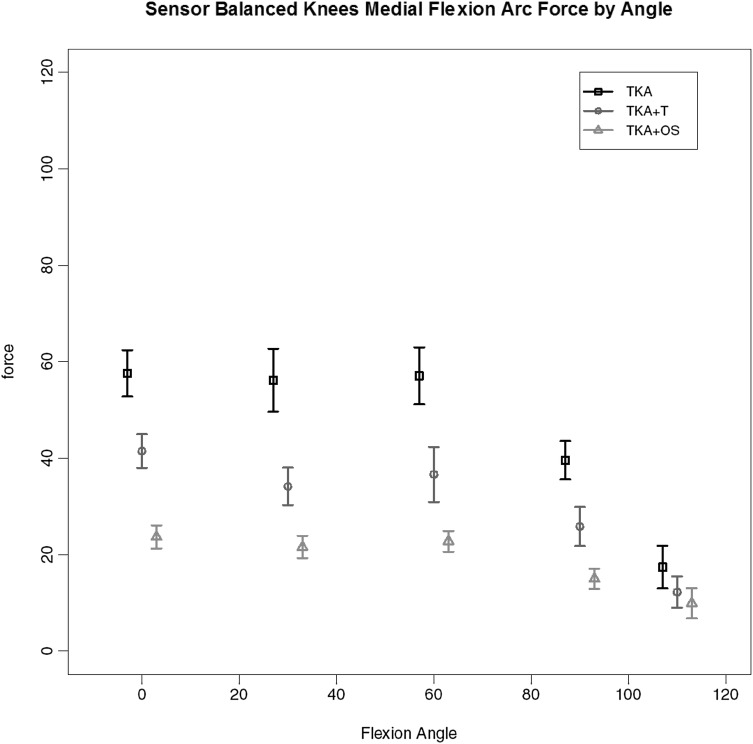
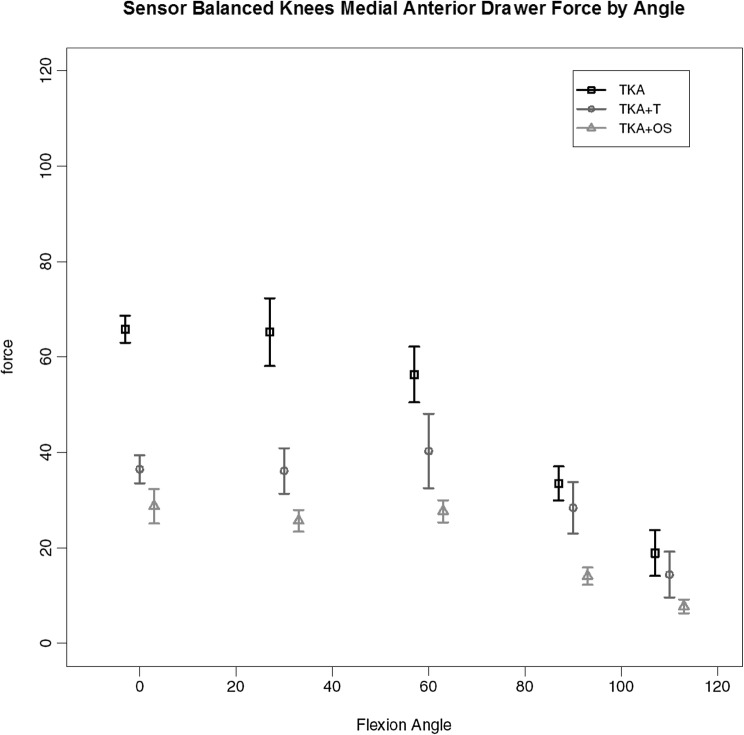
A cadaveric study, using eight knees, was performed to define the impact of an established gap distraction device against load sensor-aimed soft tissue release in a TKA setting. Using validated measures of laxity in six degrees of freedom and true real-time load sensing four states were examined: native knee, TKA using spacer blocks (TKA), TKA with soft tissue release aided by a monogram tensiometer (TKA-T) and finally where load across the tibiofemoral articulation remains unbalanced final soft tissue release using a sensor device (TKA-OS).
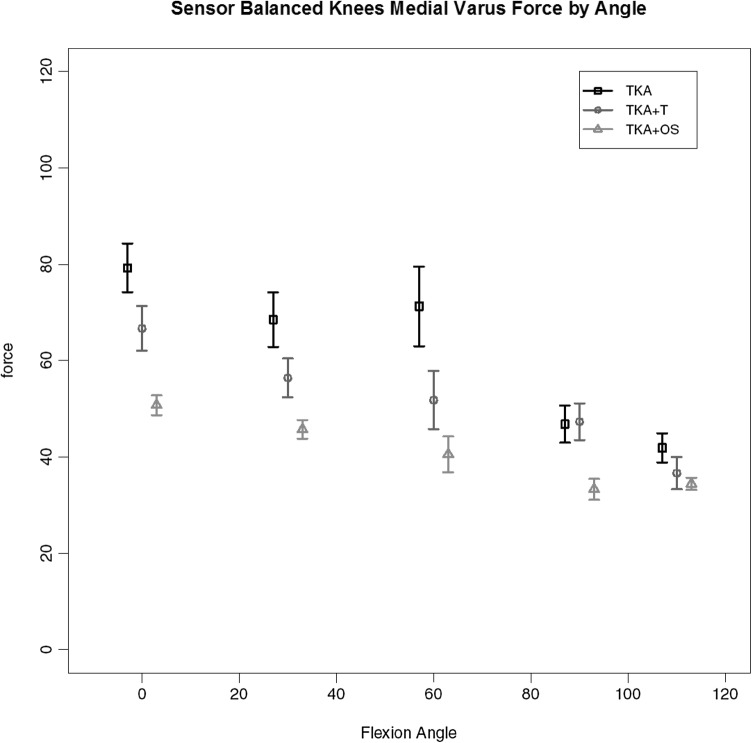
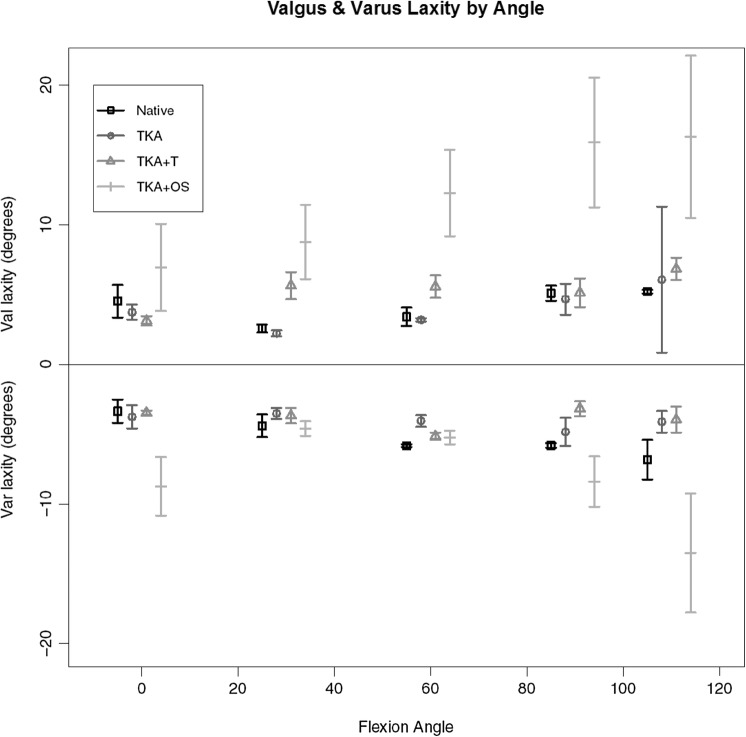
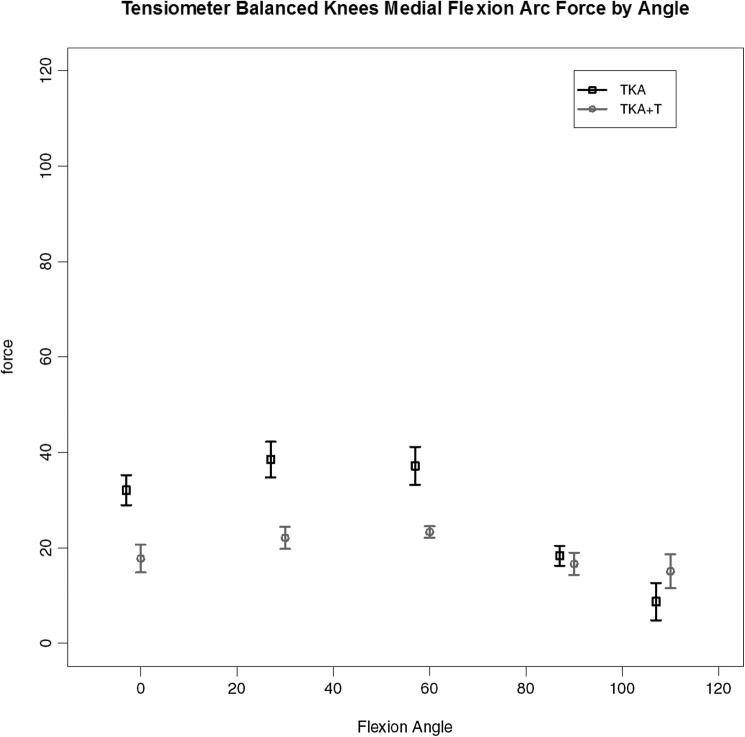
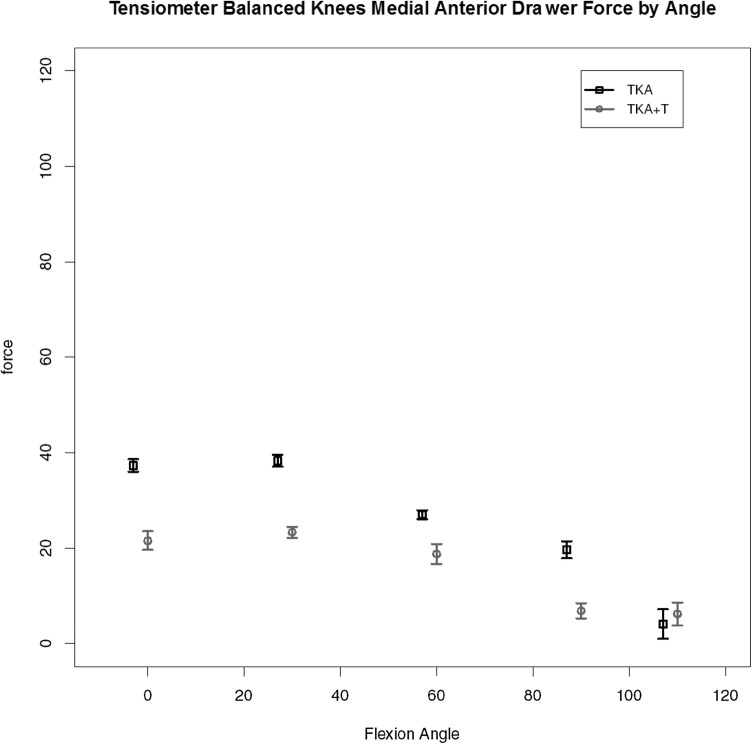
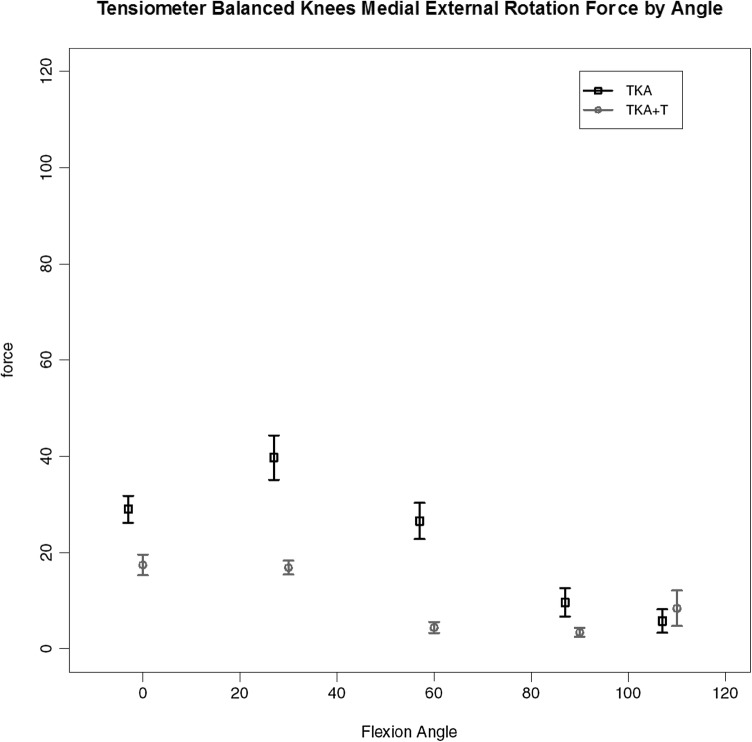
The laxity pattern was equivalent for TKA-T and TKA-OS. However, in only four of these seven knees despite the tensiometer confirming equivalence of rectangular flexion-extension gap dimensions and centralisation of collateral ligament distraction, there remained a > 15lb medial to lateral load difference for at least one point of the flexion arc. This was corrected by further final soft tissue release guided by the OS sensor device in the final three knees.
Tensiometer-guided soft tissue release at two points of flexion failed to achieve balance for three out of seven knee arthroplasty procedures. Sensor technology guided final soft tissue balancing to equilibrate load across the joint through full arc of motion. This work argues for the role of continuous sensor readings to guide the soft tissue balancing during total knee arthroplasty.
膝关节置换术应优化假体生存率和功能表现。内外侧股骨胫骨负荷平衡需要在关节囊周围韧带松解时进行适当引导。本研究的零假设为:张力计装置和远程负荷传感器在膝关节功能活动弧中传递关节最终负荷时,不会产生差异。
本研究为尸体研究,共涉及 8 个膝关节,旨在确定在 TKA 中,使用间隙牵开器与基于负荷传感器的软组织松解相比,对膝关节的影响。采用六自由度松弛度的验证测量和真正的实时负荷传感,检查了 4 种状态:正常膝关节、使用间隔块的 TKA(TKA)、在张力计辅助下进行软组织松解的 TKA(TKA-T)和最后使用传感器设备仍无法平衡胫骨股骨关节接触负荷的 TKA (TKA-OS)。
TKA-T 和 TKA-OS 的松弛模式相似。然而,在这 7 个膝关节中,只有 4 个膝关节尽管张力计确认了矩形屈伸间隙尺寸的等效性和侧副韧带牵开的中心性,但在至少一个屈伸弧点仍存在超过 15 磅的内侧到外侧负荷差异。通过在最后 3 个膝关节中使用 OS 传感器设备进一步进行最终的软组织松解,解决了这一问题。
张力计引导的两点屈伸位软组织松解未能平衡 7 个膝关节中的 3 个。传感器技术引导最终的软组织平衡,使关节在整个活动弧中达到负荷平衡。这项研究证明了在全膝关节置换术中,连续传感器读数在引导软组织平衡方面的作用。