Institute of Biomedicine and Molecular Immunology "A. Monroy" (IBIM), National Research Council of Italy (CNR), Palermo, Italy.
Dipartimento di Biomedicina sperimentale e Neuroscienze Cliniche (BioNec), University of Palermo, Palermo, Italy.
Exp Mol Med. 2018 Oct 5;50(10):1-12. doi: 10.1038/s12276-018-0158-2.
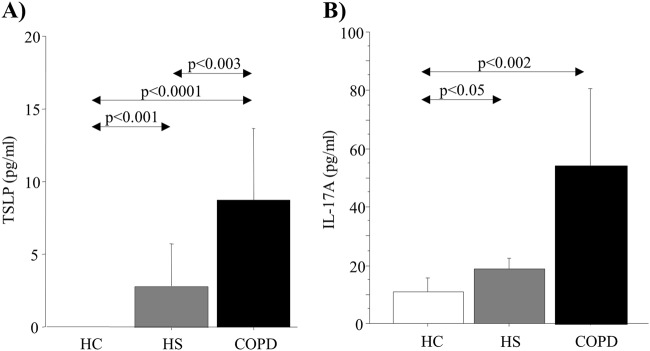
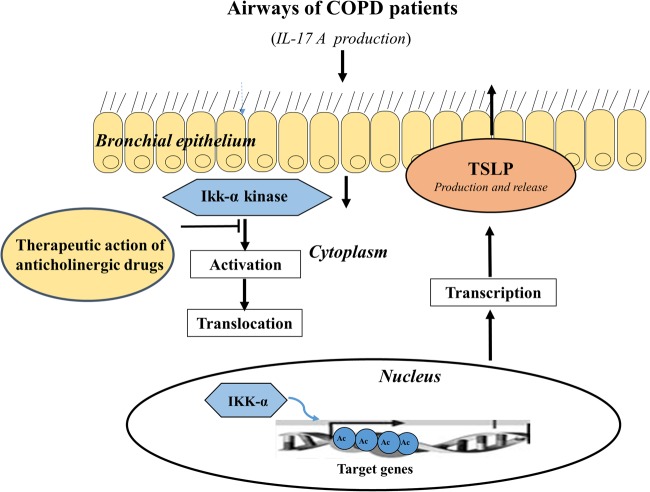
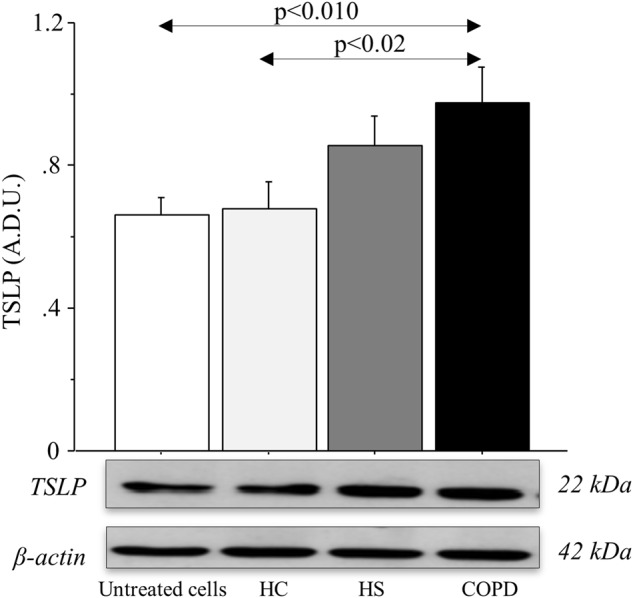
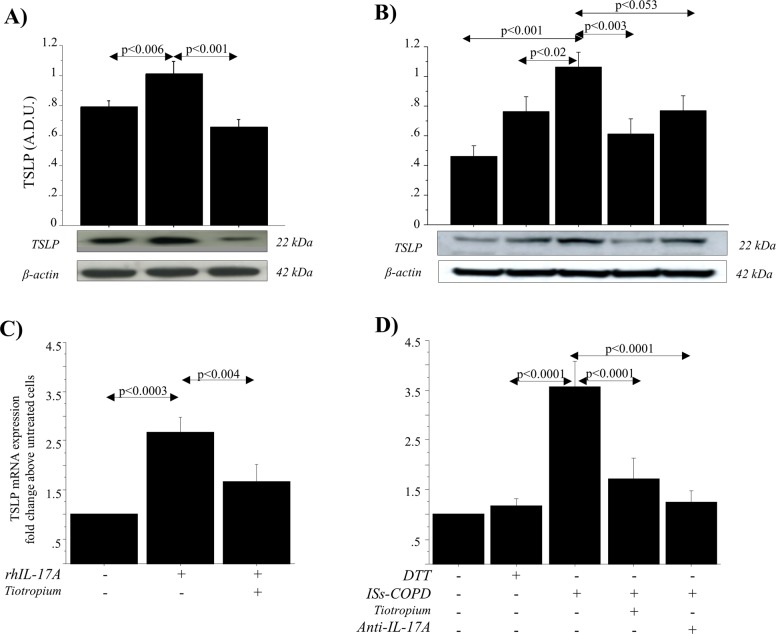
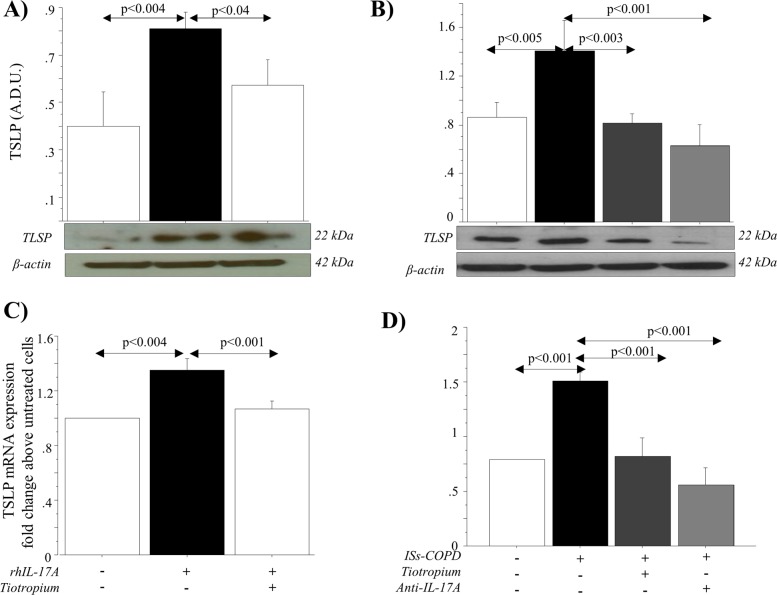
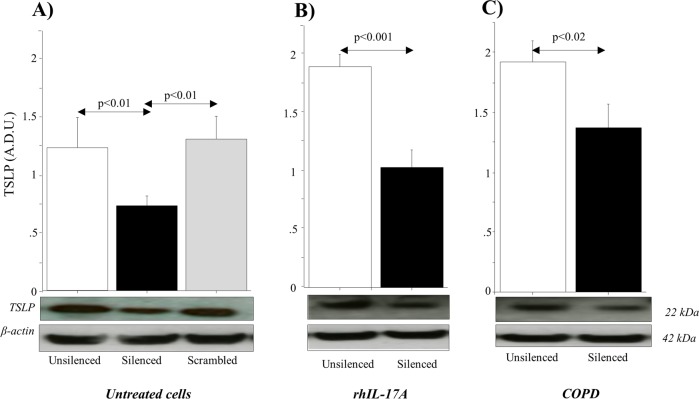
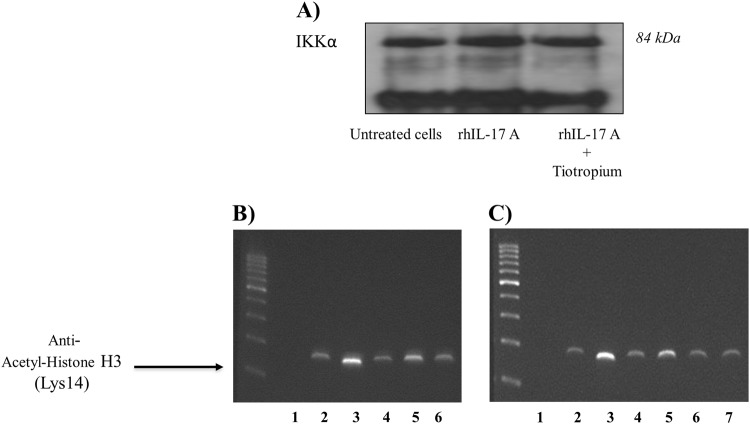
Thymic stromal lymphopoietin (TSLP) is a cytokine expressed in the epithelium, involved in the pathogenesis of chronic disease. IL-17A regulates airway inflammation, oxidative stress, and reduction of steroid sensitivity in chronic obstructive pulmonary disease (COPD). TSLP and IL-17A were measured in induced sputum supernatants (ISs) from healthy controls (HC), healthy smokers (HS), and COPD patients by enzyme-linked immunosorbent assay. Human bronchial epithelial cell line (16HBE) and normal bronchial epithelial cells were stimulated with rhIL-17A or ISs from COPD patients to evaluate TSLP protein and mRNA expression. The effects of the depletion of IL-17A in ISs, an anticholinergic drug, and the silencing of inhibitor kappa kinase alpha (IKKα) on TSLP production were evaluated in 16HBE cells. Coimmunoprecipitation of acetyl-histone H3(Lys14)/IKKα was evaluated in 16HBE cells treated with rhIL-17A and in the presence of the drug. TSLP and IL-17A levels were higher in ISs from COPD patients and HS compared with HC. TSLP protein and mRNA increased in 16HBE cells and in normal bronchial epithelial cells stimulated with ISs from COPD patients compared with ISs from HC and untreated cells. IKKα silencing reduced TSLP production in 16HBE cells stimulated with rhIL-17A and ISs from COPD patients. RhIL-17A increased the IKKα/acetyl-histone H3 immunoprecipitation in 16HBE cells. The anticholinergic drug affects TSLP protein and mRNA levels in bronchial epithelial cells treated with rhIL-17A or with ISs from COPD patients, and IKKα mediated acetyl-histone H3(Lys14). IL-17A/IKKα signaling induced the mechanism of chromatin remodeling associated with acetyl-histone H3(Lys14) and TSLP production in bronchial epithelial cells. Anticholinergic drugs might target TSLP derived from epithelial cells during the treatment of COPD.
胸腺基质淋巴细胞生成素(TSLP)是一种在上皮细胞中表达的细胞因子,参与慢性疾病的发病机制。白细胞介素 17A(IL-17A)调节气道炎症、氧化应激和慢性阻塞性肺疾病(COPD)中类固醇敏感性的降低。通过酶联免疫吸附试验(ELISA)测量健康对照组(HC)、健康吸烟者(HS)和 COPD 患者诱导痰上清液(IS)中的 TSLP 和 IL-17A。用 rhIL-17A 或 COPD 患者的 IS 刺激人支气管上皮细胞系(16HBE)和正常支气管上皮细胞,评估 TSLP 蛋白和 mRNA 表达。评估 COPD 患者 IS 中 IL-17A 耗竭、抗胆碱能药物和抑制κB 激酶α(IKKα)沉默对 TSLP 产生的影响,在 16HBE 细胞中进行。用 rhIL-17A 处理和存在药物时,评估 16HBE 细胞中乙酰组蛋白 H3(Lys14)/IKKα的共免疫沉淀。与 HC 和未处理细胞相比,COPD 患者和 HS 的 IS 中 TSLP 和 IL-17A 水平更高。与 HC 的 IS 和未处理细胞相比,COPD 患者的 IS 刺激 16HBE 细胞和正常支气管上皮细胞后,TSLP 蛋白和 mRNA 增加。IKKα 沉默减少了 rhIL-17A 和 COPD 患者 IS 刺激的 16HBE 细胞中 TSLP 的产生。rhIL-17A 增加了 16HBE 细胞中 IKKα/乙酰组蛋白 H3 的免疫沉淀。抗胆碱能药物影响 rhIL-17A 或 COPD 患者 IS 处理的支气管上皮细胞中 TSLP 蛋白和 mRNA 水平,IKKα 介导乙酰组蛋白 H3(Lys14)。IL-17A/IKKα 信号转导诱导了与支气管上皮细胞中乙酰组蛋白 H3(Lys14)和 TSLP 产生相关的染色质重塑机制。抗胆碱能药物在 COPD 治疗中可能针对来自上皮细胞的 TSLP。