Department of Chemical Engineering and Biotechnology, University of Applied Sciences Darmstadt, Haardtring 100, 64295 Darmstadt, Germany.
Preclinical Program, Hopp Children's Cancer Center at NCT Heidelberg (KiTZ), Germany; Clinical Cooperation Unit Pediatric Oncology, German Cancer Research Center (DKFZ), INF 280, D-69120 Heidelberg, Germany; Department of Pediatric Oncology, Hematology and Immunology, University Hospital Heidelberg, Heidelberg, Germany; German Cancer Research Consortium (DKTK), Germany.
Redox Biol. 2019 Jan;20:60-67. doi: 10.1016/j.redox.2018.09.013. Epub 2018 Sep 27.
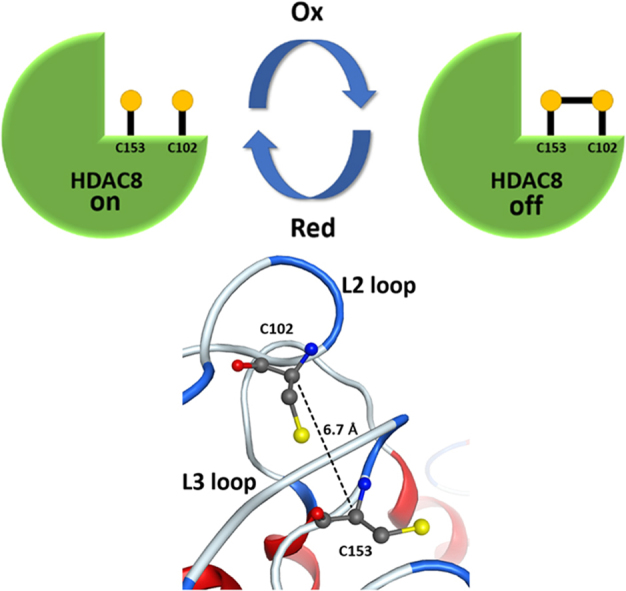
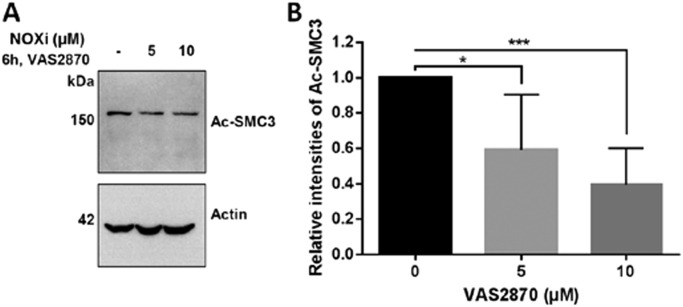
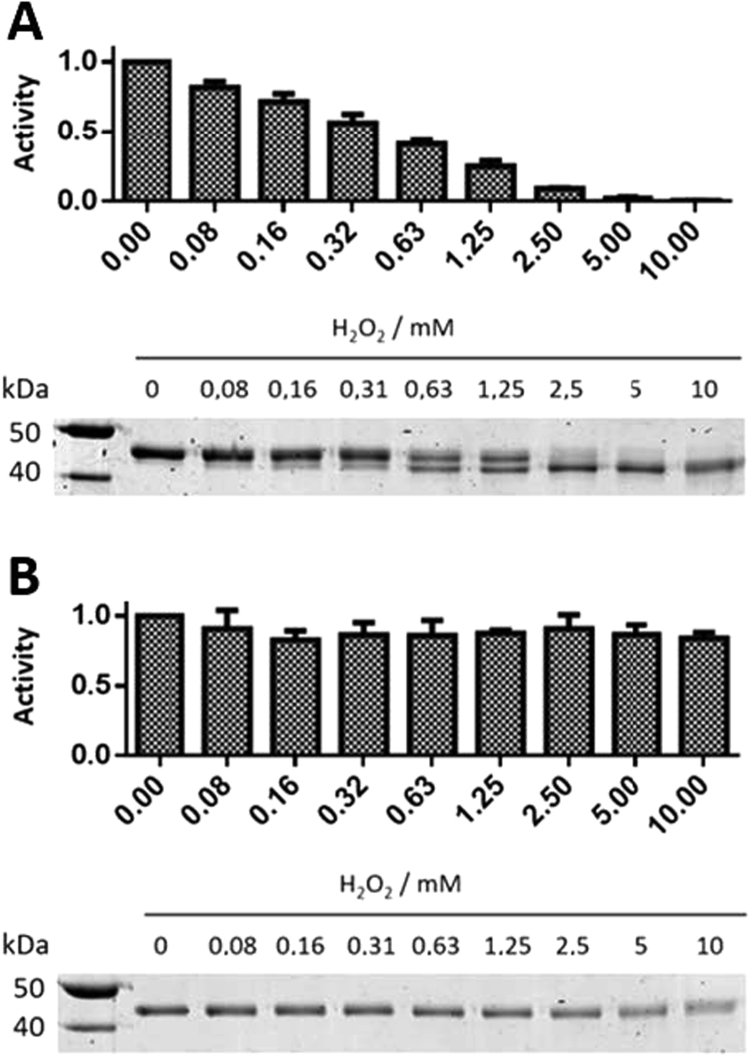
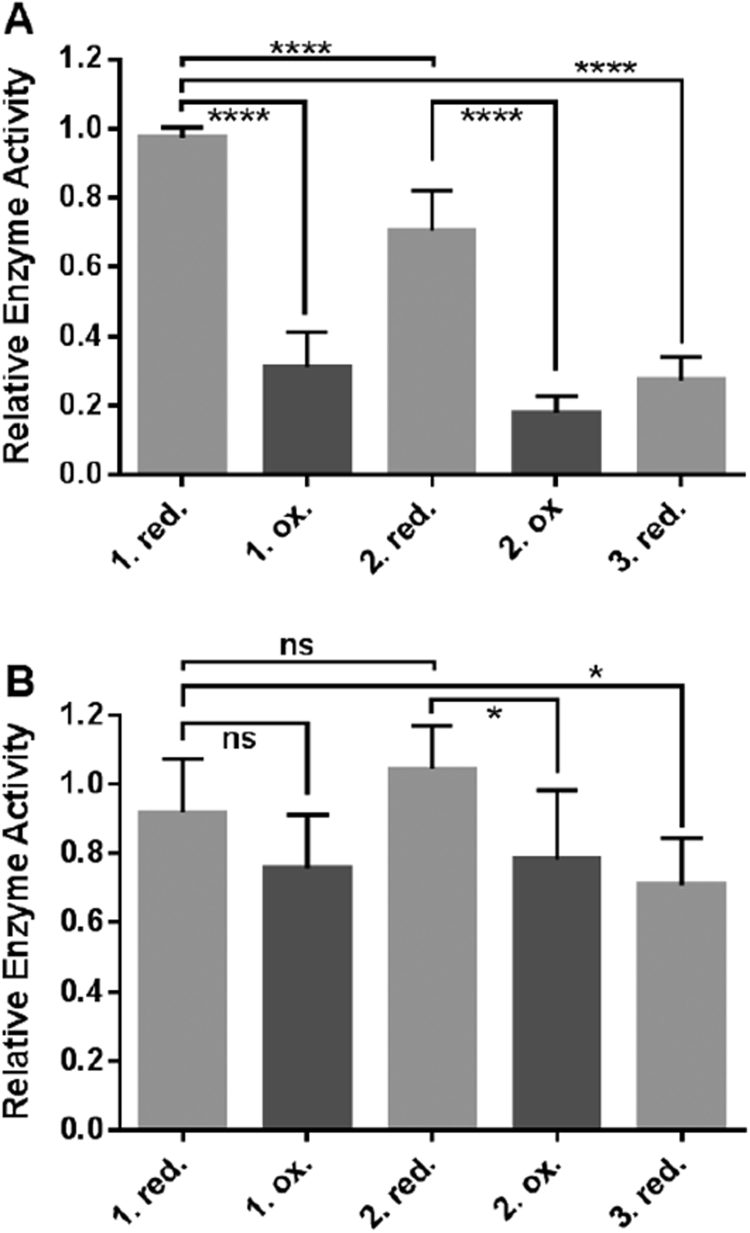
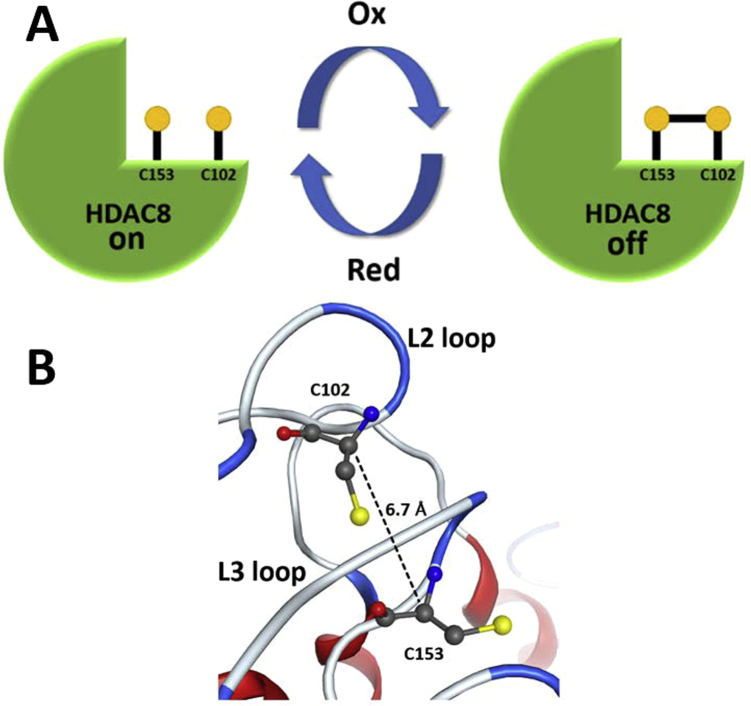
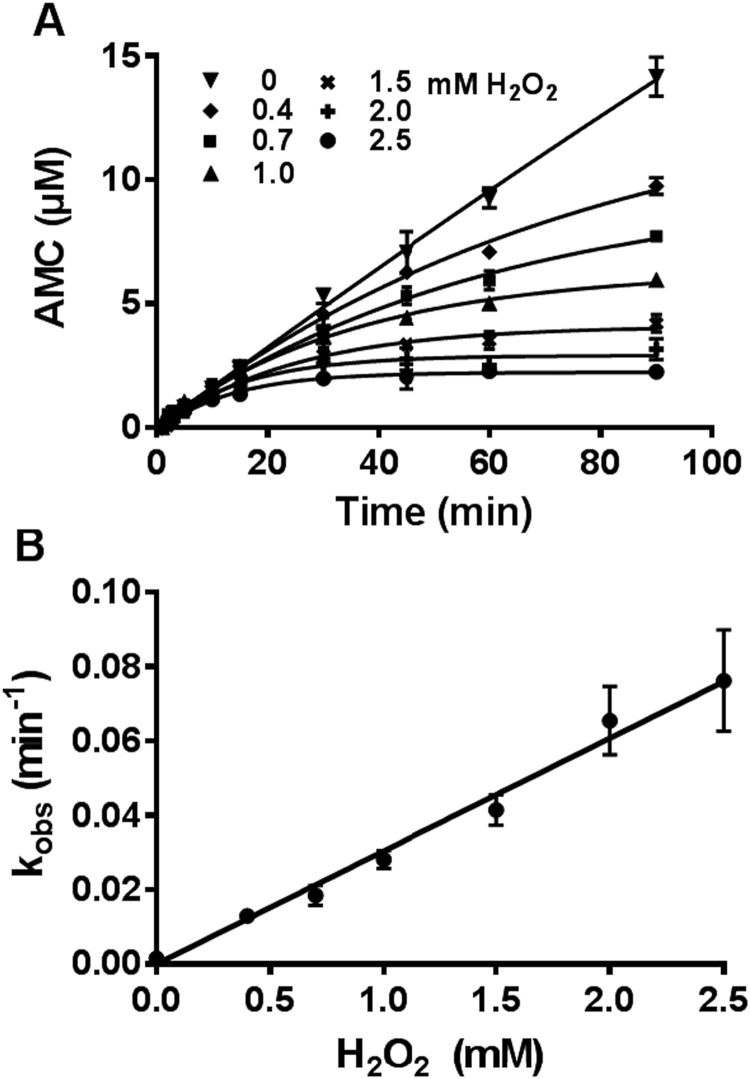
Enzymes from the histone deacetylase (HDAC) family are highly regulated by different mechanisms. However, only very limited knowledge exists about the regulation of HDAC8, an established target in multiple types of cancer. A previous dedicated study of HDAC class I enzymes identified no redox-sensitive cysteinyl thiol in HDAC8. This is in contrast to the observation that HDAC8 preparations show different enzyme activities depending on the addition of reducing agents. In the light of the importance of HDAC8 in tumorigenesis a possible regulation by redox signaling was investigated using biochemical and biophysical methods combined with site directed mutagenesis. The occurrence of a characteristic disulfide bond under oxidizing conditions is associated with a complete but reversible loss of enzyme activity. Cysteines 102 and 153 are the integral components of the redox-switch. A possible regulation of HDAC8 by redox signal transduction is suggested by the observed relationship between inhibition of reactive oxygen species generating NOX and concomitant increased HDAC8 activity in neuroblastoma tumor cells. The slow kinetics for direct oxidation of HDAC8 by hydrogen peroxide suggests that transmitters of oxidative equivalents are required to transfer the HO signal to HDAC8.
组蛋白去乙酰化酶(HDAC)家族的酶受到多种机制的高度调控。然而,对于 HDAC8 的调控,我们知之甚少,HDAC8 是多种癌症的既定靶点。之前对 HDAC 类 I 酶的专门研究并未发现 HDAC8 中存在氧化还原敏感的半胱氨酸巯基。这与以下观察结果形成对比,即 HDAC8 制剂的酶活性因还原剂的添加而有所不同。鉴于 HDAC8 在肿瘤发生中的重要性,我们使用生化和生物物理方法结合定点突变,研究了其可能的氧化还原信号调节。在氧化条件下发生特征性二硫键会导致完全但可逆转的酶失活。半胱氨酸 102 和 153 是氧化还原开关的组成部分。在神经母细胞瘤肿瘤细胞中,观察到活性氧生成 NOX 的抑制剂与同时增加的 HDAC8 活性之间存在关联,这表明 HDAC8 可能受到氧化还原信号转导的调节。过氧化氢对 HDAC8 的直接氧化的缓慢动力学表明,需要氧化等价物的传递者将 HO 信号传递给 HDAC8。