Tao Li, Zhang Li, Gao Rong, Jiang Feng, Cao Jianbo, Liu Huixiang
Department of Pharmacy and Translational Medicine Center, Zhangjiagang First People's Hospital, Suzhou, China.
Department of Neurosurgery, Zhangjiagang First People's Hospital, Suzhou, China.
Front Neurosci. 2018 Sep 20;12:657. doi: 10.3389/fnins.2018.00657. eCollection 2018.
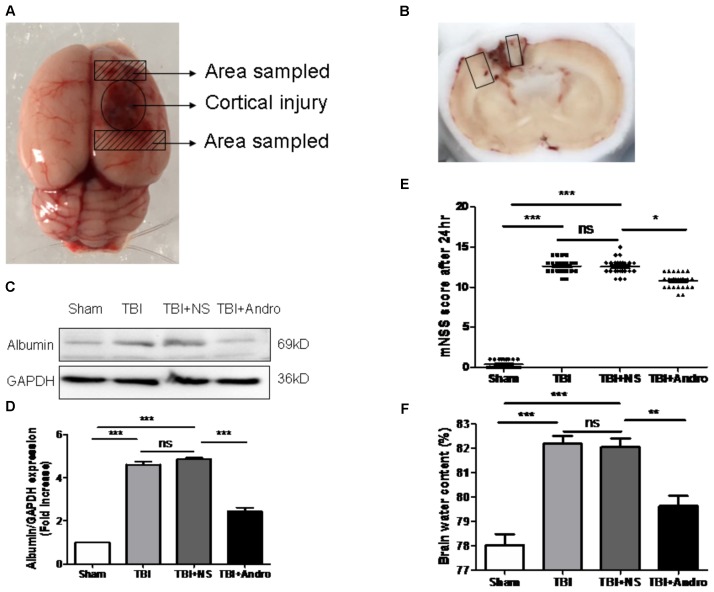
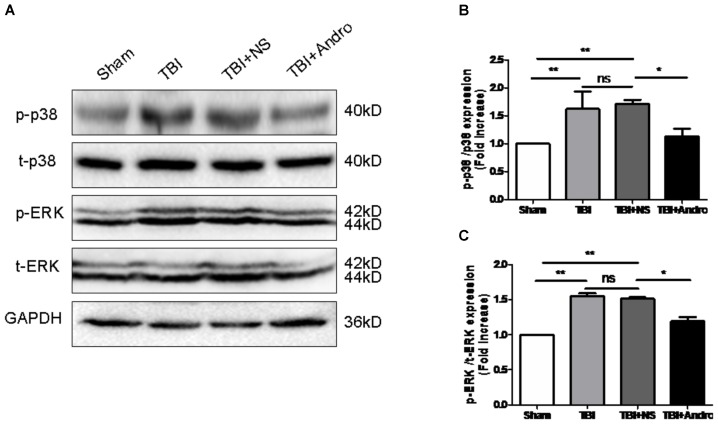
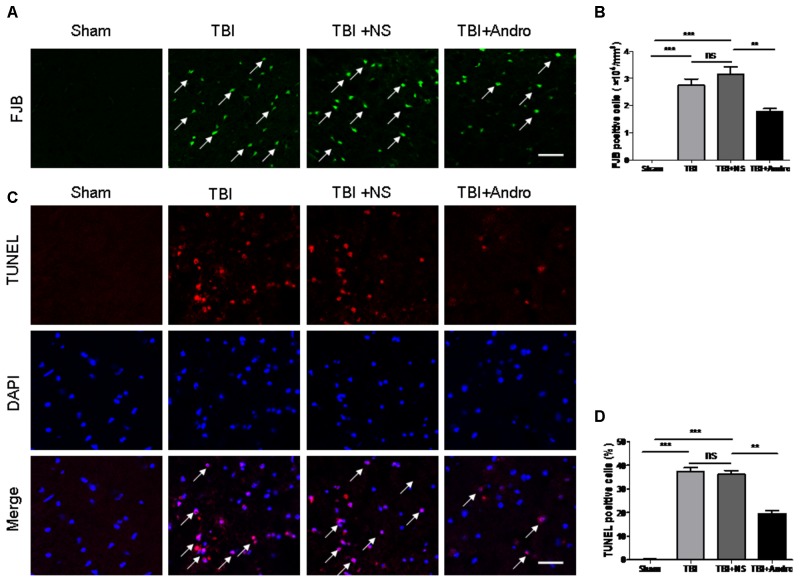
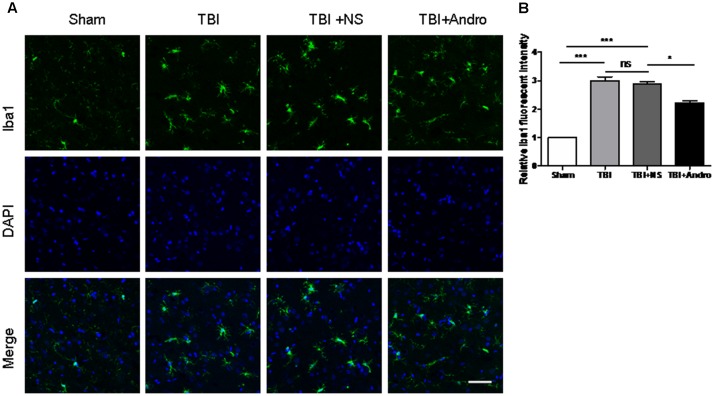
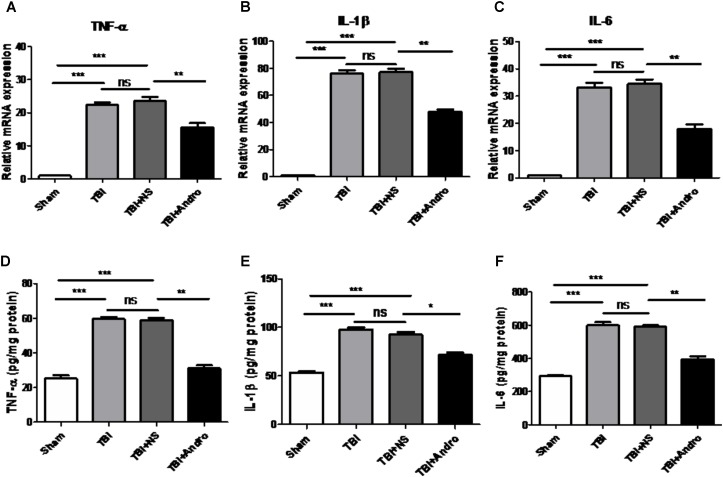
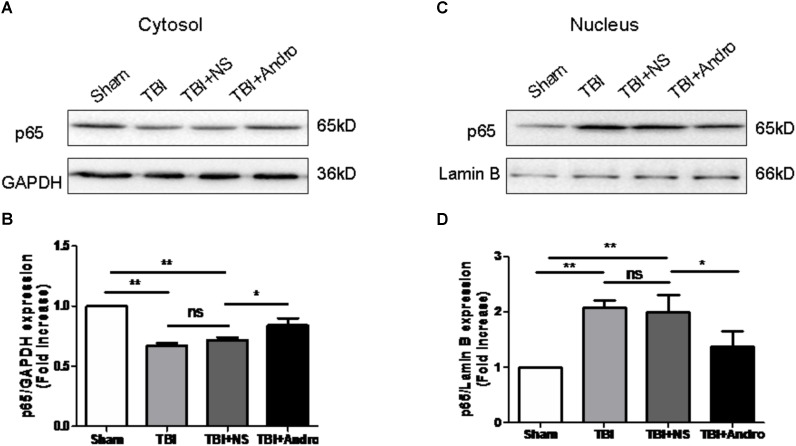
Neuroinflammation plays an important role in secondary injury after traumatic brain injury (TBI). Andrographolide (Andro), a diterpenoid lactone isolated from , has been demonstrated to exhibit anti-inflammatory activity in neurodegenerative disorders. This study therefore aimed to investigate the potential neuroprotective effects of Andro after TBI and explore the underlying mechanisms. In our study, we used a weight-dropped model to induce TBI in Sprague-Dawley rats, the neurological deficits were assessed using modified neurological severity scores, Fluoro-Jade B (FJB) and terminal deoxynucleotidyl transferase (TdT) dUTP Nick-End Labeling (TUNEL) staining were employed to examine neuronal degeneration and apoptosis after TBI, immunofluorescence was designed to investigate microglial activation. Quantitative Real-time PCR and ELISA were conducted to detect the expression levels of pro-inflammatory cytokines, Western blot was used to examine the expression level of proteins of relative signaling pathway. Our results showed that after Andro administration, the neurological deficit was attenuated, and the cerebral edema and apoptosis in brain tissues were also decreased following TBI. Both microglial activation and the expression of pro-inflammatory cytokines were significantly inhibited by Andro after TBI. Moreover, Andro inhibited NF-κB p65 subunit translocation and decreased the expression levels of phosphorylated extracellular signal regulated kinase (ERK) and p38 MAPK after TBI. Altogether, this study suggests that Andro could improve neurobehavioral function by inhibiting NF-κB and MAPK signaling pathway in TBI, which might provide a new approach for treating brain injury.
神经炎症在创伤性脑损伤(TBI)后的继发性损伤中起重要作用。穿心莲内酯(Andro)是一种从[植物名称未给出]中分离出的二萜内酯,已被证明在神经退行性疾病中具有抗炎活性。因此,本研究旨在探讨穿心莲内酯在创伤性脑损伤后的潜在神经保护作用,并探索其潜在机制。在我们的研究中,我们使用重物落体模型在Sprague-Dawley大鼠中诱导创伤性脑损伤,使用改良的神经严重程度评分评估神经功能缺损,采用Fluoro-Jade B(FJB)和末端脱氧核苷酸转移酶(TdT)dUTP缺口末端标记(TUNEL)染色检测创伤性脑损伤后神经元变性和凋亡,通过免疫荧光研究小胶质细胞活化。进行定量实时PCR和ELISA检测促炎细胞因子的表达水平,使用蛋白质印迹法检测相关信号通路蛋白的表达水平。我们的结果表明,给予穿心莲内酯后,神经功能缺损减轻,创伤性脑损伤后脑组织中的脑水肿和细胞凋亡也减少。穿心莲内酯在创伤性脑损伤后显著抑制小胶质细胞活化和促炎细胞因子的表达。此外,穿心莲内酯抑制核因子κB p65亚基易位,并降低创伤性脑损伤后磷酸化细胞外信号调节激酶(ERK)和p38丝裂原活化蛋白激酶(MAPK)的表达水平。总之,本研究表明穿心莲内酯可通过抑制创伤性脑损伤中的核因子κB和丝裂原活化蛋白激酶信号通路来改善神经行为功能,这可能为治疗脑损伤提供一种新方法。