Guo Bang J, Yang Zhen L, Zhang Long J
Department of Medical Imaging, Jinling Hospital, Nanjing Clinical School, Southern Medical University, Nanjing, China.
Department of Medical Imaging, Jinling Hospital, Medical School of Nanjing University, Nanjing, China.
Front Mol Neurosci. 2018 Sep 20;11:335. doi: 10.3389/fnmol.2018.00335. eCollection 2018.
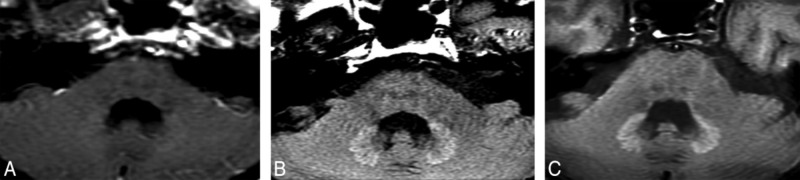
In the past 4 years, many publications described a concentration-dependent deposition of gadolinium in the brain both in adults and children, seen as high signal intensities in the globus pallidus and dentate nucleus on unenhanced T1-weighted images. Postmortem human or animal studies have validated gadolinium deposition in these T1-hyperintensity areas, raising new concerns on the safety of gadolinium-based contrast agents (GBCAs). Residual gadolinium is deposited not only in brain, but also in extracranial tissues such as liver, skin, and bone. This review summarizes the current evidence on gadolinium deposition in the human and animal bodies, evaluates the effects of different types of GBCAs on the gadolinium deposition, introduces the possible entrance or clearance mechanism of the gadolinium and potential side effects that may be related to the gadolinium deposition on human or animals, and puts forward some suggestions for further research.
在过去4年里,许多出版物描述了钆在成人和儿童大脑中的浓度依赖性沉积,在未增强的T1加权图像上,苍白球和齿状核呈现高信号强度。人体或动物尸检研究证实了钆在这些T1高信号区域的沉积,引发了对钆基造影剂(GBCA)安全性的新担忧。残留的钆不仅沉积在大脑中,还沉积在肝、皮肤和骨骼等颅外组织中。本综述总结了目前关于钆在人体和动物体内沉积的证据,评估了不同类型GBCA对钆沉积的影响,介绍了钆可能的进入或清除机制以及可能与钆沉积相关的对人类或动物的潜在副作用,并提出了一些进一步研究的建议。