Department of Cancer Biology and Pharmacology, University of Illinois College of Medicine, Peoria, Illinois, USA.
Department of Neurosurgery, University of Illinois College of Medicine, Peoria, Illinois, USA.
Stroke Vasc Neurol. 2018 Mar 9;3(3):153-159. doi: 10.1136/svn-2018-000142. eCollection 2018 Sep.
Recent reports from our laboratory demonstrated the post-ischaemic expression profile of various matrix metalloproteinases (MMPs) in rats and the detrimental role of MMP-12 in post-stroke brain damage. We hypothesise that the post-stroke dysregulation of MMPs is similar across species and that genetic deletion of MMP-12 would not affect the post-stroke expression of other MMPs. We tested our hypothesis by determining the pre-ischaemic and post-ischaemic expression profile of MMPs in wild-type and MMP-12 knockout mice.
Focal cerebral ischaemia was induced in wild-type and MMP-12 knockout mice by middle cerebral artery occlusion procedure by insertion of a monofilament suture. One hour after ischaemia, reperfusion was initiated by removing the monofilament. One day after reperfusion, ischaemic brain tissues from various groups of mice were collected, and total RNA was isolated and subjected to cDNA synthesis followed by PCR analysis.
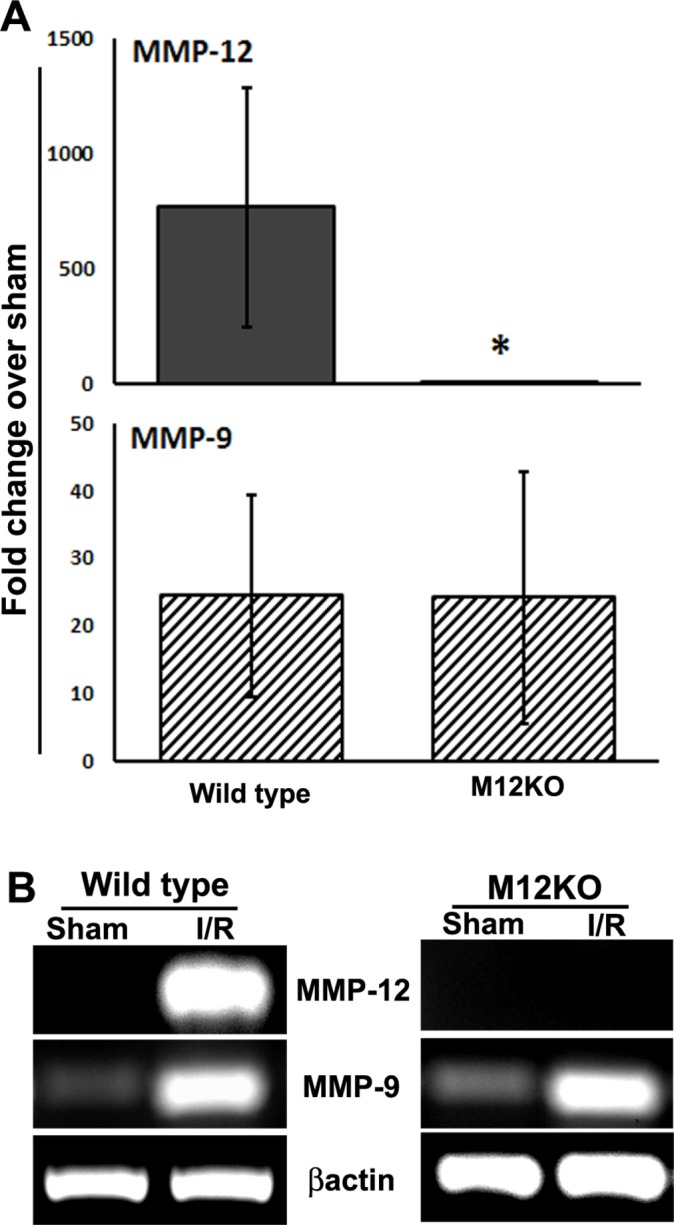
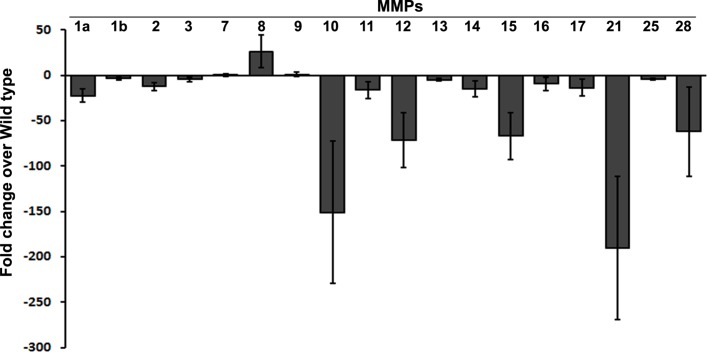
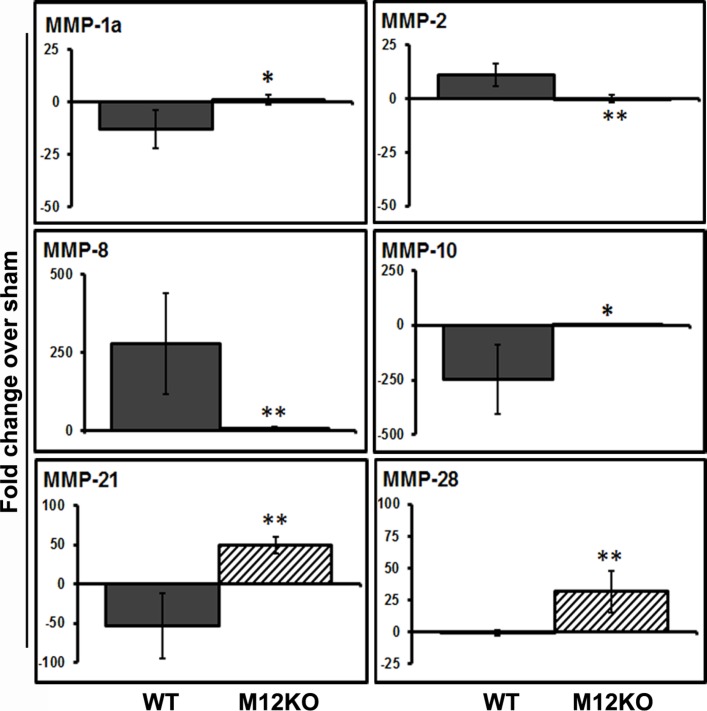
Although the post-stroke expression profile of MMPs in the ischaemic brain of mice is different from rats, there is a clear species similarity in the expression of MMP-12, which was found to be predominantly upregulated in both species. Further, the post-stroke induction or inhibition of various MMPs in MMP-12 knockout mice is different from their respective expression profile in wild-type mice. Moreover, the brain mRNA expression profile of various MMPs in MMP-12 knockout mice under normal conditions is also different to their expression in wild-type mice.
In the ischaemic brain, MMP-12 upregulates several fold higher than any other MMP. Mice derived with the genetic deletion of MMP-12 are constitutive and have altered MMP expression profile both under normal and ischaemic conditions.
本实验室近期的研究报告表明,基质金属蛋白酶(MMPs)在大鼠缺血后的表达谱存在差异,MMP-12 在卒中后脑损伤中发挥有害作用。我们假设,卒中后 MMPs 的失调在不同物种中是相似的,并且 MMP-12 的基因缺失不会影响卒中后其他 MMPs 的表达。我们通过检测野生型和 MMP-12 敲除小鼠缺血前和缺血后的 MMPs 表达谱来验证我们的假设。
通过插入单丝缝线的方法,在野生型和 MMP-12 敲除小鼠中诱导局灶性脑缺血。缺血 1 小时后,通过移除单丝缝线来启动再灌注。再灌注 1 天后,从各组小鼠的缺血脑组织中收集总 RNA,并进行 cDNA 合成和 PCR 分析。
尽管小鼠缺血脑内 MMPs 的卒中后表达谱与大鼠不同,但 MMP-12 的表达存在明显的物种相似性,其在两种物种中均被明显上调。此外,MMP-12 敲除小鼠卒中后各种 MMP 的诱导或抑制与其在野生型小鼠中的表达谱不同。此外,MMP-12 敲除小鼠在正常条件下的各种 MMP 的脑 mRNA 表达谱也与其在野生型小鼠中的表达谱不同。
在缺血脑内,MMP-12 的上调幅度比任何其他 MMP 都高几个数量级。源自 MMP-12 基因缺失的小鼠在正常和缺血条件下均具有组成型和改变的 MMP 表达谱。