Pillar of Engineering Product Development (EPD), Singapore University of Technology and Design (SUTD), Singapore, 487372, Singapore.
Department of Biomedical Engineering, National University of Singapore, Singapore, 117583, Singapore.
Sci Rep. 2018 Oct 8;8(1):14974. doi: 10.1038/s41598-018-33226-z.
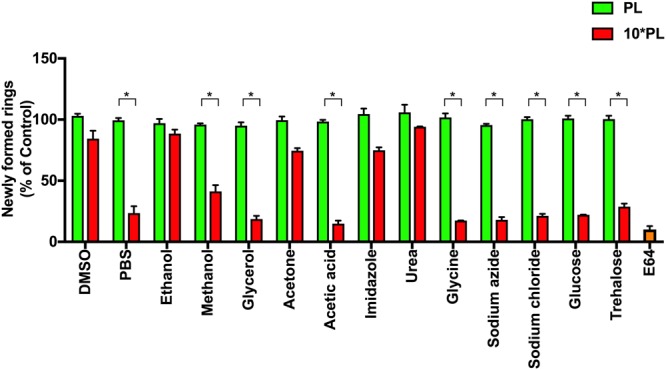
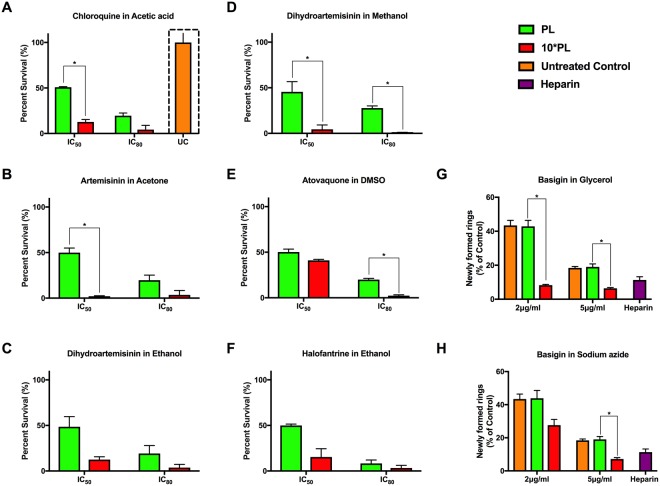
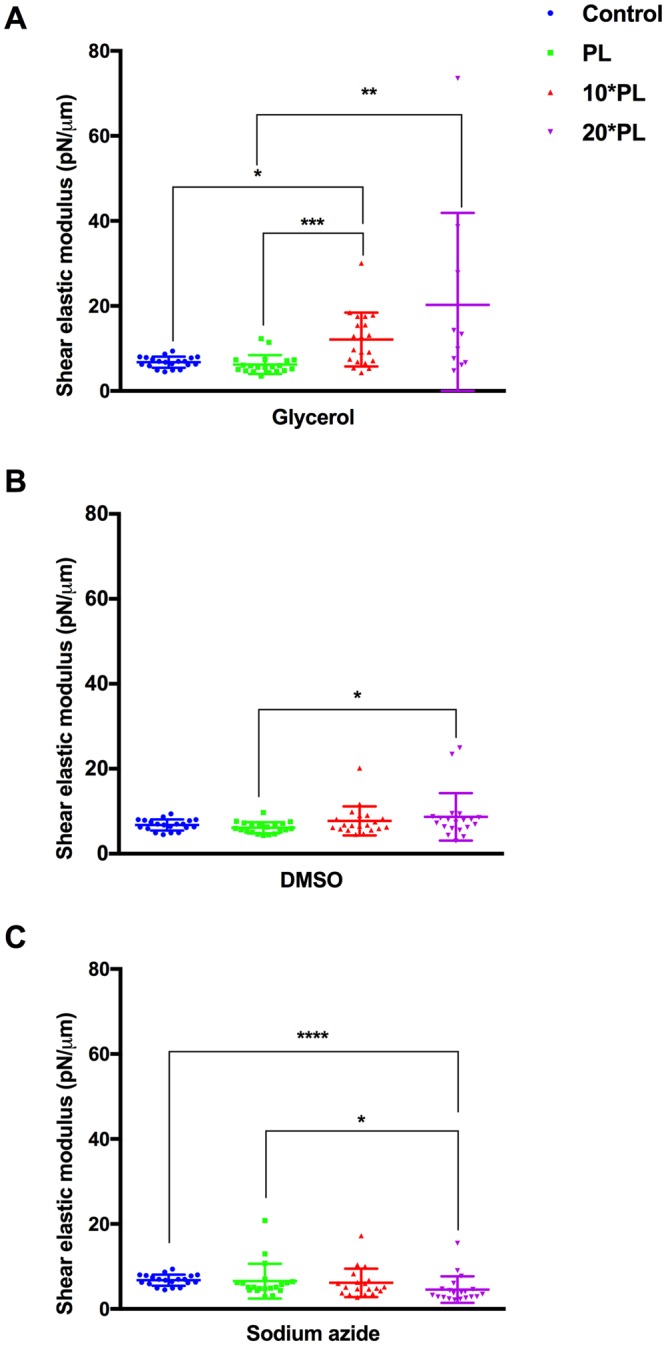
Antimalarial drug discovery expands on targeted and phenotype-based screening of potential inhibitory molecules to ascertain overall efficacy, phenotypic characteristics and toxicity, prior to exploring pharmacological optimizations. Candidate inhibitors may have varying chemical properties, thereby requiring specific reconstitution conditions to ensure solubility, stability or bioavailability. Hence, a variety of solvents, buffers, detergents and stabilizers become part of antimalarial efficacy assays, all of which, above certain threshold could interfere with parasite viability, invasion or red blood cell properties leading to misinterpretation of the results. Despite their routine use across malaria research laboratories, there is no documentation on non-toxic range for common constituents including DMSO, glycerol, ethanol and methanol. We herein constructed a compatibility reference guide for 14 such chemicals and estimated their Permissible Limit against P. falciparum asexual stages at which viability and replication of parasites are not compromised. We also demonstrate that at the estimated Permissible Limit, red blood cells remain healthy and viable for infection by merozoites. Taken together, this dataset provides a valuable reference tool for the acceptable concentration range for common chemicals during in vitro antimalarial tests.
抗疟药物的发现扩展到针对潜在抑制分子的靶向和表型筛选,以确定整体疗效、表型特征和毒性,然后再探索药理学优化。候选抑制剂可能具有不同的化学性质,因此需要特定的复溶条件以确保溶解度、稳定性或生物利用度。因此,各种溶剂、缓冲液、清洁剂和稳定剂成为抗疟疗效测定的一部分,所有这些物质在超过一定阈值时都可能干扰寄生虫的生存能力、入侵能力或红细胞特性,从而导致对结果的误解。尽管这些物质在疟疾研究实验室中经常使用,但对于包括 DMSO、甘油、乙醇和甲醇在内的常见成分的无毒范围,尚无文献记载。我们在此构建了 14 种此类化学物质的兼容性参考指南,并估计了它们对无鞭毛体寄生虫无性阶段的允许极限,在此极限下,寄生虫的生存能力和复制能力不会受到损害。我们还证明,在估计的允许极限下,红细胞保持健康和活力,可被裂殖子感染。总之,该数据集为体外抗疟试验中常见化学物质的可接受浓度范围提供了有价值的参考工具。