Gu Qihui, Wu Qingping, Zhang Jumei, Guo Weipeng, Ding Yu, Wang Juan, Wu Huiqing, Sun Ming, Hou Luanfeng, Wei Xianhu, Zhang Youxiong
State Key Laboratory of Applied Microbiology Southern China, Guangdong Provincial Key Laboratory of Microbial Culture Collection and Application, Guangdong Open Laboratory of Applied Microbiology, Guangdong Institute of Microbiology, Guangzhou, China.
Front Microbiol. 2018 Sep 21;9:2162. doi: 10.3389/fmicb.2018.02162. eCollection 2018.
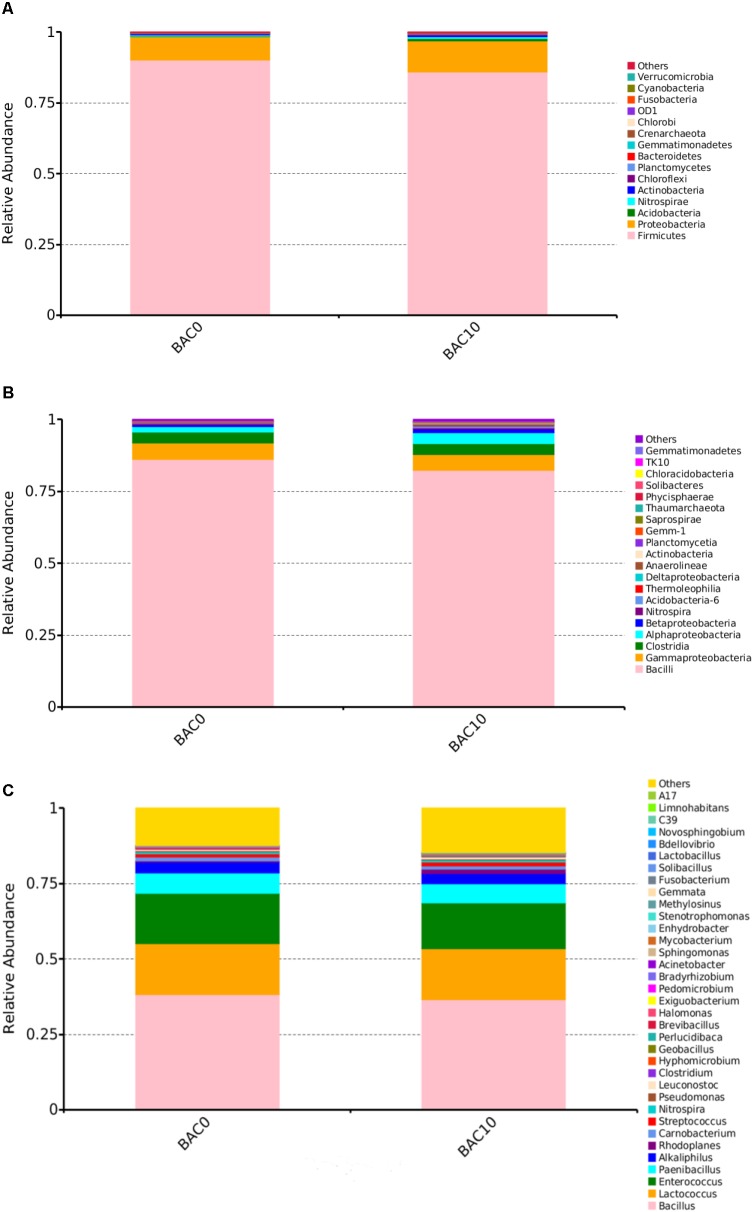
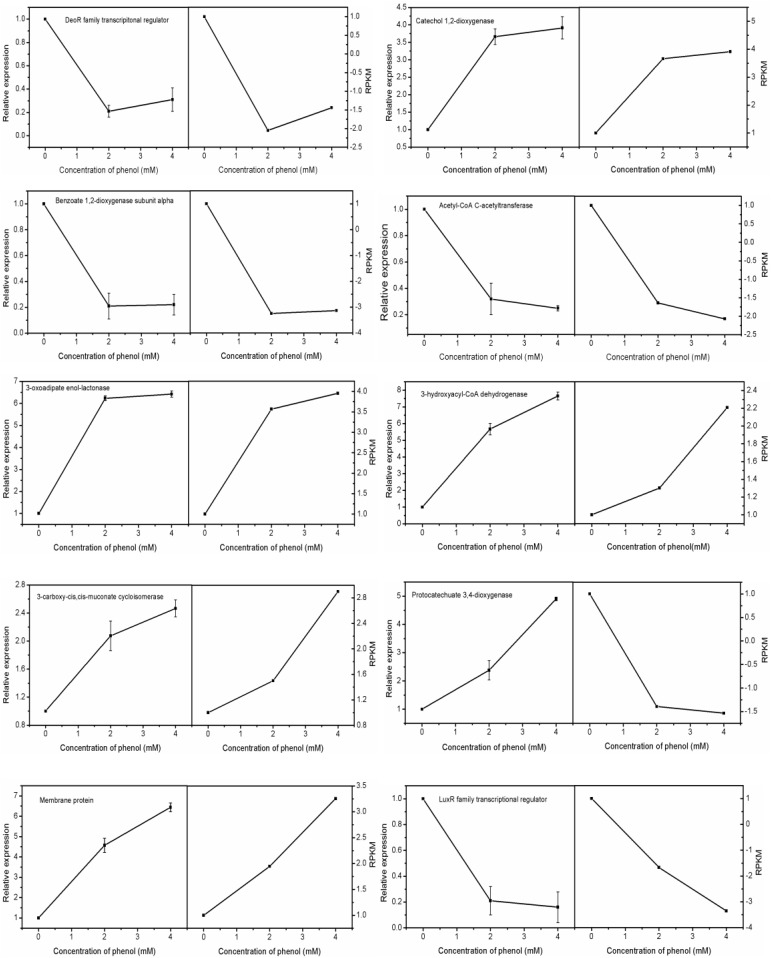
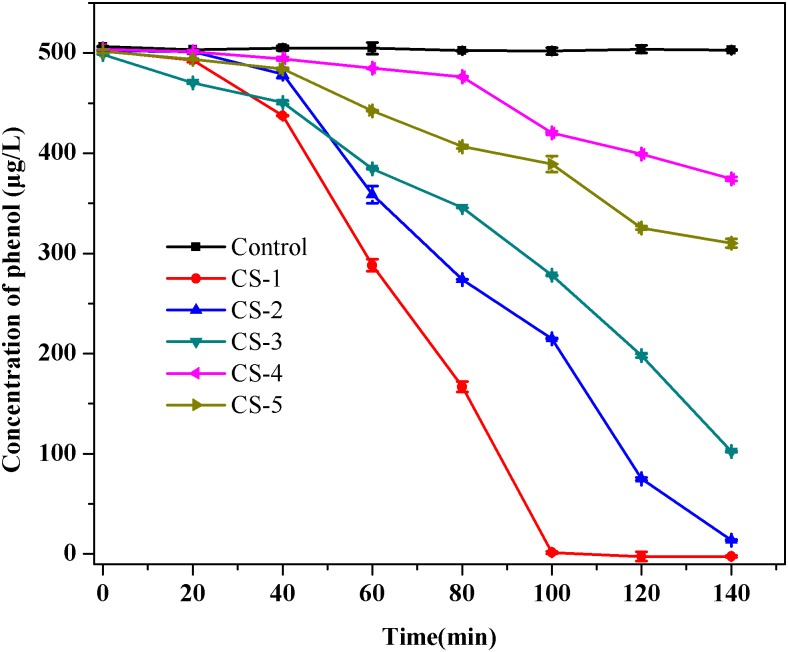
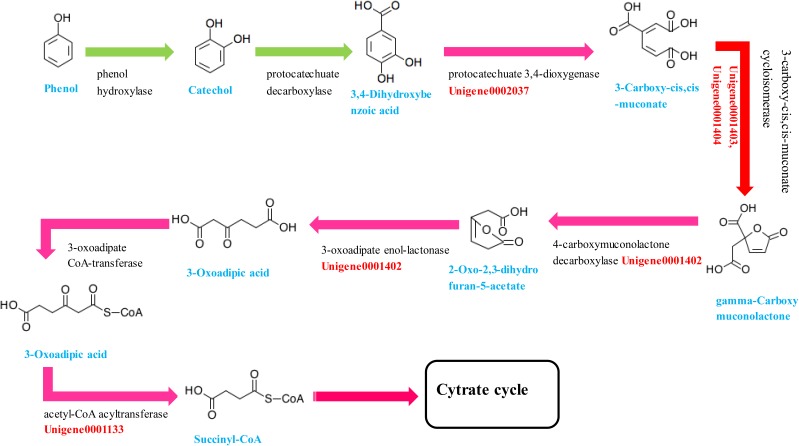
Phenol is a typical organic contaminant in the environment. To date, the biodegradation of phenol by microorganisms remains the preferred method for its removal and remediation, but data on phenol removal by drinking water biofilters are lacking. In this study, we used high-throughput sequencing to investigate the microbial community structure in a carbon-sand biofilter. The results indicated that the predominant bacterial group was , followed by , , and . In addition, a strain was capable of degrading phenol at low concentrations of 500 μg/L within 100 min was isolated and identified as sp. CS-1. Transcriptome analysis results showed that sp. CS-1 was able to degrade phenol via both the catechol and protocatechuate branch of the β-ketoadipate pathway. Furthermore, some novel candidate biomarkers (copper oxidase, copper chaperone, and MarR/DeoR/TetR family transcriptional regulators) were successfully identified to be potentially involved in phenol biodegradation. This study indicates that carbon-sand filters have the potential for remediation of phenol. The application of native microorganisms to drinking water treatment system is an adaptive strategy in oligotrophic water environments.
苯酚是环境中一种典型的有机污染物。迄今为止,微生物对苯酚的生物降解仍然是其去除和修复的首选方法,但关于饮用水生物滤池去除苯酚的数据却很缺乏。在本研究中,我们使用高通量测序技术研究了碳砂生物滤池中的微生物群落结构。结果表明,主要细菌类群为 ,其次是 、 、和 。此外,分离出一株能够在100分钟内降解低浓度500μg/L苯酚的菌株,并鉴定为 sp. CS-1。转录组分析结果表明, sp. CS-1能够通过β-酮己二酸途径的儿茶酚和原儿茶酸分支降解苯酚。此外,一些新的候选生物标志物(铜氧化酶、铜伴侣蛋白以及MarR/DeoR/TetR家族转录调节因子)被成功鉴定,它们可能参与苯酚的生物降解。本研究表明,碳砂滤池具有修复苯酚污染水体的潜力。将本地微生物应用于饮用水处理系统是贫营养水环境中的一种适应性策略。