Mishra Sandhya, Lin Ziqiu, Pang Shimei, Zhang Wenping, Bhatt Pankaj, Chen Shaohua
State Key Laboratory for Conservation and Utilization of Subtropical Agro-Bioresources, Guangdong Province Key Laboratory of Microbial Signals and Disease Control, Integrative Microbiology Research Centre, South China Agricultural University, Guangzhou, China.
Guangdong Laboratory for Lingnan Modern Agriculture, Guangzhou, China.
Front Bioeng Biotechnol. 2021 Feb 10;9:632059. doi: 10.3389/fbioe.2021.632059. eCollection 2021.
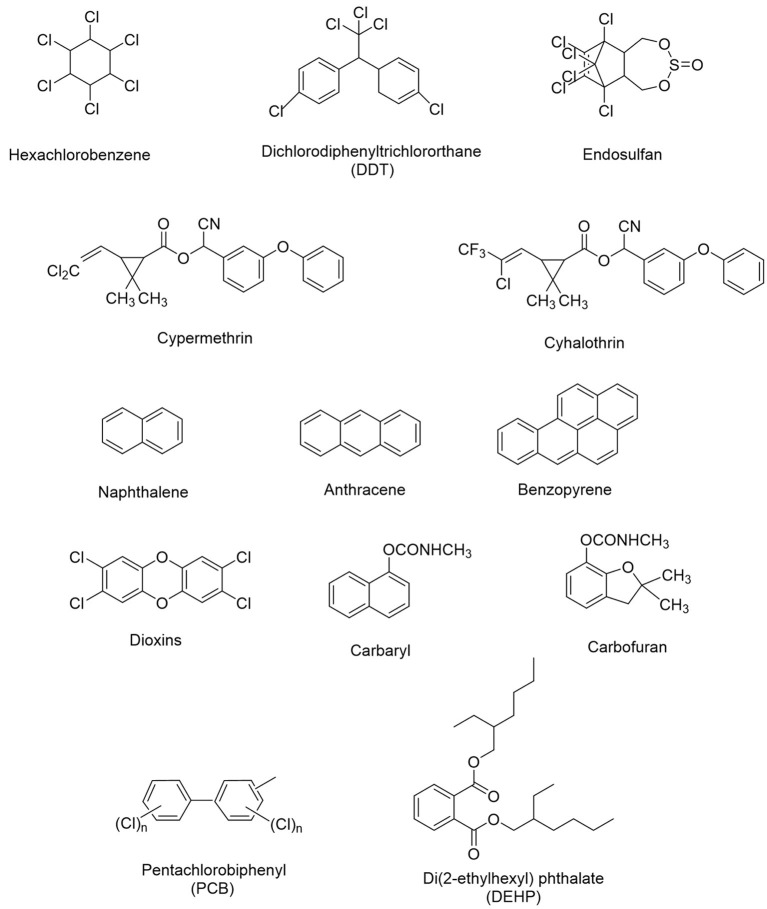
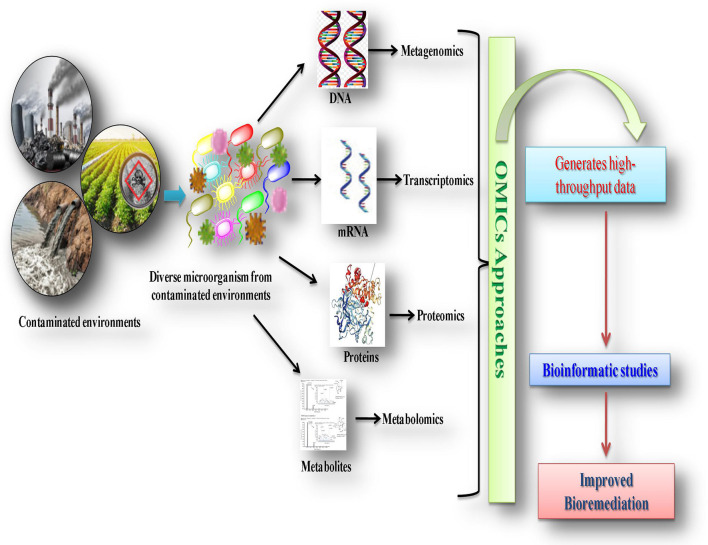
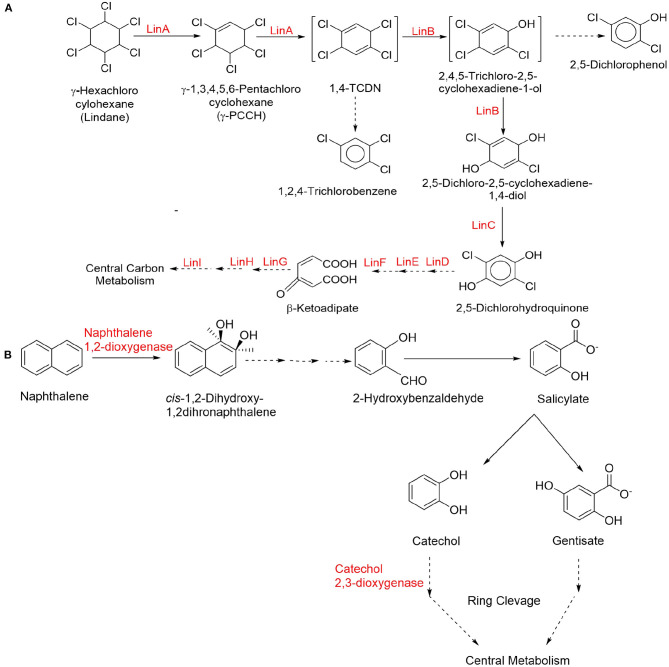
Global environmental contamination with a complex mixture of xenobiotics has become a major environmental issue worldwide. Many xenobiotic compounds severely impact the environment due to their high toxicity, prolonged persistence, and limited biodegradability. Microbial-assisted degradation of xenobiotic compounds is considered to be the most effective and beneficial approach. Microorganisms have remarkable catabolic potential, with genes, enzymes, and degradation pathways implicated in the process of biodegradation. A number of microbes, including , and , have been isolated and characterized, and have shown exceptional biodegradation potential for a variety of xenobiotic contaminants from soil/water environments. Microorganisms potentially utilize xenobiotic contaminants as carbon or nitrogen sources to sustain their growth and metabolic activities. Diverse microbial populations survive in harsh contaminated environments, exhibiting a significant biodegradation potential to degrade and transform pollutants. However, the study of such microbial populations requires a more advanced and multifaceted approach. Currently, multiple advanced approaches, including metagenomics, proteomics, transcriptomics, and metabolomics, are successfully employed for the characterization of pollutant-degrading microorganisms, their metabolic machinery, novel proteins, and catabolic genes involved in the degradation process. These technologies are highly sophisticated, and efficient for obtaining information about the genetic diversity and community structures of microorganisms. Advanced molecular technologies used for the characterization of complex microbial communities give an in-depth understanding of their structural and functional aspects, and help to resolve issues related to the biodegradation potential of microorganisms. This review article discusses the biodegradation potential of microorganisms and provides insights into recent advances and omics approaches employed for the specific characterization of xenobiotic-degrading microorganisms from contaminated environments.
全球受到复杂的外源性生物混合污染物的环境污染已成为全球主要的环境问题。许多外源性生物化合物因其高毒性、长期持久性和有限的生物降解性而对环境产生严重影响。微生物辅助降解外源性生物化合物被认为是最有效和有益的方法。微生物具有显著的分解代谢潜力,在生物降解过程中涉及基因、酶和降解途径。包括[具体微生物名称未给出]在内的许多微生物已被分离和鉴定,并已显示出对来自土壤/水环境的多种外源性生物污染物具有特殊的生物降解潜力。微生物有可能利用外源性生物污染物作为碳源或氮源来维持其生长和代谢活动。不同的微生物种群在恶劣的污染环境中生存,表现出显著的生物降解潜力以降解和转化污染物。然而,对这类微生物种群的研究需要更先进和多方面的方法。目前,包括宏基因组学、蛋白质组学、转录组学和代谢组学在内的多种先进方法已成功用于表征降解污染物的微生物、它们的代谢机制、新蛋白质以及参与降解过程的分解代谢基因。这些技术非常复杂,并且在获取有关微生物遗传多样性和群落结构的信息方面很有效。用于表征复杂微生物群落的先进分子技术能深入了解其结构和功能方面,并有助于解决与微生物生物降解潜力相关的问题。这篇综述文章讨论了微生物的生物降解潜力,并深入探讨了用于从污染环境中特异性表征外源性生物降解微生物的最新进展和组学方法。