Department of Pediatrics and Adolescent Medicine, Medical University of Vienna, Vienna, Austria.
Department of Biomedical Imaging and Image-guided Therapy, Medical University of Vienna, Vienna, Austria.
Brain Behav. 2018 Nov;8(11):e01072. doi: 10.1002/brb3.1072. Epub 2018 Oct 8.
The relationship between language abilities and language lateralization in the developing brain is important for our understanding of the neural architecture of language development.
We investigated 35 right-handed children and adolescents aged 7-16 years with a functional magnetic resonance imaging language paradigm and a comprehensive language and verbal memory examination.
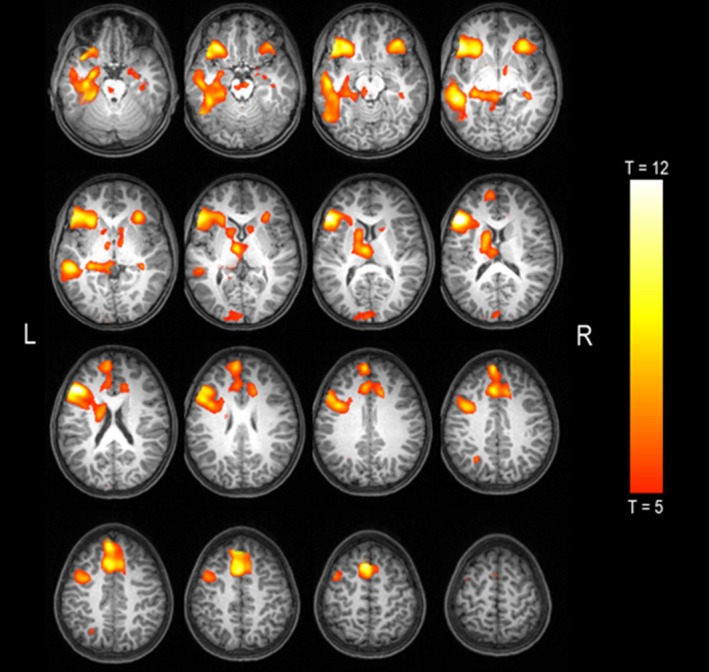
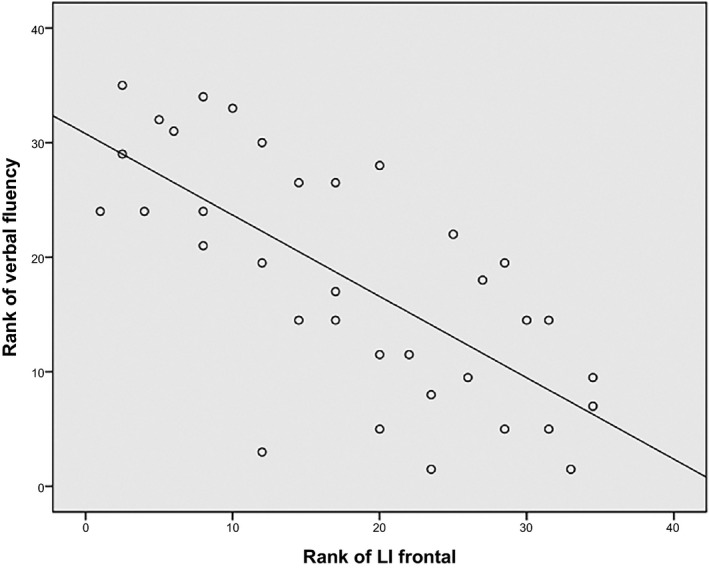
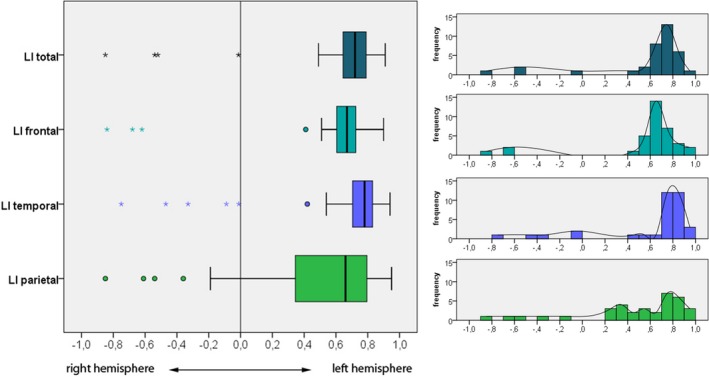
We found that less lateralized language was significantly correlated with better language performance across areas of the brain and across different language tasks. Less lateralized language in the overall brain was associated with better in-scanner task accuracy on a semantic language decision task and out-of-scanner vocabulary and verbal fluency. Specifically, less lateralized frontal lobe language dominance was associated with better in-scanner task accuracy and out-of-scanner verbal fluency. Furthermore, less lateralized parietal language was associated with better out-of-scanner verbal memory across learning, short- and long-delay trials. In contrast, we did not find any relationship between temporal lobe language laterality and verbal performance.
This study suggests that semantic language performance is better with some involvement of the nondominant hemisphere.
发育中的大脑的语言能力与语言侧化之间的关系对于我们理解语言发展的神经结构非常重要。
我们使用功能磁共振成像语言范式和全面的语言和言语记忆测试,对 35 名右利手儿童和青少年(年龄 7-16 岁)进行了研究。
我们发现,语言的侧化程度越低,与大脑各个区域和不同语言任务的语言表现越好呈显著相关。大脑整体语言的侧化程度越低,在语义语言决策任务的扫描内任务准确性以及扫描外词汇和言语流畅性方面的表现越好。具体而言,额叶语言优势的侧化程度越低,与扫描内任务准确性和扫描外言语流畅性的关系越好。此外,顶叶语言的侧化程度越低,与学习、短延迟和长延迟试验中的扫描外言语记忆的关系越好。相比之下,我们没有发现颞叶语言侧化与言语表现之间存在任何关系。
这项研究表明,在一定程度上涉及非优势半球时,语义语言表现更好。