Department of Physiology and Biophysics, University of Washington, Seattle, United States.
Elife. 2018 Oct 9;7:e38281. doi: 10.7554/eLife.38281.
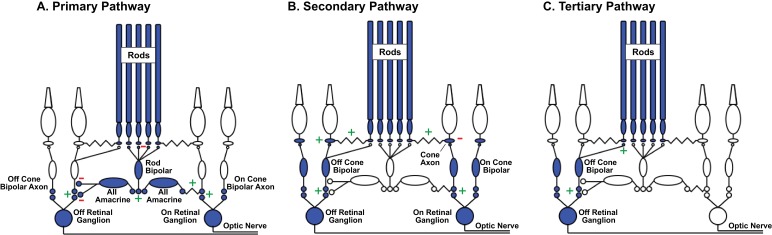
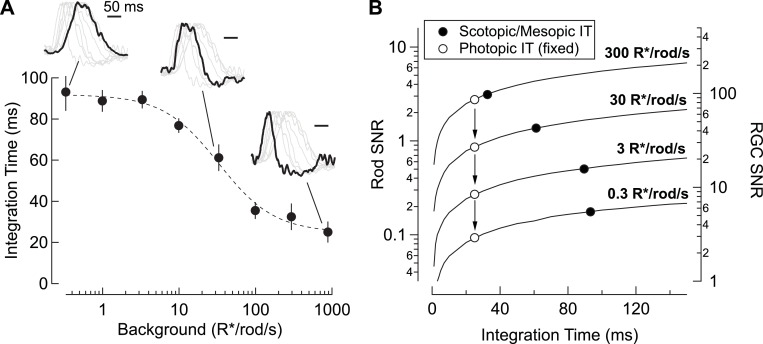
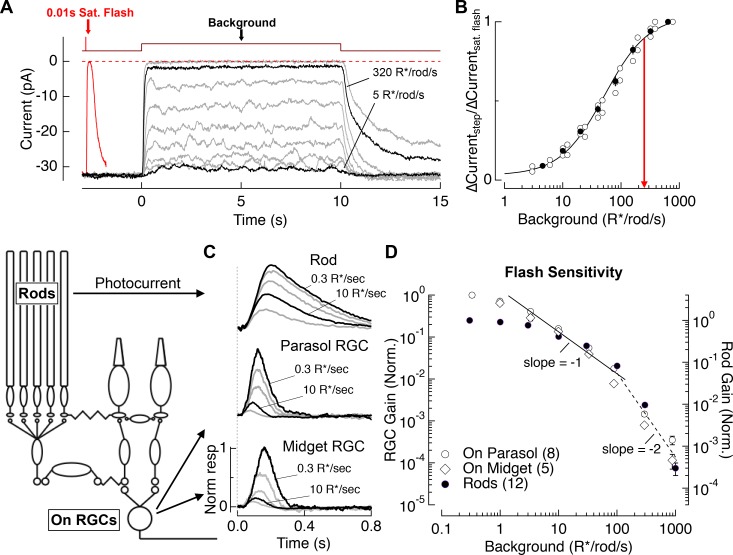
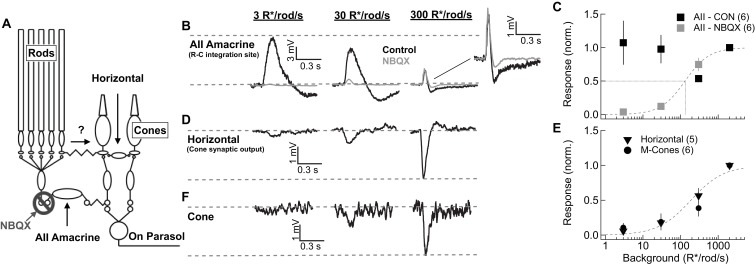
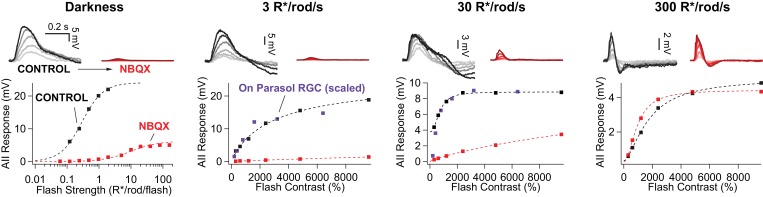
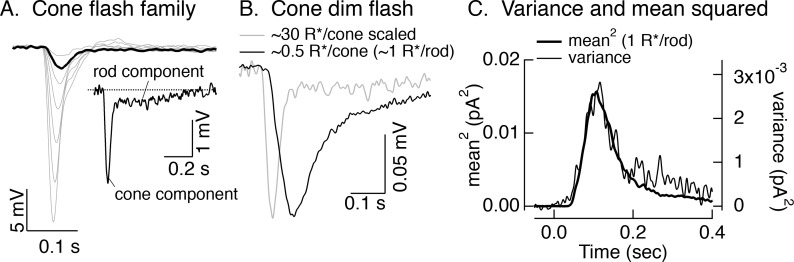
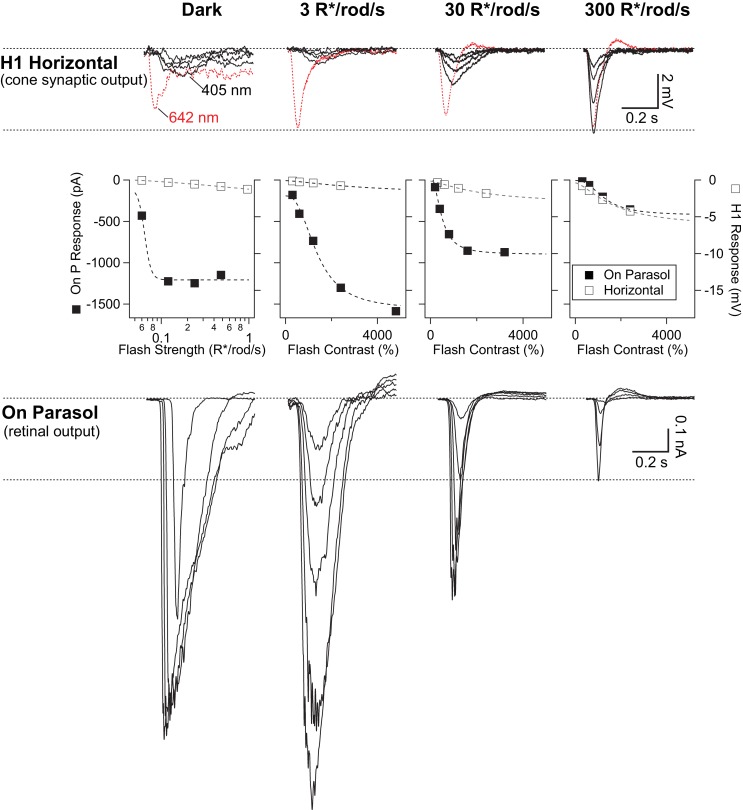
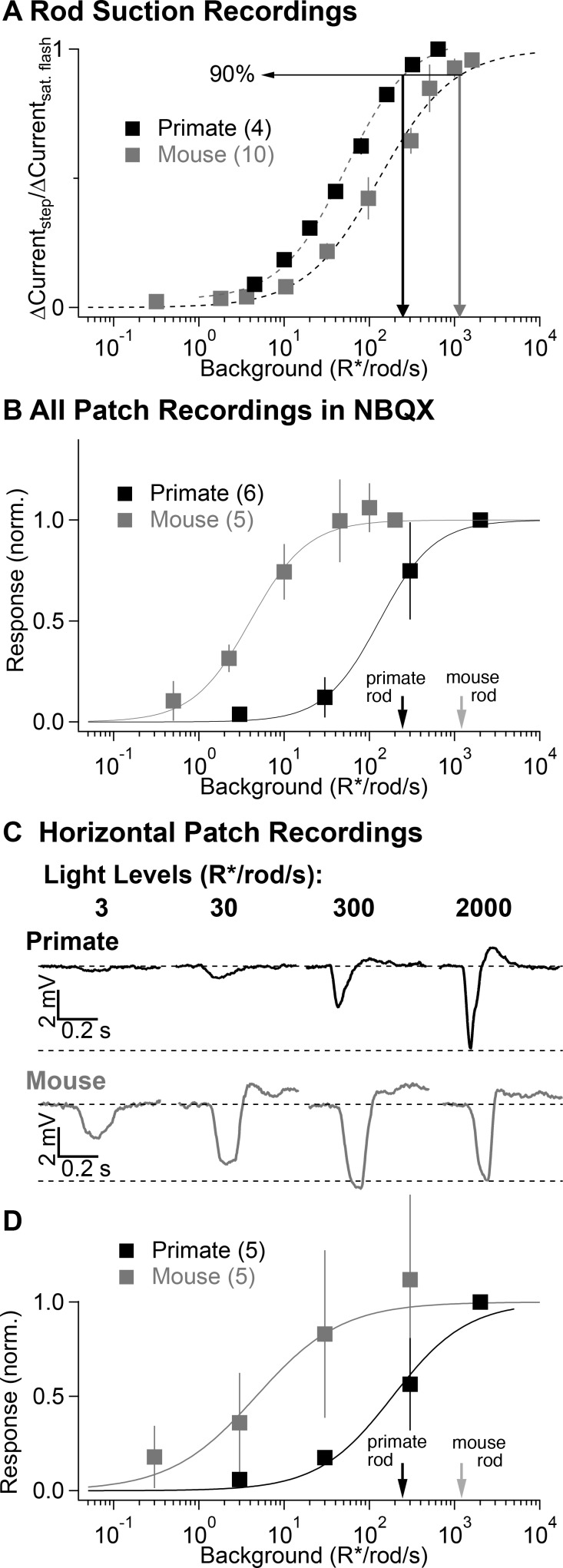
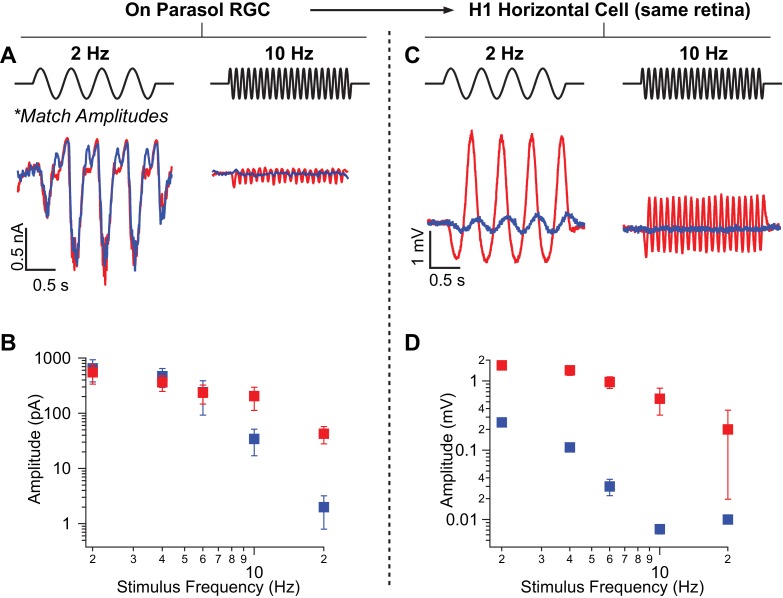
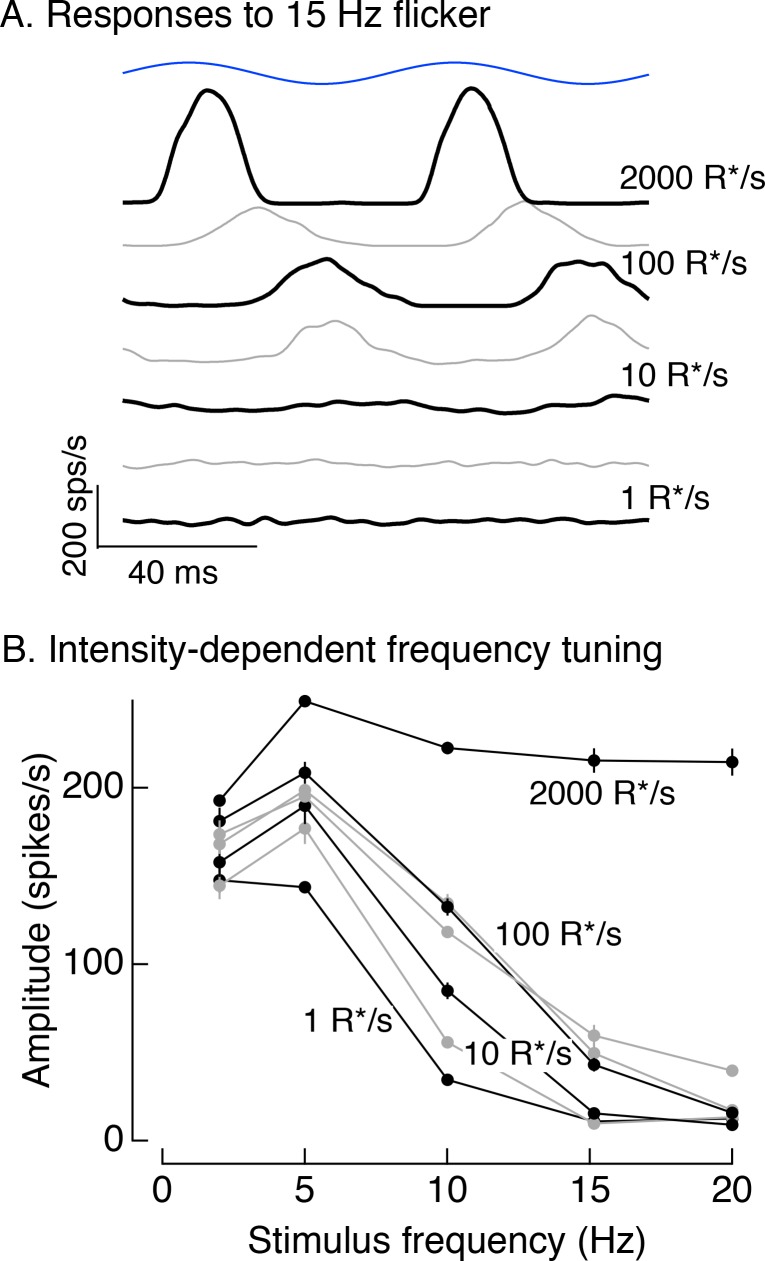
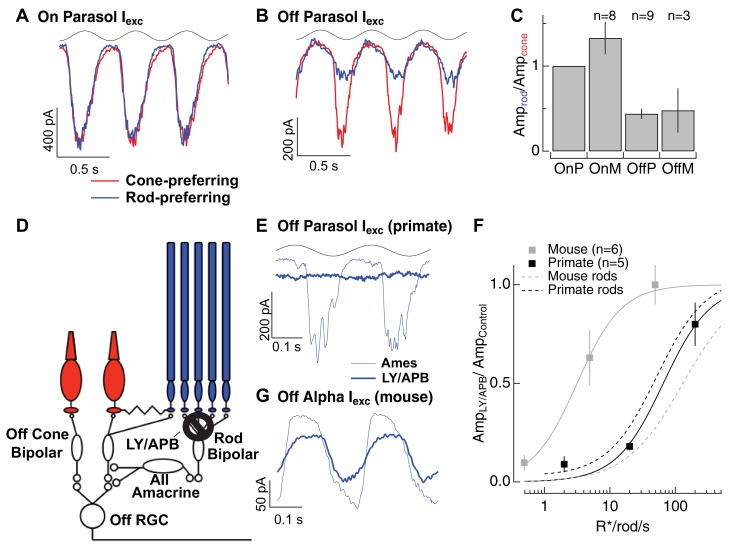
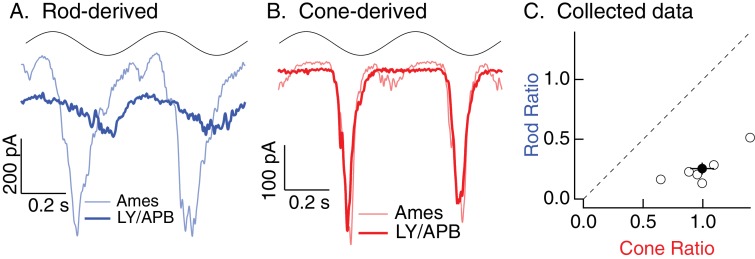
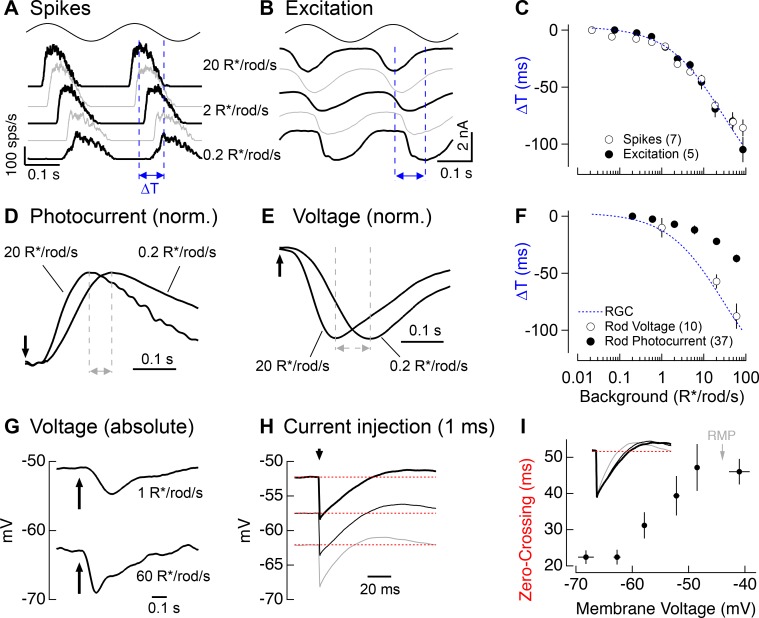
Stimulus- or context-dependent routing of neural signals through parallel pathways can permit flexible processing of diverse inputs. For example, work in mouse shows that rod photoreceptor signals are routed through several retinal pathways, each specialized for different light levels. This light-level-dependent routing of rod signals has been invoked to explain several human perceptual results, but it has not been tested in primate retina. Here, we show, surprisingly, that rod signals traverse the primate retina almost exclusively through a single pathway - the dedicated rod bipolar pathway. Identical experiments in mouse and primate reveal substantial differences in how rod signals traverse the retina. These results require reevaluating human perceptual results in terms of flexible computation within this single pathway. This includes a prominent speeding of rod signals with light level - which we show is inherited directly from the rod photoreceptors themselves rather than from different pathways with distinct kinetics.
刺激或上下文相关的神经信号通过平行途径的路由可以实现对各种输入的灵活处理。例如,在小鼠中的研究表明,视杆光感受器信号通过几种专门用于不同光强度的视网膜途径进行路由。这种依赖于光强度的视杆信号路由已被用来解释几种人类感知结果,但尚未在灵长类动物视网膜中进行测试。令人惊讶的是,我们在这里表明,视杆信号几乎完全通过一条途径——专门的视杆双极途径——穿过灵长类动物的视网膜。在小鼠和灵长类动物中进行的相同实验揭示了视杆信号在穿过视网膜时存在显著差异。这些结果需要根据该单一途径内的灵活计算重新评估人类感知结果。这包括随着光强度的增加对视杆信号的显著加速——我们表明,这直接来自视杆光感受器本身,而不是来自具有不同动力学的不同途径。