HIV Dynamics and Replication Program, Center for Cancer Research, National Cancer Institute, Frederick, MD 21702.
Department of Immunology and Microbiology, The Scripps Research Institute, La Jolla, CA 92037.
Proc Natl Acad Sci U S A. 2018 Oct 23;115(43):E10069-E10078. doi: 10.1073/pnas.1811892115. Epub 2018 Oct 9.
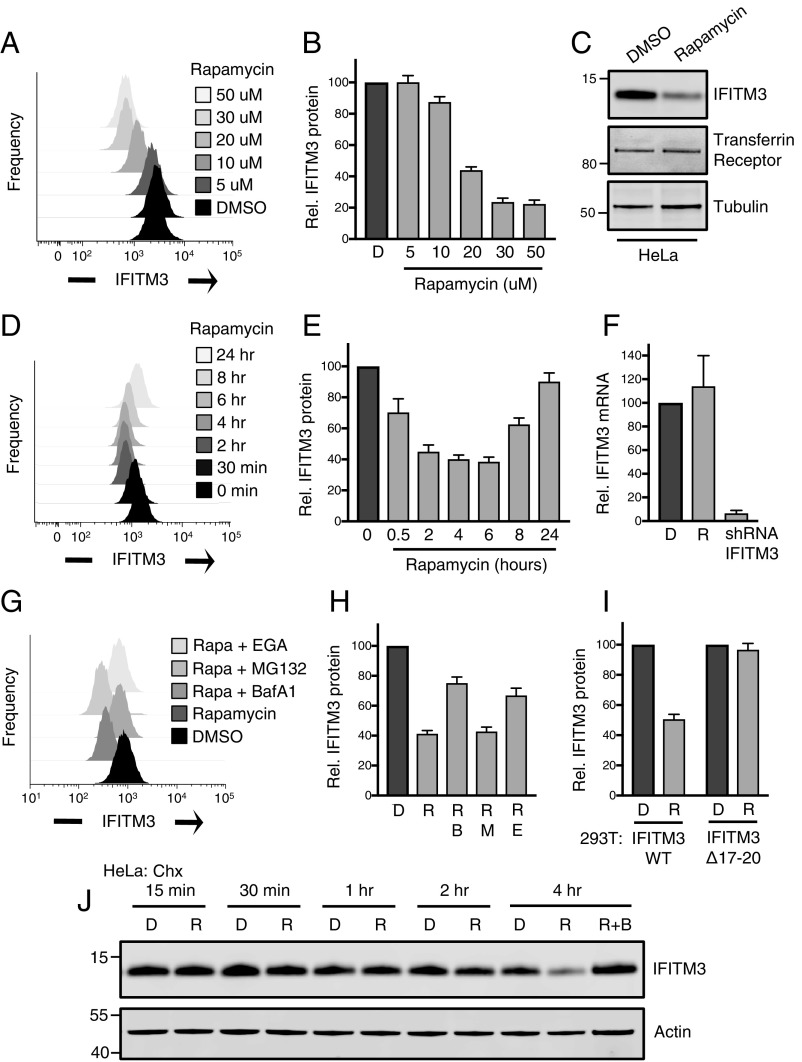
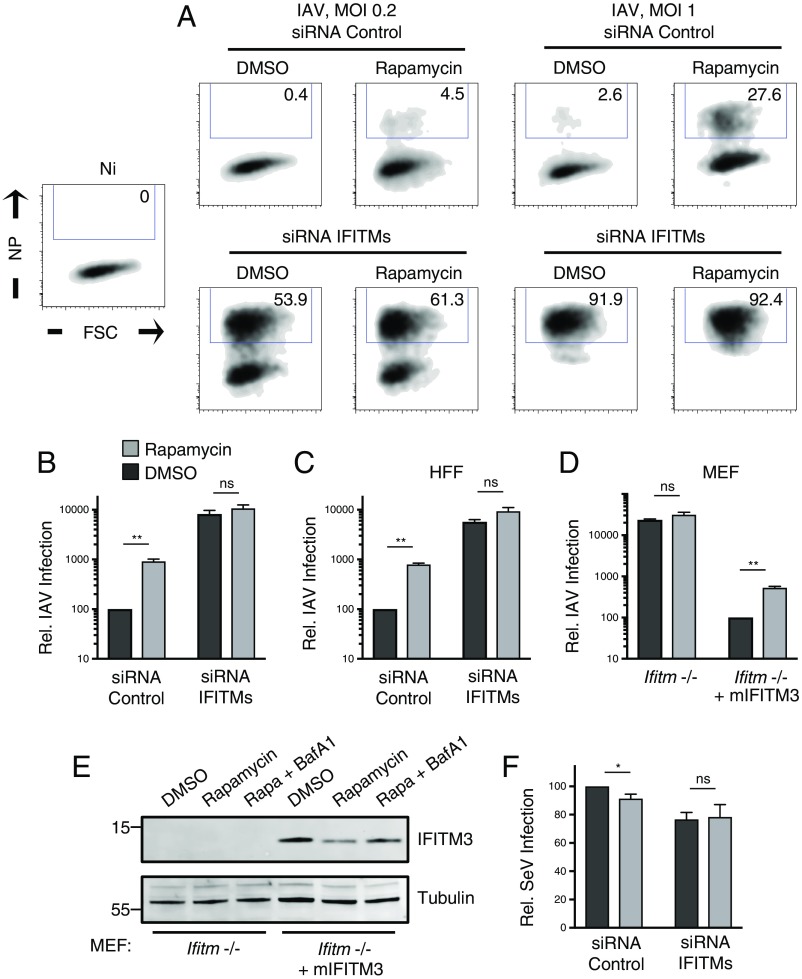
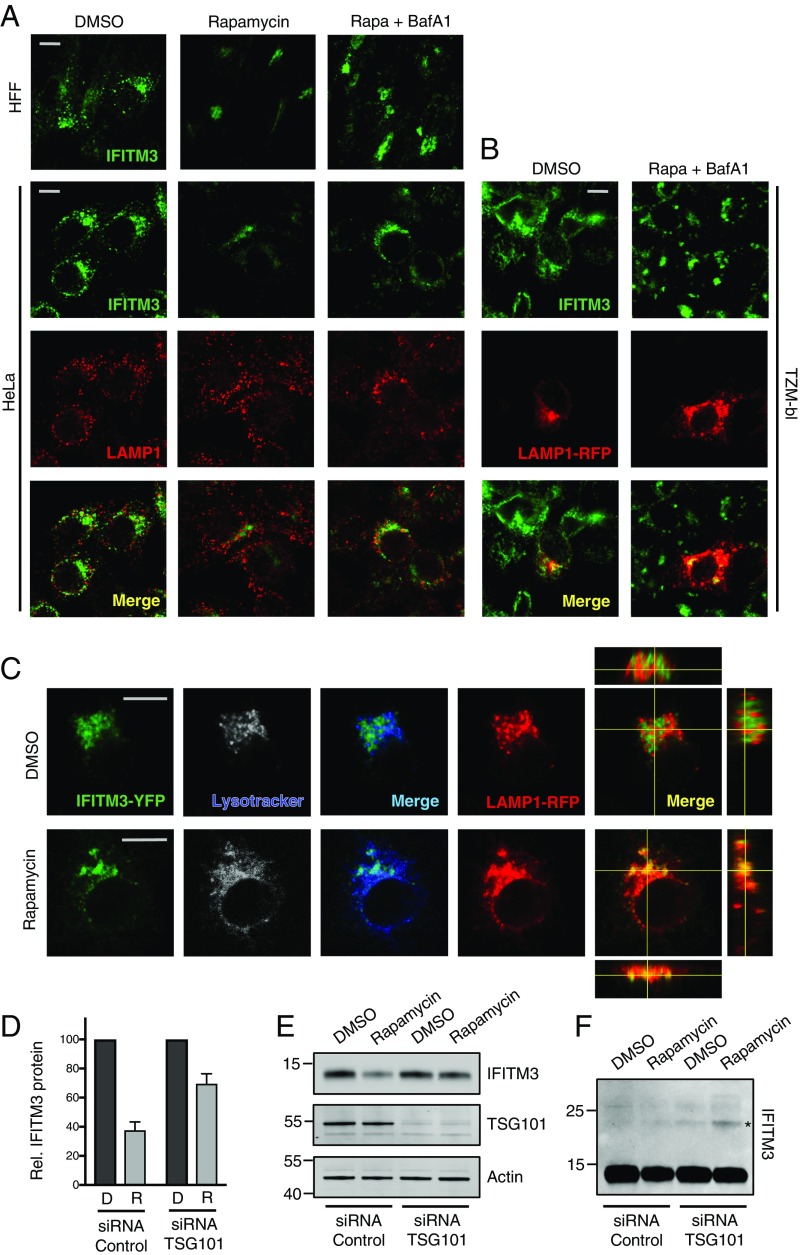
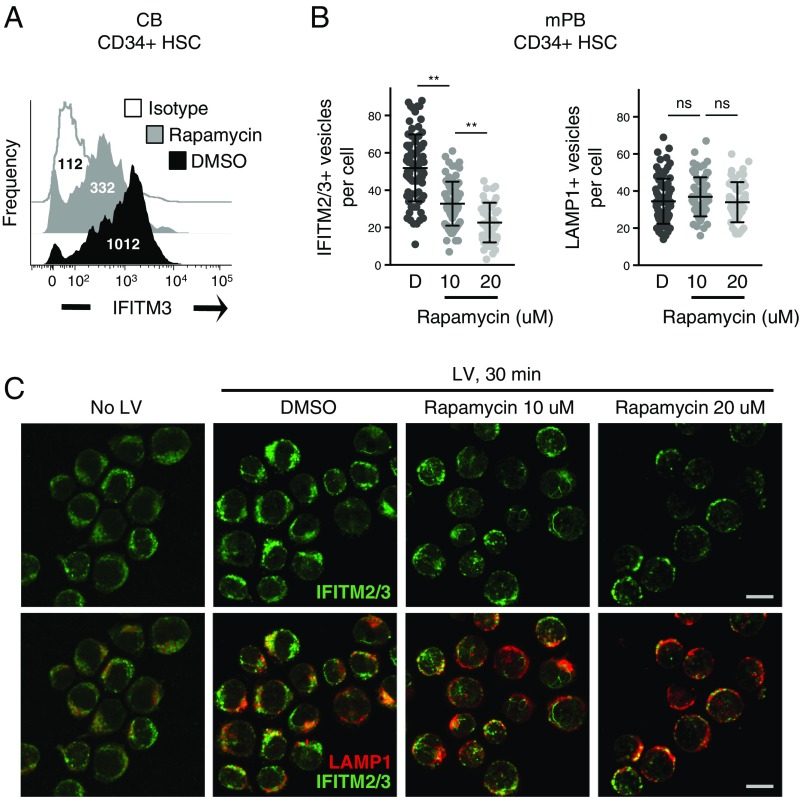
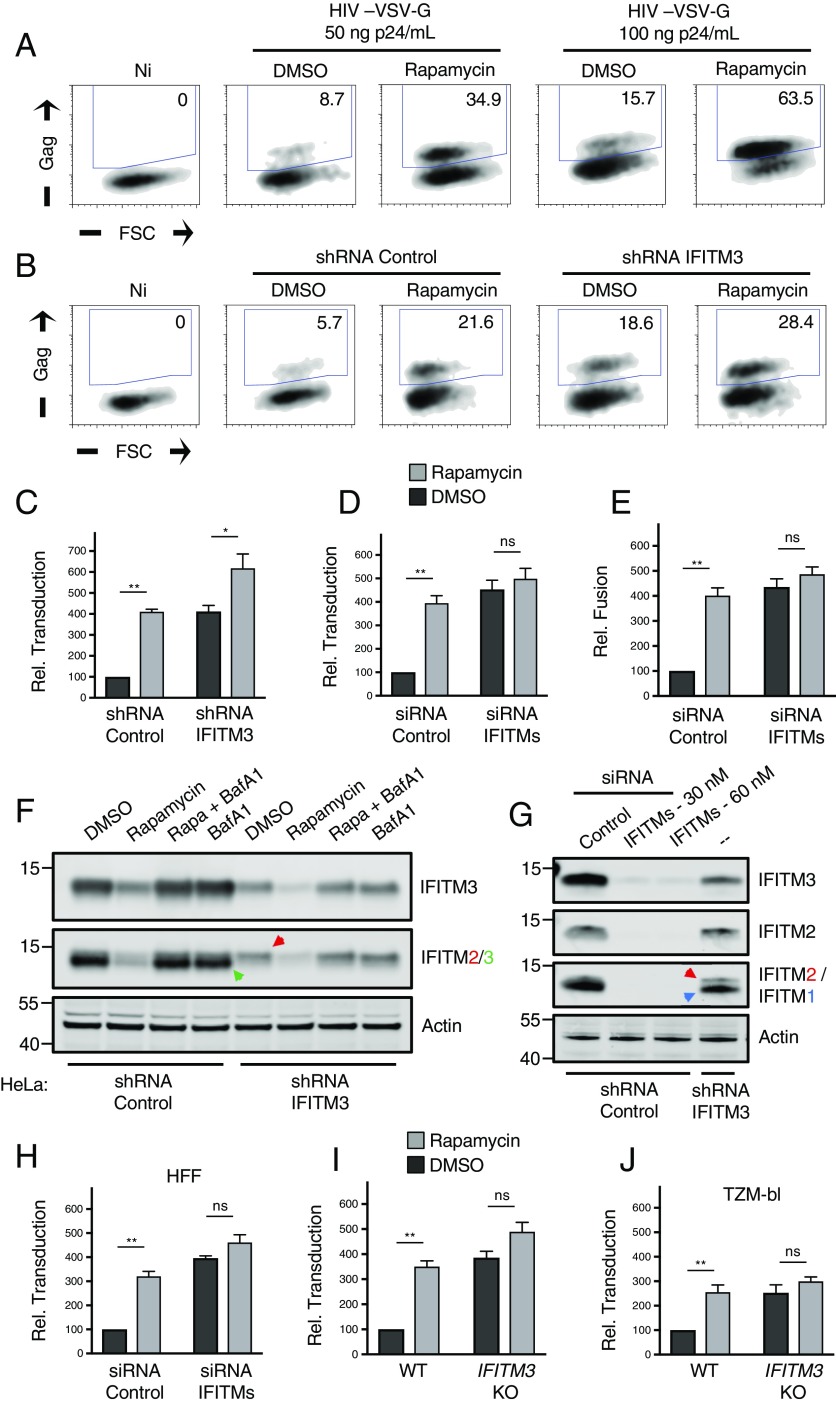
Rapamycin and its derivatives are specific inhibitors of mammalian target of rapamycin (mTOR) kinase and, as a result, are well-established immunosuppressants and antitumorigenic agents. Additionally, this class of drug promotes gene delivery by facilitating lentiviral vector entry into cells, revealing its potential to improve gene therapy efforts. However, the precise mechanism was unknown. Here, we report that mTOR inhibitor treatment results in down-regulation of the IFN-induced transmembrane (IFITM) proteins. IFITM proteins, especially IFITM3, are potent inhibitors of virus-cell fusion and are broadly active against a range of pathogenic viruses. We found that the effect of rapamycin treatment on lentiviral transduction is diminished upon IFITM silencing or knockout in primary and transformed cells, and the extent of transduction enhancement depends on basal expression of IFITM proteins, with a major contribution from IFITM3. The effect of rapamycin treatment on IFITM3 manifests at the level of protein, but not mRNA, and is selective, as many other endosome-associated transmembrane proteins are unaffected. Rapamycin-mediated degradation of IFITM3 requires endosomal trafficking, ubiquitination, endosomal sorting complex required for transport (ESCRT) machinery, and lysosomal acidification. Since IFITM proteins exhibit broad antiviral activity, we show that mTOR inhibition also promotes infection by another IFITM-sensitive virus, Influenza A virus, but not infection by Sendai virus, which is IFITM-resistant. Our results identify the molecular basis by which mTOR inhibitors enhance virus entry into cells and reveal a previously unrecognized immunosuppressive feature of these clinically important drugs. In addition, this study uncovers a functional convergence between the mTOR pathway and IFITM proteins at endolysosomal membranes.
雷帕霉素及其衍生物是哺乳动物雷帕霉素靶蛋白(mTOR)激酶的特异性抑制剂,因此是成熟的免疫抑制剂和抗肿瘤药物。此外,这类药物通过促进慢病毒载体进入细胞来促进基因传递,这揭示了其改善基因治疗的潜力。然而,确切的机制尚不清楚。在这里,我们报告说 mTOR 抑制剂治疗导致 IFN 诱导的跨膜(IFITM)蛋白下调。IFITM 蛋白,特别是 IFITM3,是病毒-细胞融合的有效抑制剂,对多种致病性病毒具有广泛的活性。我们发现,在原代和转化细胞中沉默或敲除 IFITM 后,雷帕霉素处理对慢病毒转导的影响减弱,并且转导增强的程度取决于 IFITM 蛋白的基础表达,IFITM3 有主要贡献。雷帕霉素处理对 IFITM3 的影响表现在蛋白质水平,而不是 mRNA 水平,并且是选择性的,因为许多其他内体相关跨膜蛋白不受影响。雷帕霉素介导的 IFITM3 降解需要内体运输、泛素化、内体分选复合物必需运输(ESCRT)机制和溶酶体酸化。由于 IFITM 蛋白表现出广泛的抗病毒活性,我们表明 mTOR 抑制也促进另一种 IFITM 敏感病毒——甲型流感病毒的感染,但不促进 IFITM 抗性的 Sendai 病毒的感染。我们的结果确定了 mTOR 抑制剂增强细胞内病毒进入的分子基础,并揭示了这些临床上重要药物的先前未被认识的免疫抑制特征。此外,本研究揭示了 mTOR 途径和 IFITM 蛋白在内体溶酶体膜上的功能收敛。