Arevalo-Rodriguez Ingrid, Muñoz Edgar, Buitrago-Garcia Diana, Nuñez-González Solange, Montero-Oleas Nadia, Garzón Vanessa, Pardo-Hernandez Hector, Bonfill Xavier
Centro de Investigación en Salud Pública y Epidemiología Clínica (CISPEC), Facultad de Ciencias de la Salud Eugenio Espejo, Universidad Tecnológica Equinoccial, Quito, Ecuador.
Clinical Biostatistics Unit, Hospital Universitario Ramón y Cajal (IRYCIS), CIBER en Epidemiología y Salud Pública (CIBERESP), Madrid, Spain.
SAGE Open Med. 2018 Oct 3;6:2050312118801710. doi: 10.1177/2050312118801710. eCollection 2018.
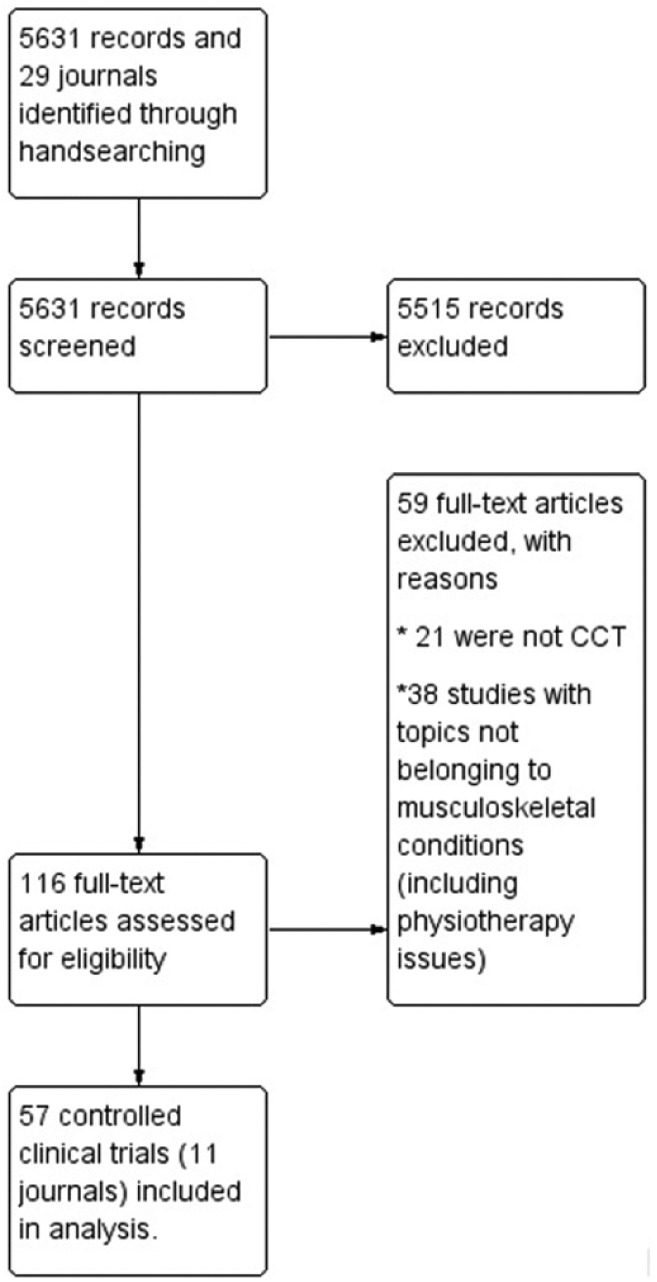
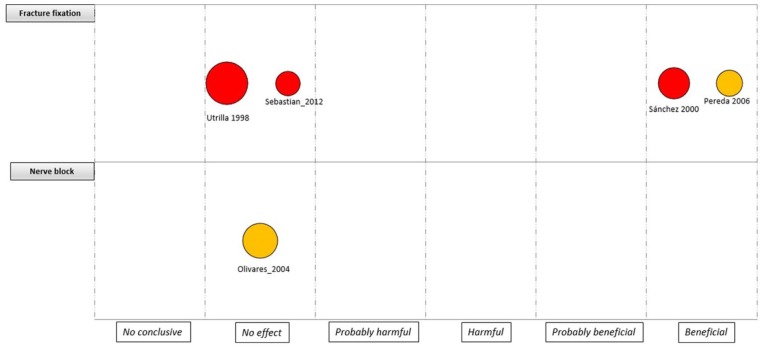
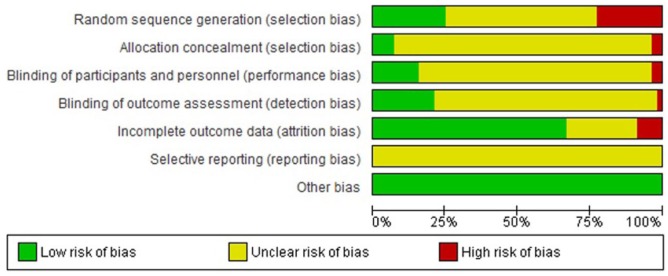
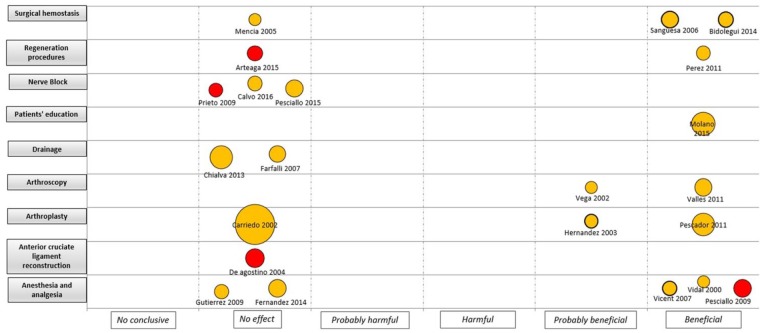
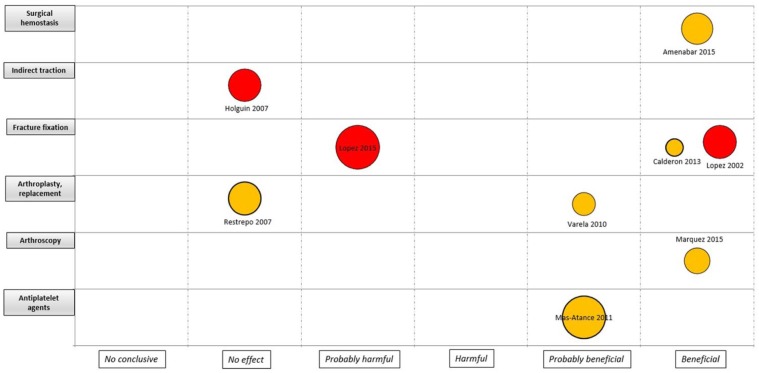
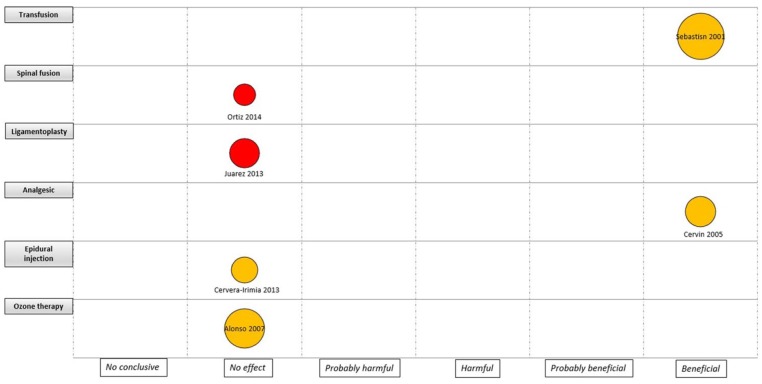
Few Orthopaedics and Traumatology journals from Latin America and Spain are indexed in major databases; controlled clinical trials published in these journals cannot be exhaustively retrieved using electronic literature searches. We aimed to identify, describe and assess the quality of controlled clinical trials published in Orthopaedics and Traumatology journals from Latin America and Spain through handsearching and evidence mapping methods. We identified controlled clinical trials published in eligible Orthopaedics/Traumatology journals in Spanish until July 2017 by handsearching. Data were extracted for controlled clinical trials main characteristics and the Cochrane risk of bias tool was used to assess the controlled clinical trials methodological quality. In addition, we mapped the main findings of these trials. As a result, we assessed 5631 references in 29 eligible journals of which 57 were controlled clinical trials (1.0%). Controlled clinical trials were published between 1995 and 2017 at a rate of 2.5 per year. Journals from Spain and Mexico published around 63% of the controlled clinical trials identified. The median sample size of patients enrolled was 60 (range = 30-300 participants). About conditions assessed, 38.5% of controlled clinical trials assessed issues related to knee conditions, 15.7% about hip and 10.5% about trauma or spine. The risk of bias domains most affected was selective reporting bias and random sequence generation. In addition, only two and seven trials had low risk of bias in all items related to participant/personnel and outcome assessment blindings, respectively. More than 40% of studies did not report differences on benefits/harms between the interventions assessed. As a conclusion, the number of controlled clinical trials published in Orthopaedics/Traumatology journals from Latin America and Spain is low. These controlled clinical trials had important methodological shortcomings and were judged as unclear or high risk of bias. These trials are now available in CENTRAL for their potential inclusion in systematic reviews and other documents of synthesis.
拉丁美洲和西班牙的骨科与创伤学领域的期刊在主要数据库中被索引的较少;通过电子文献检索无法全面获取这些期刊上发表的对照临床试验。我们旨在通过手工检索和证据图谱方法,识别、描述和评估拉丁美洲和西班牙的骨科与创伤学期刊上发表的对照临床试验的质量。我们通过手工检索,确定了截至2017年7月在符合条件的西班牙语骨科/创伤学期刊上发表的对照临床试验。提取了对照临床试验的主要特征数据,并使用Cochrane偏倚风险工具评估对照临床试验的方法学质量。此外,我们梳理了这些试验的主要结果。结果显示,我们评估了29种符合条件的期刊中的5631篇参考文献,其中57篇为对照临床试验(1.0%)。对照临床试验发表于1995年至2017年之间,每年发表率为2.5篇。西班牙和墨西哥的期刊发表了约63%已识别的对照临床试验。纳入患者的样本量中位数为60(范围=30 - 300名参与者)。关于评估的病症,38.5%的对照临床试验评估了与膝关节病症相关的问题,15.7%关于髋关节问题,10.5%关于创伤或脊柱问题。受影响最大的偏倚风险领域是选择性报告偏倚和随机序列生成。此外,分别只有两项和七项试验在与参与者/人员和结果评估盲法相关的所有项目中具有低偏倚风险。超过40% 的研究未报告所评估干预措施之间在益处/危害方面的差异。结论是,拉丁美洲和西班牙骨科/创伤学期刊上发表的对照临床试验数量较少。这些对照临床试验存在重要的方法学缺陷,并被判定为偏倚风险不明确或较高。现在这些试验可在Cochrane系统评价数据库中获取,有可能被纳入系统评价和其他综合文献中。