Northeast Ohio Medical University, Rootstown.
Northeast Ohio Medical University, Rootstown, and Kent State University, Kent, Ohio.
Arthritis Rheumatol. 2019 Apr;71(4):583-593. doi: 10.1002/art.40751. Epub 2019 Mar 6.
Cytokine expression is tightly regulated posttranscriptionally, but high levels of interleukin-6 (IL-6) in patients with osteoarthritis (OA) indicate that regulatory mechanisms are disrupted in this disorder. The enzyme ZCCHC6 (zinc-finger CCHC domain-containing protein 6; TUT-7) has been implicated in posttranscriptional regulation of inflammatory cytokine expression, but its role in OA pathogenesis is unknown. The present study was undertaken to investigate whether ZCCHC6 directs the expression of IL-6 and influences OA pathogenesis in vivo.
Human and mouse chondrocytes were stimulated with recombinant IL-1β. Expression of ZCCHC6 in human chondrocytes was knocked down using small interfering RNAs. IL-6 transcript stability was determined by actinomycin D chase, and 3'-uridylation of microRNAs was determined by deep sequencing. Zcchc6 mice were produced by gene targeting. OA was surgically induced in the knee joints of mice, and disease severity was scored using a semiquantitative grading system.
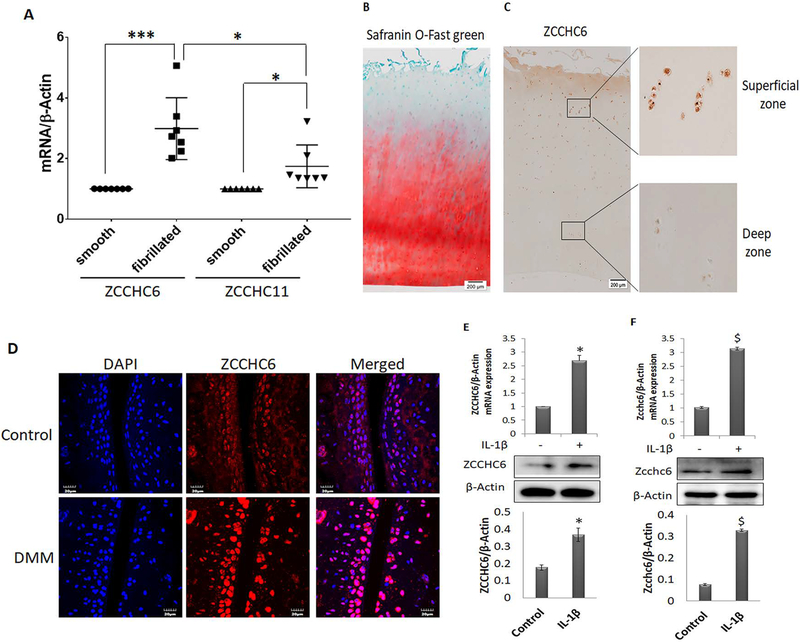
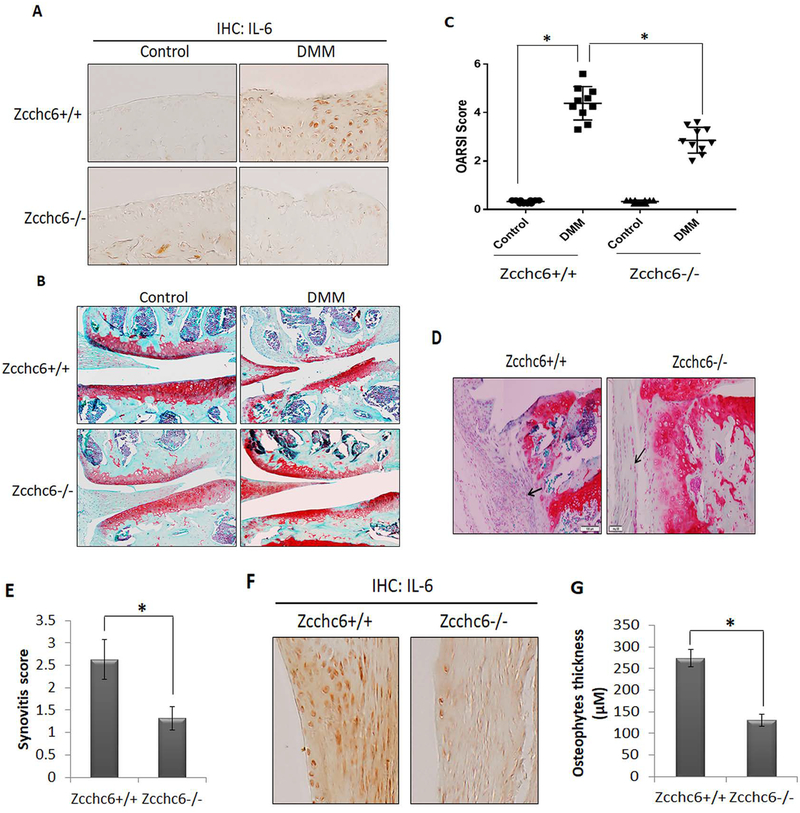
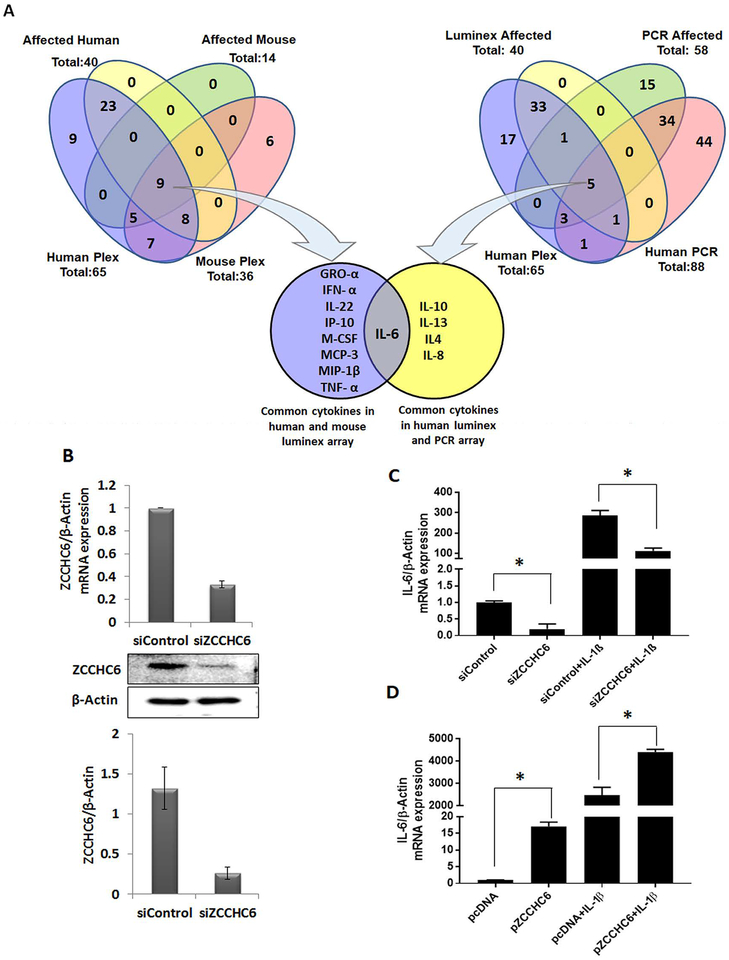
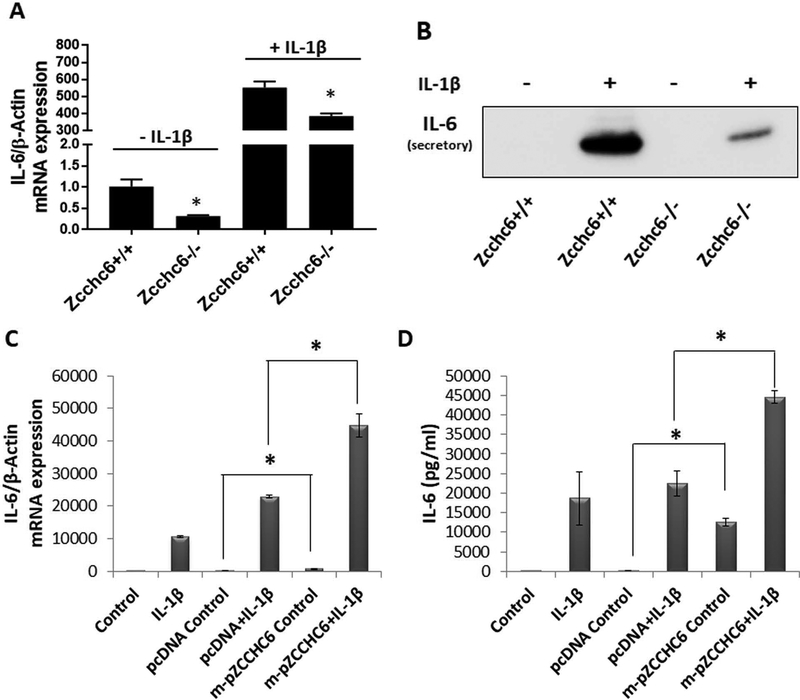
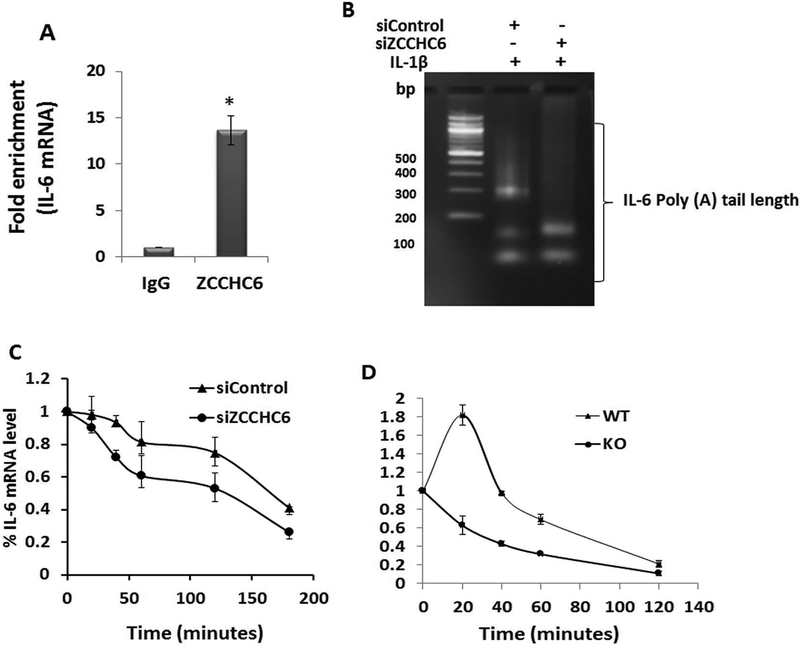
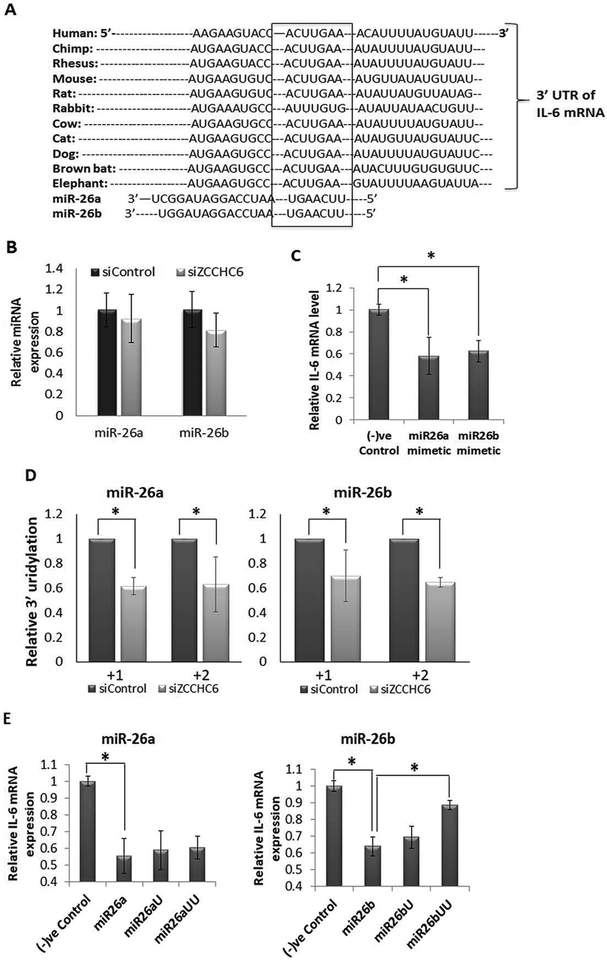
ZCCHC6 was markedly up-regulated in damaged cartilage from human OA patients and from wild-type mice with surgically induced OA. Overexpression of ZCCHC6 induced the expression of IL-6, and its knockdown reduced IL-6 transcript stability and IL-1β-induced IL-6 expression in chondrocytes. Reintroduction of Zcchc6 in Zcchc6 mouse chondrocytes rescued the IL-1β-induced IL-6 expression. Knockdown of ZCCHC6 reduced the population of micro-RNA 26b (miR-26b) with 3'-uridylation by 60%. Zcchc6 mice with surgically induced OA produced low levels of IL-6 and exhibited reduced cartilage damage and synovitis in the joints.
These findings indicate that ZCCHC6 enhances IL-6 expression in chondrocytes through transcript stabilization and by uridylating miR-26b, which abrogates repression of IL-6. Inhibition of IL-6 expression and significantly reduced OA severity in Zcchc6 mice identify ZCCHC6 as a novel therapeutic target to inhibit disease pathogenesis.
细胞因子的表达在转录后受到严格调控,但骨关节炎(OA)患者体内白细胞介素 6(IL-6)水平升高表明,这种疾病的调控机制受到了破坏。锌指 CCHC 结构域蛋白 6(ZCCHC6;TUT-7)酶已被牵涉到炎症细胞因子表达的转录后调控,但它在 OA 发病机制中的作用尚不清楚。本研究旨在探讨 ZCCHC6 是否指导 IL-6 的表达,并在体内影响 OA 的发病机制。
用重组白细胞介素 1β刺激人软骨细胞和小鼠软骨细胞。使用小干扰 RNA 敲低人软骨细胞中的 ZCCHC6 表达。用放线菌素 D 追踪法测定 IL-6 转录本的稳定性,并用深度测序法测定 microRNA 的 3'-尿嘧啶化。通过基因靶向产生 Zcchc6 小鼠。对小鼠膝关节进行手术诱导 OA,并用半定量评分系统对疾病严重程度进行评分。
在人 OA 患者受损软骨和经手术诱导 OA 的野生型小鼠的软骨中,ZCCHC6 明显上调。ZCCHC6 的过表达诱导了 IL-6 的表达,而其敲低降低了软骨细胞中 IL-6 转录本的稳定性和 IL-1β诱导的 IL-6 表达。在 Zcchc6 小鼠软骨细胞中重新引入 Zcchc6 可挽救 IL-1β诱导的 IL-6 表达。ZCCHC6 的敲低使 microRNA 26b(miR-26b)的 3'-尿嘧啶化减少了 60%。经手术诱导 OA 的 Zcchc6 小鼠产生的 IL-6 水平较低,关节中的软骨损伤和滑膜炎减少。
这些发现表明,ZCCHC6 通过转录本稳定和尿嘧啶化 miR-26b 增强软骨细胞中的 IL-6 表达,从而消除了对 IL-6 的抑制。在 Zcchc6 小鼠中抑制 IL-6 表达和显著降低 OA 严重程度表明,ZCCHC6 是抑制疾病发病机制的新的治疗靶点。