Department of Urology, Columbia University, 1130 St. Nicholas Avenue, New York, NY 10032, USA.
Department of Urology, Genetics, and Development and Pathology and Cell Biology, Columbia University, 1130 St. Nicholas Avenue, New York, NY 10032, USA.
Cell Rep. 2018 Oct 9;25(2):464-477.e4. doi: 10.1016/j.celrep.2018.09.042.
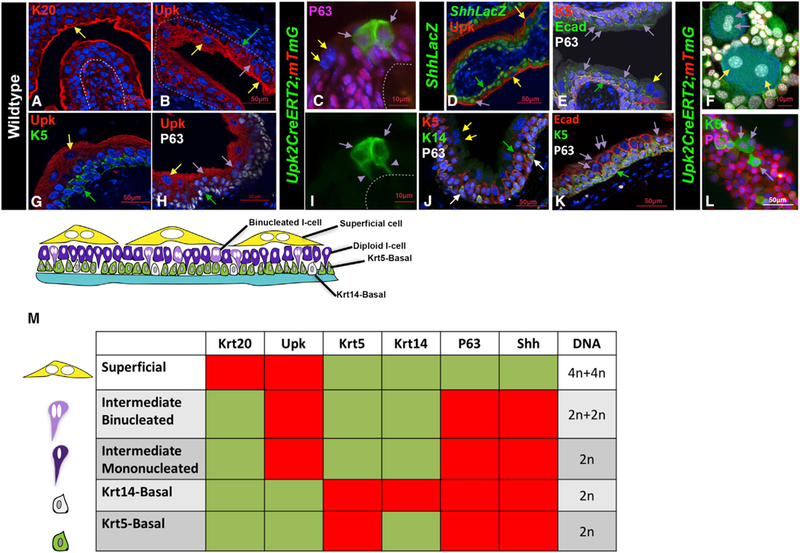
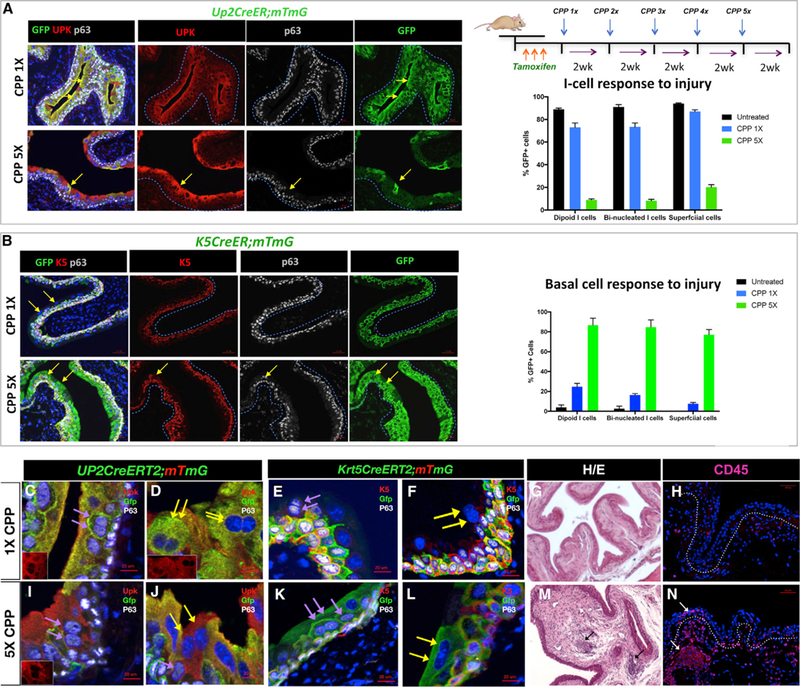
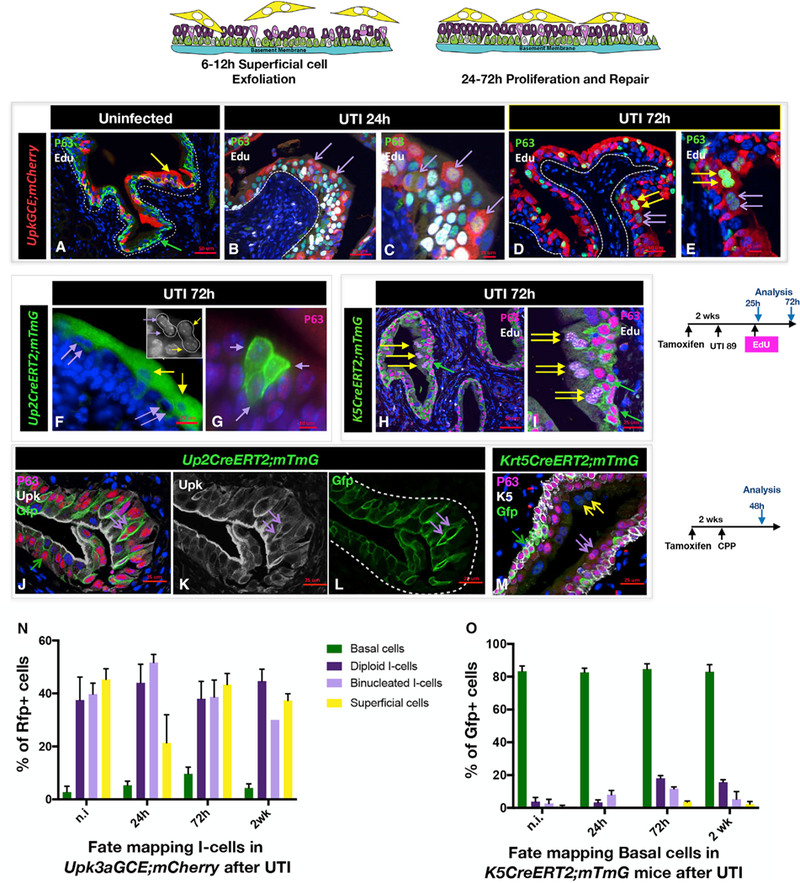
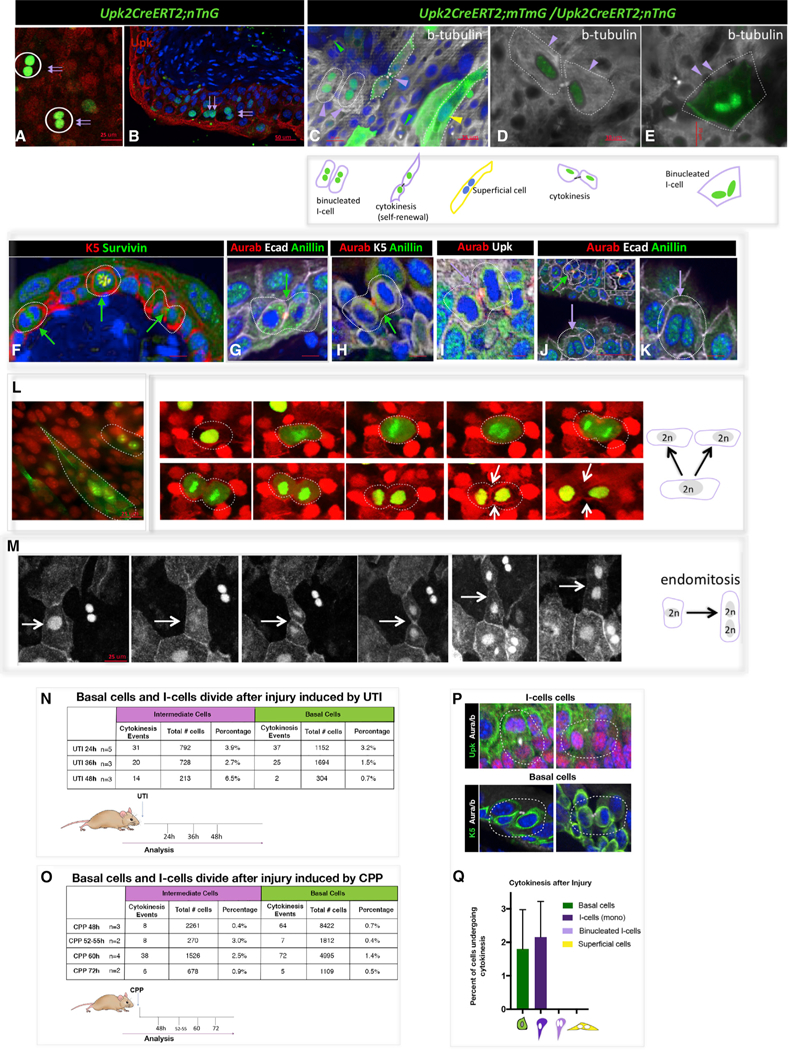
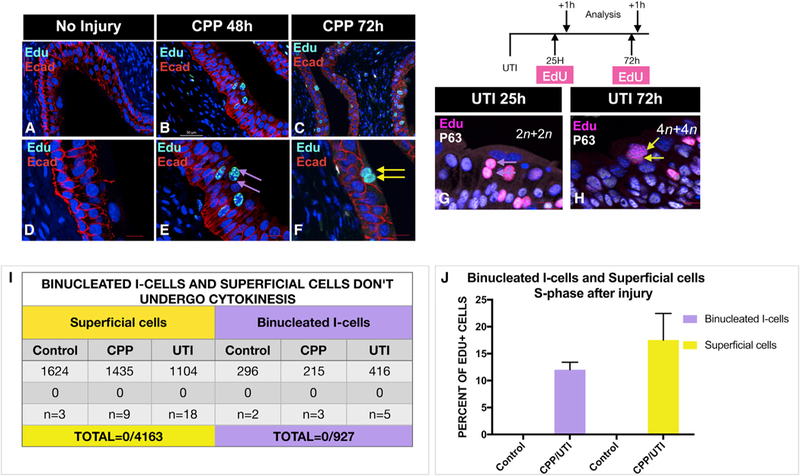
The urothelium is an epithelia barrier lined by a luminal layer of binucleated, octoploid, superficial cells. Superficial cells are critical for production and transport of uroplakins, a family of proteins that assemble into a waterproof crystalline plaque that helps protect against infection and toxic substances. Adult urothelium is nearly quiescent, but rapidly regenerates in response to injury. Yet the mechanism by which binucleated, polyploid, superficial cells are produced remains unclear. Here, we show that superficial cells are likely to be derived from a population of binucleated intermediate cells, which are produced from mononucleated intermediate cells via incomplete cytokinesis. We show that binucleated intermediate and superficial cells increase DNA content via endoreplication, passing through S phase without entering mitosis. The urothelium can be permanently damaged by repetitive or chronic injury or disease. Identification of the mechanism by which superficial cells are produced may be important for developing strategies for urothelial repair.
尿路上皮是一种上皮屏障,由一层双核、八倍体、表面细胞组成。表面细胞对于尿路上皮蛋白的产生和运输至关重要,这些蛋白组成了一种防水的结晶斑块,有助于防止感染和有毒物质。成人尿路上皮几乎处于静止状态,但在受到损伤时会迅速再生。然而,双核、多倍体表面细胞的产生机制尚不清楚。在这里,我们表明,表面细胞可能来自一群双核中间细胞,这些细胞是由单核中间细胞通过不完全胞质分裂产生的。我们表明,双核中间细胞和表面细胞通过内复制增加 DNA 含量,在不进入有丝分裂的情况下通过 S 期。尿路上皮可能会因反复或慢性损伤或疾病而永久受损。确定表面细胞产生的机制对于开发尿路上皮修复策略可能很重要。