Alemi A Sean, Mazur Courtney M, Fowler Tristan W, Woo Jonathon J, Knott P Daniel, Alliston Tamara
Department of Otorhinolaryngology, Head and Neck Surgery, University of California San Francisco, United States of America.
Department of Orthopaedic Surgery, University of California San Francisco, United States of America.
Bone Rep. 2018 Oct 3;9:145-153. doi: 10.1016/j.bonr.2018.09.004. eCollection 2018 Dec.
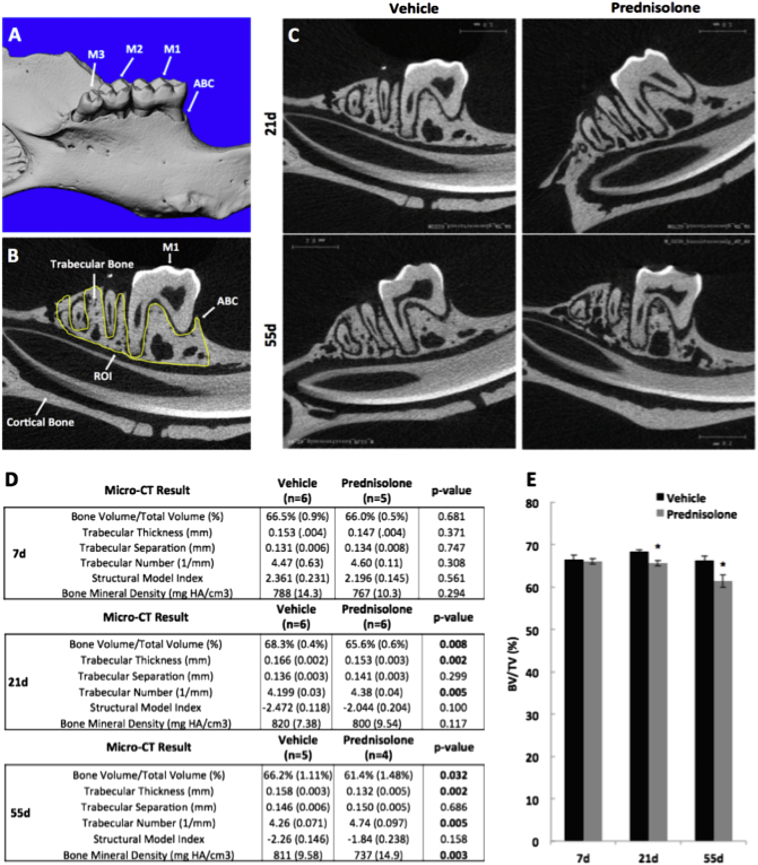
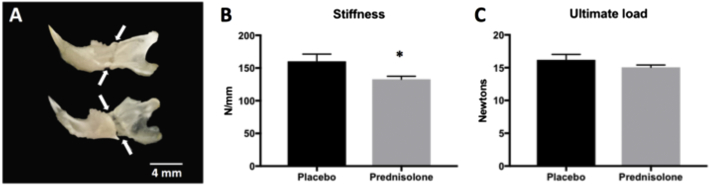
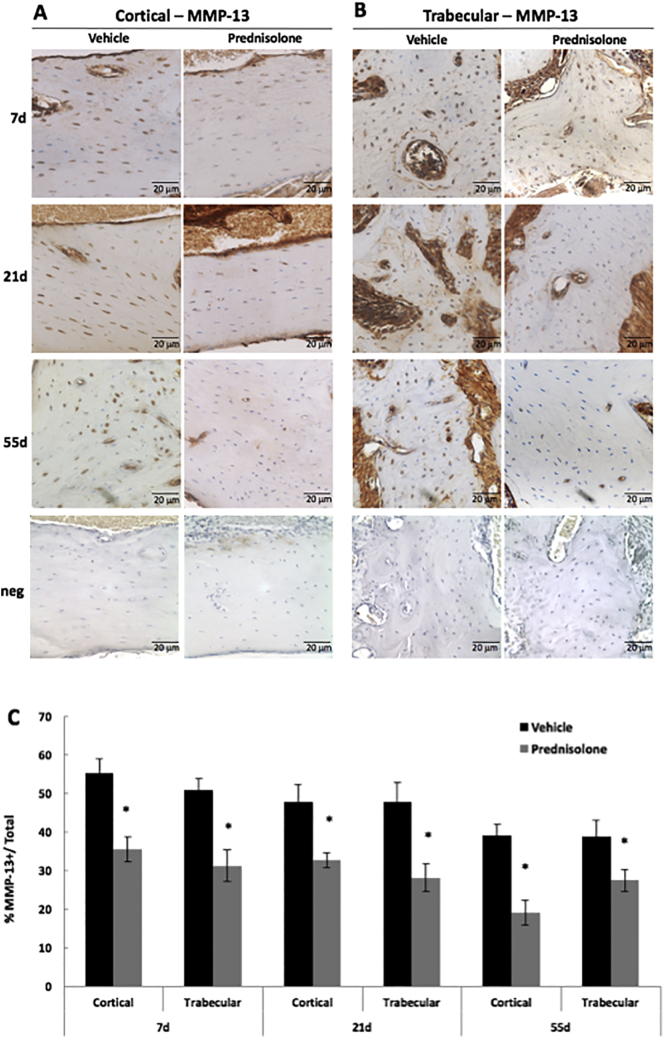
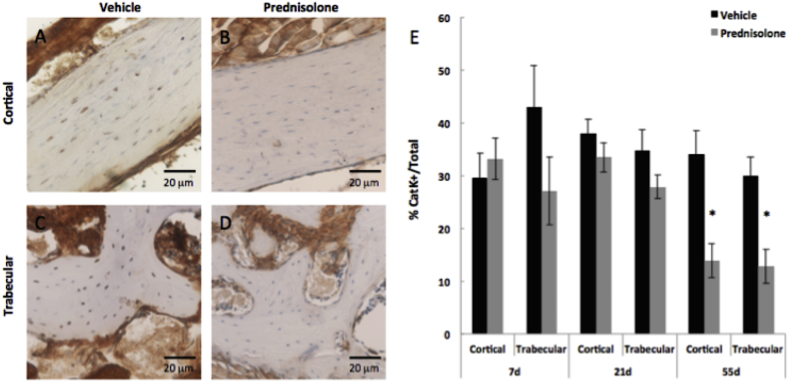
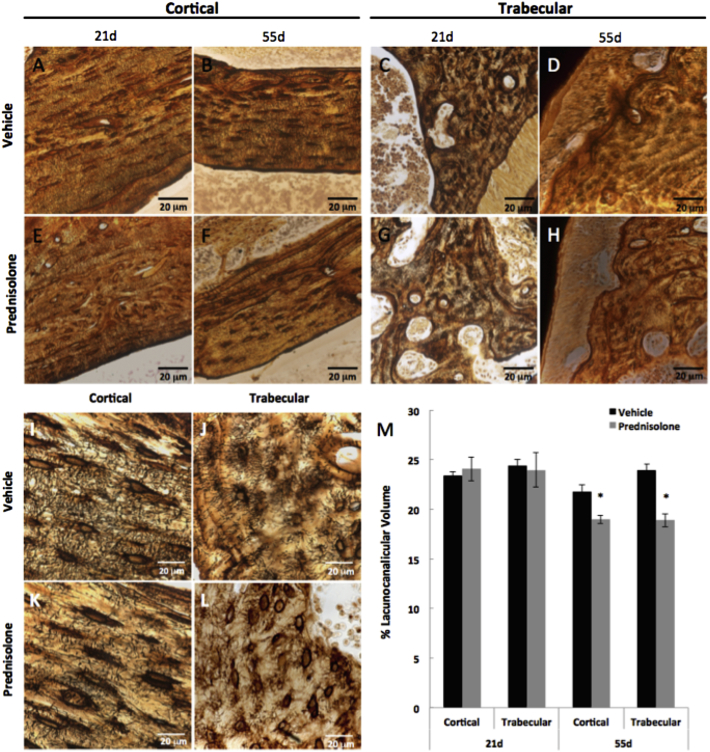
Osteocytes support dynamic, cell-intrinsic resorption and deposition of bone matrix through a process called perilacunar/canalicular remodeling (PLR). In long bones, PLR depends on MMP13 and is tightly regulated by PTH, sclerostin, TGFβ, and glucocorticoids. However, PLR is regulated differently in the cochlea, suggesting a mechanism that is anatomically distinct. Unlike long bones, the mandible derives from neural crest and exhibits unique susceptibility to medication and radiation induced osteonecrosis. Therefore, we sought to determine if PLR in the mandible is suppressed by glucocorticoids, as it is in long bone. Hemimandibles were collected from mice subcutaneously implanted with prednisolone or vehicle containing pellets for 7, 21, or 55 days (n = 8/group) for radiographic and histological analyses. Within 21 days, micro-computed tomography revealed a glucocorticoid-dependent reduction in bone volume/total volume and trabecular thickness and a significant decrease in bone mineral density after 55 days. Within 7 days, glucocorticoids strongly and persistently repressed osteocytic expression of the key PLR enzyme MMP13 in both trabecular and cortical bone of the mandible. Cathepsin K expression was significantly reduced only after 55 days of glucocorticoid treatment, at which point histological analysis revealed a glucocorticoid-dependent reduction in the lacunocanalicular surface area. In addition to reducing bone mass and suppressing PLR, glucocorticoids also reduced the stiffness of mandibular bone in flexural tests. Thus, osteocyte PLR in the neural crest-derived mandible is susceptible to glucocorticoids, just as it is in the mesodermally-derived femur, highlighting the need to further study PLR as a target of drugs, and radiation in mandibular osteonecrosis.
骨细胞通过一种称为陷窝周/骨小管重塑(PLR)的过程支持骨基质的动态、细胞内在的吸收和沉积。在长骨中,PLR依赖于基质金属蛋白酶13(MMP13),并受到甲状旁腺激素(PTH)、硬化蛋白、转化生长因子β(TGFβ)和糖皮质激素的严格调控。然而,PLR在耳蜗中的调节方式不同,这表明存在一种解剖学上不同的机制。与长骨不同,下颌骨起源于神经嵴,对药物和辐射诱导的骨坏死表现出独特的易感性。因此,我们试图确定下颌骨中的PLR是否像在长骨中一样受到糖皮质激素的抑制。从小鼠身上收集半侧下颌骨,这些小鼠皮下植入泼尼松龙或含载体的小球7天、21天或55天(每组n = 8),用于影像学和组织学分析。在21天内,显微计算机断层扫描显示骨体积/总体积和小梁厚度呈糖皮质激素依赖性降低,55天后骨矿物质密度显著下降。在7天内,糖皮质激素强烈且持续地抑制下颌骨小梁和皮质骨中关键PLR酶MMP13的骨细胞表达。仅在糖皮质激素治疗55天后,组织蛋白酶K的表达才显著降低,此时组织学分析显示陷窝骨小管表面积呈糖皮质激素依赖性降低。除了减少骨量和抑制PLR外,糖皮质激素还降低了下颌骨在弯曲试验中的硬度。因此,神经嵴来源的下颌骨中的骨细胞PLR与中胚层来源的股骨一样对糖皮质激素敏感,这突出了进一步研究PLR作为下颌骨坏死中药物和辐射靶点的必要性。