Department of Neurology, George Washington University, Washington, D.C., United States of America.
Department of Pharmacology and Physiology, George Washington University, Washington, D.C., United States of America.
PLoS One. 2018 Oct 11;13(10):e0205464. doi: 10.1371/journal.pone.0205464. eCollection 2018.
A characteristic pathology of early onset myasthenia gravis is thymic hyperplasia with ectopic germinal centers (GC). However, the mechanisms that trigger and maintain thymic hyperplasia are poorly characterized. Dysregulation of small, non-coding microRNAs (miRNAs) and their target genes has been identified in the pathology of several autoimmune diseases. We assessed the miRNA and mRNA profiles of the MG thymus and have investigated their role in GC formation and maintenance.
MG thymus samples were assessed by histology and grouped based upon the appearance of GC; GC positive and GC negative. A systems biology approach was used to study the differences between the groups. Our study included miRNA and mRNA profiling, quantitative real-time PCR validation, miRNA target identification, pathway analysis, miRNA-mRNA reciprocal expression pairing and interaction.
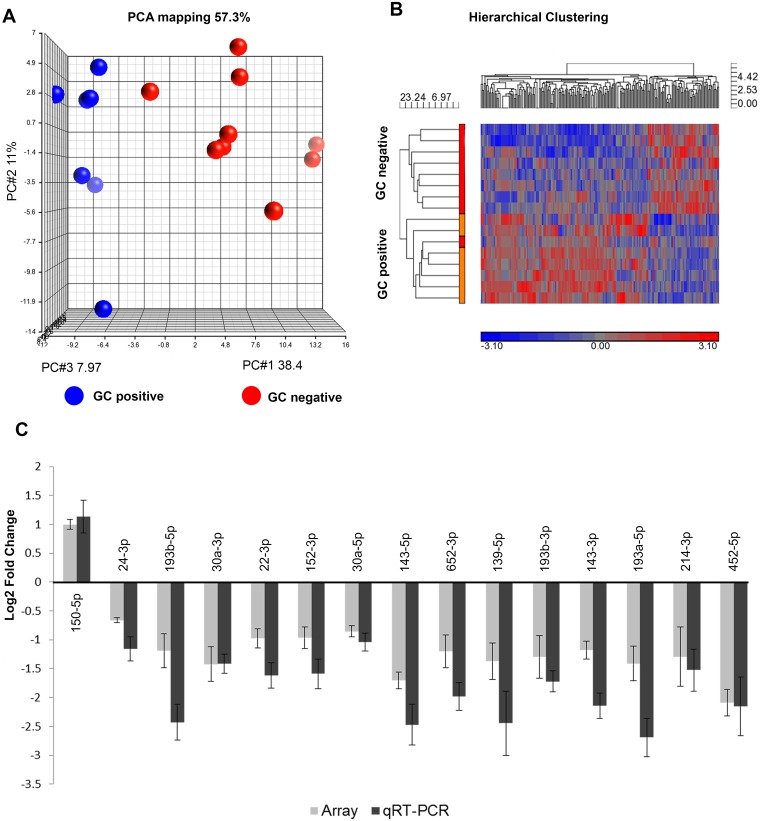
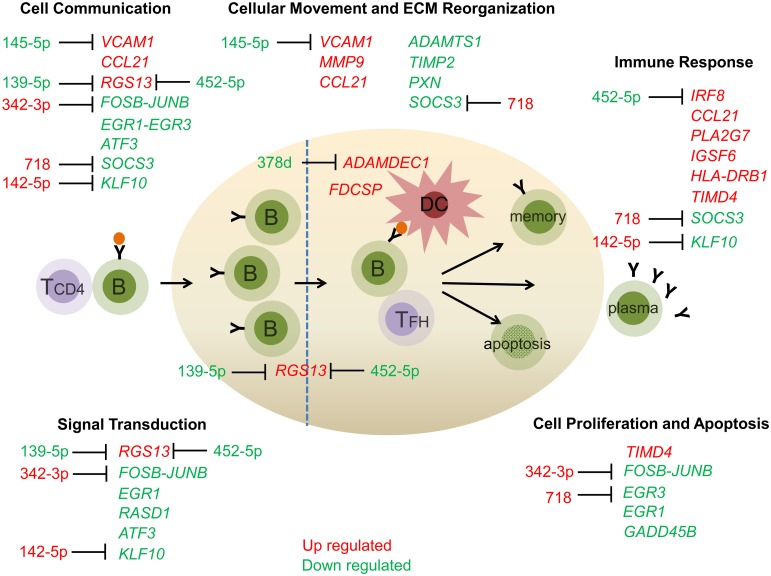
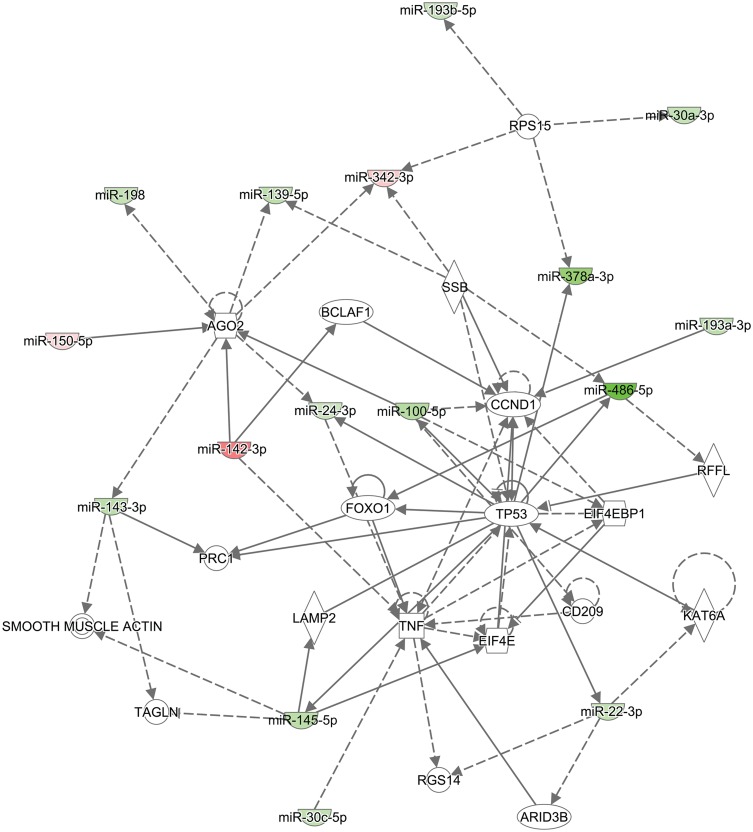
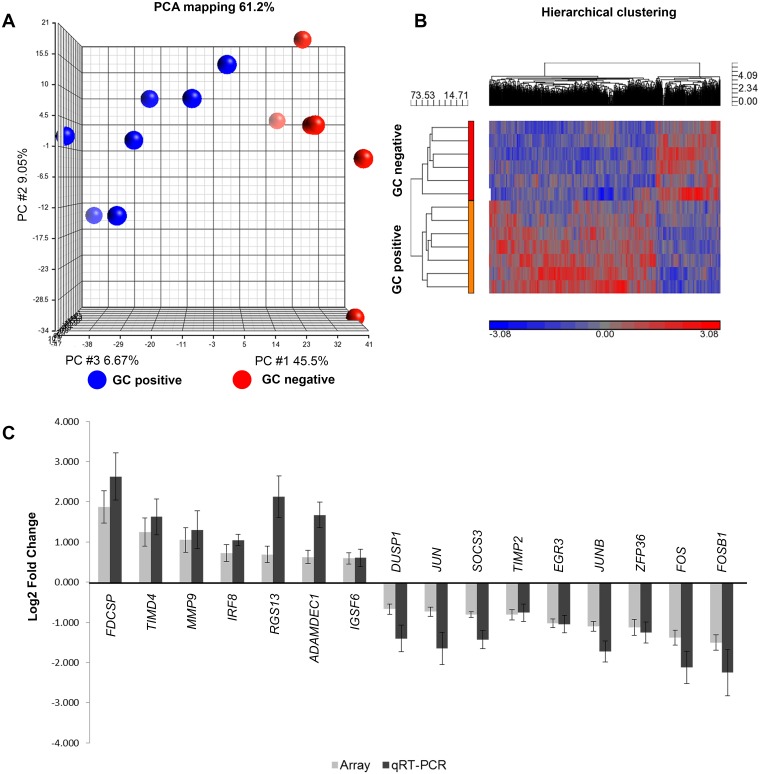
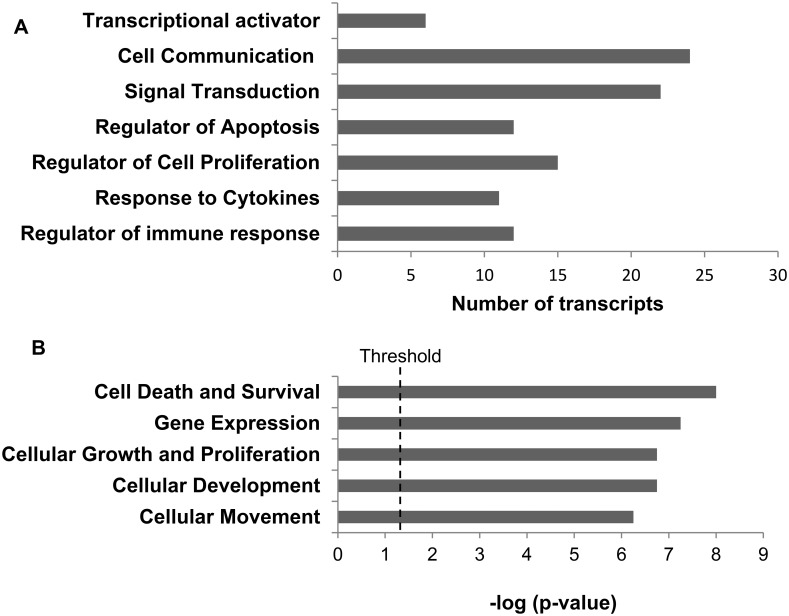
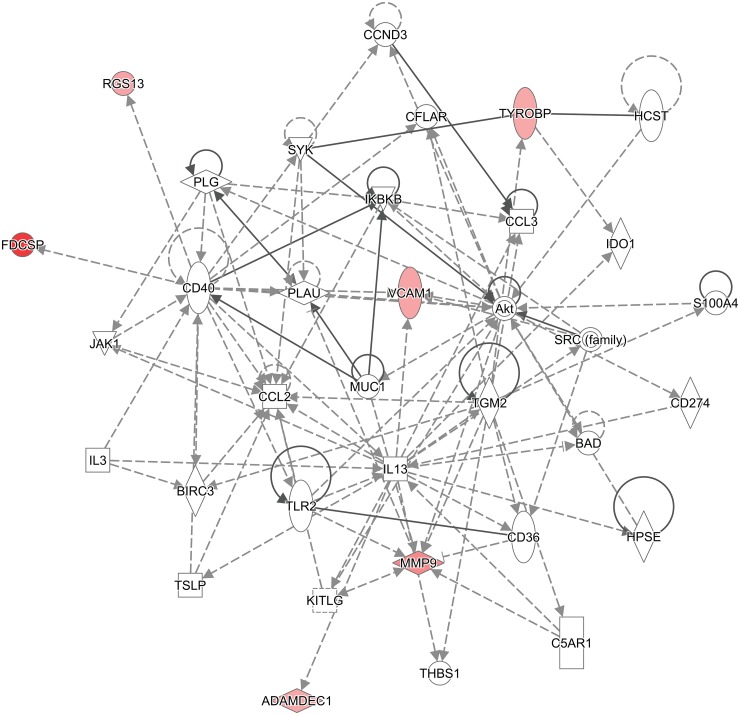
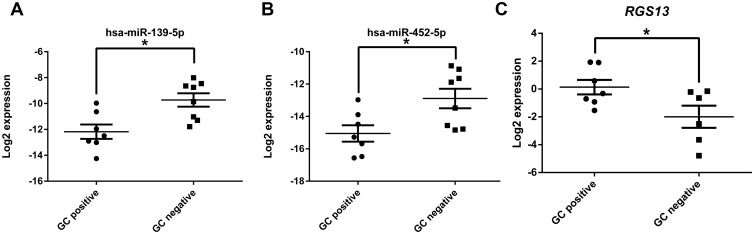
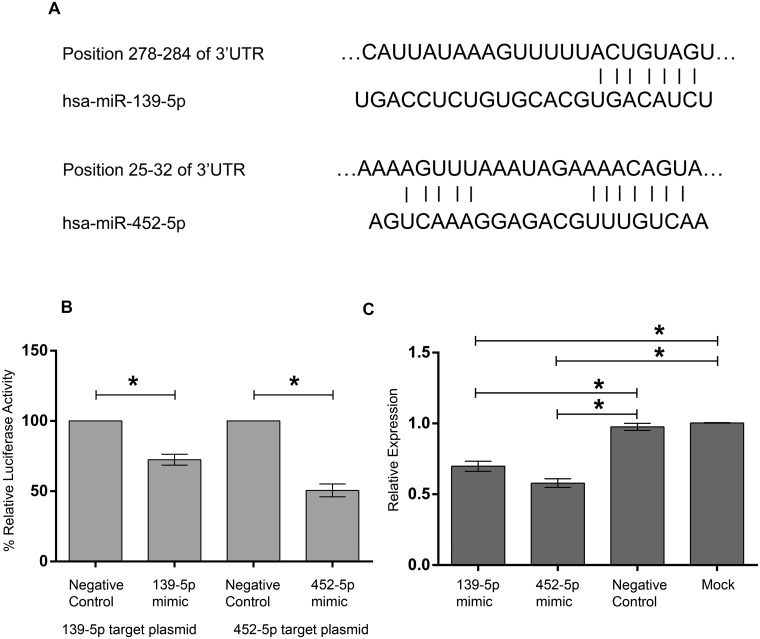
Thirty-eight mature miRNAs and forty-six annotated mRNA transcripts were differentially expressed between the two groups (>1.5 fold change, ANOVA p<0.05). The miRNAs were found to be involved in immune response pathways and identified in other autoimmune diseases. The cellular and molecular functions of the mRNAs showed involvement in cell death and cell survival, cellular proliferation, cytokine signaling and extra-cellular matrix reorganization. Eleven miRNA and mRNA pairs were reciprocally regulated. The Regulator of G protein Signalling 13 (RGS13), known to be involved in GC regulation, was identified in specimens with GC and was paired with downregulation of miR-452-5p and miR-139-5p. MiRNA target sites were validated by dual luciferase assay. Transfection of miRNA mimics led to down regulation of RGS13 expression in Raji cells.
Our study indicates a distinct miRNA and mRNA expression pattern in ectopic GC in MG thymus. These miRNAs and mRNAs are involved in regulatory pathways common to inflammation and immune response, cell cycle regulation and anti-apoptotic pathways suggesting their involvement in support of GC formation in the thymus. We demonstrate for the first time that miR-139-5p and miR-452-5p negatively regulate RGS13 expression.
早发性重症肌无力的特征性病理学是胸腺增生伴异位生发中心(GC)。然而,触发和维持胸腺增生的机制尚未得到很好的描述。在几种自身免疫性疾病的病理学中,已经发现了小的非编码 microRNAs(miRNAs)及其靶基因的失调。我们评估了 MG 胸腺的 miRNA 和 mRNA 谱,并研究了它们在 GC 形成和维持中的作用。
通过组织学评估 MG 胸腺样本,并根据 GC 的出现对其进行分组;GC 阳性和 GC 阴性。使用系统生物学方法研究两组之间的差异。我们的研究包括 miRNA 和 mRNA 谱分析、定量实时 PCR 验证、miRNA 靶标鉴定、途径分析、miRNA-mRNA 相互表达配对和相互作用。
两组之间有 38 个成熟 miRNA 和 46 个注释 mRNA 转录本表达差异(>1.5 倍变化,ANOVA p<0.05)。这些 miRNA 参与了免疫反应途径,并在其他自身免疫性疾病中被鉴定出来。mRNA 的细胞和分子功能表明参与细胞死亡和细胞存活、细胞增殖、细胞因子信号转导和细胞外基质重排。11 个 miRNA 和 mRNA 对被相互调节。已知参与 GC 调节的 G 蛋白信号转导调节因子 13(RGS13)在有 GC 的标本中被鉴定出来,并与 miR-452-5p 和 miR-139-5p 的下调相配对。通过双荧光素酶测定验证了 miRNA 靶位。miRNA 模拟物的转染导致 Raji 细胞中 RGS13 表达下调。
我们的研究表明,MG 胸腺异位 GC 中存在明显的 miRNA 和 mRNA 表达模式。这些 miRNA 和 mRNAs 参与了炎症和免疫反应、细胞周期调节和抗凋亡途径的调节途径,表明它们参与了 GC 在胸腺中的形成。我们首次证明 miR-139-5p 和 miR-452-5p 负调控 RGS13 表达。