Neurology IV-Neuroimmunology and Neuromuscular Diseases Unit, Fondazione I.R.C.C.S. Istituto Neurologico Carlo Besta, Milan, Italy.
Department of Pathological Anatomy, ASST-Bergamo Est Ospedale Bolognini Seriate, Bergamo, Italy.
Front Immunol. 2020 Mar 10;11:142. doi: 10.3389/fimmu.2020.00142. eCollection 2020.
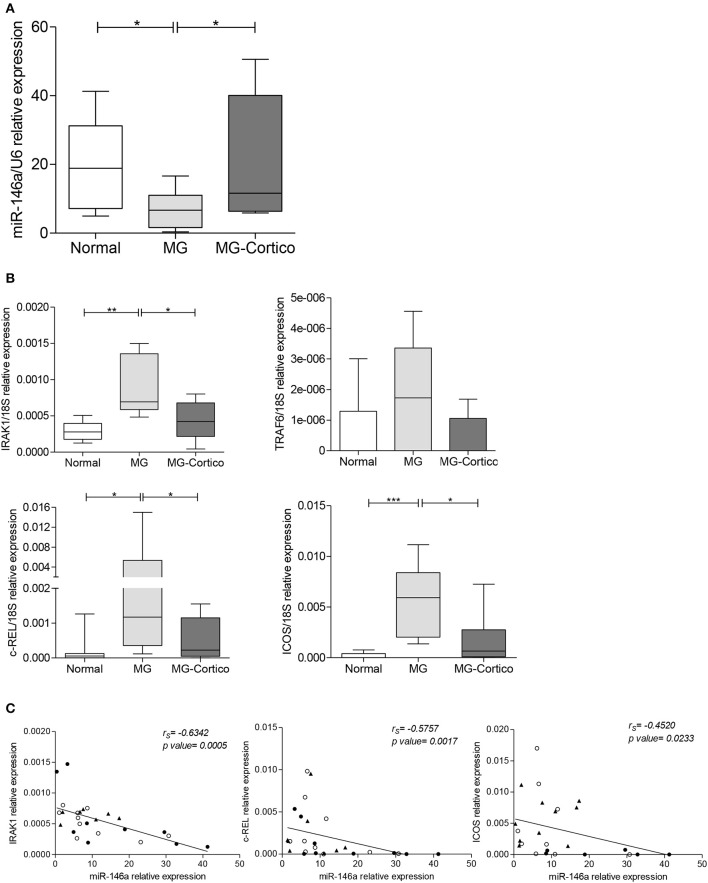
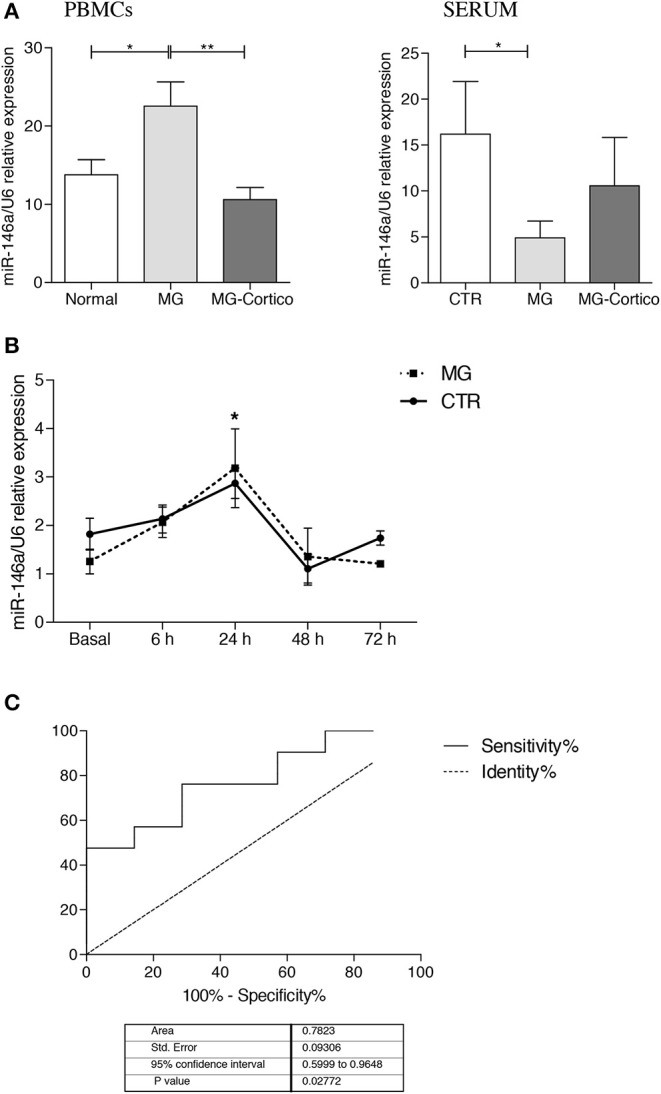
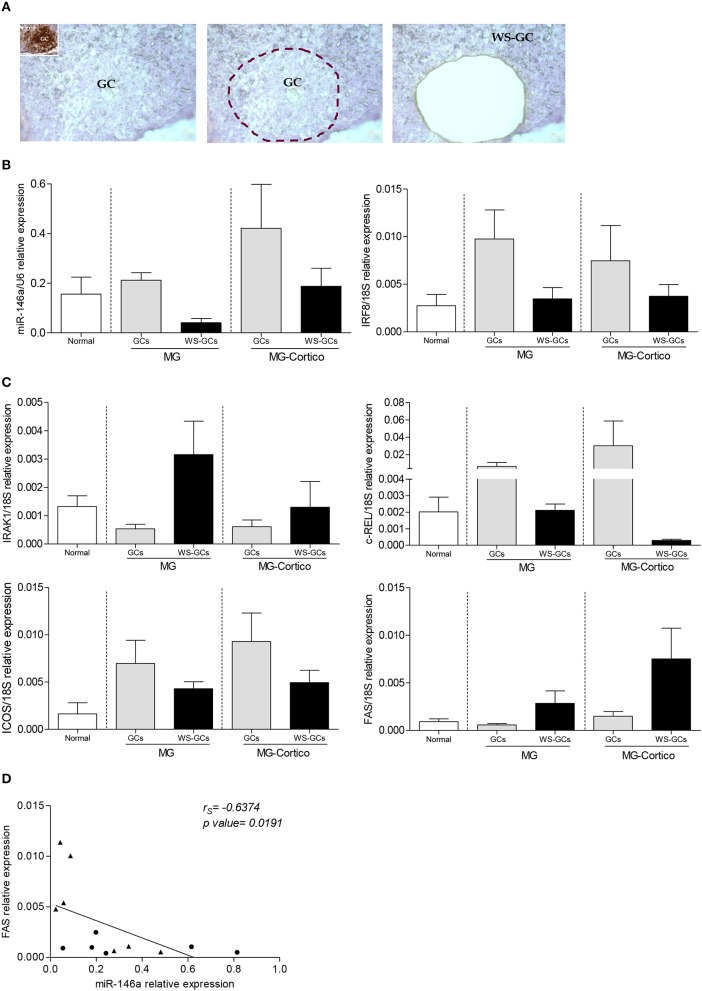
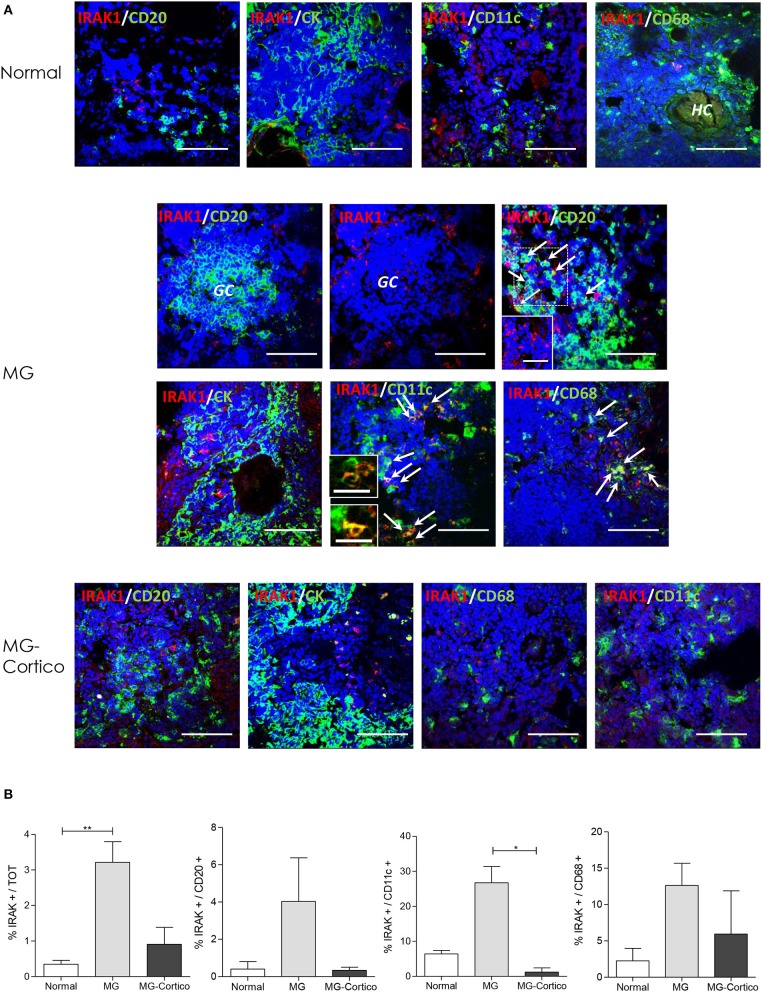
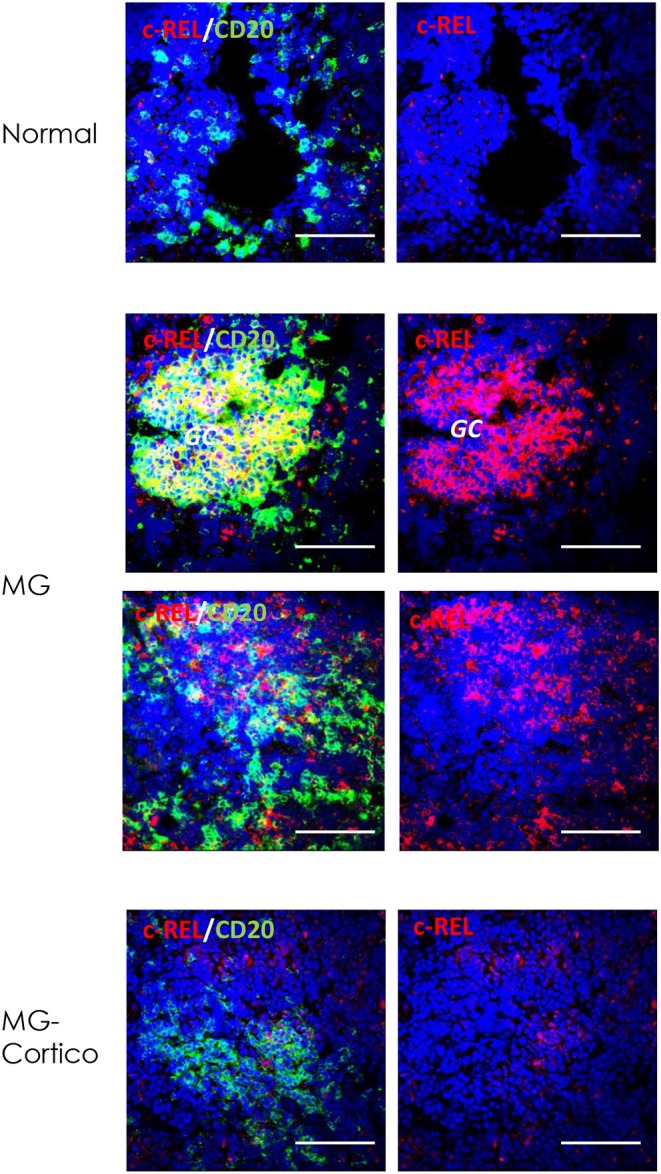
Toll-like receptor (TLR)-mediated innate immune responses are critically involved in the pathogenesis of myasthenia gravis (MG), an autoimmune disorder affecting neuromuscular junction mainly mediated by antiacetylcholine receptor antibodies. Considerable evidence indicate that uncontrolled TLR activation and chronic inflammation significantly contribute to hyperplastic changes and germinal center (GC) formation in the MG thymus, ultimately leading to autoantibody production and autoimmunity. miR-146a is a key modulator of innate immunity, whose dysregulation has been associated with autoimmune diseases. It acts as inhibitor of TLR pathways, mainly by targeting the nuclear factor kappa B (NF-κB) signaling transducers, interleukin 1 receptor associated kinase 1 (IRAK1) and tumor necrosis factor (TNF) receptor associated factor 6 (TRAF6); miR-146a is also able to target c-REL, inducible T-cell costimulator (ICOS), and Fas cell surface death receptor (FAS), known to regulate B-cell function and GC response. Herein, we investigated the miR-146a contribution to the intrathymic MG pathogenesis. By real-time PCR, we found that miR-146a expression was significantly downregulated in hyperplastic MG compared to control thymuses; contrariwise, IRAK1, TRAF6, c-REL, and ICOS messenger RNA (mRNA) levels were upregulated and negatively correlated with miR-146a levels. Microdissection experiments revealed that miR-146a deficiency in hyperplastic MG thymuses was not due to GCs, but restricted to the GC-surrounding medulla, characterized by IRAK1 overexpression. We also showed higher c-REL and ICOS mRNA levels, and lower FAS mRNA levels, in GCs than in the remaining medulla, according to the contribution of these molecules in GC formation. By double immunofluorescence, an increased proportion of IRAK1-expressing dendritic cells and macrophages was found in hyperplastic MG compared to control thymuses, along with GC immunoreactivity for c-REL. Interestingly, in corticosteroid-treated MG patients intrathymic miR-146a and mRNA target levels were comparable to those of controls, suggesting that immunosuppressive therapy may restore the microRNA (miRNA) levels. Indeed, an effect of prednisone on miR-146a expression was demonstrated on peripheral blood cells. Serum miR-146a levels were lower in MG patients compared to controls, indicating dysregulation of the circulating miRNA. Our overall findings strongly suggest that defective miR-146a expression could contribute to persistent TLR activation, lack of inflammation resolution, and hyperplastic changes in MG thymuses, thus linking TLR-mediated innate immunity to B-cell-mediated autoimmunity. Furthermore, they unraveled a new mechanism of action of corticosteroids in inducing control of autoimmunity in MG via miR-146a.
Toll 样受体 (TLR)-介导的先天免疫反应在重症肌无力 (MG) 的发病机制中起着至关重要的作用,MG 是一种主要由抗乙酰胆碱受体抗体介导的影响神经肌肉接头的自身免疫性疾病。大量证据表明,TLR 激活失控和慢性炎症显著促进了 MG 胸腺中的增生性改变和生发中心 (GC) 形成,最终导致自身抗体的产生和自身免疫。miR-146a 是先天免疫的关键调节剂,其失调与自身免疫性疾病有关。它作为 TLR 途径的抑制剂发挥作用,主要通过靶向核因子 kappa B (NF-κB) 信号转导物、白细胞介素 1 受体相关激酶 1 (IRAK1) 和肿瘤坏死因子 (TNF) 受体相关因子 6 (TRAF6);miR-146a 还能够靶向 c-REL、诱导性 T 细胞共刺激物 (ICOS) 和 Fas 细胞表面死亡受体 (FAS),这些分子已知可调节 B 细胞功能和 GC 反应。在此,我们研究了 miR-146a 在胸腺内 MG 发病机制中的作用。通过实时 PCR,我们发现与对照胸腺相比,增生性 MG 中 miR-146a 的表达显著下调;相反,IRAK1、TRAF6、c-REL 和 ICOS 信使 RNA (mRNA) 水平上调,并与 miR-146a 水平呈负相关。显微解剖实验表明,增生性 MG 胸腺中 miR-146a 的缺乏不是由于 GC,而是局限于 GC 周围的髓质,其特征是 IRAK1 过表达。我们还显示,与剩余的髓质相比,GC 中 c-REL 和 ICOS mRNA 水平更高,FAS mRNA 水平更低,这与这些分子在 GC 形成中的作用有关。通过双重免疫荧光,与对照胸腺相比,在增生性 MG 中发现 IRAK1 表达的树突状细胞和巨噬细胞的比例增加,同时 GC 对 c-REL 呈免疫反应性。有趣的是,在接受皮质类固醇治疗的 MG 患者中,胸腺内 miR-146a 和 mRNA 靶标水平与对照组相当,表明免疫抑制治疗可能恢复 miRNA 水平。事实上,已经证明泼尼松对外周血细胞中 miR-146a 表达的作用。与对照组相比,MG 患者的血清 miR-146a 水平较低,表明循环 miRNA 失调。我们的整体研究结果强烈表明,miR-146a 表达缺陷可能导致持续的 TLR 激活、炎症消退缺乏和 MG 胸腺的增生性改变,从而将 TLR 介导的先天免疫与 B 细胞介导的自身免疫联系起来。此外,它们揭示了皮质类固醇通过 miR-146a 诱导控制 MG 自身免疫的新作用机制。