VCU Pauley Heart Center, Virginia Commonwealth University, Richmond, Virginia; Department of Cardiology, Hospital Italiano, Buenos Aires, Argentina.
VCU Pauley Heart Center, Virginia Commonwealth University, Richmond, Virginia; 'Dianne and C. Kenneth Wright' Center for Clinical and Translational Research, Virginia Commonwealth University, Richmond, Virginia.
J Am Coll Cardiol. 2018 Oct 16;72(16):1955-1971. doi: 10.1016/j.jacc.2018.07.072.
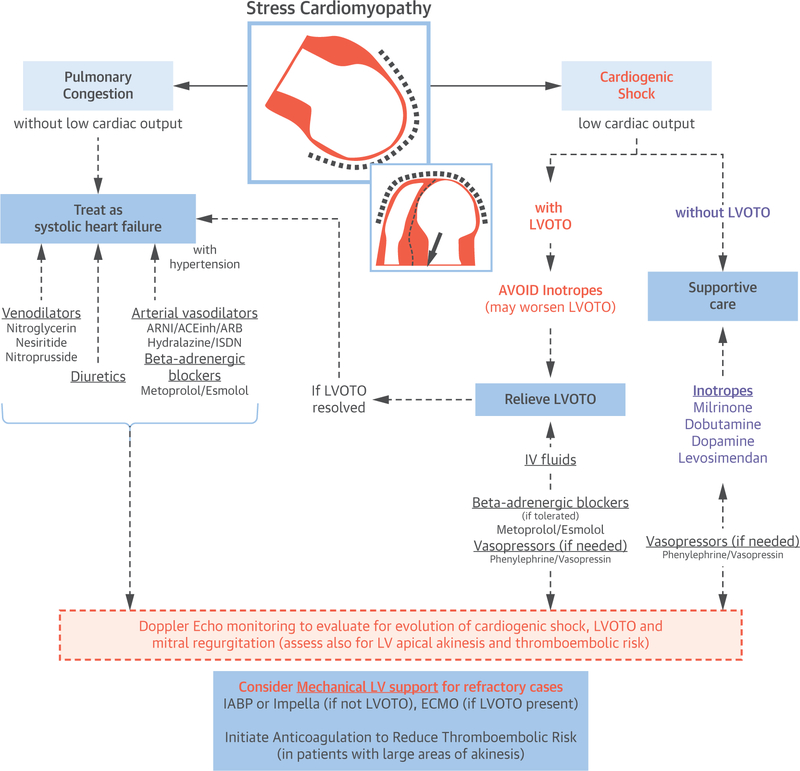
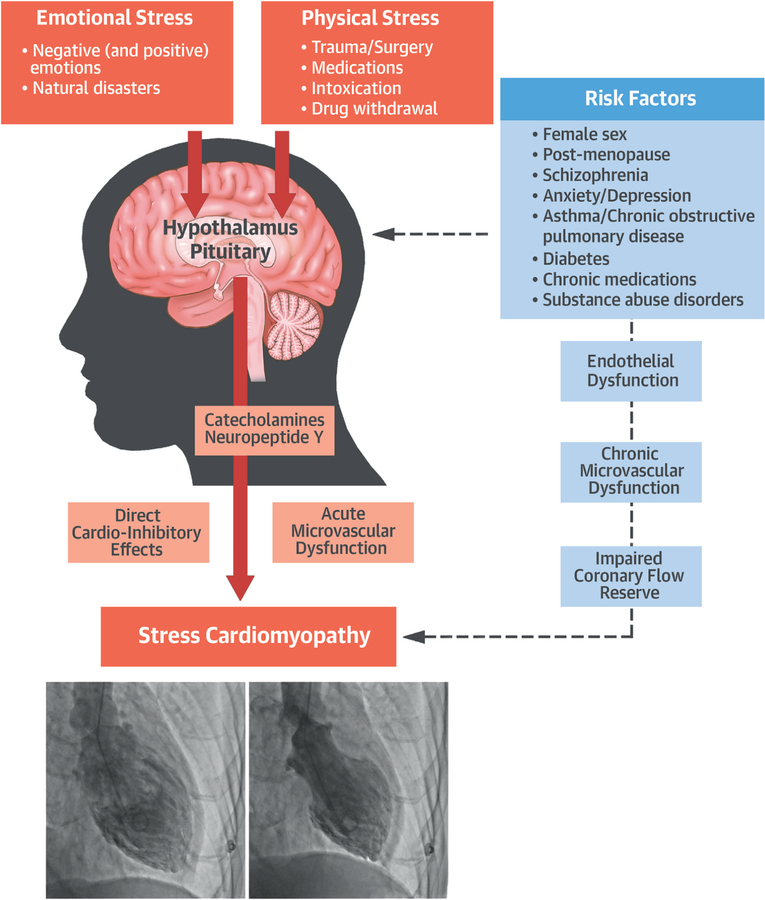
Stress cardiomyopathy is an acute reversible heart failure syndrome initially believed to represent a benign condition due to its self-limiting clinical course, but now recognized to be associated with a non-negligible rate of serious complications such as ventricular arrhythmias, systemic thromboembolism, and cardiogenic shock. Due to an increased awareness and recognition, the incidence of stress cardiomyopathy has been rising (15-30 cases per 100,000 per year), although the true incidence is unknown as the condition is likely underdiagnosed. Stress cardiomyopathy represents a form of neurocardiogenic myocardial stunning, and while the link between the brain and the heart is established, the exact pathophysiological mechanisms remain unclear. We herein review the proposed risk factors and triggers for the syndrome and discuss a practical approach to diagnosis and treatment of the patients with stress cardiomyopathy, highlighting potential challenges and unresolved questions.
应激性心肌病是一种急性可逆性心力衰竭综合征,最初因其自限性临床病程而被认为是良性疾病,但现在已认识到它与严重并发症(如室性心律失常、全身性血栓栓塞和心源性休克)的发生率不可忽视。由于认识和识别的提高,应激性心肌病的发病率一直在上升(每年每 10 万人中有 15-30 例),尽管由于该疾病可能被漏诊,实际发病率尚不清楚。应激性心肌病代表一种神经心源性心肌顿抑的形式,尽管已经确立了大脑和心脏之间的联系,但确切的病理生理机制仍不清楚。本文回顾了该综合征的拟议危险因素和诱因,并讨论了应激性心肌病患者的诊断和治疗的实用方法,强调了潜在的挑战和未解决的问题。