Key Laboratory of Biotechnology of Antibiotics, National Health Commission (NHC), Institute of Medicinal Biotechnology, Chinese Academy of Medical Sciences and Peking Union Medical College, Beijing, China.
Front Immunol. 2018 Sep 24;9:2176. doi: 10.3389/fimmu.2018.02176. eCollection 2018.
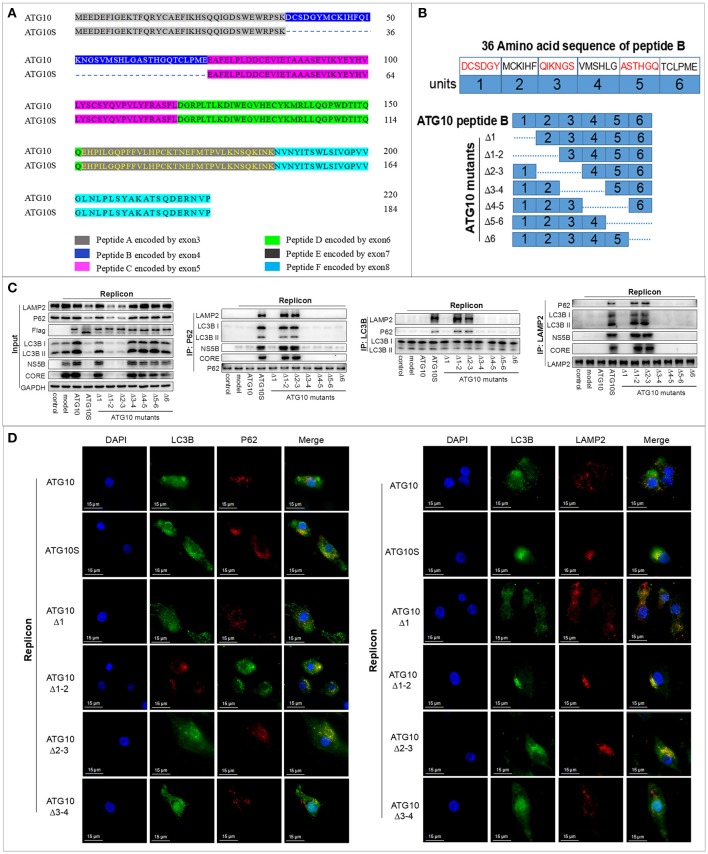
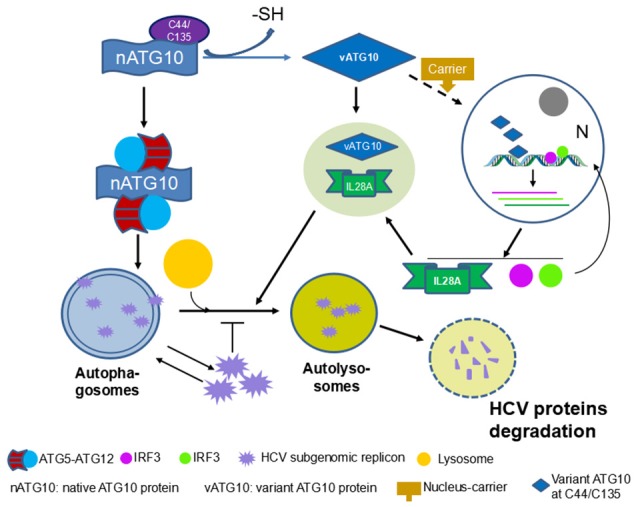
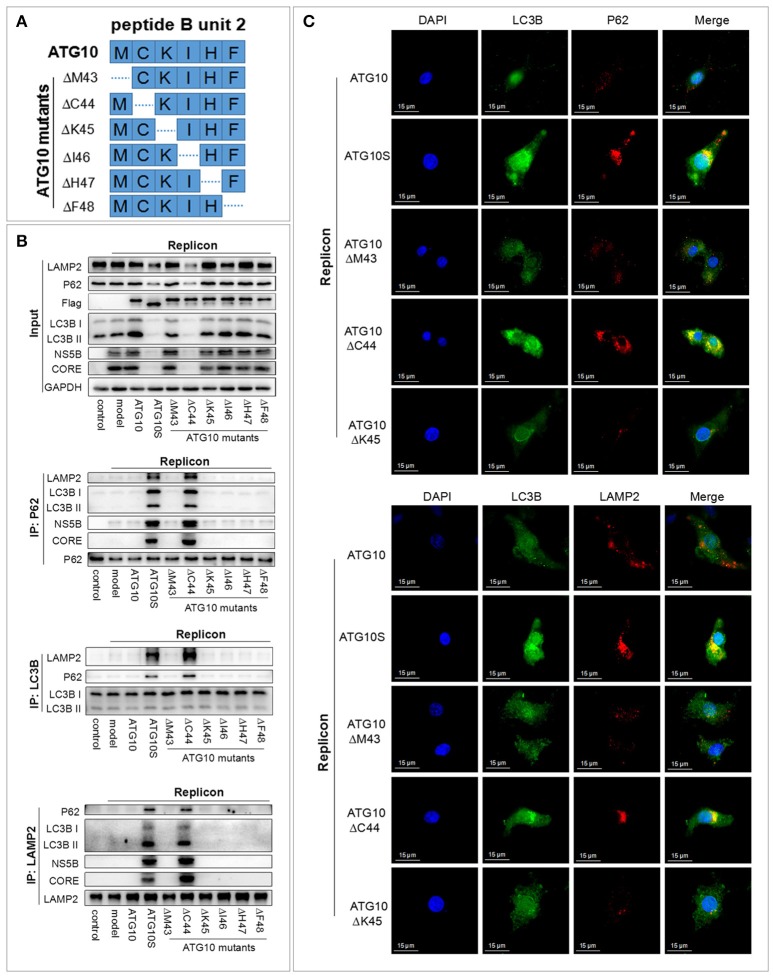
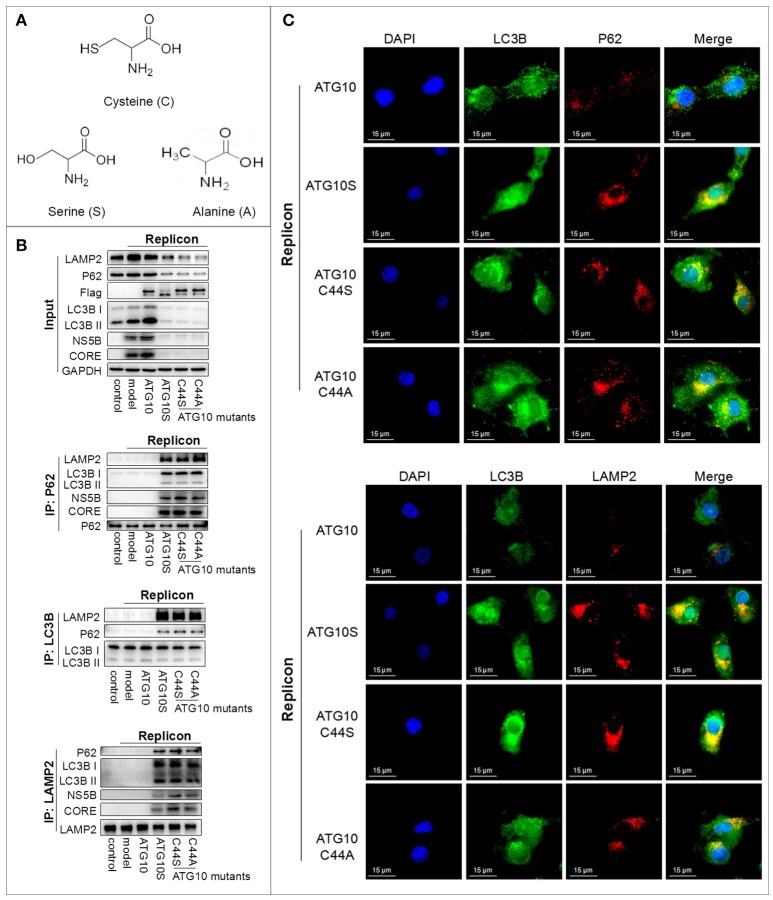
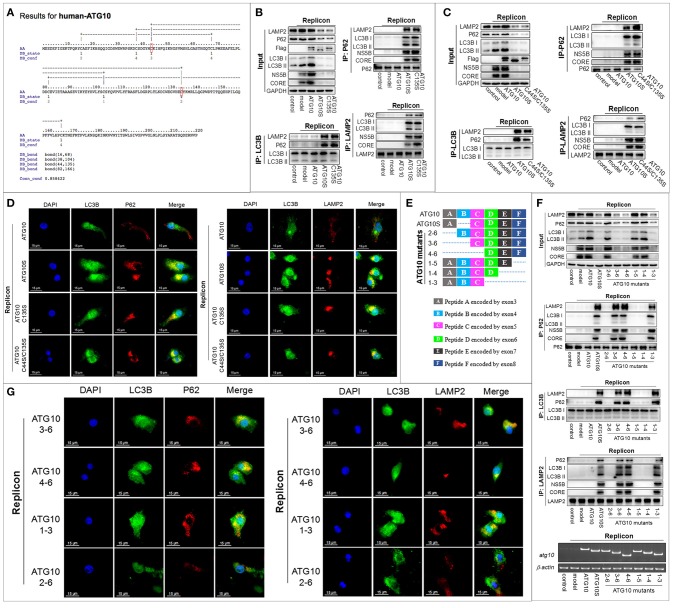
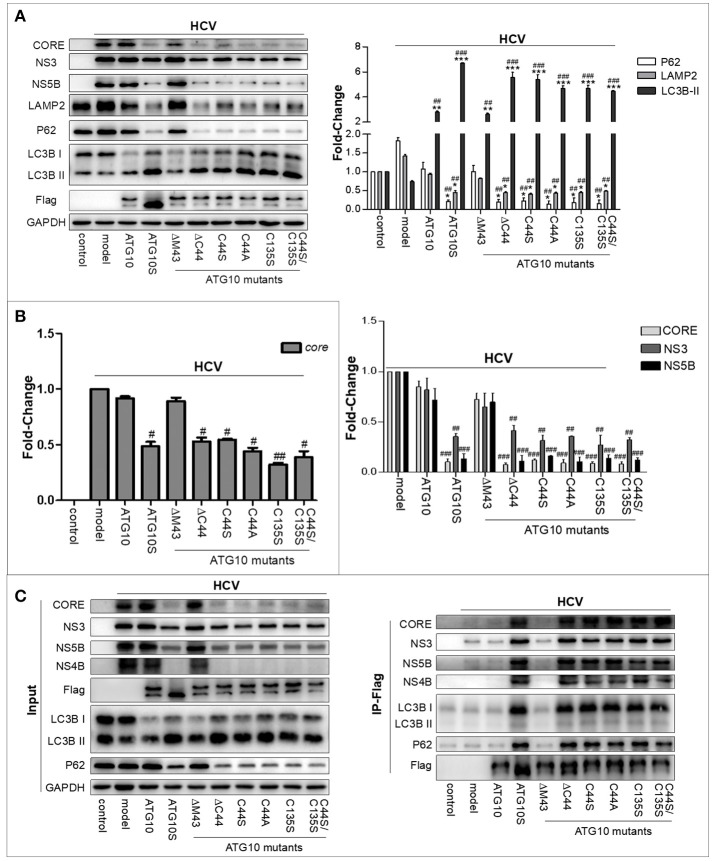
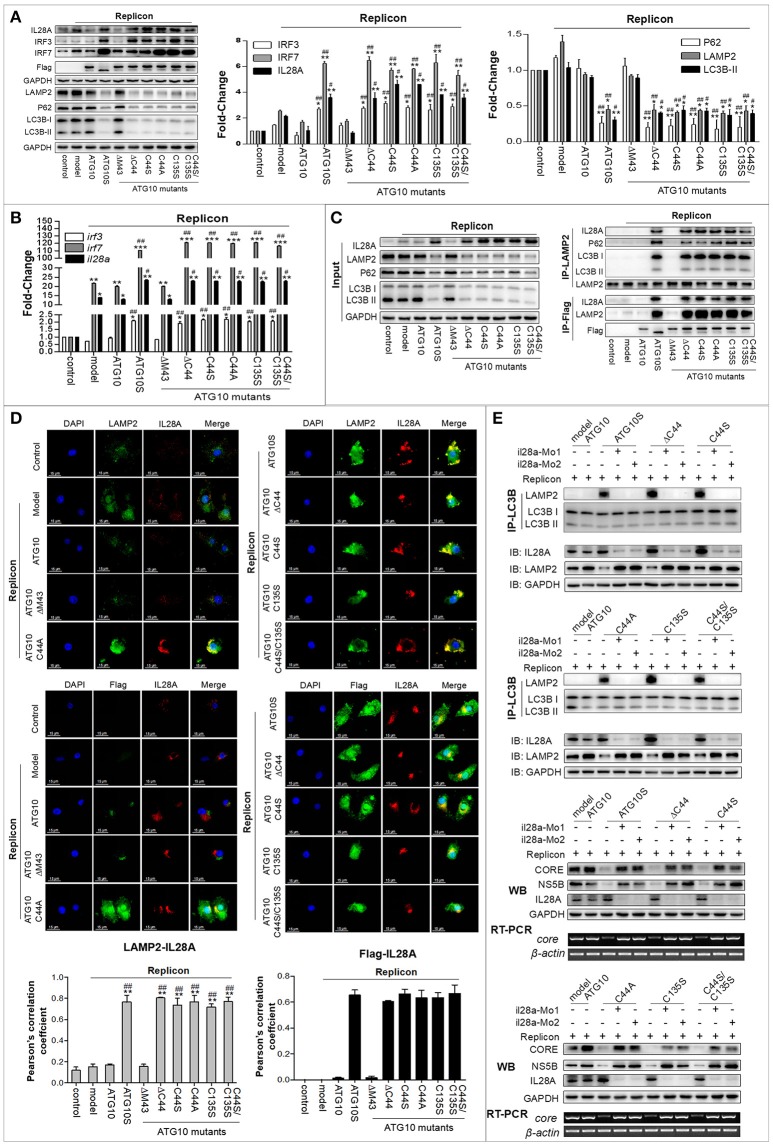
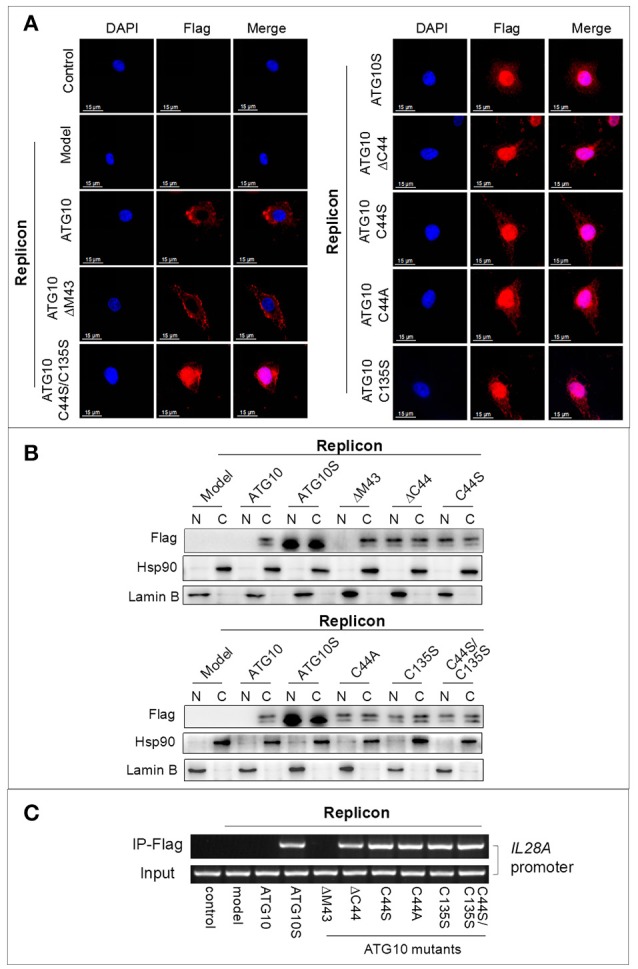
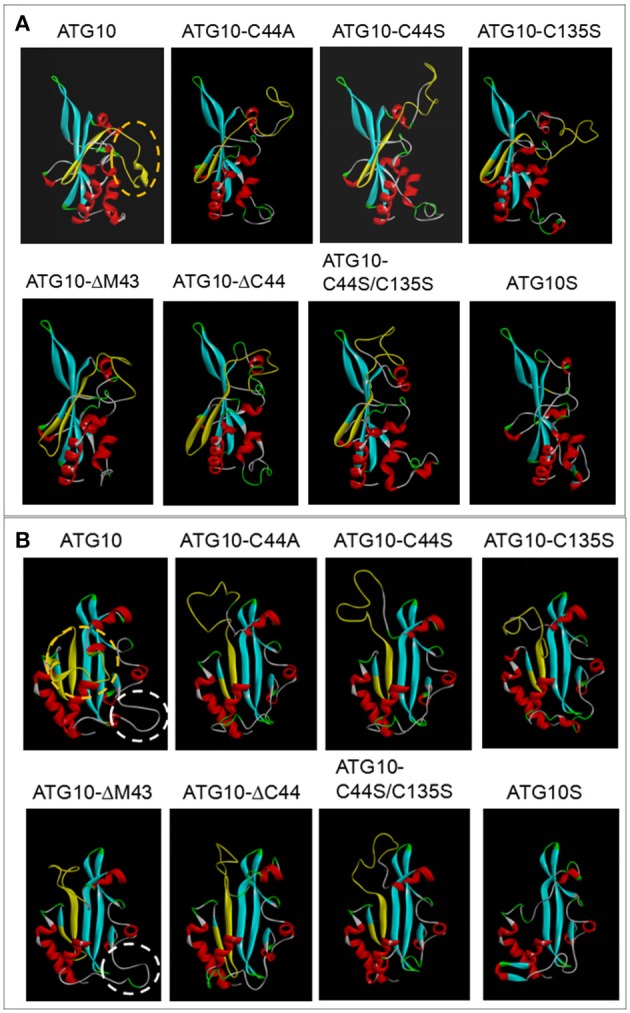
Autophagy-related 10 (ATG10) is essential for autophagy since it promotes ATG5-ATG12 complex formation. Our previous study found that there are two isoforms of the ATG10 protein, ATG10 (a longer one) and ATG10S, which have identical sequences except an absence of a 36-amino acid fragment (peptide B) in ATG10S, yet exhibit distinct effects on HCV genome replication. Here, we report the existence of two amino acids, cysteine at residue 44 and 135 (Cys and Cys, respectively), in ATG10 being related to differential effects of ATG10 on HCV replication and autophagy flux. Through a series of ATG10 mutation experiments and protein modeling prediction, we found that Cys was involved in the dual role of the two isoforms of ATG10 protein on HCV replication and autophagy flux, and that Cys plays similar roles as Cys, but the disulfide bond of Cys-Cys was not verified in the ATG10 protein. Further analyses by full HCV virion infection confirmed the roles of -SH of Cys and Cys on HCV replication. ATG10 with deleted or mutated Cys and/or Cys could activate expression of innate immunity-related genes, including , and promote complete autophagy by driving autophagosomes to interact with lysosomes via IL28A-mediation. Subcellular localization assay and chromatin immunoprecipitation assay showed that ATG10 with the sulfydryl deletion or substitution of Cys and Cys could translocate into the nucleus and bind to promoter of IL28A gene; the results indicated that ATG10 with Cys and/or Cys absence might act as transcriptional factors to trigger the expression of anti-HCV immunological genes, too. In conclusion, our findings provide important information for understanding the differential roles on HCV replication and autophagy flux between ATG10 and ATG10S, and how the structure-function relationship of ATG10 transformed by a single -SH group loss on Cys and Cys in ATG10 protein, which may be a new target against HCV replication.
自噬相关蛋白 10(ATG10)对于自噬至关重要,因为它促进了 ATG5-ATG12 复合物的形成。我们之前的研究发现 ATG10 蛋白有两种同工型,即 ATG10(较长的一种)和 ATG10S,它们除了在 ATG10S 中缺少 36 个氨基酸片段(肽 B)外,序列完全相同,但对 HCV 基因组复制有不同的影响。在这里,我们报告了 ATG10 中两个氨基酸,即残基 44 和 135 上的半胱氨酸(Cys 和 Cys),与 ATG10 对 HCV 复制和自噬通量的不同影响有关。通过一系列 ATG10 突变实验和蛋白质建模预测,我们发现 Cys 参与了 ATG10 两种同工型对 HCV 复制和自噬通量的双重作用,并且 Cys 发挥了与 Cys 相似的作用,但在 ATG10 蛋白中未验证 Cys-Cys 二硫键的存在。通过全 HCV 病毒粒子感染的进一步分析证实了 Cys 和 Cys 的 -SH 在 HCV 复制中的作用。具有缺失或突变的 Cys 和/或 Cys 的 ATG10 可以通过诱导先天免疫相关基因的表达,包括 和 ,并通过 IL28A 介导的自噬体与溶酶体相互作用来促进完全自噬。亚细胞定位实验和染色质免疫沉淀实验表明,具有 Cys 和/或 Cys 缺失的 ATG10 可以转位到细胞核,并与 IL28A 基因的启动子结合;结果表明,具有缺失 Cys 和/或 Cys 的 ATG10 可能作为转录因子,也可以触发抗 HCV 免疫基因的表达。总之,我们的研究结果为理解 ATG10 和 ATG10S 对 HCV 复制和自噬通量的不同作用以及 ATG10 蛋白中单个 -SH 基团缺失对 Cys 和 Cys 的结构-功能关系如何转化提供了重要信息,这可能是针对 HCV 复制的新靶点。