Department of Clinical Pharmacology, School of Pharmacy, Tokyo University of Pharmacy and Life Sciences, Hachioji, Tokyo 192‑0392, Japan.
Department of Applied Biochemistry, School of Pharmacy, Tokyo University of Pharmacy and Life Sciences, Hachioji, Tokyo 192‑0392, Japan.
Oncol Rep. 2019 Jan;41(1):27-42. doi: 10.3892/or.2018.6780. Epub 2018 Oct 9.
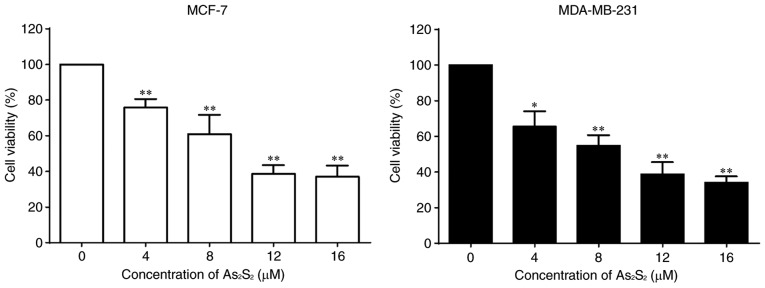
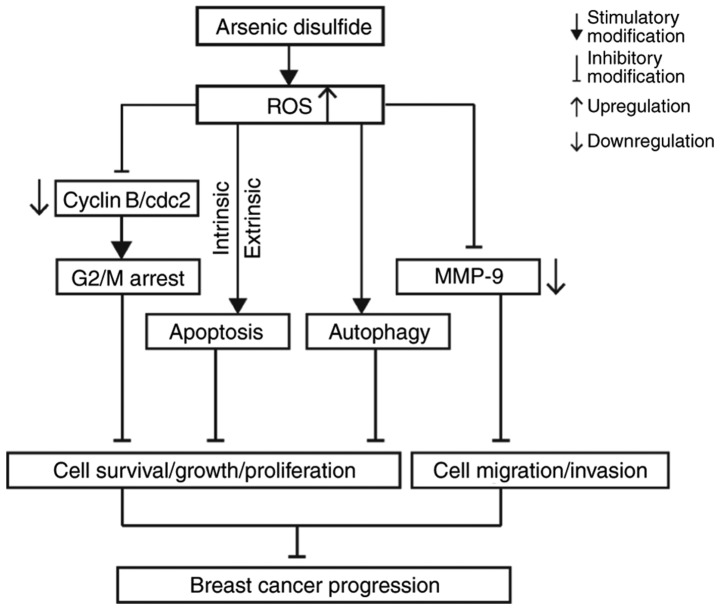
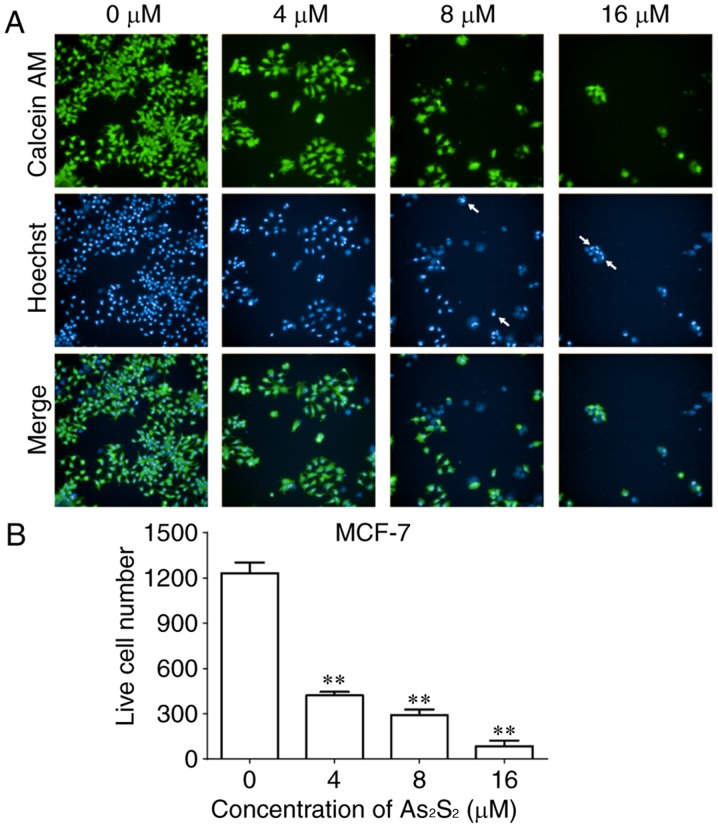
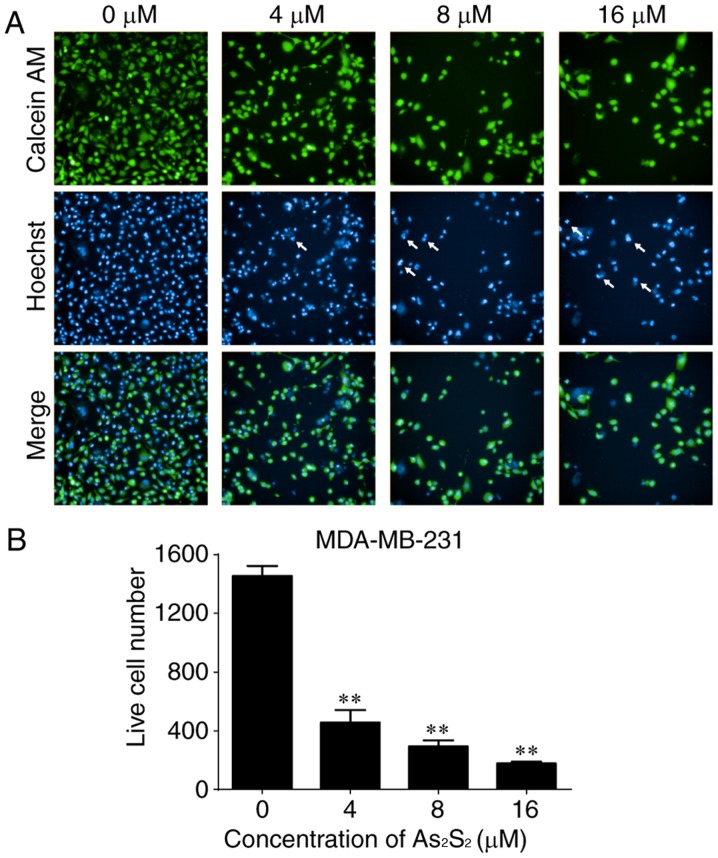
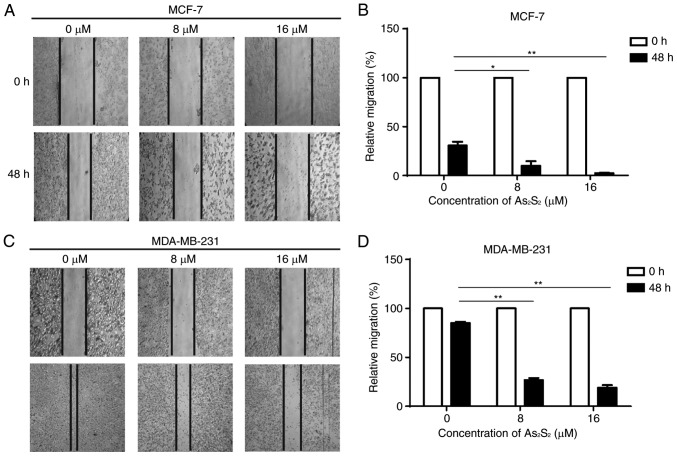
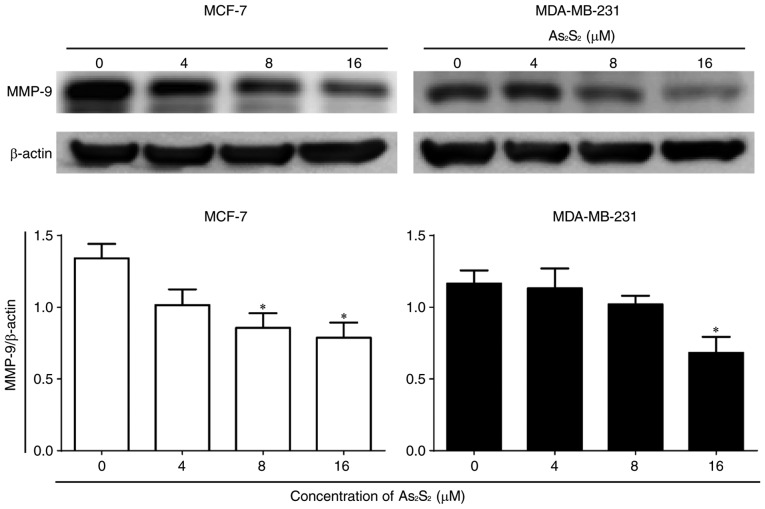
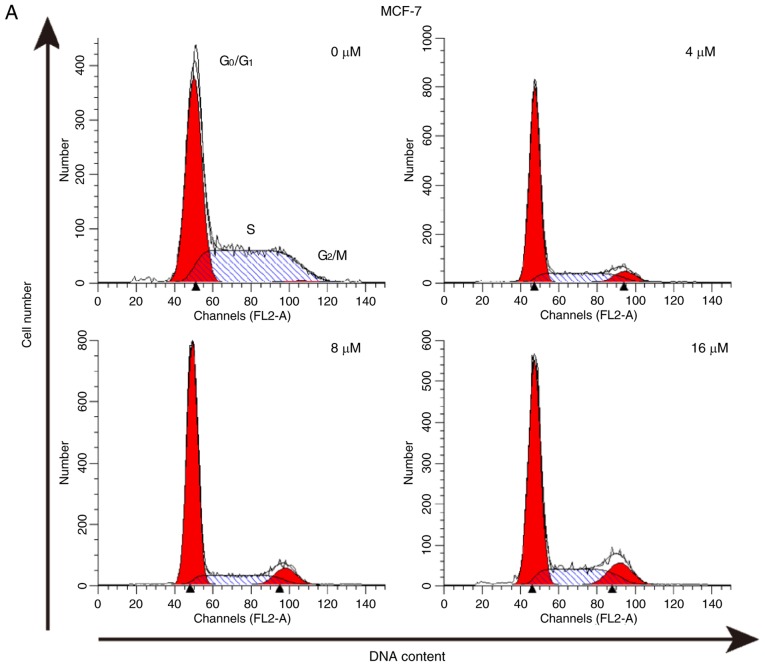
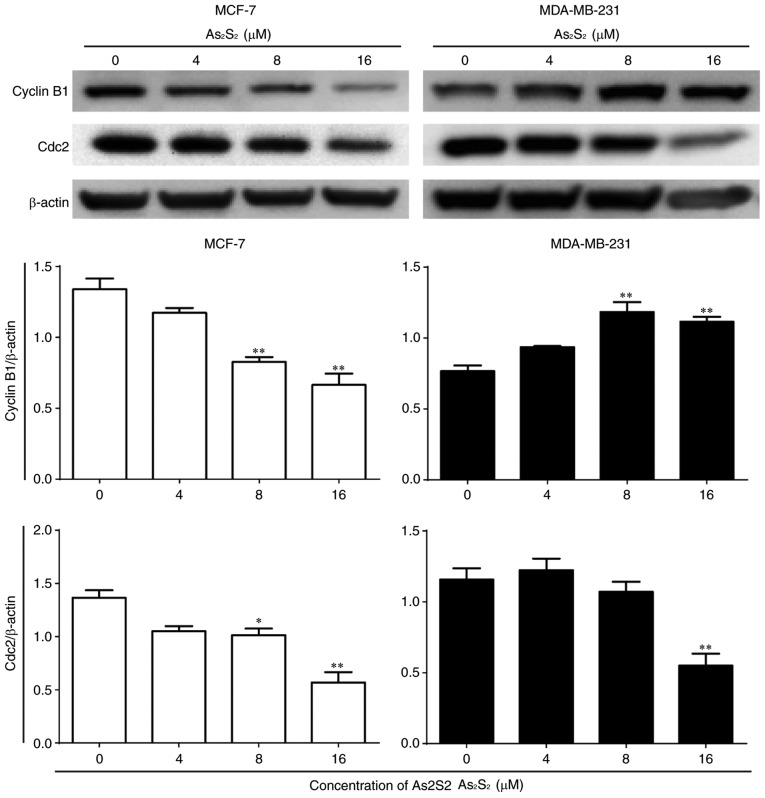
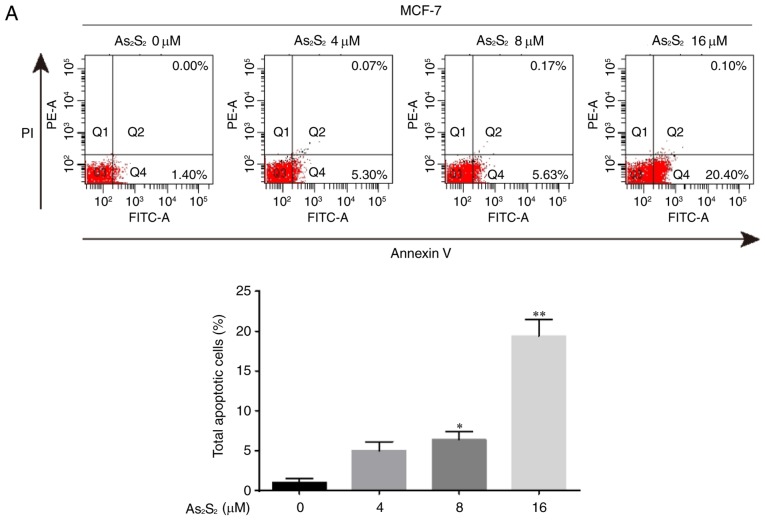
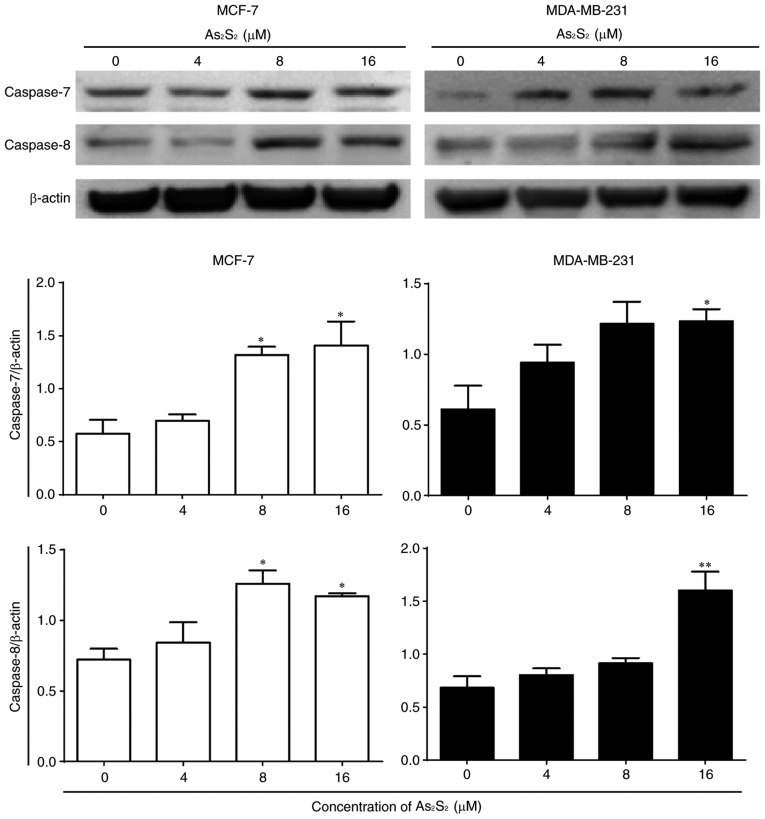
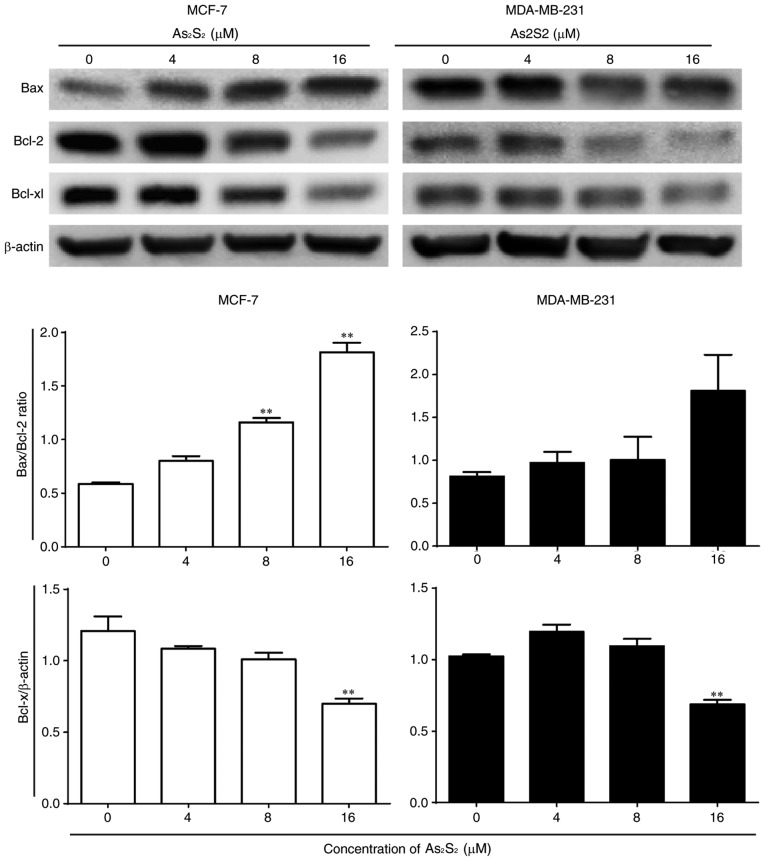
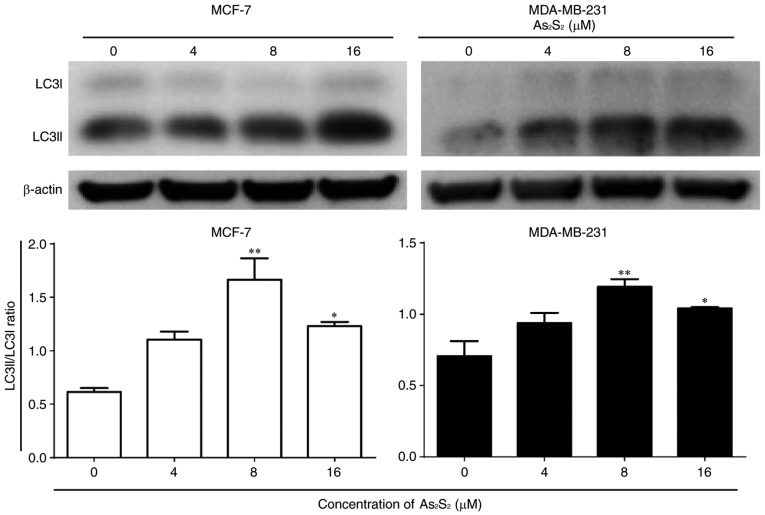
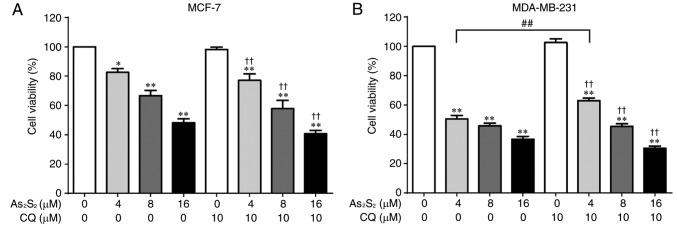
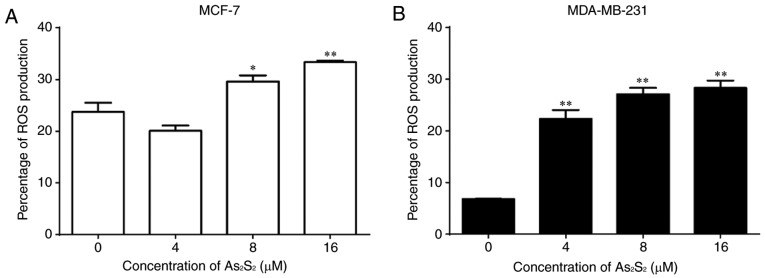
In the present study, the antitumor effects of arsenic disulfide (As2S2) on the proliferative, survival and migratory ability of human breast cancer MCF‑7 and MDA‑MB‑231 cells were investigated, and its potential underlying molecular mechanisms with an emphasis on cell cycle arrest, apoptosis induction, autophagy induction and reactive oxygen species (ROS) generation were determined. The results indicated that As2S2 significantly inhibited the viability, survival and migration of breast cancer cells in a dose‑dependent manner. In addition, it was identified that As2S2 induced cell cycle arrest primarily at G2/M phase in the two breast cancer cell lines by regulating the expression of associated proteins, including cyclin B1 and cell division cycle protein 2. In addition to cell cycle arrest, As2S2 also triggered the induction of apoptosis in cells by activating the expression of pro‑apoptotic proteins, including caspase‑7 and ‑8, as well as increasing the B‑cell lymphoma 2 (Bcl‑2)‑associated X protein/Bcl‑2 ratio, while decreasing the protein expression of anti‑apoptotic B‑cell lymphoma extra‑large. In addition, As2S2 stimulated the accumulation of microtubule‑associated protein 1A/1B‑light chain 3 (LC3)‑II and increased the LC3‑II/LC3‑I ratio, indicating the occurrence of autophagy. As2S2 treatment also inhibited the protein expression of matrix metalloproteinase‑9 (MMP‑9), but increased the intracellular accumulation of ROS in the two breast cancer cell lines, which may assist in alleviating metastasis and attenuating the progression of breast cancer. Taken together, the results of the present study suggest that As2S2 inhibits the progression of human breast cancer cells through the regulation of cell cycle arrest, intrinsic and extrinsic apoptosis, autophagy, MMP‑9 signaling and ROS generation.
在本研究中,研究了二硫化二砷(As2S2)对人乳腺癌 MCF-7 和 MDA-MB-231 细胞增殖、存活和迁移能力的抗肿瘤作用,并确定了其潜在的分子机制,重点是细胞周期停滞、细胞凋亡诱导、自噬诱导和活性氧(ROS)生成。结果表明,As2S2 显著抑制乳腺癌细胞的活力、存活和迁移,呈剂量依赖性。此外,研究还发现,As2S2 通过调节相关蛋白的表达,包括细胞周期蛋白 B1 和细胞分裂周期蛋白 2,主要将两种乳腺癌细胞系的细胞周期阻滞在 G2/M 期。除了细胞周期停滞外,As2S2 通过激活促凋亡蛋白,包括 caspase-7 和 caspase-8 的表达,以及增加 B 细胞淋巴瘤 2(Bcl-2)相关 X 蛋白/Bcl-2 比值,同时降低抗凋亡 B 细胞淋巴瘤特大蛋白的表达,也引发了细胞凋亡。此外,As2S2 刺激微管相关蛋白 1A/1B-轻链 3(LC3)-II 的积累,并增加 LC3-II/LC3-I 比值,表明自噬的发生。As2S2 处理还抑制了基质金属蛋白酶-9(MMP-9)的蛋白表达,但增加了两种乳腺癌细胞系中 ROS 的细胞内积累,这可能有助于减轻转移并减缓乳腺癌的进展。综上所述,本研究结果表明,As2S2 通过调节细胞周期停滞、内源性和外源性细胞凋亡、自噬、MMP-9 信号通路和 ROS 生成,抑制人乳腺癌细胞的进展。