Wani Tasaduq H, Surendran Sreeraj, Mishra Vishnu S, Chaturvedi Jaya, Chowdhury Goutam, Chakrabarty Anindita
Department of Life Sciences, Shiv Nadar University, Greater Noida, UP 201314, India.
Department of Chemistry, Shiv Nadar University, Greater Noida, UP 201314, India.
Oncotarget. 2018 Sep 11;9(71):33589-33600. doi: 10.18632/oncotarget.26096.
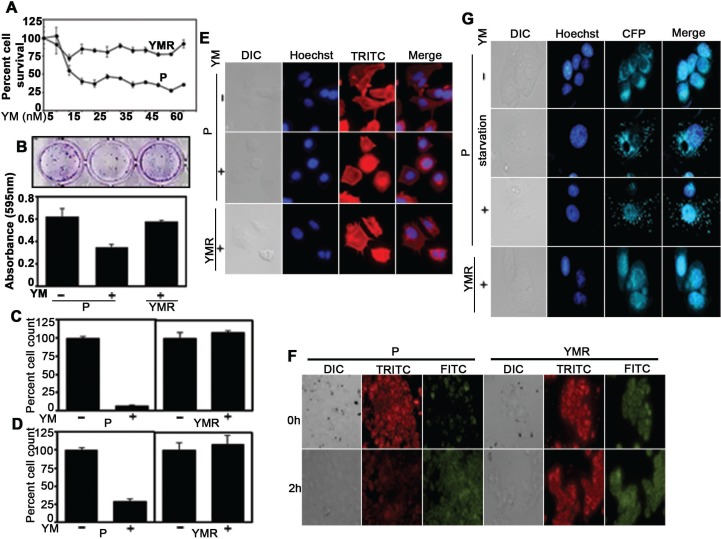
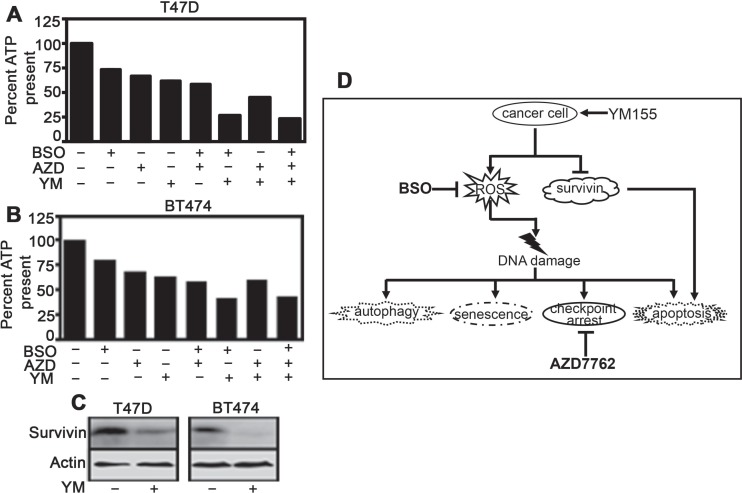
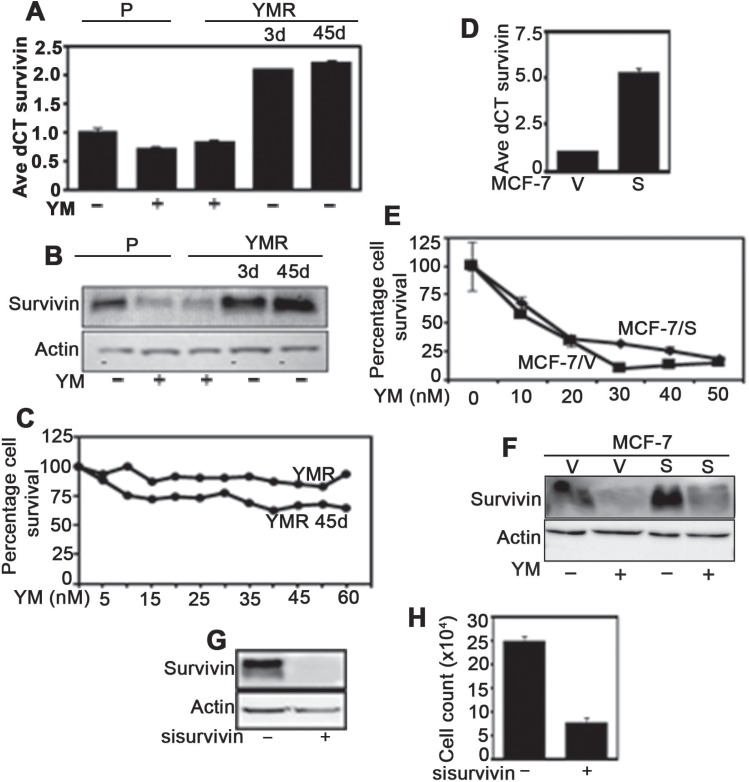
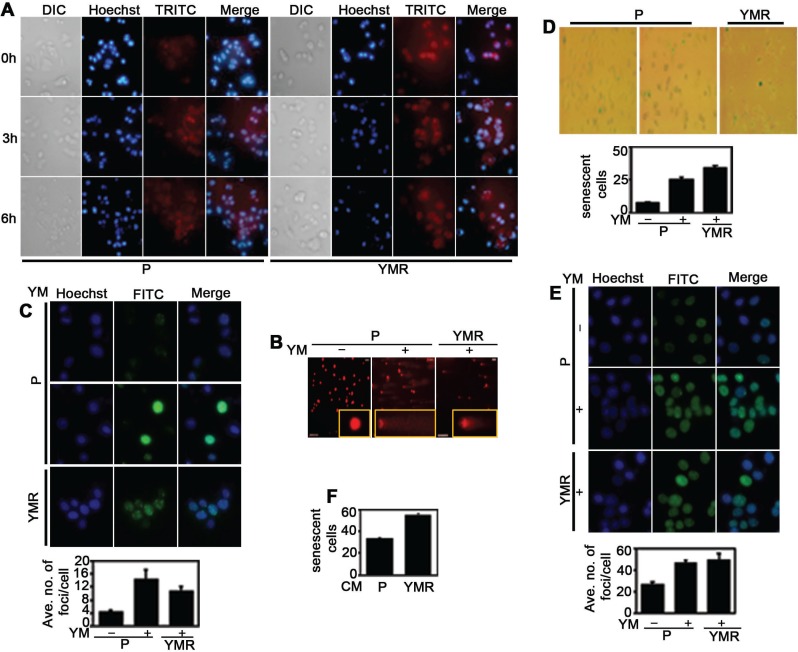
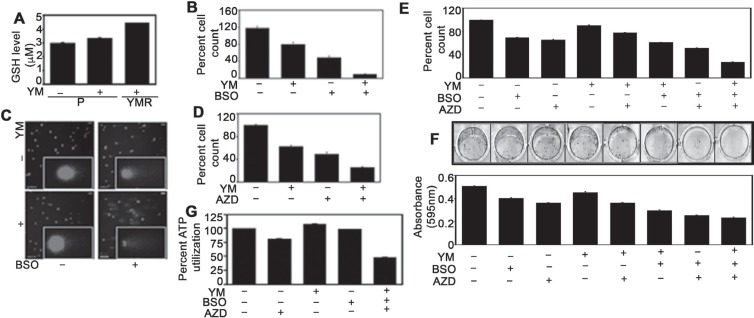
Sepantronium bromide (YM155), originally developed against the anti-apoptotic protein survivin, performed exceptionally well in pre-clinical and phase I clinical trials. However, in phase II trials of several cancer types including breast cancer it performed poorly. Additionally, no definitive correlation between survivin level and response to therapy was found. In an attempt to understand the true reason of the late-stage failure of this promising drug, we developed YM155-resistant MCF-7 breast cancer cell line and characterized side-by-side with the drug-naïve parental cell line. Chronic YM155 treatment resulted in downregulation of survivin expression yet triggered cellular responses typical of adaptation to persistent DNA damage. Lowering endogenous antioxidant glutathione level and activity of cell cycle check-point kinase restored YM155 activity. Thus, contrary to its development as a survivin suppressant, YM155 primarily acts as a chemotherapeutic drug causing oxidative stress-mediated DNA damage. Adaptation to long-term exposure to YM155 can be prevented and/or overcome by interfering with detoxification and DNA damage-response pathways. Finally, proteins associated with DNA damage-response pathway will be more appropriate as predictive biomarkers of YM155 in breast tumor cells.
溴化司帕沙星(YM155)最初是针对抗凋亡蛋白生存素研发的,在临床前和I期临床试验中表现出色。然而,在包括乳腺癌在内的几种癌症类型的II期试验中,它的表现不佳。此外,未发现生存素水平与治疗反应之间存在明确的相关性。为了试图了解这种有前景的药物后期失败的真正原因,我们构建了对YM155耐药的MCF-7乳腺癌细胞系,并与未接触过该药物的亲本细胞系进行了对比研究。长期使用YM155治疗导致生存素表达下调,但引发了典型的对持续性DNA损伤适应的细胞反应。降低内源性抗氧化剂谷胱甘肽水平和细胞周期检查点激酶的活性可恢复YM155的活性。因此,与作为生存素抑制剂的研发初衷相反,YM155主要作为一种化疗药物,引起氧化应激介导 的DNA损伤。通过干扰解毒和DNA损伤反应途径,可以预防和/或克服对长期暴露于YM155的适应性。最后,与DNA损伤反应途径相关的蛋白质将更适合作为乳腺癌细胞中YM155的预测生物标志物。