Division of Bioanalytical Chemistry, Amsterdam Institute for Molecules, Medicines and Systems, Department of Chemistry and Pharmaceutical Sciences, Faculty of Science, Vrije Universiteit, De Boelelaan 1085, 1081 HV, Amsterdam, The Netherlands.
TI-COAST, Science Park 904, 1098 XH, Amsterdam, The Netherlands.
Anal Bioanal Chem. 2018 Dec;410(30):7837-7848. doi: 10.1007/s00216-018-1414-y. Epub 2018 Oct 17.
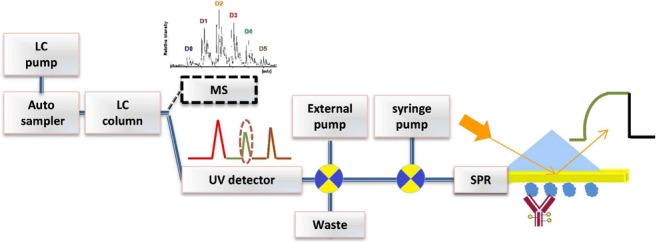
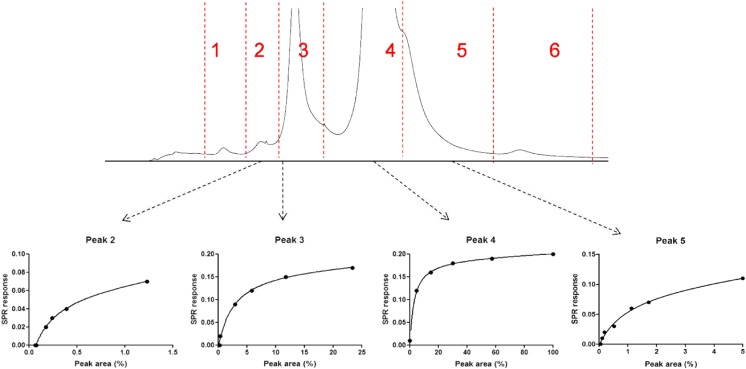
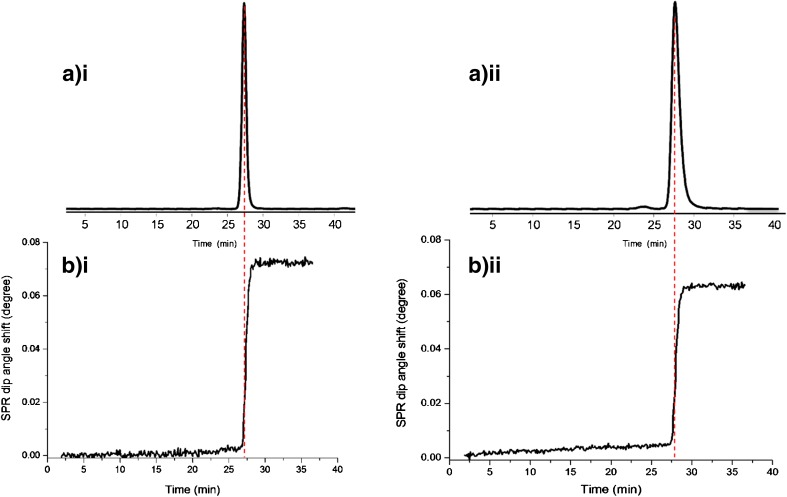
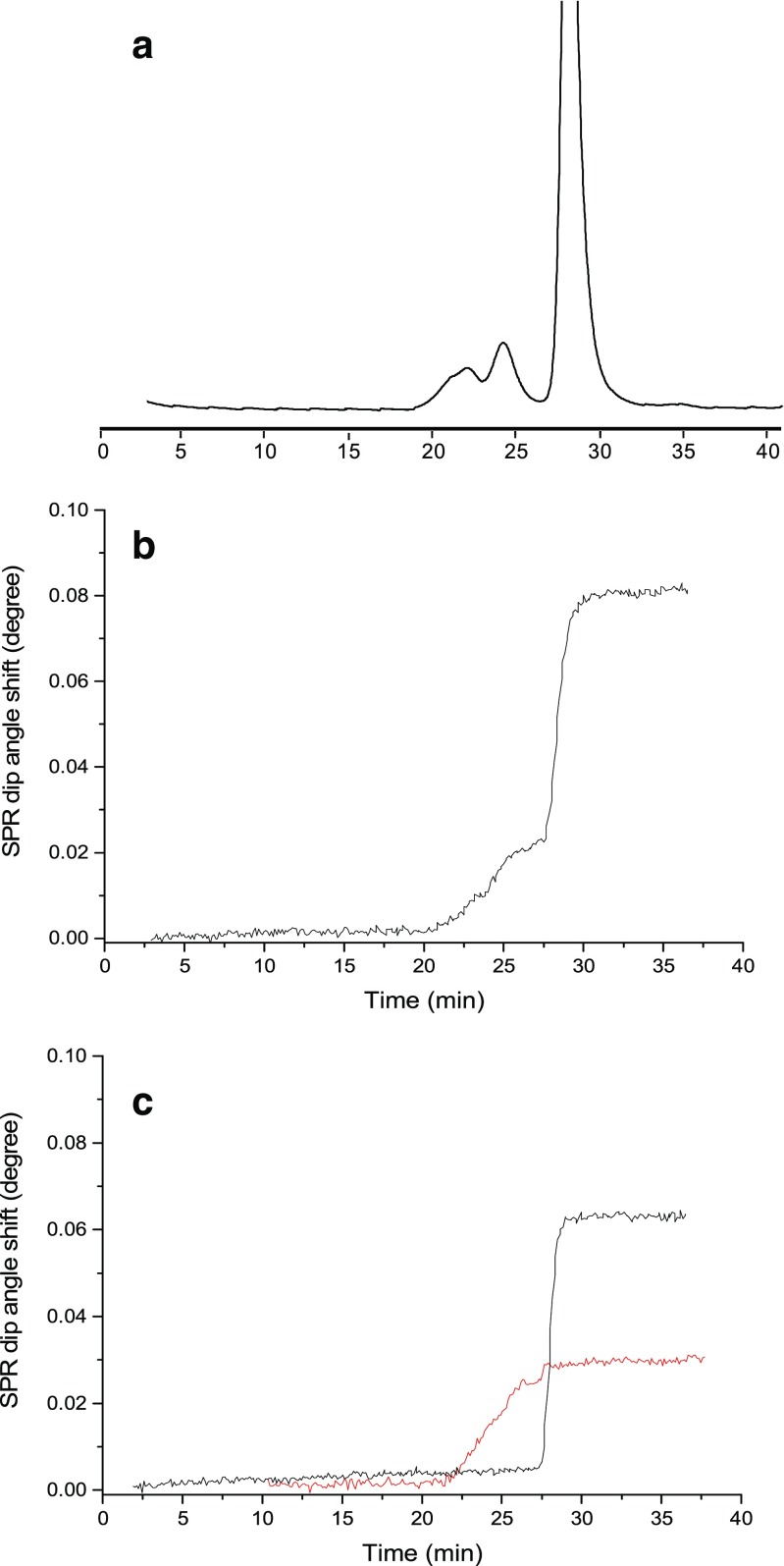
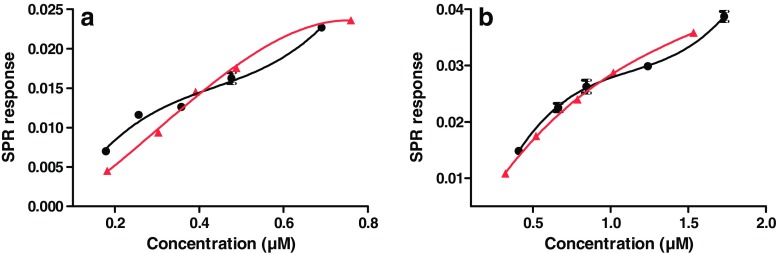
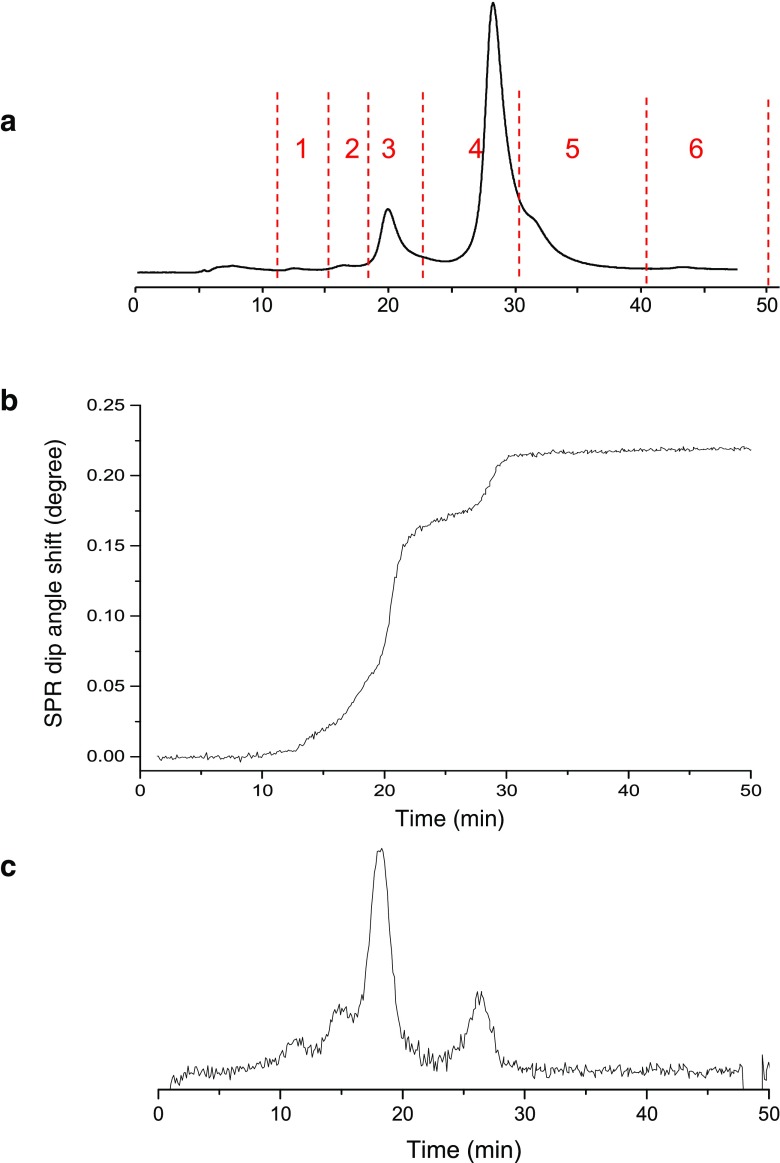
Monoclonal antibodies (mAbs) and antibody-drug conjugates (ADCs) are highly potent biopharmaceuticals designed for targeted cancer therapies. mAbs and ADCs can undergo modifications during production and storage which may affect binding to target receptors, potentially altering drug efficacy. In this work, liquid chromatography was coupled online to surface plasmon resonance (LC-SPR) to allow label-free affinity evaluation of mAb and ADC sample constituents (size and charge variants), under near-native conditions. Trastuzumab and its ADC trastuzumab emtansine (T-DM1) were used as a test sample and were analyzed by aqueous size-exclusion chromatography (SEC)-SPR before and after exposure to aggregate-inducing conditions. SEC-SPR allowed separation of the formed aggregates and measurement of their affinity towards the ligand-binding domain of the human epidermal growth factor receptor 2 (HER2) receptor immobilized on the surface of the SPR sensor chip. The monomer and aggregates of the mAb and ADC were shown to have similar antigen affinity. Conjugation of drugs to trastuzumab appeared to accelerate the aggregate formation. In addition, cation-exchange chromatography (CEX) was coupled to SPR enabling monitoring the maximum ligand-analyte binding capacity (R) of individual charge variants present in mAbs. Deamidated species and lysine variants in trastuzumab sample were separated but did not show different binding affinities to the immobilized HER2-binding domain. In order to allow protein variant assignment, parallel MS detection was added to the LC-SPR setup using a column effluent split. The feasibility of the LC-MS/SPR system was demonstrated by analysis of trastuzumab and T-DM1 providing information on antibody glycoforms and/or determination of the drug-to-antibody ratio (DAR), while simultaneously monitoring binding of eluting species to HER2. Graphical abstract ᅟ.
单克隆抗体 (mAbs) 和抗体药物偶联物 (ADCs) 是高度有效的生物制药,旨在用于靶向癌症治疗。mAbs 和 ADCs 在生产和储存过程中可能会发生修饰,从而影响与靶受体的结合,从而可能改变药物的疗效。在这项工作中,液相色谱法与表面等离子体共振 (LC-SPR) 在线偶联,允许在接近天然的条件下对 mAb 和 ADC 样品成分(大小和电荷变体)进行无标记亲和力评估。曲妥珠单抗及其 ADC 曲妥珠单抗emtansine(T-DM1)被用作测试样品,并在暴露于聚集诱导条件前后通过水性尺寸排阻色谱法 (SEC)-SPR 进行分析。SEC-SPR 允许分离形成的聚集体,并测量它们与固定在 SPR 传感器芯片表面的人表皮生长因子受体 2 (HER2) 受体配体结合域的亲和力。mAb 和 ADC 的单体和聚集体被证明具有相似的抗原亲和力。药物与曲妥珠单抗的缀合似乎加速了聚集体的形成。此外,阳离子交换色谱法 (CEX) 与 SPR 偶联,能够监测存在于 mAbs 中的各个电荷变体的最大配体分析物结合能力 (R)。曲妥珠单抗样品中的脱酰胺物种和赖氨酸变体被分离,但与固定的 HER2 结合域没有显示出不同的结合亲和力。为了允许进行蛋白质变体分配,在 LC-SPR 装置中添加平行 MS 检测,使用柱洗脱液分流。LC-MS/S PR 系统的可行性通过分析曲妥珠单抗和 T-DM1 得到了证明,该系统提供了抗体糖型的信息和/或确定了药物与抗体的比率 (DAR),同时监测洗脱物种与 HER2 的结合。