Department of Anaesthesia and Intensive Care, Pain Management and Palliative Care, S. Giovanni Battista Hospital, University of Turin, C.so Bramante 88, 10126, Turin, Italy.
Unit of Parenteral Nutrition in Oncology, S. Giovanni Battista Hospital, C.so Bramante 88, 10126, Turin, Italy.
BMC Cancer. 2018 Oct 17;18(1):990. doi: 10.1186/s12885-018-4904-6.
Home parenteral nutrition (HPN) can improve survival, quality of life, nutritional and functional status in cancer patients. Bioelectrical impedance analysis (BIA) is a non-invasive, validated method to assess body composition. The objective of this prospective single-arm study was to investigate the impact of HPN in advanced cancer patients receiving chemotherapy assessed by BIA, clinical and laboratory measures.
Adult malnourished cancer outpatients with solid tumors receiving anticancer treatments who were candidates for daily HPN were enrolled. Patients were assessed at baseline (T0), 60 (T1) and 90 days (T2) after HPN start. Assessments included anthropometric and clinical-oncological characteristics, performance status, inflammatory response and Patient-Generated Subjective Global Assessment (PG-SGA).
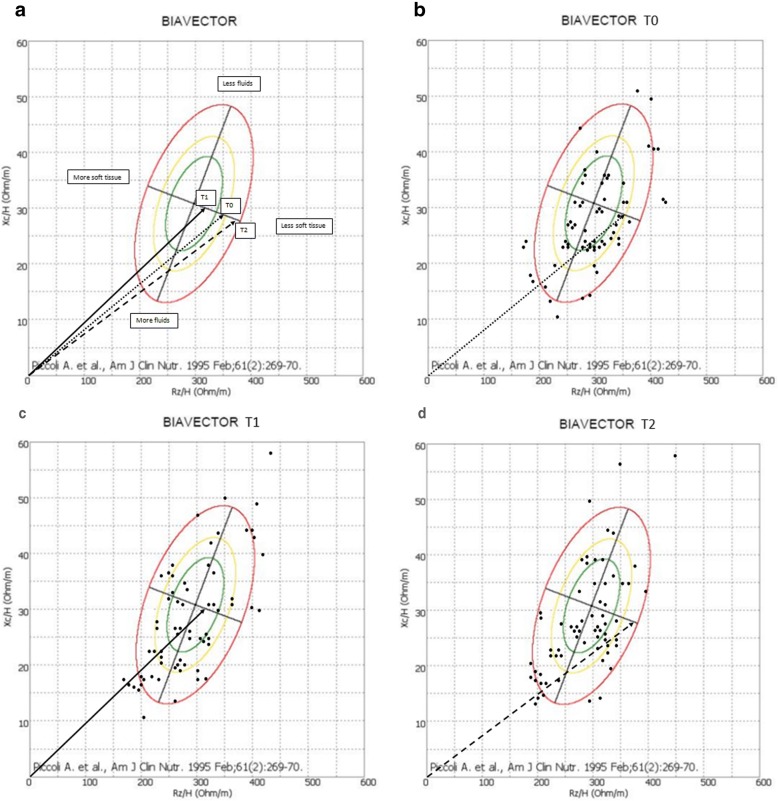
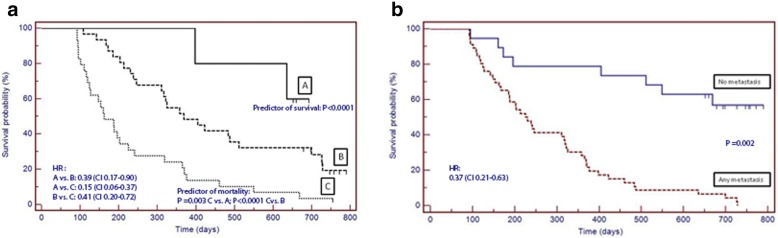
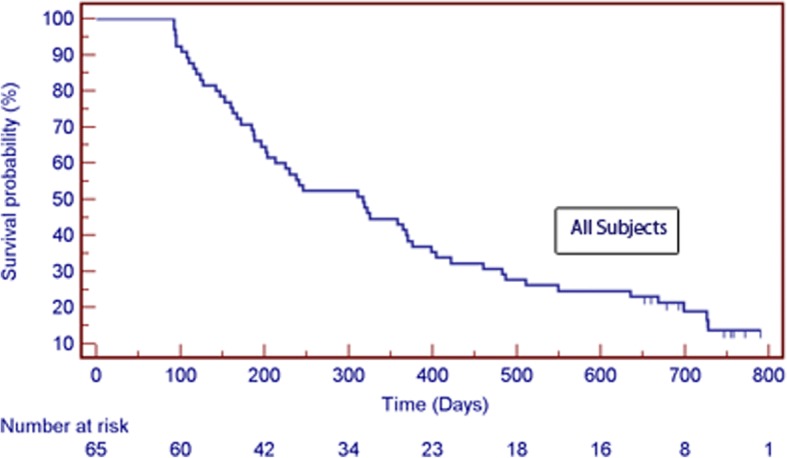
Sixty-five advanced cancer patients were enrolled. Median overall survival was 317 days. Body weight, BMI, oral calorie and protein intake increased over time (P < 0.01). At T2 the proportion of well-nourished patients, Karnofsky performance status and modified Glasgow prognostic score were improved (P < 0.01), total body water was reduced (P = 0.04), and fat mass increased (P = 0.04). Reactance, resistance and phase angle were significantly associated with survival at T0, T1, and T2, respectively. At T2, PG-SGA category A was a predictor of survival (P < 0.0001).
After 90 days of HPN, patients experienced significantly improved nutritional status, performance status, prognostic score and some BIA measures. HPN may be an important therapy in oncology patients receiving chemotherapy. Longitudinal use of BIA may help track the effects of HPN and disease progression, potentially contributing to optimal global patient management.
家庭肠外营养(HPN)可改善癌症患者的生存、生活质量、营养和功能状态。生物电阻抗分析(BIA)是一种非侵入性、经过验证的方法,可评估人体成分。本前瞻性单臂研究的目的是通过 BIA、临床和实验室指标评估接受化疗的晚期癌症患者中 HPN 的影响。
纳入接受抗癌治疗且患有实体肿瘤的营养不良的成年癌症门诊患者,这些患者是接受每日 HPN 的候选者。患者在基线(T0)、HPN 开始后 60 天(T1)和 90 天(T2)进行评估。评估包括人体测量学和临床肿瘤学特征、表现状态、炎症反应和患者生成的主观整体评估(PG-SGA)。
共纳入 65 例晚期癌症患者。中位总生存期为 317 天。体重、BMI、口服热量和蛋白质摄入随时间增加(P<0.01)。在 T2,营养良好的患者比例、Karnofsky 表现状态和改良格拉斯哥预后评分得到改善(P<0.01),总体水减少(P=0.04),脂肪量增加(P=0.04)。在 T0、T1 和 T2 时,电抗、电阻和相位角分别与生存时间显著相关。在 T2 时,PG-SGA 类别 A 是生存的预测因子(P<0.0001)。
在接受 HPN 90 天后,患者的营养状况、表现状态、预后评分和一些 BIA 指标显著改善。HPN 可能是接受化疗的肿瘤患者的重要治疗方法。BIA 的纵向使用可以帮助跟踪 HPN 和疾病进展的效果,有可能有助于实现患者的整体管理。