Picke Ann-Kristin, Campbell Graeme M, Schmidt Felix N, Busse Björn, Rauner Martina, Simon Jan C, Anderegg Ulf, Hofbauer Lorenz C, Saalbach Anja
Division of Endocrinology, Diabetes, and Bone Diseases, Department of Medicine III, Center for Healthy Aging, Technische Universität Dresden, Dresden, Germany.
Institute of Comparative Molecular Endocrinology, Ulm University, Ulm, Germany.
Front Cell Dev Biol. 2018 Oct 2;6:127. doi: 10.3389/fcell.2018.00127. eCollection 2018.
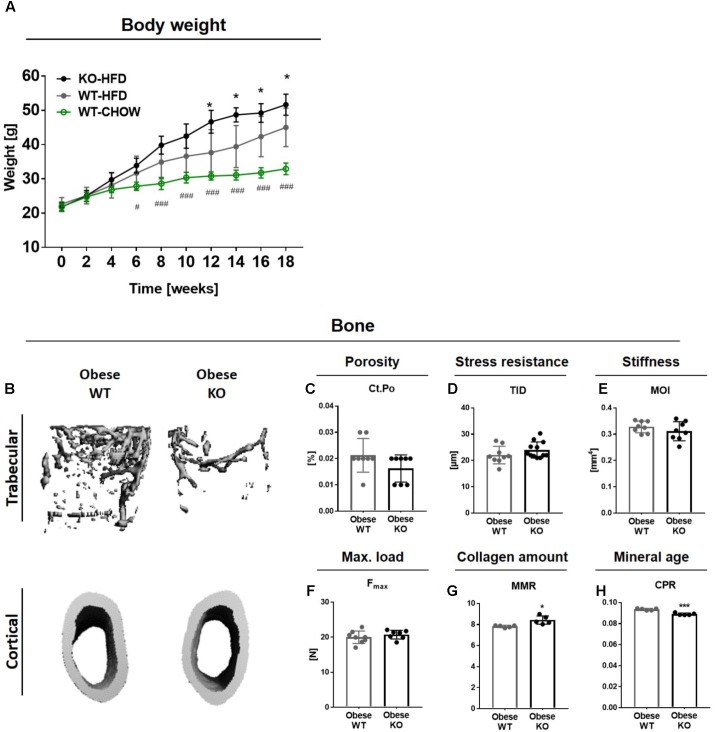
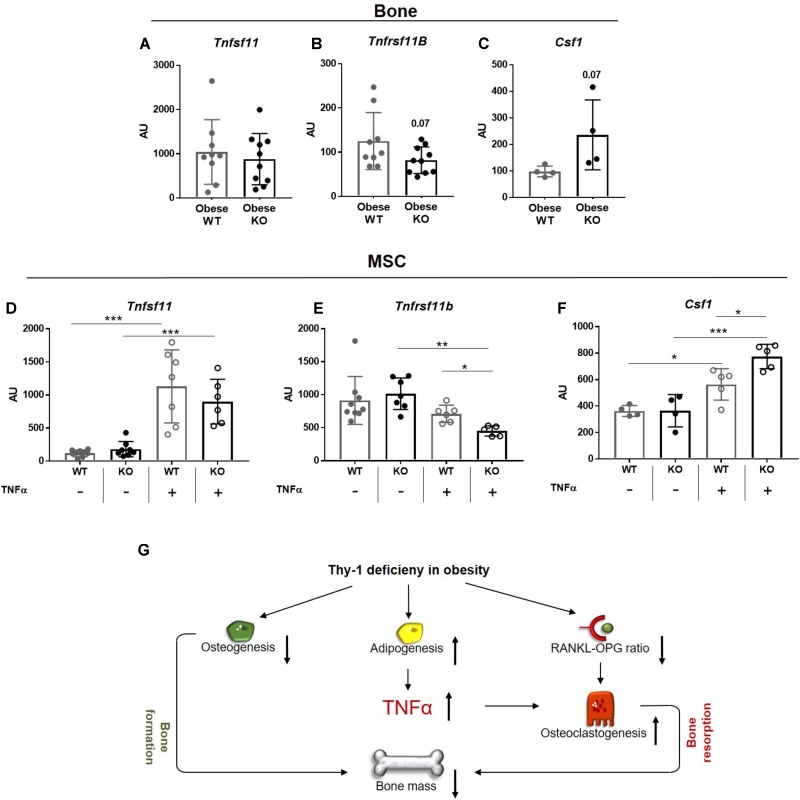
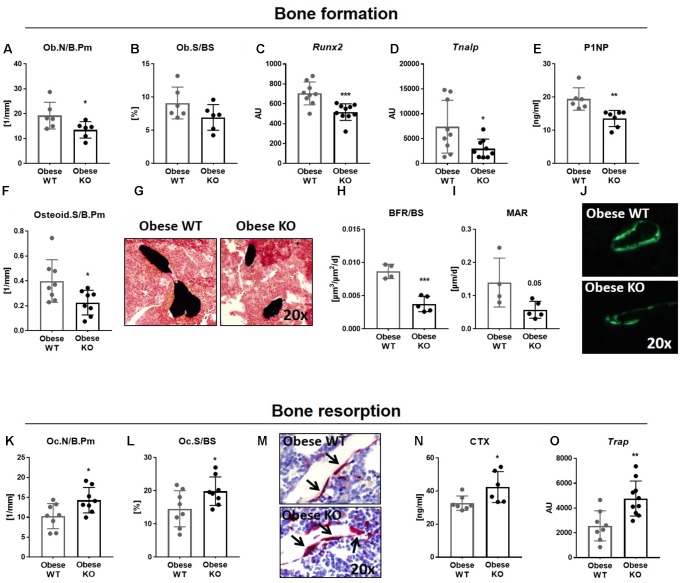
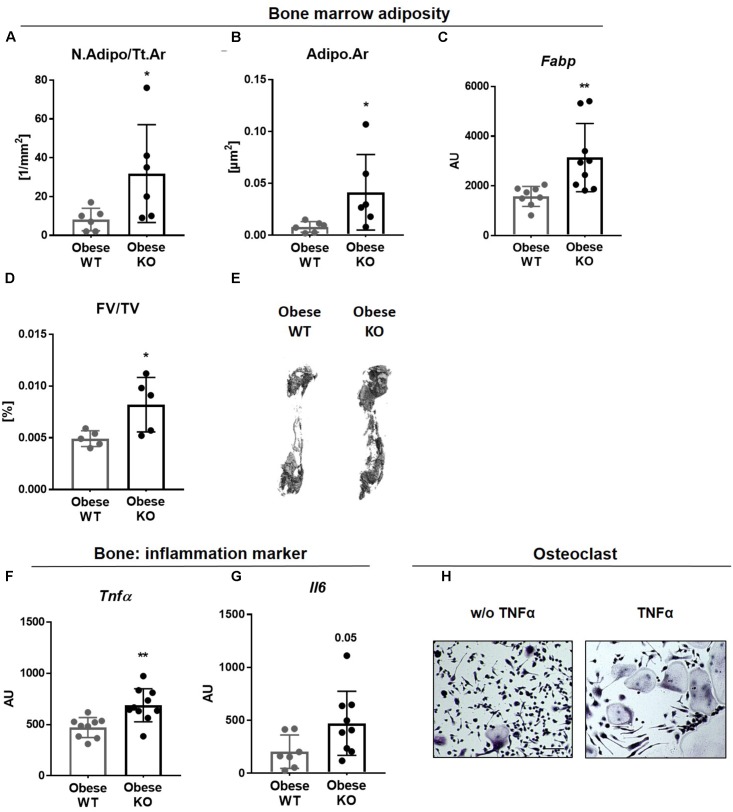
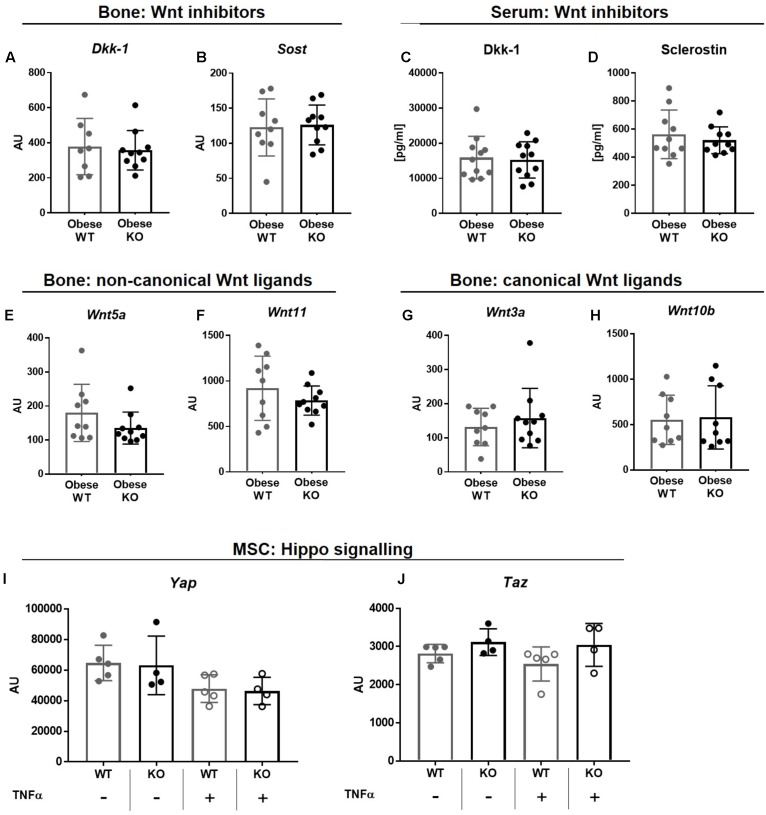
Healthy bone remodeling results from a balanced bone formation and bone resorption realized by bone-forming osteoblasts and bone-resorbing osteoclasts, respectively. Recently, Thy-1 (CD90) was identified as positive regulator of osteoblast differentiation and activation, thus, promoting bone formation while concurrently inhibiting adipogenesis and obesity in mice. Additionally, Thy-1 did not affect bone resorption. An obesity-related co-morbidity that is increasing in prevalence is a disturbed bone formation resulting in an increased fracture risk. The underlying mechanisms of obesity-induced bone alterations are not yet fully elucidated and therefore therapy options for efficient bone-anabolic treatments are limited. Therefore, we investigated the impact of Thy-1 on bone metabolism under obese conditions. Indeed, high fat diet (HFD) induced obese mice lacking Thy-1 (Thy-1) showed increased body fat mass compared to wildtype (WT) mice while bone mass (-38%) and formation (-57%) were decreased as shown by micro-computed tomography (μCT) measurement, histological analysis, and fourier-transform infrared spectroscopy (FTIR). Interestingly, under obese conditions, lack of Thy-1 affected both osteoblast and osteoclast function. Number (-30%) and activity of osteoblasts were decreased in obese Thy-1 mice while osteoclast number (+39%) and activity were increased. Facilitated bone marrow fat accumulation (+56%) in obese Thy-1 mice compared to obese WT mice was associated with upregulated tumor necrosis factor α (, +46%) and colony stimulating factor 1 receptor expression, strong promoters of osteoclast differentiation. Moreover, lack of Thy-1 was accompanied by a reduction of osteoprotegerin () expression (-36%), an inhibitor of osteoclast differentiation. Altered , , and expression might be responsible for elevated osteoclast activity in obese Thy-1-deficient mice. In summary, our findings show that lack of Thy-1 promotes obesity under HFD conditions while concurrently decreasing bone mass and formation. Mechanistic studies revealed that under obese conditions lack of Thy-1 impairs both bone formation and bone resorption.
健康的骨重塑源于成骨细胞和破骨细胞分别实现的平衡的骨形成和骨吸收。最近,Thy-1(CD90)被确定为成骨细胞分化和激活的正向调节因子,因此,在促进骨形成的同时,还能抑制小鼠的脂肪生成和肥胖。此外,Thy-1不影响骨吸收。一种患病率不断上升的与肥胖相关的合并症是骨形成紊乱,导致骨折风险增加。肥胖引起的骨骼改变的潜在机制尚未完全阐明,因此有效的骨合成代谢治疗的选择有限。因此,我们研究了Thy-1在肥胖条件下对骨代谢的影响。事实上,与野生型(WT)小鼠相比,高脂饮食(HFD)诱导的缺乏Thy-1(Thy-1 -/-)的肥胖小鼠体脂量增加,而通过微计算机断层扫描(μCT)测量、组织学分析和傅里叶变换红外光谱(FTIR)显示骨量(-38%)和骨形成(-57%)减少。有趣的是,在肥胖条件下,Thy-1的缺乏影响了成骨细胞和破骨细胞的功能。肥胖的Thy-1 -/-小鼠中成骨细胞数量(-30%)和活性降低,而破骨细胞数量(+39%)和活性增加。与肥胖的WT小鼠相比,肥胖的Thy-1 -/-小鼠骨髓脂肪积累增加(+56%),这与肿瘤坏死因子α(TNF-α,+46%)和集落刺激因子1受体(CSF-1R)表达上调有关,CSF-1R是破骨细胞分化的强促进剂。此外,Thy-1的缺乏伴随着骨保护素(OPG)表达的降低(-36%),OPG是破骨细胞分化的抑制剂。TNF-α、CSF-1R和OPG表达的改变可能是肥胖的Thy-1缺陷小鼠破骨细胞活性升高的原因。总之,我们的研究结果表明,在HFD条件下,Thy-1的缺乏会促进肥胖,同时降低骨量和骨形成。机制研究表明,在肥胖条件下,Thy-1的缺乏会损害骨形成和骨吸收。