1Northwestern University, Evanston, USA.
2University of North Carolina at Chapel Hill, Chapel Hill, USA.
Mol Autism. 2018 Oct 10;9:51. doi: 10.1186/s13229-018-0233-5. eCollection 2018.
Rapid automatized naming (RAN; naming of familiar items presented in an array) is a task that taps fundamental neurocognitive processes that are affected in a number of complex psychiatric conditions. Deficits in RAN have been repeatedly observed in autism spectrum disorder (ASD), and also among first-degree relatives, suggesting that RAN may tap features that index genetic liability to ASD. This study used eye tracking to examine neurocognitive mechanisms related to RAN performance in ASD and first-degree relatives, and investigated links to broader language and clinical-behavioral features.
Fifty-one individuals with ASD, biological parents of individuals with ASD ( = 133), and respective control groups ( = 45 ASD controls; 58 parent controls) completed RAN on an eye tracker. Variables included naming time, frequency of errors, and measures of eye movement during RAN (eye-voice span, number of fixations and refixations).
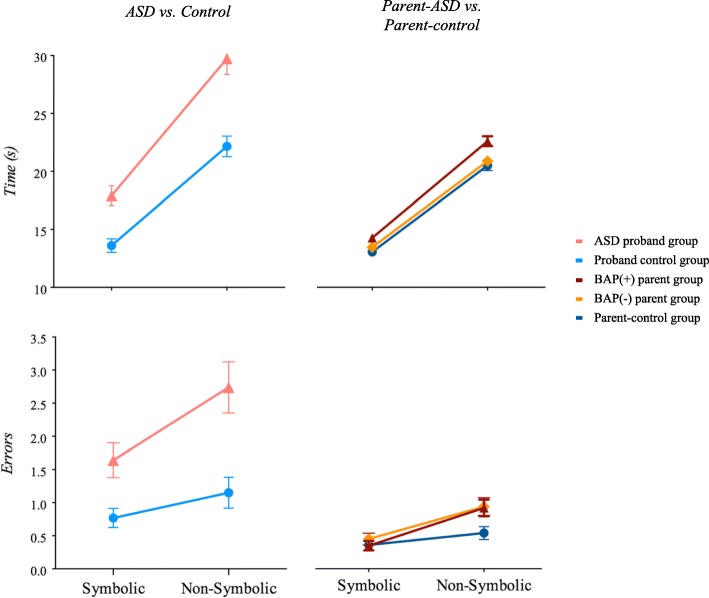
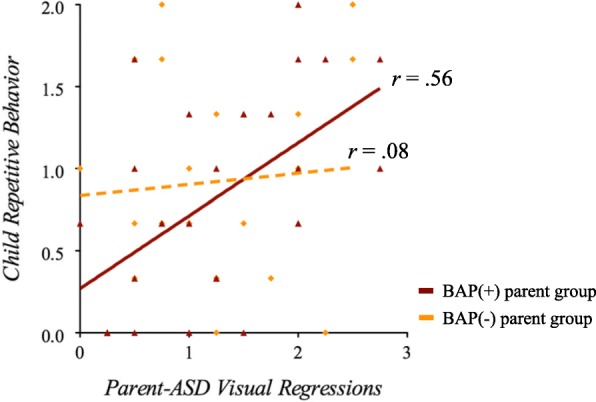
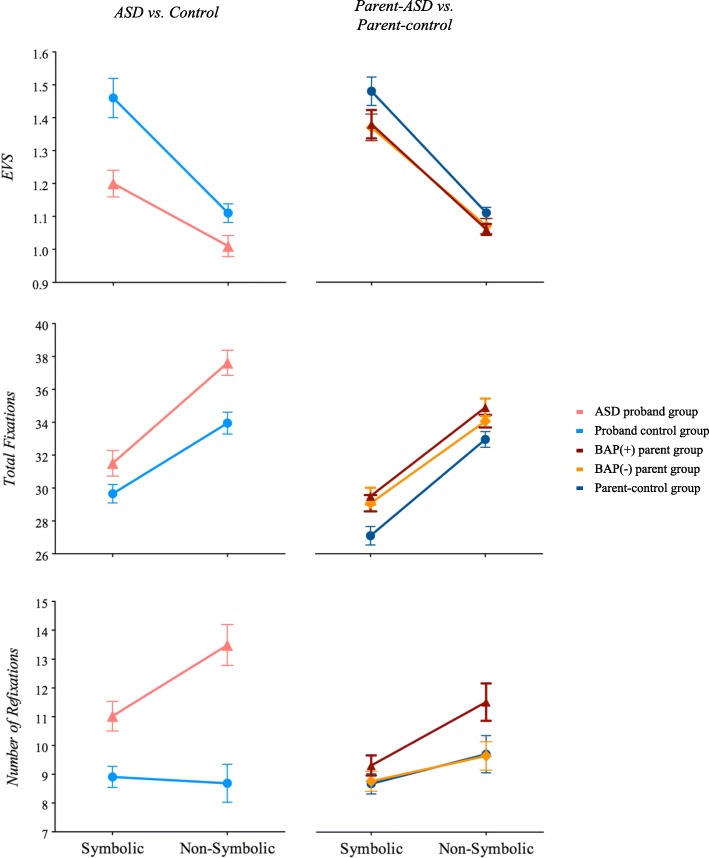
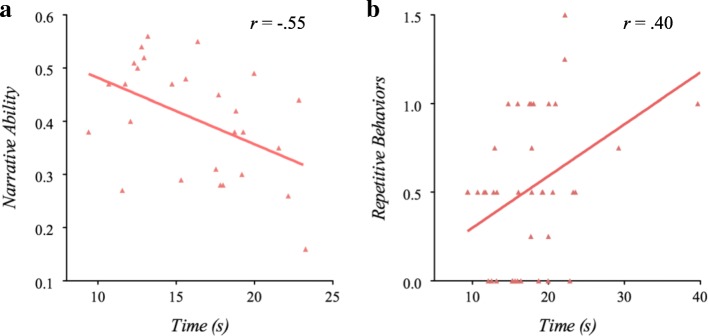
Both the ASD and parent-ASD groups showed slower naming times, more errors, and atypical eye-movement patterns (e.g., increased fixations and refixations), relative to controls, with differences persisting after accounting for spousal resemblance. RAN ability and associated eye movement patterns were correlated with increased social-communicative impairment and increased repetitive behaviors in ASD. Longer RAN times and greater refixations in the parent-ASD group were driven by the subgroup who showed clinical-behavioral features of the broad autism phenotype (BAP). Finally, parent-child dyad correlations revealed associations between naming time and refixations in parents with the BAP and increased repetitive behaviors in their child with ASD.
Differences in RAN performance and associated eye movement patterns detected in ASD and in parents, and links to broader social-communicative abilities, clinical features, and parent-child associations, suggest that RAN-related abilities might constitute genetically meaningful neurocognitive markers that can help bridge connections between underlying biology and ASD symptomatology.
快速自动命名(RAN;在数组中呈现的熟悉项目的命名)是一项任务,它涉及到受多种复杂精神疾病影响的基本神经认知过程。在自闭症谱系障碍(ASD)中,以及在一级亲属中,反复观察到 RAN 缺陷,这表明 RAN 可能涉及到与 ASD 遗传易感性相关的特征。本研究使用眼动追踪技术来研究 ASD 患者及其一级亲属的 RAN 表现相关的神经认知机制,并探讨了与更广泛的语言和临床行为特征的联系。
51 名 ASD 患者、ASD 患者的生物学父母(共 133 人)以及各自的对照组(共 45 名 ASD 对照组和 58 名父母对照组)在眼动追踪仪上完成 RAN。变量包括命名时间、错误频率以及 RAN 期间的眼动测量(眼-声跨度、注视次数和重注视次数)。
ASD 组和父母-ASD 组的命名时间都较慢,错误较多,眼动模式异常(例如,注视次数和重注视次数增加),与对照组相比,这些差异在考虑到配偶相似性后仍然存在。RAN 能力和相关的眼动模式与 ASD 中社交沟通障碍的增加和重复行为的增加有关。父母-ASD 组中 RAN 时间延长和重注视次数增加,是由具有广泛自闭症表型(BAP)的临床行为特征的亚组驱动的。最后,亲子对子相关分析显示,具有 BAP 的父母的命名时间和重注视次数与他们患有 ASD 的孩子的重复行为增加之间存在关联。
在 ASD 患者及其父母中检测到的 RAN 表现和相关的眼动模式差异,以及与更广泛的社交沟通能力、临床特征以及亲子关联的联系,表明 RAN 相关能力可能构成具有遗传意义的神经认知标志物,有助于在潜在生物学和 ASD 症状之间架起桥梁。