Briston Thomas, Stephen Jenna M, Thomas Luke W, Esposito Cinzia, Chung Yuen-Li, Syafruddin Saiful E, Turmaine Mark, Maddalena Lucas A, Greef Basma, Szabadkai Gyorgy, Maxwell Patrick H, Vanharanta Sakari, Ashcroft Margaret
Division of Medicine, Centre for Cell Signalling and Molecular Genetics, University College London, London, United Kingdom.
Department of Medicine, University of Cambridge, Cambridge, United Kingdom.
Front Oncol. 2018 Oct 4;8:388. doi: 10.3389/fonc.2018.00388. eCollection 2018.
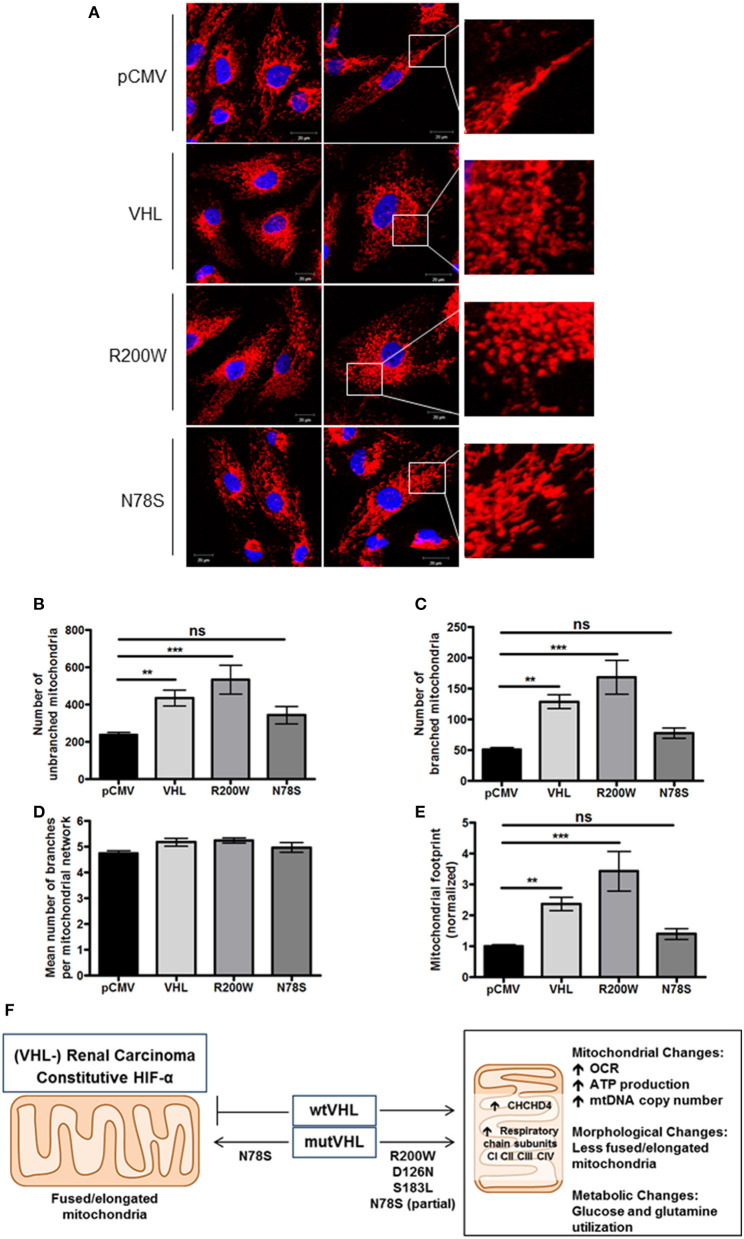
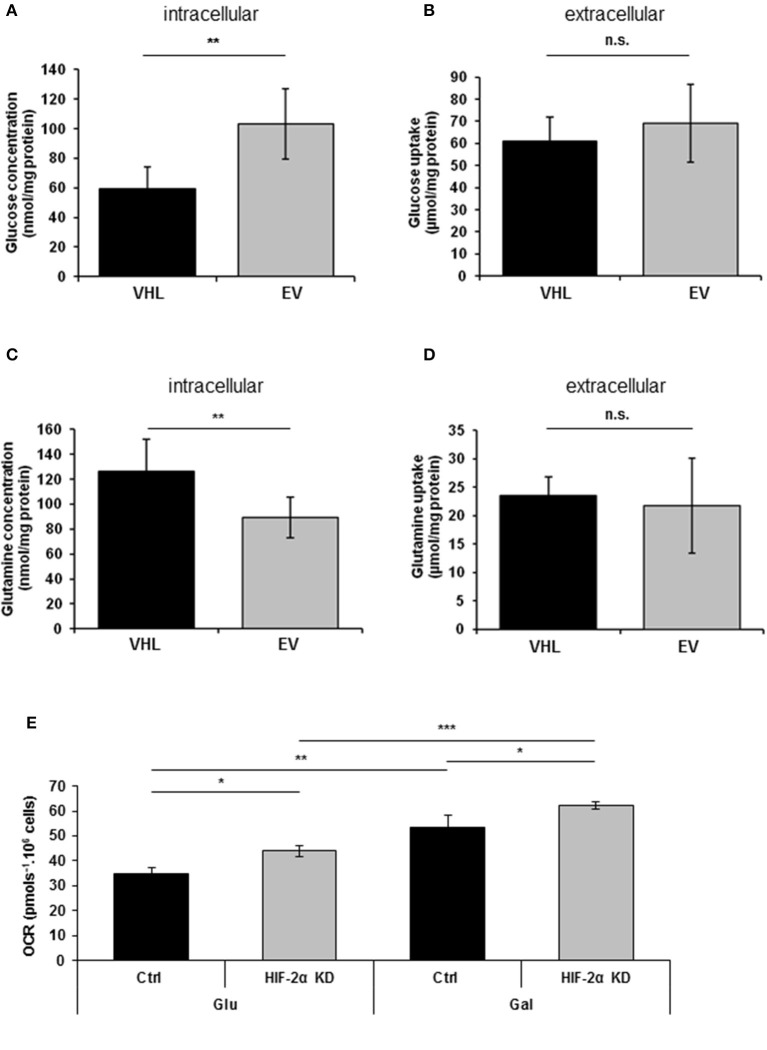
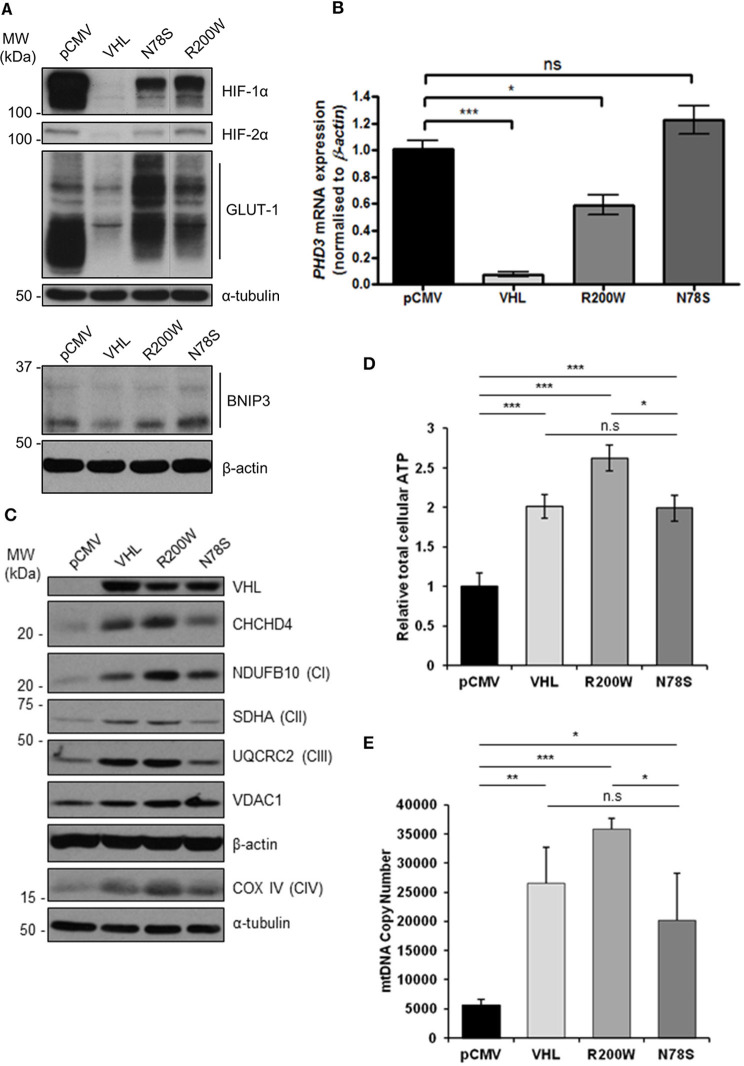
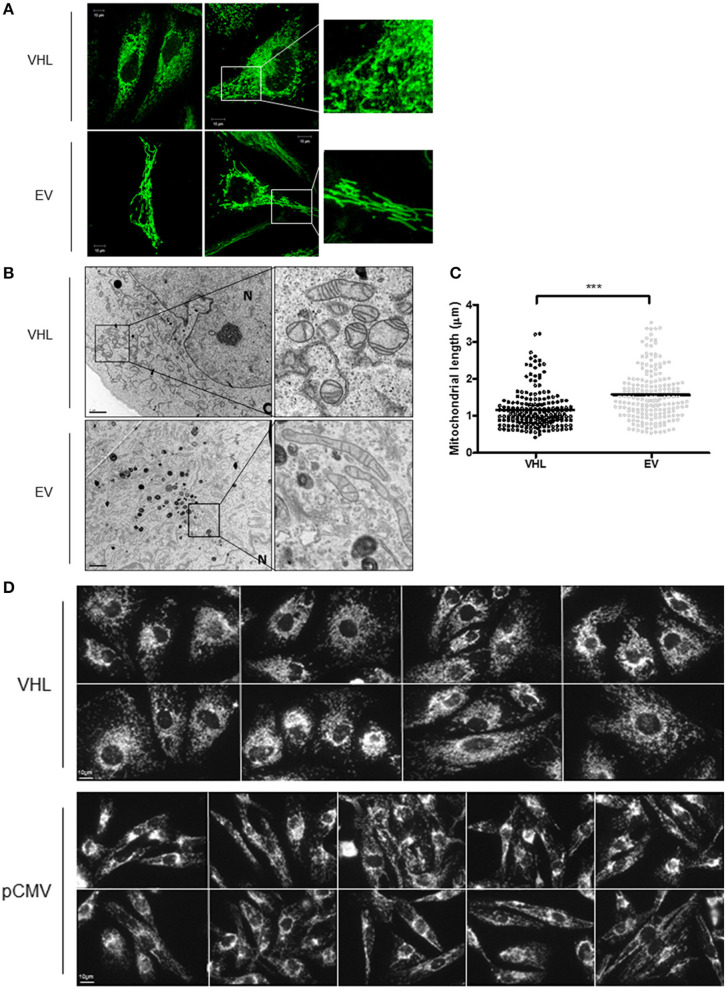
Dysregulated mitochondrial function is associated with the pathology of a wide range of diseases including renal disease and cancer. Thus, investigating regulators of mitochondrial function is of particular interest. Previous work has shown that the von Hippel-Lindau tumor suppressor protein (pVHL) regulates mitochondrial biogenesis and respiratory chain function. pVHL is best known as an E3-ubiquitin ligase for the α-subunit of the hypoxia inducible factor (HIF) family of dimeric transcription factors. In normoxia, pVHL recognizes and binds hydroxylated HIF-α (HIF-1α and HIF-2α), targeting it for ubiquitination and proteasomal degradation. In this way, HIF transcriptional activity is tightly controlled at the level of HIF-α protein stability. At least 80% of clear cell renal carcinomas exhibit inactivation of the gene, which leads to HIF-α protein stabilization and constitutive HIF activation. Constitutive HIF activation in renal carcinoma drives tumor progression and metastasis. Reconstitution of wild-type VHL protein (pVHL) in pVHL-defective renal carcinoma cells not only suppresses HIF activation and tumor growth, but also enhances mitochondrial respiratory chain function via mechanisms that are not fully elucidated. Here, we show that pVHL regulates mitochondrial function when re-expressed in pVHL-defective 786O and RCC10 renal carcinoma cells distinct from its regulation of HIF-α. Expression of CHCHD4, a key component of the disulphide relay system (DRS) involved in mitochondrial protein import within the intermembrane space (IMS) was elevated by pVHL re-expression alongside enhanced expression of respiratory chain subunits of complex I (NDUFB10) and complex IV (mtCO-2 and COX IV). These changes correlated with increased oxygen consumption rate (OCR) and dynamic changes in glucose and glutamine metabolism. Knockdown of HIF-2α also led to increased OCR, and elevated expression of CHCHD4, NDUFB10, and COXIV in 786O cells. Expression of pVHL mutant proteins (R200W, N78S, D126N, and S183L) that constitutively stabilize HIF-α but differentially promote glycolytic metabolism, were also found to differentially promote the pVHL-mediated mitochondrial phenotype. Parallel changes in mitochondrial morphology and the mitochondrial network were observed. Our study reveals a new role for pVHL in regulating CHCHD4 and mitochondrial function in renal carcinoma cells.
线粒体功能失调与包括肾脏疾病和癌症在内的多种疾病的病理过程相关。因此,研究线粒体功能的调节因子具有特别重要的意义。先前的研究表明,冯·希佩尔-林道肿瘤抑制蛋白(pVHL)可调节线粒体生物发生和呼吸链功能。pVHL最为人所知的是作为二聚体转录因子缺氧诱导因子(HIF)家族α亚基的E3泛素连接酶。在常氧条件下,pVHL识别并结合羟基化的HIF-α(HIF-1α和HIF-2α),将其靶向进行泛素化和蛋白酶体降解。通过这种方式,HIF转录活性在HIF-α蛋白稳定性水平上受到严格控制。至少80%的透明细胞肾细胞癌表现出该基因失活,这导致HIF-α蛋白稳定和HIF的组成性激活。肾细胞癌中的组成性HIF激活驱动肿瘤进展和转移。在pVHL缺陷的肾癌细胞中重新表达野生型VHL蛋白(pVHL)不仅抑制HIF激活和肿瘤生长,还通过尚未完全阐明的机制增强线粒体呼吸链功能。在这里,我们表明,pVHL在pVHL缺陷的786O和RCC10肾癌细胞中重新表达时,对线粒体功能的调节与其对HIF-α的调节不同。pVHL的重新表达使CHCHD4(线粒体内膜间隙(IMS)中参与线粒体蛋白导入的二硫键中继系统(DRS)的关键成分)的表达升高,同时复合物I(NDUFB10)和复合物IV(mtCO-2和COX IV)的呼吸链亚基表达增强。这些变化与氧消耗率(OCR)增加以及葡萄糖和谷氨酰胺代谢的动态变化相关。敲低HIF-2α也导致786O细胞中OCR增加,以及CHCHD4、NDUFB10和COXIV的表达升高。还发现组成性稳定HIF-α但差异促进糖酵解代谢的pVHL突变蛋白(R200W、N78S、D126N和S183L)差异促进pVHL介导的线粒体表型。观察到线粒体形态和线粒体网络的平行变化。我们的研究揭示了pVHL在调节肾癌细胞中CHCHD4和线粒体功能方面的新作用。