Department of General Surgery, Peking Union Medical College Hospital, Chinese Academy of Medical Sciences, Peking Union Medical College, Beijing, China.
Department of Pathology, Peking Union Medical College Hospital, Chinese Academy of Medical Sciences, Peking Union Medical College, Beijing, China.
Mol Oncol. 2018 Dec;12(12):2147-2164. doi: 10.1002/1878-0261.12393. Epub 2018 Oct 30.
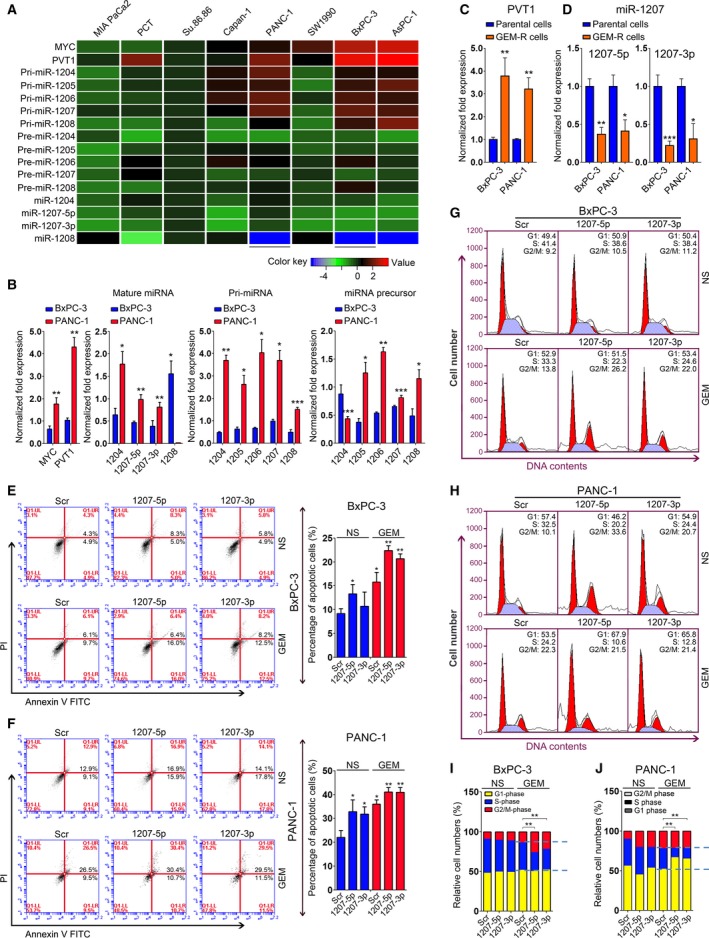
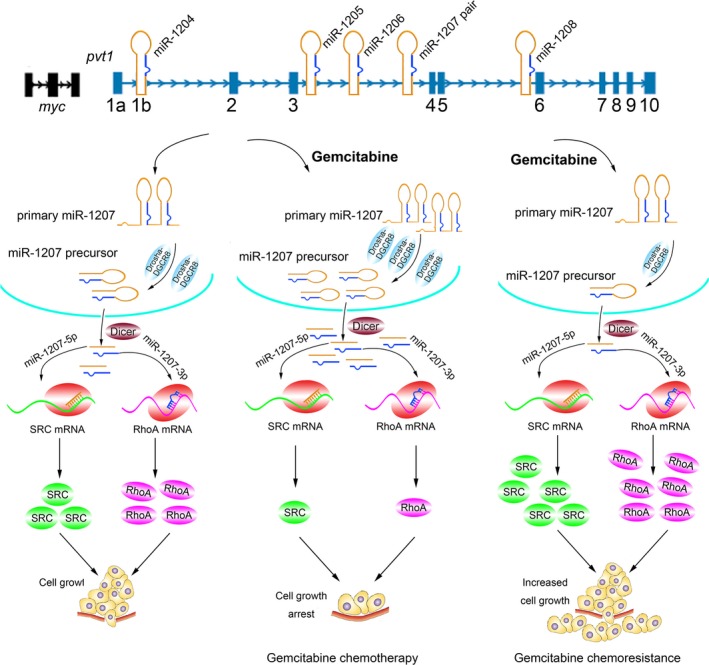
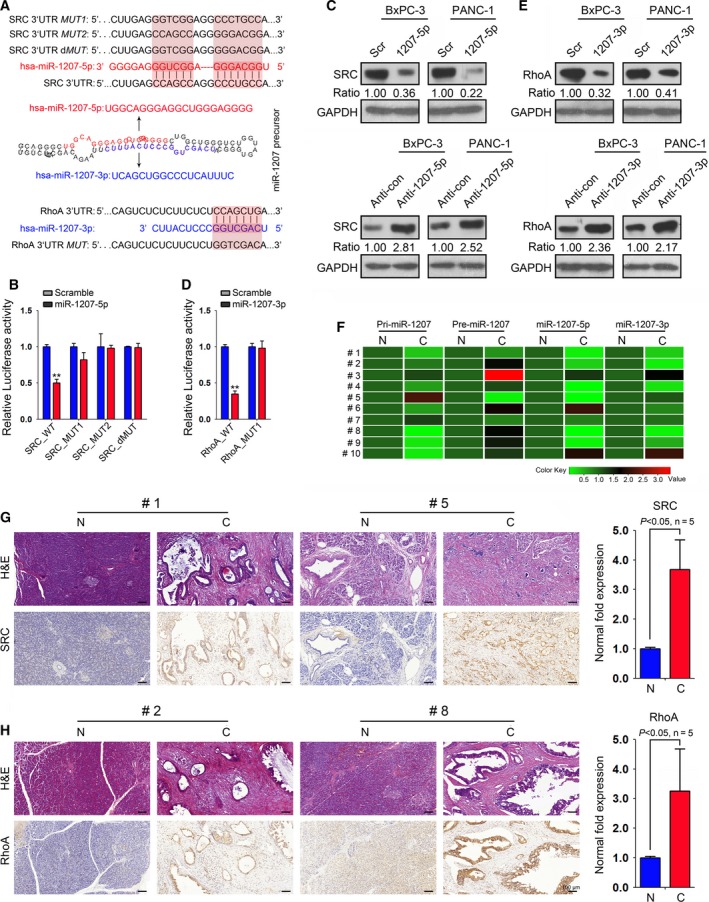
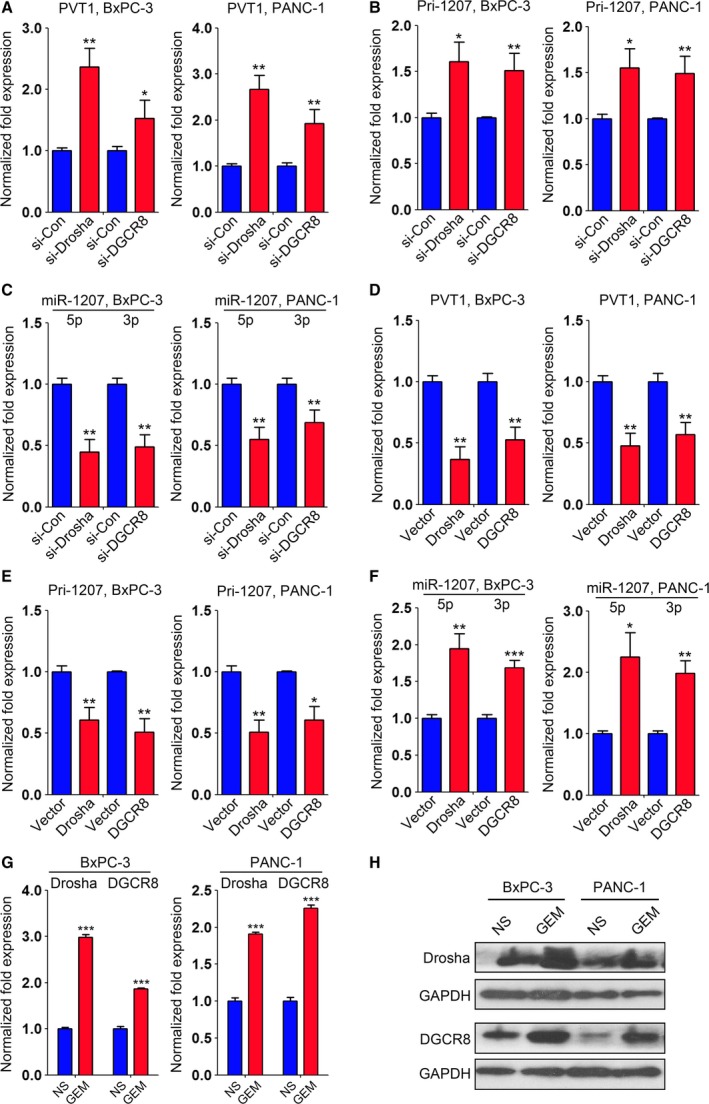
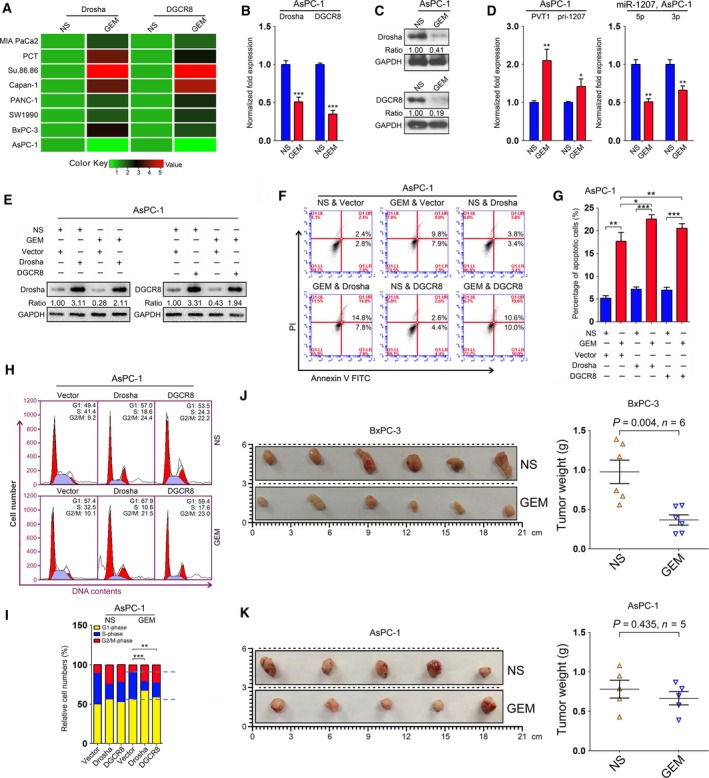
Gemcitabine serves as a first-line chemotherapy agent for advanced pancreatic cancer (PC). However, the molecular basis by which gemcitabine exerts its effects is not well-established, and the targeted genetic pathways remain unclear. Pvt1 oncogene (non-protein coding) (PVT1) has been reported to be an oncogenic long non-coding RNA in tumorigenesis. In the present study, we show that the expression of PVT1 is correlated with gemcitabine efficacy in PC therapy. Inhibition of PVT1 led to decreased cell growth in PC cells treated with gemcitabine. We also demonstrate that gemcitabine treatment decreases PVT1 levels and increases its encoded miRNAs, such as the miR-1207 pair (miR-1207-5p/3p). Overexpression of the miR-1207 pair enhanced the chemosensitivity of cells to gemcitabine, whereas silencing of miR-1207-5p/3p to prevent its induction by gemcitabine treatment led to increased cell growth. Mechanistic studies revealed that miR-1207-5p and miR-1207-3p target the SRC proto-oncogene (non-receptor tyrosine kinase) and ras homolog family member A in PC cells, respectively. In particular, we observed that gemcitabine induced Drosha ribonuclease III (Drosha) and DGCR8 microprocessor complex subunit (DGCR8) upregulation and then triggered PVT1 processing. Suppression of Drosha and DGCR8 contributed to a dampened efficacy of gemcitabine, indicating that gemcitabine decreased PVT1 expression by promoting its processing into miRNAs, which in turn resulted in blunted oncogenic signaling in PC cells. Moreover, we demonstrate that gemcitabine chemoresistance was a result of decreased expression of Drosha and DGCR8 in AsPC-1 cells and tumor cell-engrafted models. Overall, our findings define a novel mechanism for understanding the efficacy of gemcitabine chemotherapy in PC.
吉西他滨是治疗晚期胰腺癌 (PC) 的一线化疗药物。然而,吉西他滨发挥作用的分子基础尚未得到很好的确定,靶向遗传途径也不清楚。 Pvt1 癌基因(非蛋白编码)(PVT1)已被报道为肿瘤发生中的致癌长非编码 RNA。在本研究中,我们表明 PVT1 的表达与 PC 治疗中吉西他滨的疗效相关。抑制 PVT1 导致用吉西他滨处理的 PC 细胞中的细胞生长减少。我们还证明,吉西他滨处理降低了 PVT1 水平并增加了其编码的 miRNA,例如 miR-1207 对(miR-1207-5p/3p)。miR-1207 对的过表达增强了细胞对吉西他滨的化疗敏感性,而沉默 miR-1207-5p/3p 以阻止其由吉西他滨处理诱导导致细胞生长增加。机制研究表明,miR-1207-5p 和 miR-1207-3p 分别靶向 PC 细胞中的 SRC 原癌基因(非受体酪氨酸激酶)和 ras 同源家族成员 A。特别是,我们观察到吉西他滨诱导 Drosha 核糖核酸酶 III(Drosha)和 DGCR8 微处理器复合物亚基(DGCR8)上调,然后触发 PVT1 加工。抑制 Drosha 和 DGCR8 导致吉西他滨疗效降低,表明吉西他滨通过促进其加工成 miRNA 来降低 PVT1 表达,从而导致 PC 细胞中的致癌信号减弱。此外,我们证明吉西他滨耐药性是 AsPC-1 细胞和肿瘤细胞植入模型中 Drosha 和 DGCR8 表达降低的结果。总体而言,我们的研究结果定义了一种理解吉西他滨化疗在 PC 中的疗效的新机制。