Yang Ye, Liu Dongdong, Xi Yin, Li Juan, Liu Bin, Li Junjie
Department of Medical Oncology, Sichuan Cancer Hospital, Chengdu, Sichuan 610041, P.R. China.
Department of Respiratory Medicine, The First Affiliated Hospital of Guangzhou Medical University, Guangzhou, Guangdong 510120, P.R. China.
Exp Ther Med. 2018 Nov;16(5):3913-3920. doi: 10.3892/etm.2018.6692. Epub 2018 Sep 4.
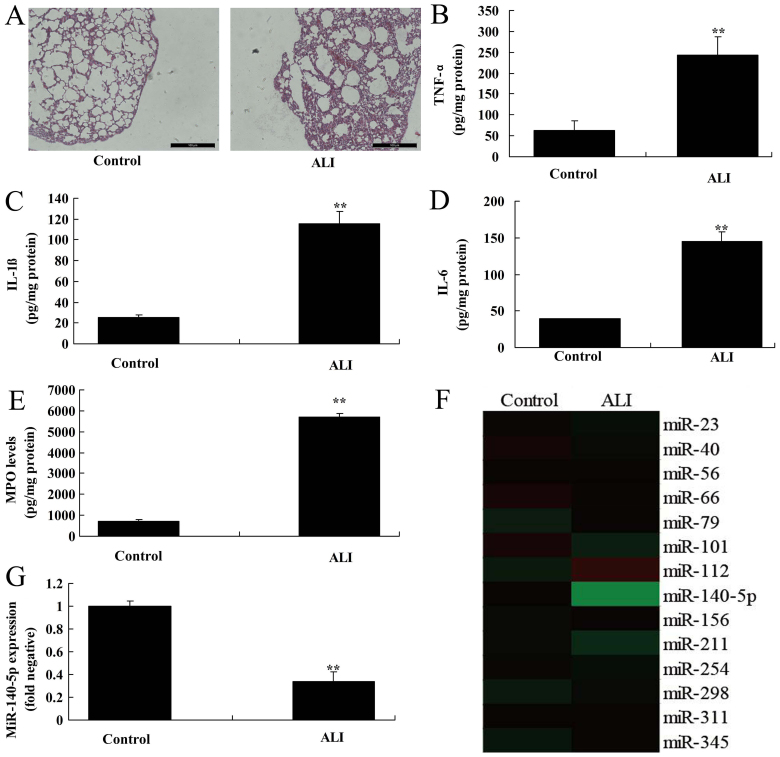
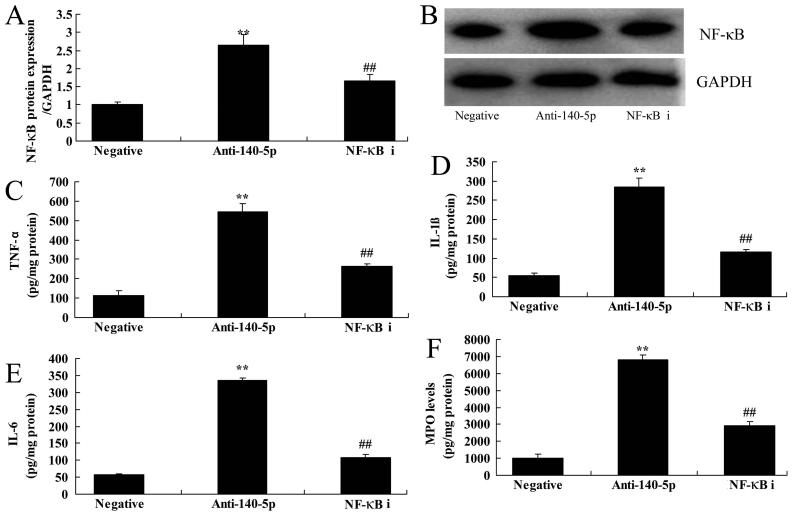
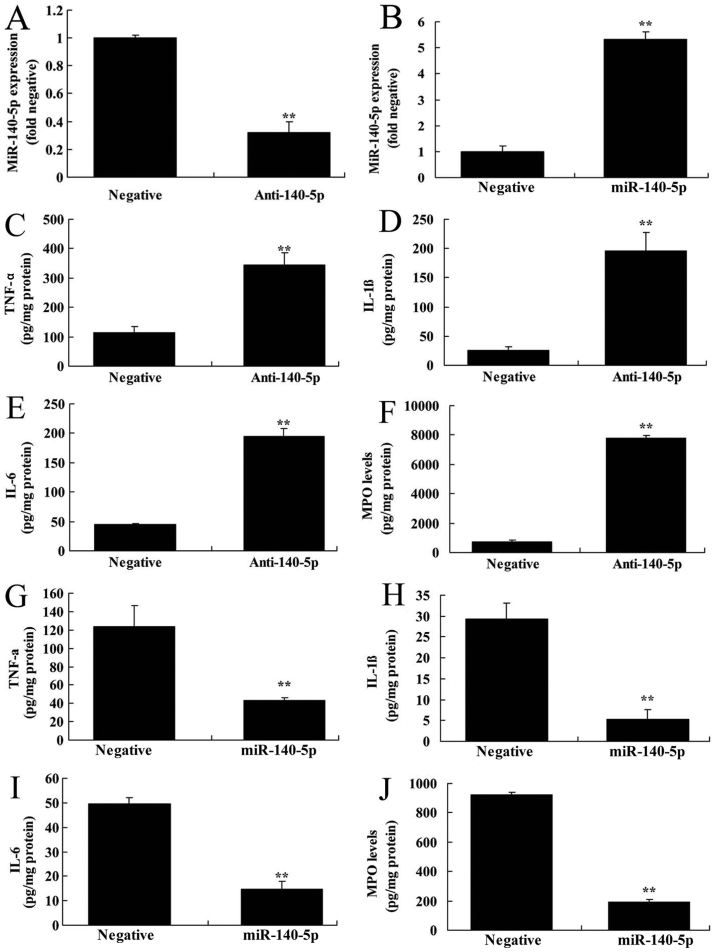
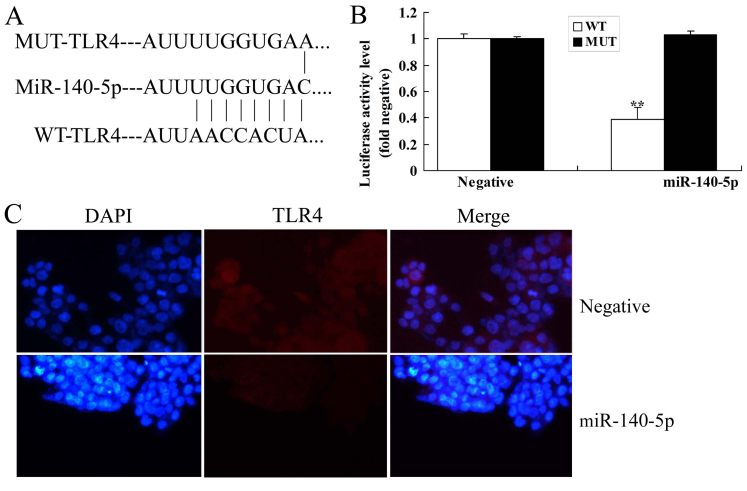
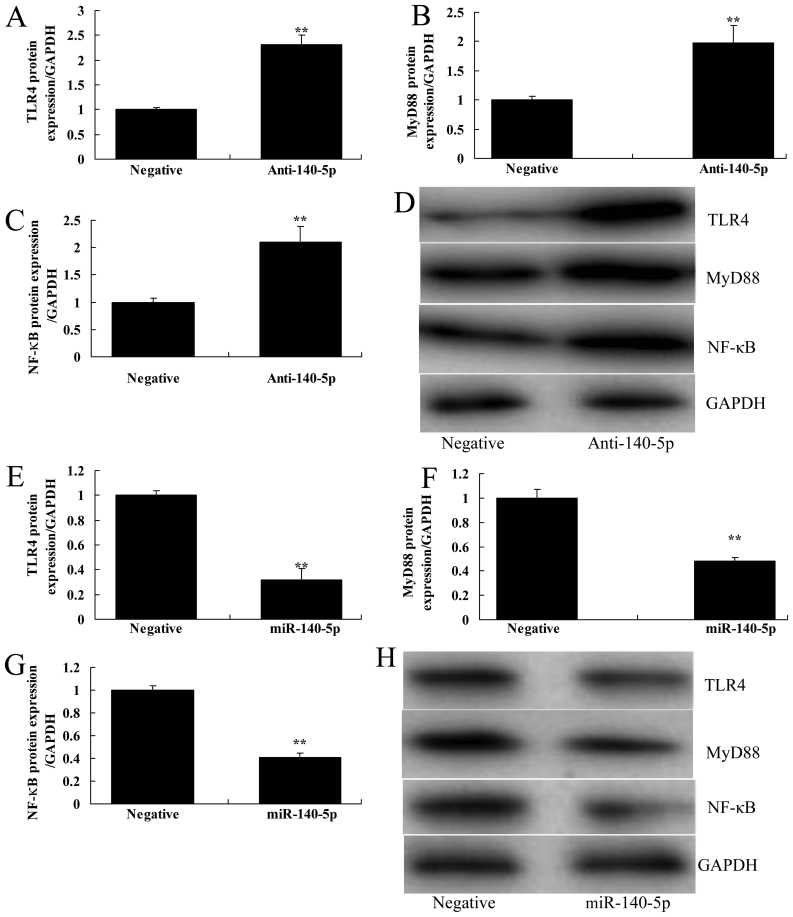
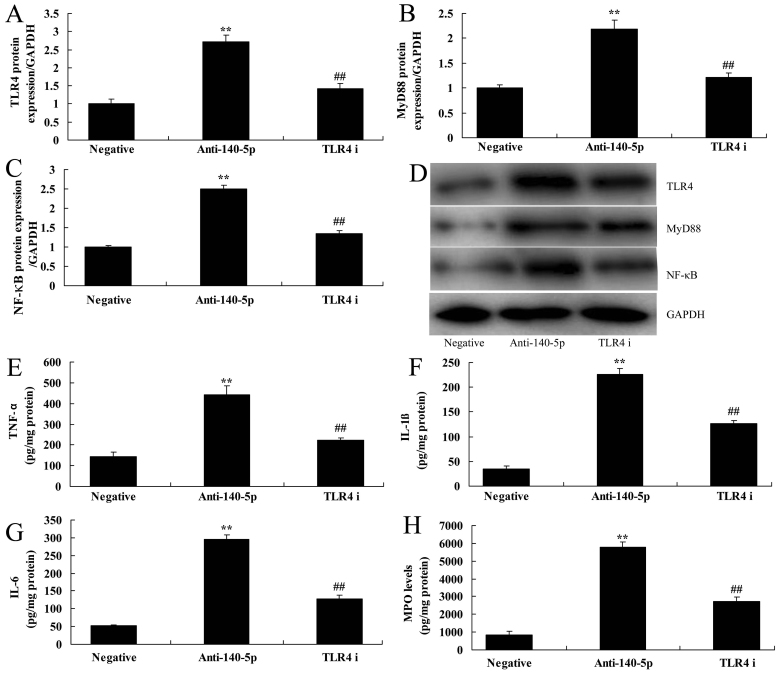
The present study was designed to determine the effect of miR-140-5p on acute lung injury (ALI) and the associated inflammation induced. As a result, miR-140-5p expression in mice with ALI was suppressed when compared with the normal group. Downregulation of miR-140-5p increased the levels of inflammatory factors induced by ALI [including tumor necrosis factor-α, interleukin (IL)-1β, IL-6 and myeloperoxidase] in an model of human lung A549 cells. Downregulation of miR-140-5p also induced the protein expression of Toll-like receptor 4 (TLR4), myeloid differentiation primary response 88 (MyD88) and nuclear factor (NF)-κB in an model. Overexpression of miR-140-5p reduced the levels of inflammation in the model of ALI via the suppression of the TLR4/MyD88/NF-κB signaling pathway. The inhibition of TLR4 using a TLR4 inhibitor reduced the proinflammation effects of anti-miR-140-5p in the model of ALI. The NF-κB inhibitor also inhibited the proinflammation effects of anti-miR-140-5p in the model of ALI. Overall, the results of the present study indicated that miR-140-5p inhibited ALI-induced inflammation via the TLR4/MyD88/NF-κB signaling pathway.
本研究旨在确定miR-140-5p对急性肺损伤(ALI)及其诱导的相关炎症的影响。结果显示,与正常组相比,ALI小鼠中miR-140-5p的表达受到抑制。在人肺A549细胞模型中,miR-140-5p的下调增加了ALI诱导的炎症因子水平[包括肿瘤坏死因子-α、白细胞介素(IL)-1β、IL-6和髓过氧化物酶]。在该模型中,miR-140-5p的下调还诱导了Toll样受体4(TLR4)、髓样分化初级反应蛋白88(MyD88)和核因子(NF)-κB的蛋白表达。miR-140-5p的过表达通过抑制TLR4/MyD88/NF-κB信号通路降低了ALI模型中的炎症水平。在ALI模型中,使用TLR4抑制剂抑制TLR4可降低抗miR-140-5p的促炎作用。NF-κB抑制剂也抑制了抗miR-140-5p在ALI模型中的促炎作用。总体而言,本研究结果表明,miR-140-5p通过TLR4/MyD88/NF-κB信号通路抑制ALI诱导的炎症。