Department of Earth System Science, Stanford University, Stanford, CA 94305;
Woods Institute for the Environment, Stanford University, Stanford, CA 94305.
Proc Natl Acad Sci U S A. 2018 Nov 6;115(45):11489-11494. doi: 10.1073/pnas.1811591115. Epub 2018 Oct 22.
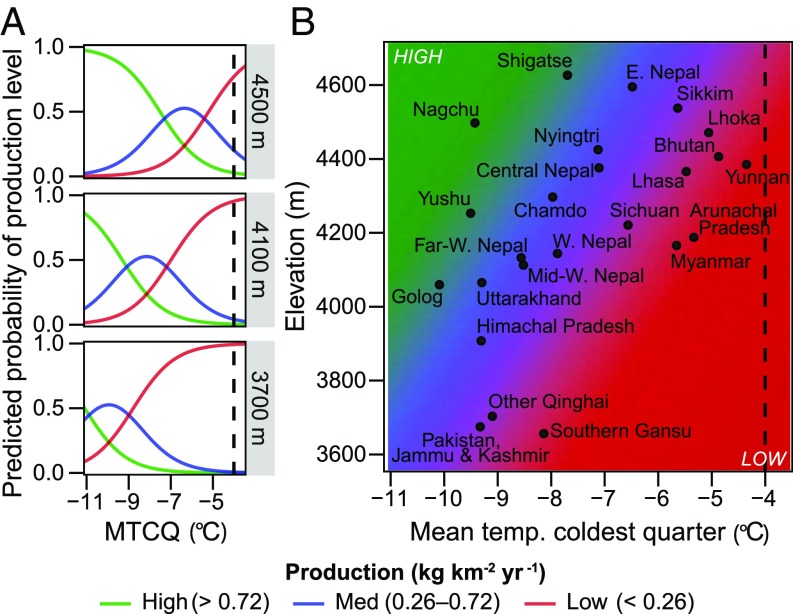
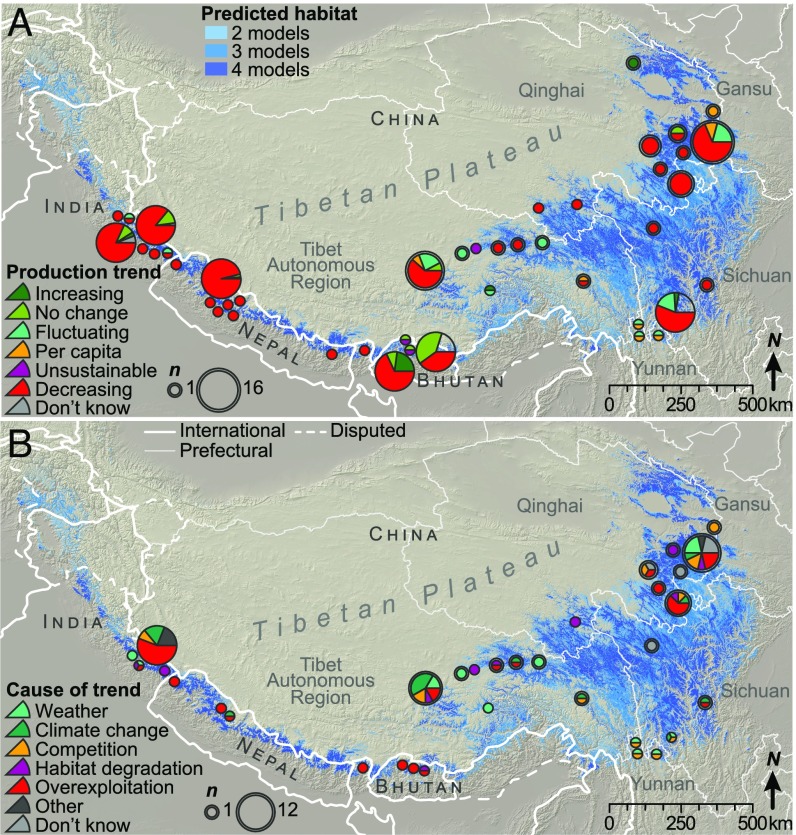
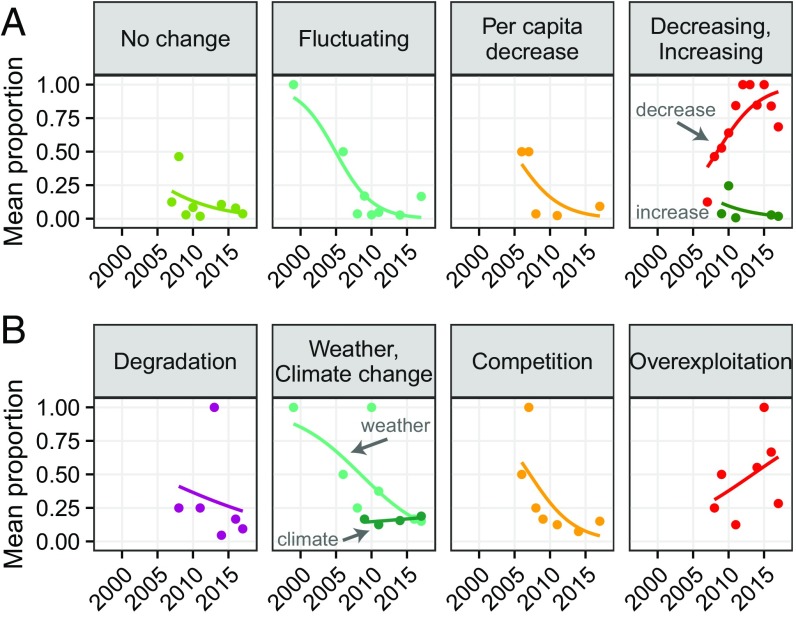
Demand for traditional medicine ingredients is causing species declines globally. Due to this trade, Himalayan caterpillar fungus () has become one of the world's most valuable biological commodities, providing a crucial source of income for hundreds of thousands of collectors. However, the resulting harvesting boom has generated widespread concern over the sustainability of its collection. We investigate whether caterpillar fungus production is decreasing-and if so, why-across its entire range. To overcome the limitations of sparse quantitative data, we use a multiple evidence base approach that makes use of complementarities between local knowledge and ecological modeling. We find that, according to collectors across four countries, caterpillar fungus production has decreased due to habitat degradation, climate change, and especially overexploitation. Our statistical models corroborate that climate change is contributing to this decline. They indicate that caterpillar fungus is more productive under colder conditions, growing in close proximity to areas likely to have permafrost. With significant warming already underway throughout much of its range, we conclude that caterpillar fungus populations have been negatively affected by a combination of overexploitation and climate change. Our results underscore that harvesting is not the sole threat to economically valuable species, and that a collapse of the caterpillar fungus system under ongoing warming and high collection pressure would have serious implications throughout the Himalayan region.
对传统药材的需求导致全球物种数量减少。由于这种贸易,喜马拉雅毛毛虫菌()已成为世界上最有价值的生物商品之一,为数以十万计的采集者提供了关键的收入来源。然而,由此产生的采集热潮引发了人们对其可持续性的广泛关注。我们调查了毛毛虫菌在其整个分布范围内的产量是否正在减少——如果是,原因是什么。为了克服稀疏定量数据的局限性,我们采用了一种多证据基础的方法,利用了当地知识和生态建模之间的互补性。我们发现,根据来自四个国家的采集者的说法,毛毛虫菌的产量因栖息地退化、气候变化以及过度开发而减少。我们的统计模型证实了气候变化是造成这种下降的原因之一。它们表明,毛毛虫菌在较冷的条件下产量更高,生长在可能有永久冻土的地区附近。由于其大部分分布区域已经出现了显著的变暖,我们得出结论,毛毛虫菌种群已经受到过度开发和气候变化的综合影响。我们的研究结果表明,采集并不是对经济价值物种的唯一威胁,而且在持续变暖以及高采集压力下,毛毛虫菌系统的崩溃将对喜马拉雅地区产生严重影响。