Unit of Molecular Neuropathology, Physiological and pathological processes Program, Centro de Biología Molecular Severo Ochoa UAM-CSIC, Calle Nicolás Cabrera, 1, Madrid, 28049, Spain.
Department of Molecular Biology, Faculty of Science, Universidad Autónoma de Madrid, Ciudad Universitaria de Cantoblanco, Madrid, 28049, Spain.
Stem Cell Res Ther. 2024 Oct 9;15(1):356. doi: 10.1186/s13287-024-03965-0.
Parkinson´s disease (PD), the second most common neurodegenerative disease in the world, is characterized by the death or impairment of dopaminergic neurons (DAn) in the substantia nigra pars compacta and dopamine depletion in the striatum. Currently, there is no cure for PD, and treatments only help to reduce the symptoms of the disease, and do not repair or replace the DAn damaged or lost in PD. Cell replacement therapy (CRT) seeks to relieve both pathological and symptomatic PD manifestations and has been shown to have beneficial effects in experimental PD models as well as in PD patients, but an apt cell line to be used in the treatment of PD has yet to be established. The purpose of this study was to examine the effects of the transplantation of hVM1 clone 32 cells, a bankable line of human neural stem cells (hNSCs), in a PD mouse model at four months post-transplant.
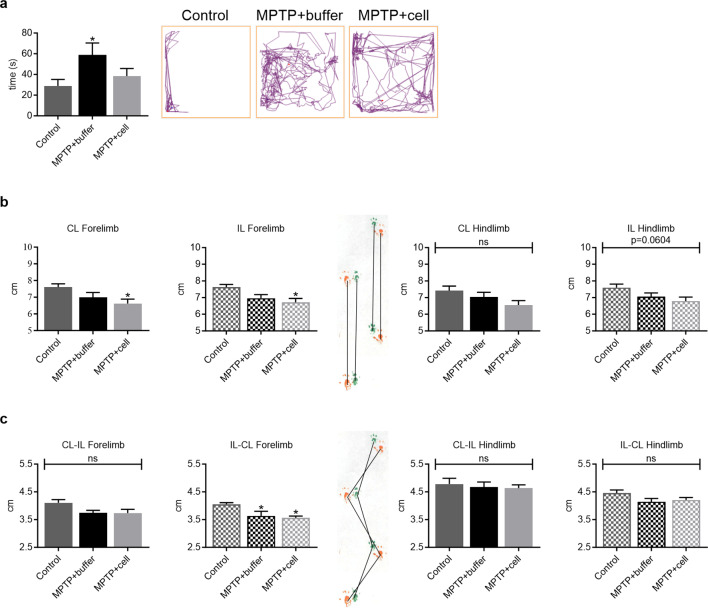
Adult (five month-old) C57BL/6JRccHsd male mice were injected with 1-methyl-4-phenyl-1,2,3,6-tetrahydropyridine and subsequently transplanted with hVM1 clone 32 cells, or buffer, in the left striatum. Four months post-transplant, behavioral effects were explored using the open field and paw print tests, and histological analyses were performed.
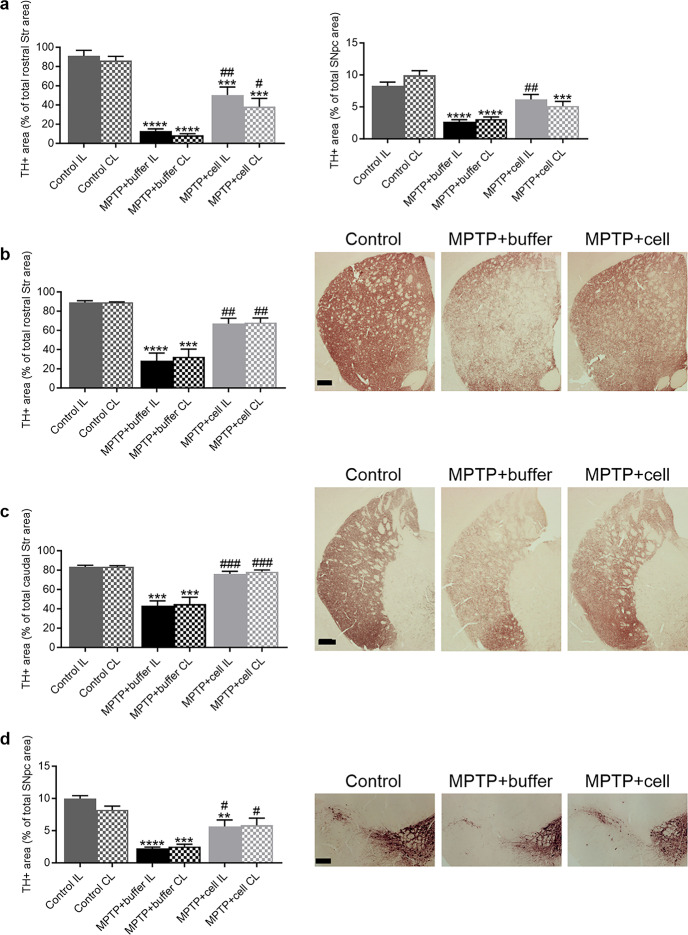
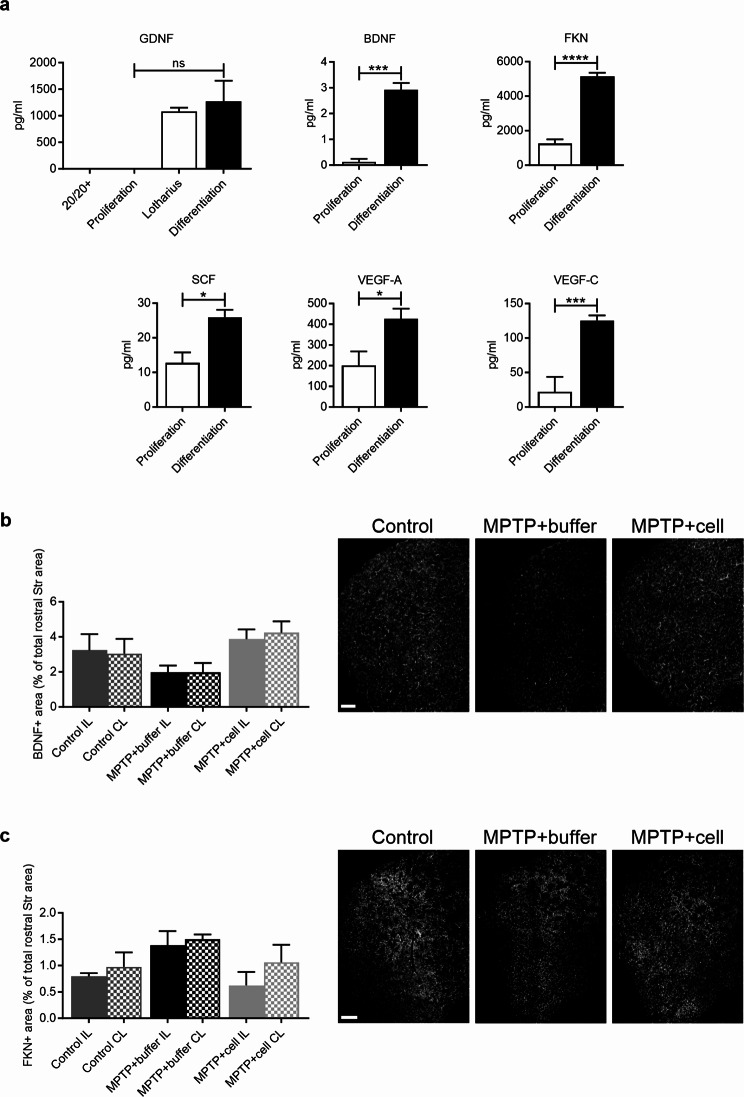
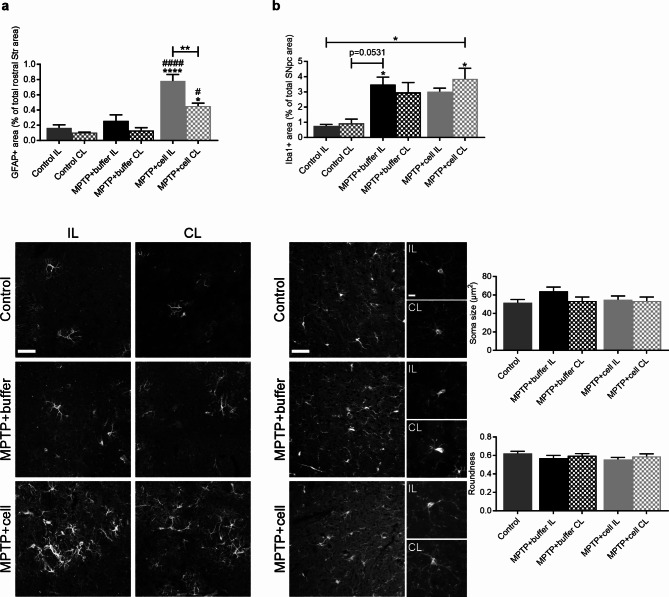
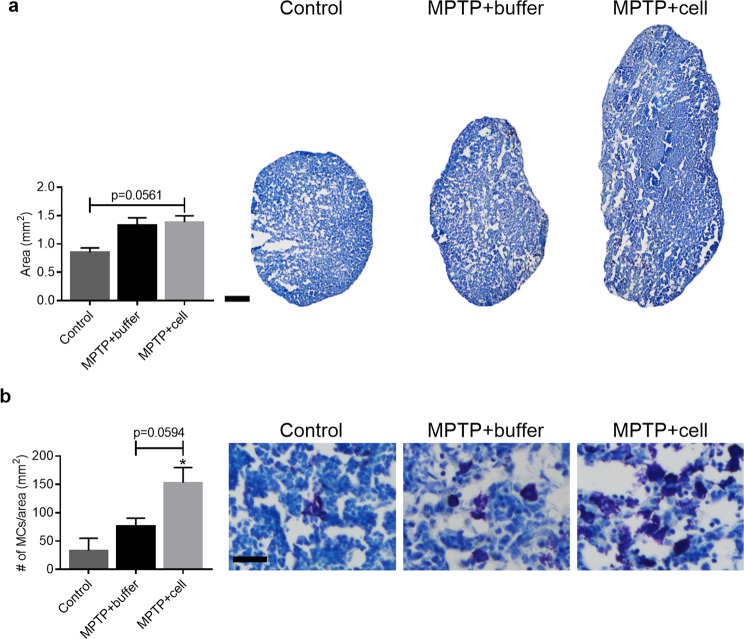
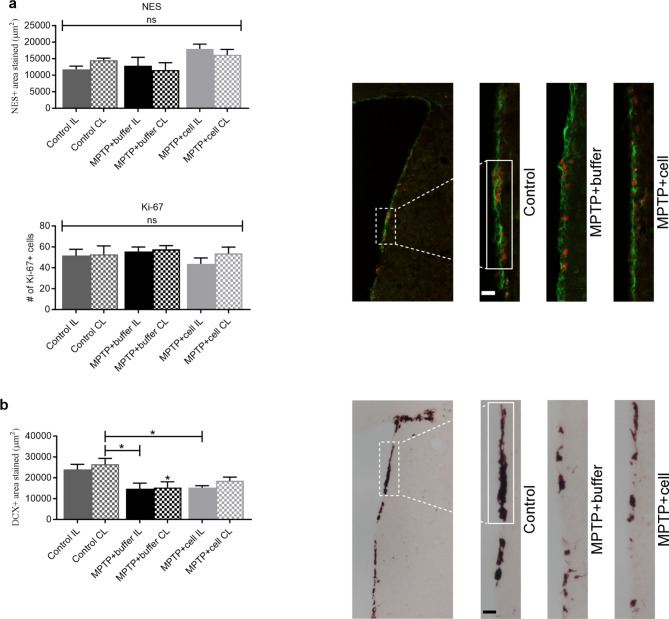
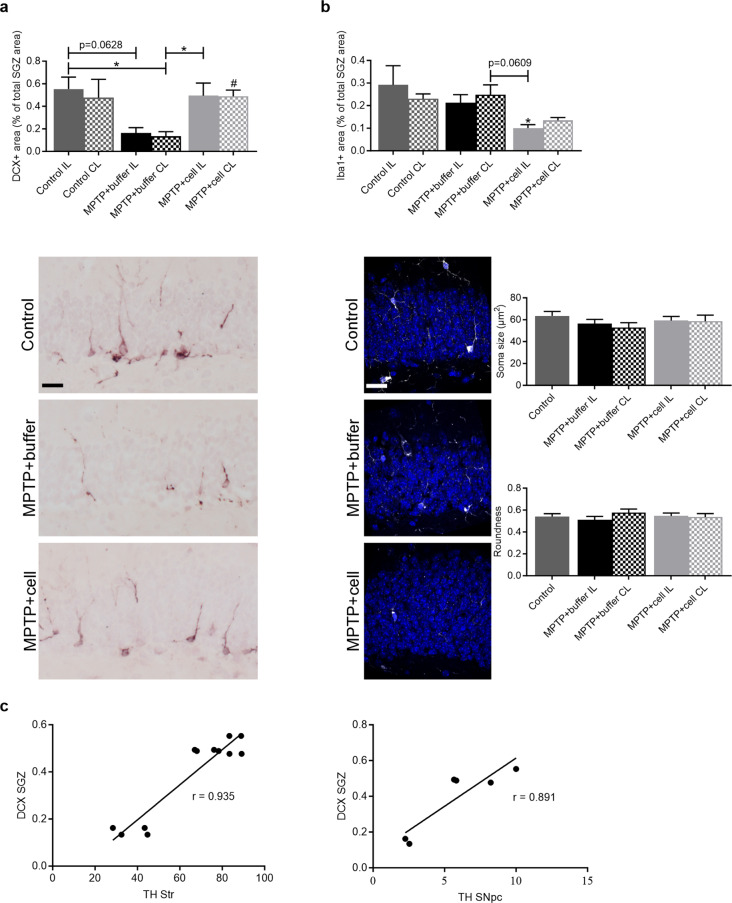
Transplantation of hVM1 clone 32 cells rescued dopaminergic nigrostriatal populations in adult Parkinsonian mice. Motor and neurological deterioration were observed in buffer-treated mice, the latter of which had a tendency to improve in hNSC-transplanted mice. Detection of mast cell migration to the superficial cervical lymph nodes in cell-transplanted mice denoted a peripheral effect. Transplantation of hNSCs also rescued neuroblast neurogenesis in the subgranular zone, which was correlated with dopaminergic recovery and is indicative of local recovery mechanisms.
In this proof-of-concept study, the transplantation of hVM1 clone 32 cells provided neuroprotection in adult Parkinsonian mice by restoring the dopaminergic nigrostriatal pathway and hippocampal neurogenesis, demonstrating the efficacy of cell replacement therapy as a treatment for PD.
帕金森病(PD)是世界上第二常见的神经退行性疾病,其特征是黑质致密部的多巴胺能神经元(DAn)死亡或受损,以及纹状体中多巴胺耗竭。目前,PD 尚无治愈方法,治疗方法只能帮助减轻疾病症状,而不能修复或替代 PD 中受损或丢失的 DAn。细胞替代疗法(CRT)旨在缓解 PD 的病理性和症状性表现,已在实验性 PD 模型以及 PD 患者中显示出有益效果,但尚未建立合适的细胞系用于 PD 的治疗。本研究旨在研究移植 hVM1 克隆 32 细胞(一种可储存的人神经干细胞(hNSC)系)对移植后四个月 PD 小鼠模型的影响。
成年(五个月大)C57BL/6JRccHsd 雄性小鼠接受 1-甲基-4-苯基-1,2,3,6-四氢吡啶注射,随后在左侧纹状体中移植 hVM1 克隆 32 细胞或缓冲液。移植后四个月,通过旷场和爪印试验探索行为效应,并进行组织学分析。
移植 hVM1 克隆 32 细胞挽救了成年帕金森病小鼠的多巴胺能黑质纹状体群体。缓冲液处理的小鼠出现运动和神经恶化,而 hNSC 移植的小鼠则有改善的趋势。细胞移植小鼠中肥大细胞迁移到浅表颈淋巴结的检测表明存在外周效应。移植 hNSC 还挽救了颗粒下区的神经母细胞神经发生,这与多巴胺的恢复有关,表明存在局部恢复机制。
在这项概念验证研究中,hVM1 克隆 32 细胞的移植通过恢复多巴胺能黑质纹状体通路和海马神经发生为成年帕金森病小鼠提供了神经保护,证明了细胞替代疗法作为 PD 治疗方法的有效性。