Department of Microbiology and Immunology, Stritch School of Medicine, Health Sciences Division, Loyola University Chicago, Maywood, Illinois, USA.
Buck Institute for Research on Aging, Novato, California, USA.
mBio. 2018 Oct 23;9(5):e01905-18. doi: 10.1128/mBio.01905-18.
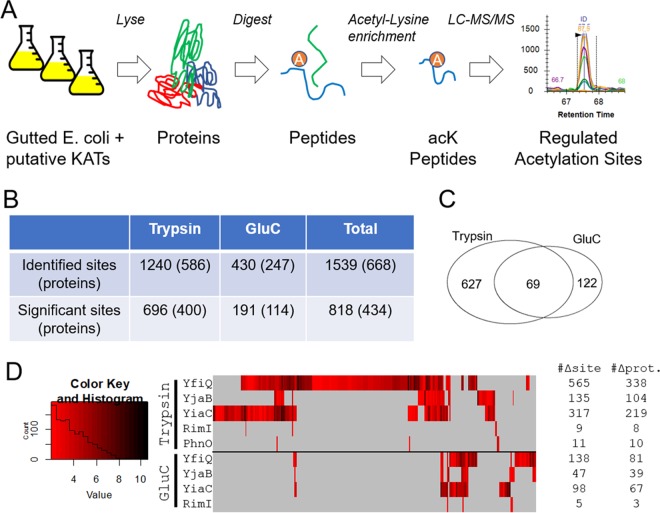
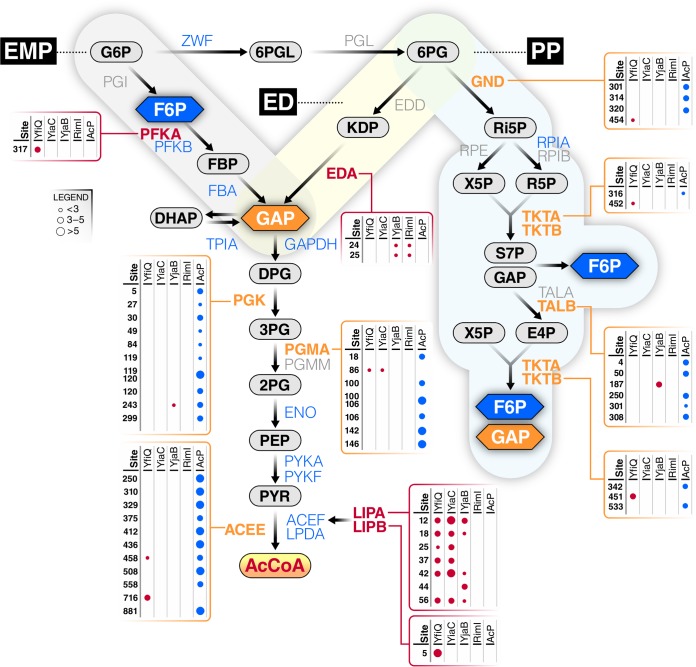
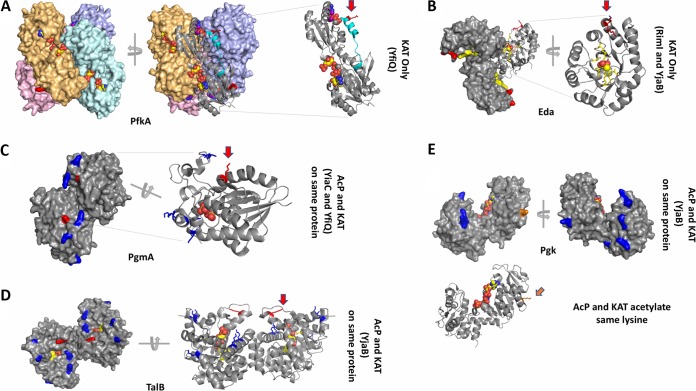
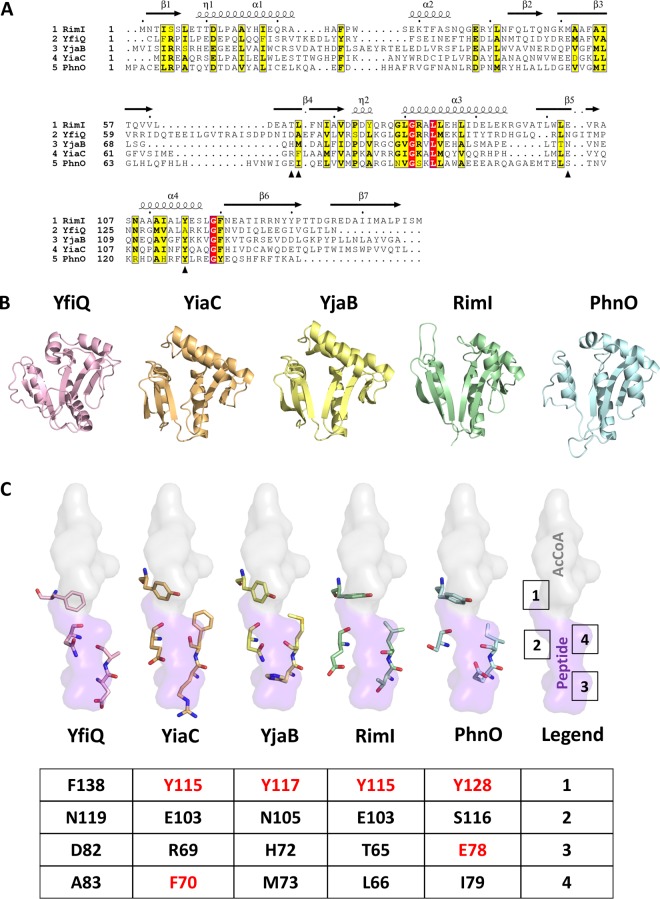
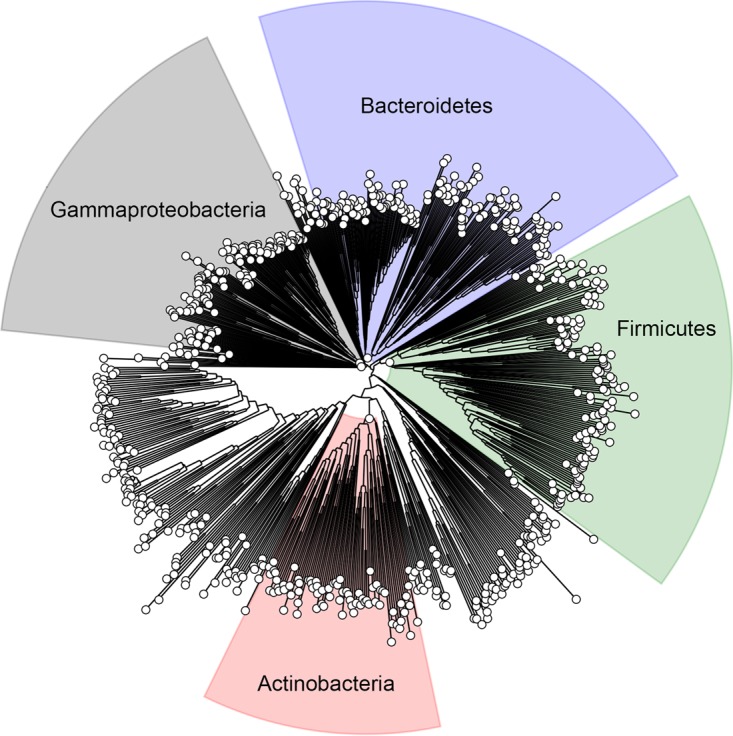
Posttranslational modifications, such as ε-lysine acetylation, regulate protein function. ε-lysine acetylation can occur either nonenzymatically or enzymatically. The nonenzymatic mechanism uses acetyl phosphate (AcP) or acetyl coenzyme A (AcCoA) as acetyl donor to modify an ε-lysine residue of a protein. The enzymatic mechanism uses ε-lysine acetyltransferases (KATs) to specifically transfer an acetyl group from AcCoA to ε-lysine residues on proteins. To date, only one KAT (YfiQ, also known as Pka and PatZ) has been identified in Here, we demonstrate the existence of 4 additional KATs: RimI, YiaC, YjaB, and PhnO. In a genetic background devoid of all known acetylation mechanisms (most notably AcP and YfiQ) and one deacetylase (CobB), overexpression of these putative KATs elicited unique patterns of protein acetylation. We mutated key active site residues and found that most of them eliminated enzymatic acetylation activity. We used mass spectrometry to identify and quantify the specificity of YfiQ and the four novel KATs. Surprisingly, our analysis revealed a high degree of substrate specificity. The overlap between KAT-dependent and AcP-dependent acetylation was extremely limited, supporting the hypothesis that these two acetylation mechanisms play distinct roles in the posttranslational modification of bacterial proteins. We further showed that these novel KATs are conserved across broad swaths of bacterial phylogeny. Finally, we determined that one of the novel KATs (YiaC) and the known KAT (YfiQ) can negatively regulate bacterial migration. Together, these results emphasize distinct and specific nonenzymatic and enzymatic protein acetylation mechanisms present in bacteria.ε-Lysine acetylation is one of the most abundant and important posttranslational modifications across all domains of life. One of the best-studied effects of acetylation occurs in eukaryotes, where acetylation of histone tails activates gene transcription. Although bacteria do not have true histones, ε-lysine acetylation is prevalent; however, the role of these modifications is mostly unknown. We constructed an strain that lacked both known acetylation mechanisms to identify four new ε-lysine acetyltransferases (RimI, YiaC, YjaB, and PhnO). We used mass spectrometry to determine the substrate specificity of these acetyltransferases. Structural analysis of selected substrate proteins revealed site-specific preferences for enzymatic acetylation that had little overlap with the preferences of the previously reported acetyl-phosphate nonenzymatic acetylation mechanism. Finally, YiaC and YfiQ appear to regulate flagellum-based motility, a phenotype critical for pathogenesis of many organisms. These acetyltransferases are highly conserved and reveal deeper and more complex roles for bacterial posttranslational modification.
翻译后修饰,如ε-赖氨酸乙酰化,可调节蛋白质功能。ε-赖氨酸乙酰化可通过非酶促或酶促方式发生。非酶促机制利用乙酰磷酸(AcP)或乙酰辅酶A(AcCoA)作为乙酰供体来修饰蛋白质的ε-赖氨酸残基。酶促机制利用ε-赖氨酸乙酰转移酶(KATs)将乙酰基从AcCoA特异性转移至蛋白质上的ε-赖氨酸残基。迄今为止,在[具体细菌名称未给出]中仅鉴定出一种KAT(YfiQ,也称为Pka和PatZ)。在此,我们证明还存在另外4种KAT:RimI、YiaC、YjaB和PhnO。在缺乏所有已知乙酰化机制(最显著的是AcP和YfiQ)以及一种去乙酰化酶(CobB)的遗传背景下,这些假定的KATs的过表达引发了独特的蛋白质乙酰化模式。我们对关键活性位点残基进行了突变,发现其中大多数消除了酶促乙酰化活性。我们使用质谱法来鉴定和量化YfiQ以及这四种新型KATs的特异性。令人惊讶的是,我们的分析揭示了高度的底物特异性。KAT依赖性乙酰化和AcP依赖性乙酰化之间的重叠极其有限,这支持了这两种乙酰化机制在细菌蛋白质翻译后修饰中发挥不同作用的假设。我们进一步表明,这些新型KATs在广泛的细菌系统发育中是保守的。最后,我们确定其中一种新型KAT(YiaC)和已知的KAT(YfiQ)可负向调节细菌迁移。总之,这些结果强调了细菌中存在的独特且特定的非酶促和酶促蛋白质乙酰化机制。ε-赖氨酸乙酰化是所有生命领域中最丰富且重要的翻译后修饰之一。乙酰化研究得最透彻的效应之一发生在真核生物中,其中组蛋白尾巴的乙酰化激活基因转录。尽管细菌没有真正的组蛋白,但ε-赖氨酸乙酰化很普遍;然而,这些修饰的作用大多未知。我们构建了一种缺乏两种已知乙酰化机制的菌株,以鉴定四种新的ε-赖氨酸乙酰转移酶(RimI, YiaC, YjaB和PhnO)。我们使用质谱法来确定这些乙酰转移酶的底物特异性。对选定底物蛋白的结构分析揭示了酶促乙酰化的位点特异性偏好,与先前报道的乙酰磷酸非酶促乙酰化机制的偏好几乎没有重叠。最后,YiaC和YfiQ似乎调节基于鞭毛的运动性,这是许多生物体发病机制中的关键表型。这些乙酰转移酶高度保守,并揭示了细菌翻译后修饰更深入、更复杂的作用。