University of Cambridge School of Clinical Medicine, Department of Psychiatry and Behavioural and Clinical Neuroscience Institute, Herchel Smith Building for Brain and Mind Sciences, Cambridge, CB2 0QQ, Cambridge Biomedical Campus, UK.
Department of Psychiatry, Psychotherapy and Psychosomatics, Psychiatric Hospital, University of Zurich,, Zurich, Switzerland.
Sci Rep. 2018 Oct 23;8(1):14923. doi: 10.1038/s41598-018-33142-2.
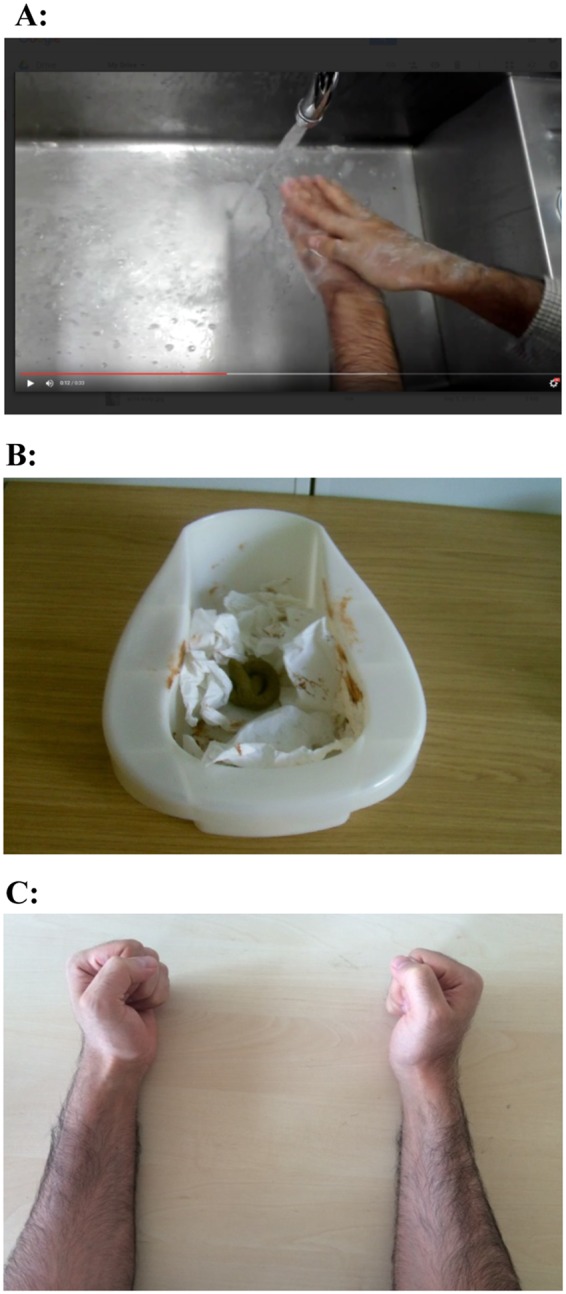
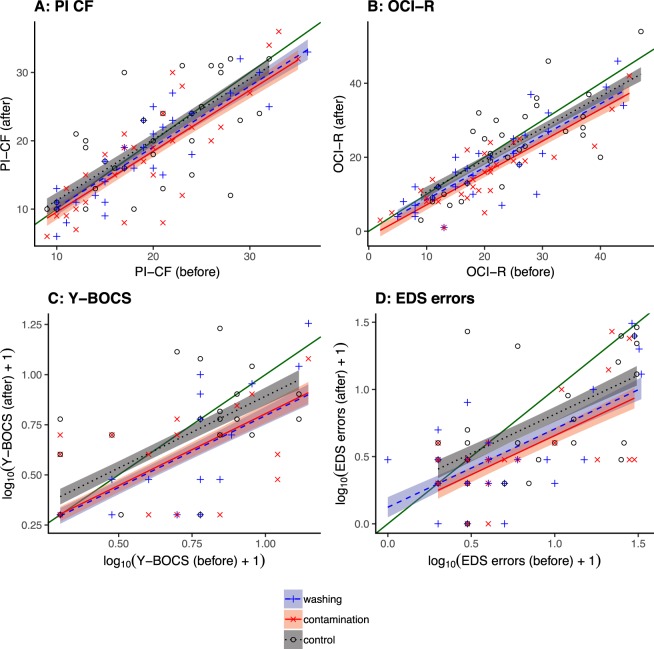
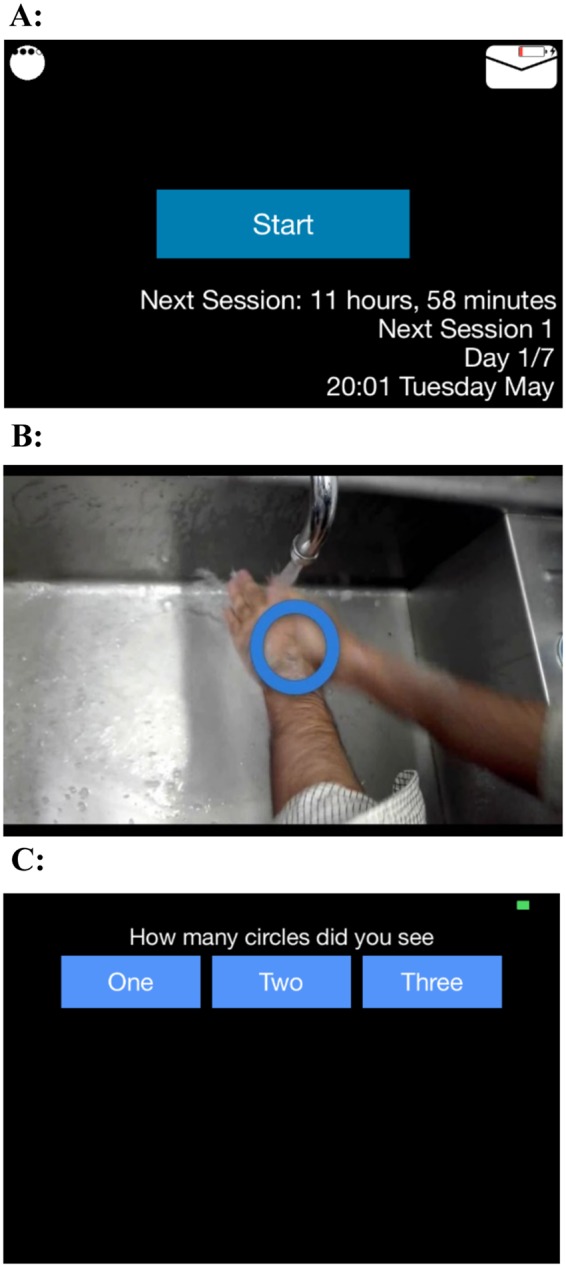
One type of obsessive-compulsive disorder (OCD) is characterized by contamination fears and compulsive cleansing. Few effective treatments are available for this debilitating condition. Compulsive symptoms, such as excessive washing, are believed to be mediated by cognitive inflexibility-arguably the most striking cognitive impairment in OCD. In this study, we investigated the effects of two novel smartphone interventions on cognitive flexibility and OCD symptoms in healthy individuals with OCD-like contamination fears. In the first intervention, participants watched a brief video recording of themselves engaging in handwashing on a smartphone, four times a day, for a total of one week (N = 31). The second intervention was similar except that participants watched themselves repeatedly touching a disgust-inducing object (N = 31). In a third (control) "intervention", participants watched themselves performing sequential hand movements (N = 31). As hypothesized, the two smartphone interventions, unlike the control, improved cognitive flexibility; as assessed on the Intradimensional-Extradimensional Set Shifting task (a sensitive marker of cognitive flexibility). The two interventions, unlike the control, also improved OCD symptoms (measured with the Obsessive-Compulsive Inventory-Revised and Yale-Brown Obsessive-Compulsive Scale). Finally, we found high levels of adherence to the interventions. These findings have significant clinical implications for OCD.
一种强迫症(OCD)的特征是污染恐惧和强迫性清洁。对于这种使人衰弱的疾病,几乎没有有效的治疗方法。强迫症状,如过度洗涤,被认为是由认知灵活性介导的——这是 OCD 中最明显的认知障碍。在这项研究中,我们调查了两种新型智能手机干预措施对有 OCD 样污染恐惧的健康个体的认知灵活性和 OCD 症状的影响。在第一种干预措施中,参与者每天在智能手机上四次观看自己洗手的简短视频记录,总共一周(N=31)。第二种干预措施类似,只是参与者反复观看自己触摸令人厌恶的物体(N=31)。在第三个(对照)“干预”中,参与者观看自己进行顺序手部运动(N=31)。正如假设的那样,与对照组相比,两种智能手机干预措施而非对照组改善了认知灵活性;通过内维度-外维度集转移任务进行评估(认知灵活性的敏感标志物)。与对照组相比,这两种干预措施也改善了 OCD 症状(用强迫症清单修订版和耶鲁-布朗强迫症量表测量)。最后,我们发现对干预措施的高度依从性。这些发现对 OCD 具有重要的临床意义。