Key Laboratory of Molecular Biology on Infectious Diseases, Ministry of Education, Department of Infectious Diseases, the Second Affiliated Hospital of Chongqing Medical University, Chongqing, China.
Molecular Oncology Laboratory, Department of Orthopaedic Surgery and Rehabilitation Medicine, The University of Chicago Medical Center, Chicago, IL, 60637, USA.
Lab Invest. 2019 Jan;99(1):58-71. doi: 10.1038/s41374-018-0087-7. Epub 2018 Oct 23.
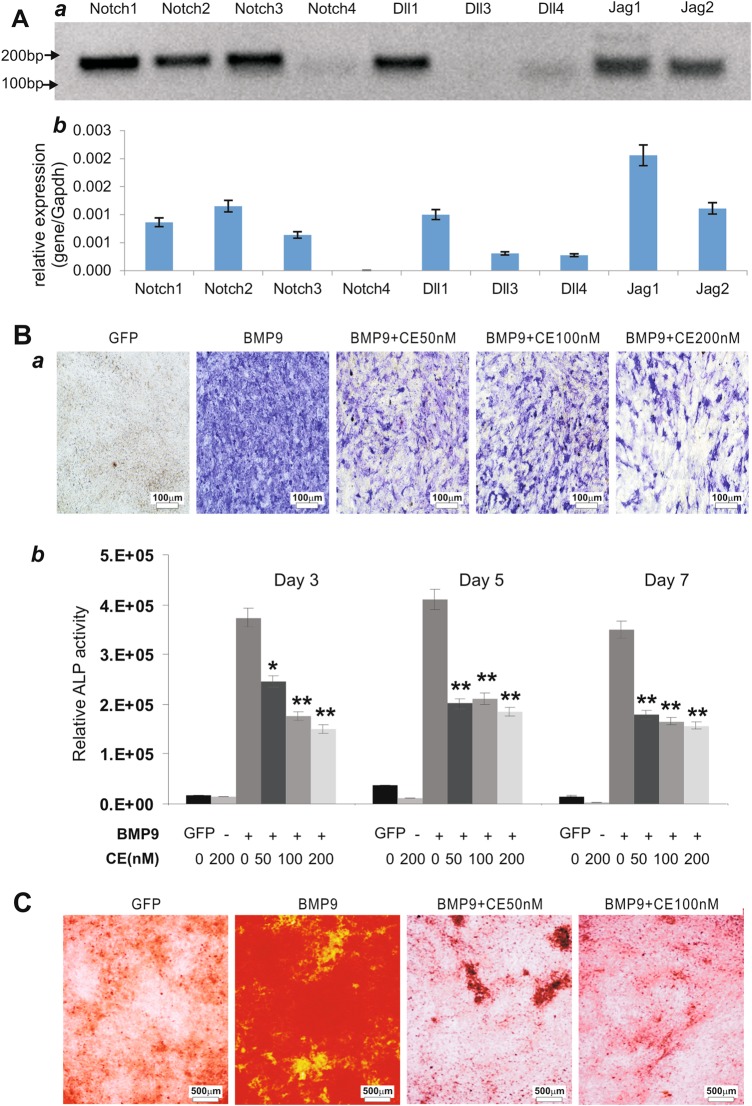
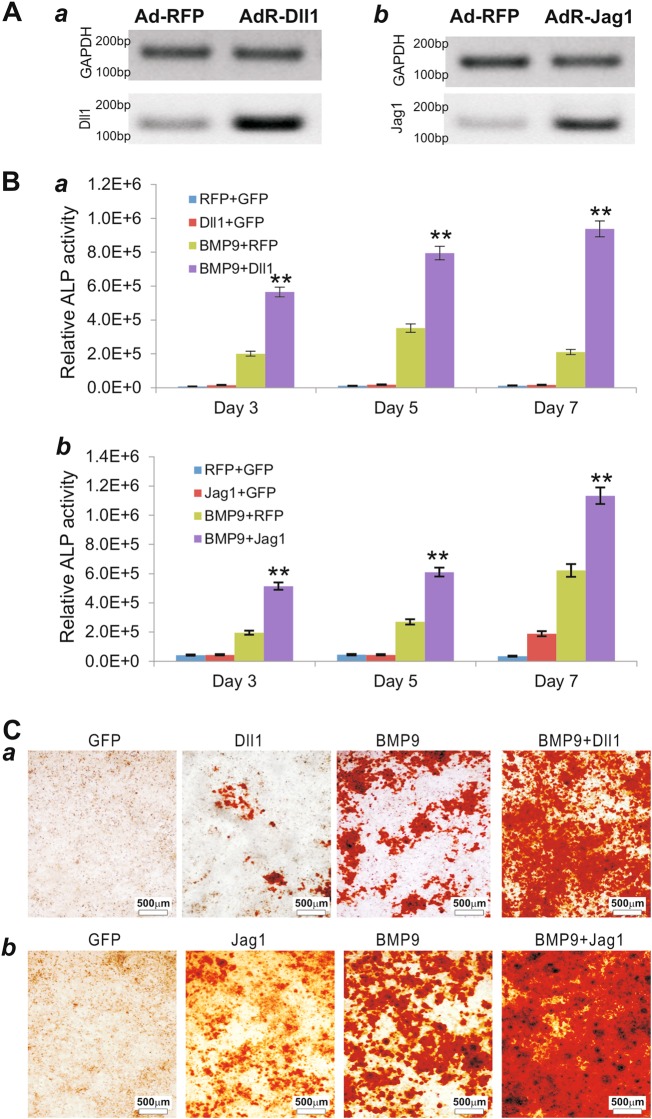
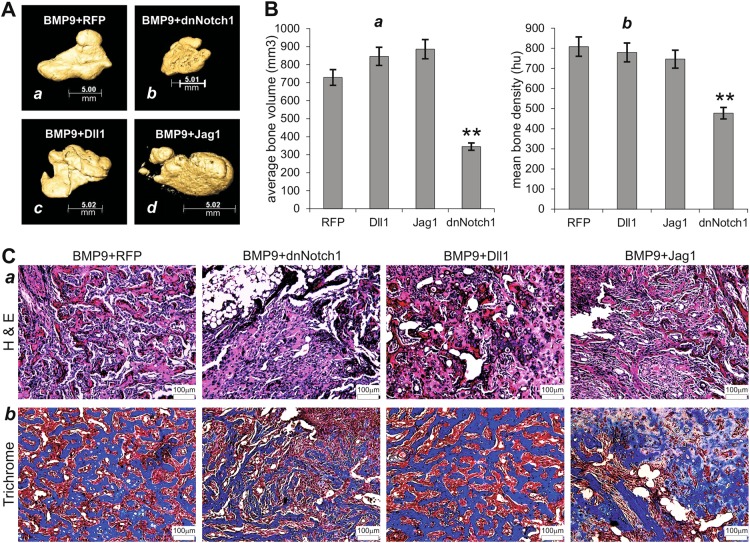
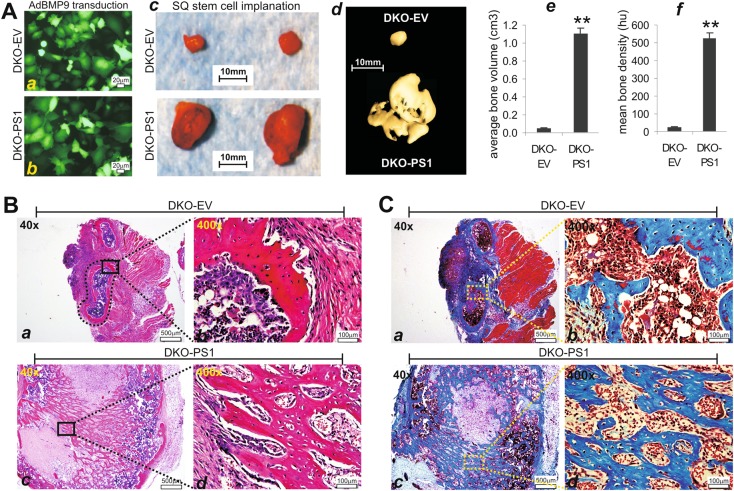
Mesenchymal stem cells (MSCs) are multipotent progenitors that can differentiate into multiple lineages including osteoblastic lineage. Osteogenic differentiation of MSCs is a cascade that recapitulates most, if not all, of the molecular events occurring during embryonic skeletal development, which is regulated by numerous signaling pathways including bone morphogenetic proteins (BMPs). Through a comprehensive analysis of the osteogenic activity, we previously demonstrated that BMP9 is the most potent BMP for inducing bone formation from MSCs both in vitro and in vivo. However, as one of the least studied BMPs, the essential mediators of BMP9-induced osteogenic signaling remain elusive. Here we show that BMP9-induced osteogenic signaling in MSCs requires intact Notch signaling. While the expression of Notch receptors and ligands are readily detectable in MSCs, Notch inhibitor and dominant-negative Notch1 effectively inhibit BMP9-induced osteogenic differentiation in vitro and ectopic bone formation in vivo. Genetic disruption of Notch pathway severely impairs BMP9-induced osteogenic differentiation and ectopic bone formation from MSCs. Furthermore, while BMP9-induced expression of early-responsive genes is not affected by defective Notch signaling, BMP9 upregulates the expression of Notch receptors and ligands at the intermediate stage of osteogenic differentiation. Taken together, these results demonstrate that Notch signaling may play an essential role in coordinating BMP9-induced osteogenic differentiation of MSCs.
间充质干细胞(MSCs)是多能祖细胞,可分化为多个谱系,包括成骨谱系。MSCs 的成骨分化是一个级联反应,几乎重现了胚胎骨骼发育过程中发生的所有分子事件,这由许多信号通路调控,包括骨形态发生蛋白(BMPs)。通过对成骨活性的全面分析,我们之前证明 BMP9 是体外和体内诱导 MSCs 形成骨的最有效 BMP。然而,作为研究最少的 BMP 之一,BMP9 诱导的成骨信号的基本介质仍不清楚。在这里,我们表明 BMP9 诱导的 MSCs 成骨信号需要完整的 Notch 信号。虽然 Notch 受体和配体的表达在 MSCs 中很容易检测到,但 Notch 抑制剂和显性负性 Notch1 有效抑制了体外 BMP9 诱导的成骨分化和体内异位骨形成。Notch 途径的遗传破坏严重损害了 BMP9 诱导的 MSC 成骨分化和异位骨形成。此外,虽然 BMP9 诱导的早期反应基因的表达不受缺陷 Notch 信号的影响,但 BMP9 在成骨分化的中间阶段上调 Notch 受体和配体的表达。总之,这些结果表明 Notch 信号可能在协调 BMP9 诱导的 MSCs 成骨分化中发挥重要作用。