Vascular Biology Center (J.L., G.Y., W.M., A.Z., J.Z., H.S.), Medical College of Georgia, Augusta University.
Guangxi Medical College, Nanning, China (G.Y.).
Circ Heart Fail. 2018 Oct;11(10):e004917. doi: 10.1161/CIRCHEARTFAILURE.118.004917.
Defects in protein homeostasis are sufficient to provoke cardiac remodeling and dysfunction. Although posttranslational modifications by ubiquitin and ubiquitin-like proteins are emerging as an important regulatory mechanism of protein function, the role of Ufm1 (ubiquitin-fold modifier 1)-a novel ubiquitin-like protein-has not been explored in either the normal or stressed heart.
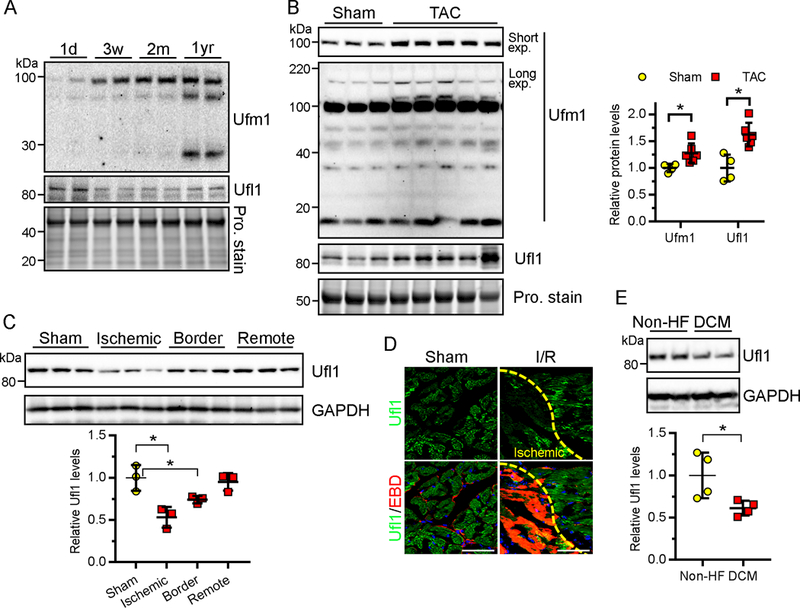
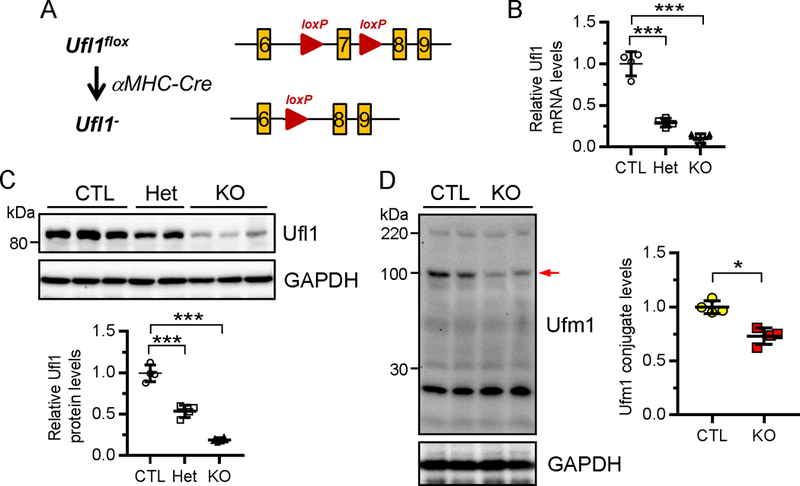
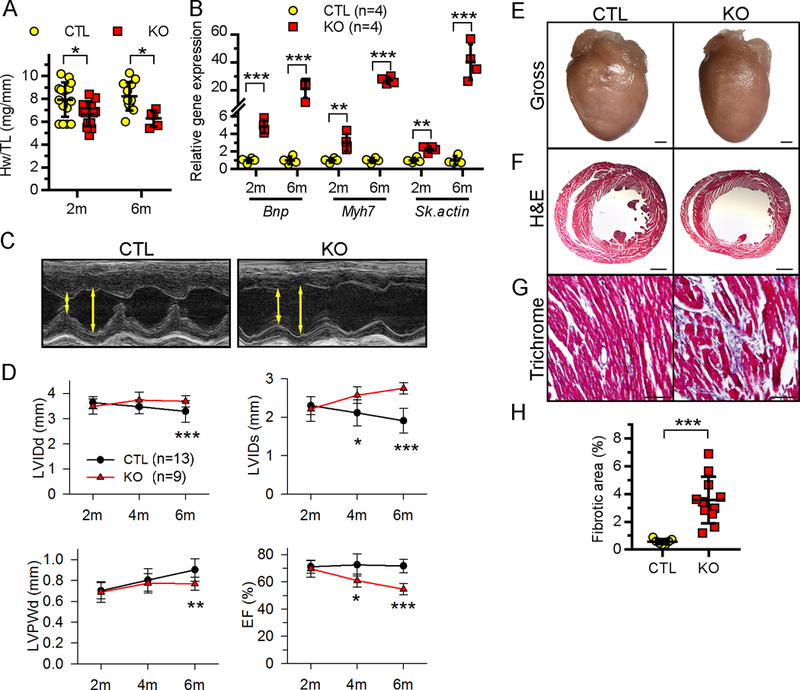
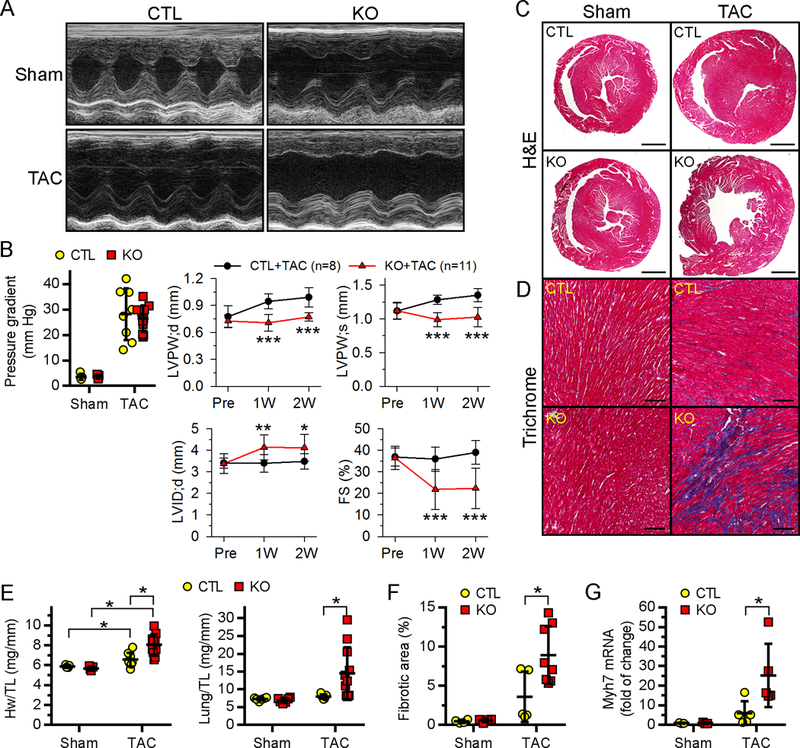
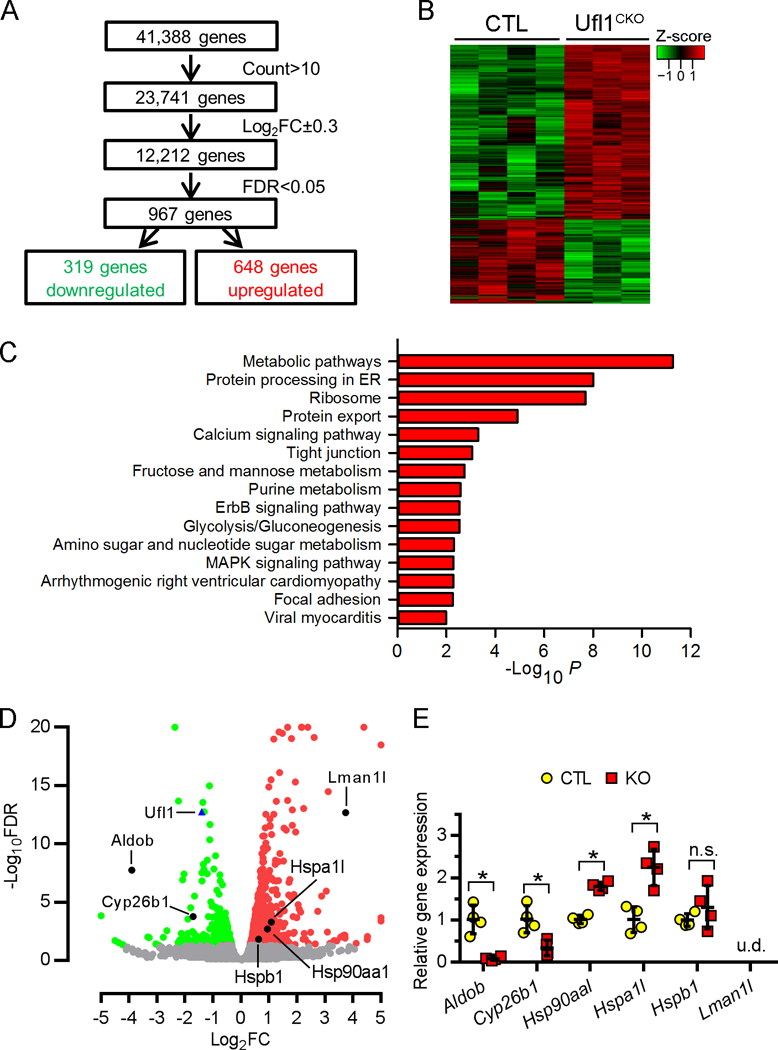
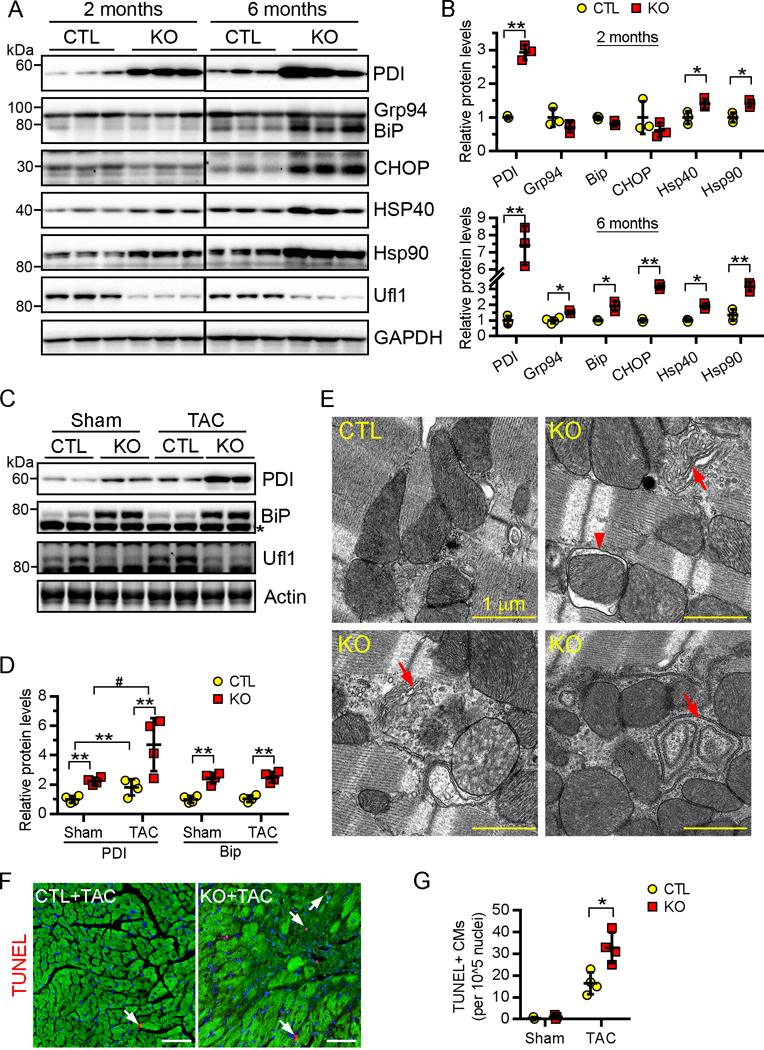
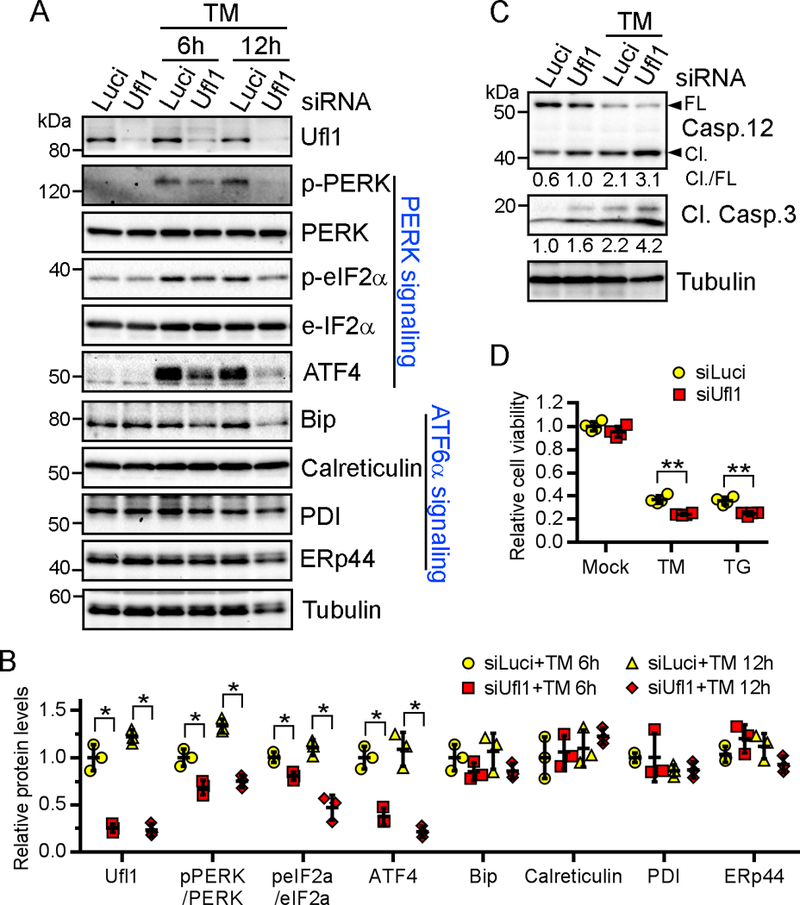
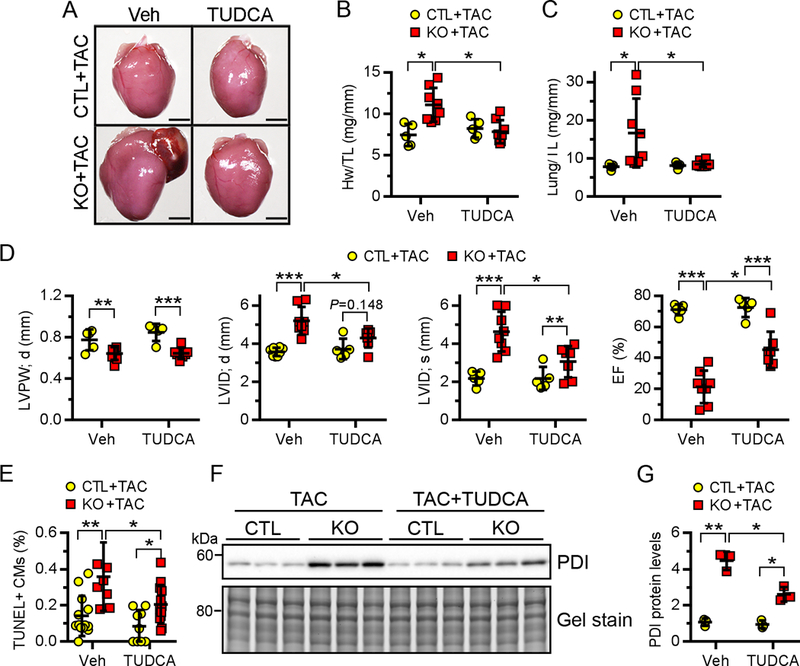
Western blotting revealed that Ufl1 (Ufm1-specific E3 ligase 1)-an enzyme essential for Ufm1 modification-was increased in hypertrophic mouse hearts but reduced in the failing hearts of patients with dilated cardiomyopathy. To determine the functional role of Ufl1 in the heart, we generated a cardiac-specific knockout mouse and showed that Ufl1-deficient mice developed age-dependent cardiomyopathy and heart failure, as indicated by elevated cardiac fetal gene expression, increased fibrosis, and impaired cardiac contractility. When challenged with pressure overload, Ufl1-deficient hearts exhibited remarkably greater hypertrophy, exacerbated fibrosis, and worsened cardiac contractility compared with control counterparts. Transcriptome analysis identified that genes associated with the endoplasmic reticulum (ER) function were dysregulated in Ufl1-deficient hearts. Biochemical analysis revealed that excessive ER stress preceded and deteriorated along with the development of cardiomyopathy in Ufl1-deficient hearts. Mechanistically, Ufl1 depletion impaired (PKR-like ER-resident kinase) signaling and aggravated cardiomyocyte cell death after ER stress. Administration of the chemical ER chaperone tauroursodeoxycholic acid to Ufl1-deficient mice alleviated ER stress and attenuated pressure overload-induced cardiac dysfunction.
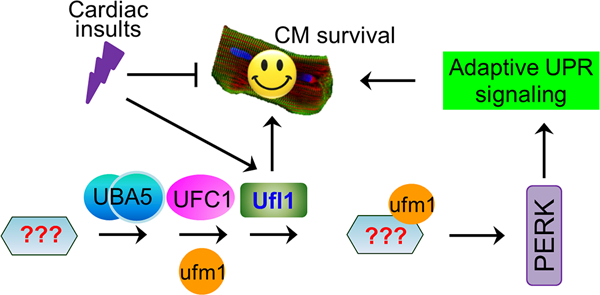
Our results advance a novel concept that the Ufm1 system is essential for cardiac homeostasis through regulation of ER function and that upregulation of myocardial Ufl1 could be protective against heart failure.
蛋白质动态平衡的缺陷足以引发心脏重构和功能障碍。虽然泛素和泛素样蛋白的翻译后修饰作为蛋白质功能的重要调节机制正在出现,但 Ufm1(泛素折叠修饰物 1)-一种新型泛素样蛋白-在正常或应激心脏中的作用尚未被探索。
Western blot 显示,Ufl1(Ufm1 特异性 E3 连接酶 1)-一种对 Ufm1 修饰至关重要的酶-在肥大的小鼠心脏中增加,但在扩张型心肌病患者的衰竭心脏中减少。为了确定 Ufl1 在心脏中的功能作用,我们生成了心脏特异性敲除小鼠,并表明 Ufl1 缺陷小鼠表现出年龄依赖性心肌病和心力衰竭,表现为心脏胎儿基因表达升高、纤维化增加和心脏收缩功能受损。当受到压力超负荷的挑战时,与对照相比,Ufl1 缺陷心脏表现出明显更大的肥大、加剧的纤维化和恶化的心脏收缩功能。转录组分析确定了与内质网(ER)功能相关的基因在 Ufl1 缺陷心脏中失调。生化分析显示,内质网应激在 Ufl1 缺陷心脏中先于并随着心肌病的发展而恶化。机制上,Ufl1 耗竭会削弱(PKR 样内质网驻留激酶)信号,并在 ER 应激后加剧心肌细胞死亡。向 Ufl1 缺陷小鼠施用化学 ER 伴侣牛磺熊脱氧胆酸可减轻 ER 应激并减轻压力超负荷引起的心脏功能障碍。
我们的结果提出了一个新的概念,即 Ufm1 系统通过调节 ER 功能对心脏动态平衡至关重要,并且心肌 Ufl1 的上调可能对心力衰竭具有保护作用。