Centre for Cardiovascular and Metabolic Neuroscience, Neuroscience, Physiology & Pharmacology, University College London, United Kingdom (R.A., S.M., P.S.H., M.B., A.V.G.).
William Harvey Research Institute, Barts and the London School of Medicine and Dentistry, London, United Kingdom (R.A., M.S., Q.A., Y.L., A.T.).
Circ Arrhythm Electrophysiol. 2018 Oct;11(10):e006740. doi: 10.1161/CIRCEP.118.006740.
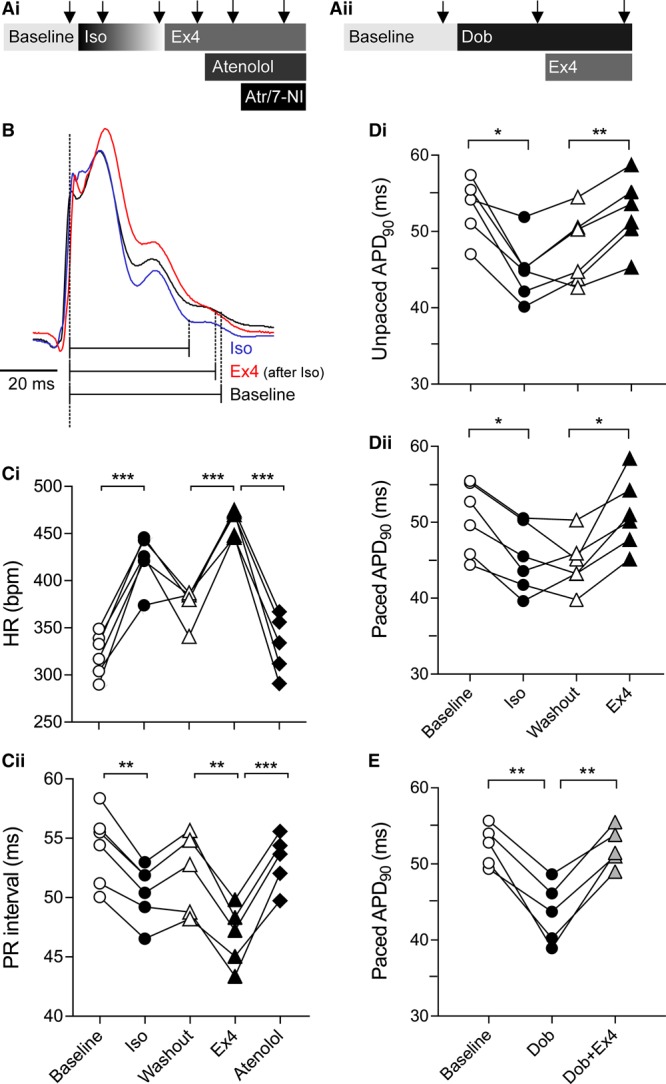
Glucagon-like peptide-1 receptor (GLP-1R) agonists improve cardiovascular outcomes in patients with type 2 diabetes mellitus. However, systemic actions of these agents cause sympathetic activation, which is generally considered to be detrimental in cardiovascular disease. Despite significant research interest in cardiovascular biology of GLP-1, the presence of GLP-1R in ventricular cardiomyocytes remains a controversial issue, and the effects of this peptide on the electrical properties of intact ventricular myocardium are unknown. We sought to determine the effects of GLP-1R agonist exendin-4 (Ex4) on ventricular action potential duration (APD) and susceptibility to ventricular arrhythmia in the rat heart in vivo and ex vivo.
Ventricular monophasic action potentials were recorded in anaesthetized (urethane) rats in vivo and isolated perfused rat hearts during sinus rhythm and ventricular pacing.
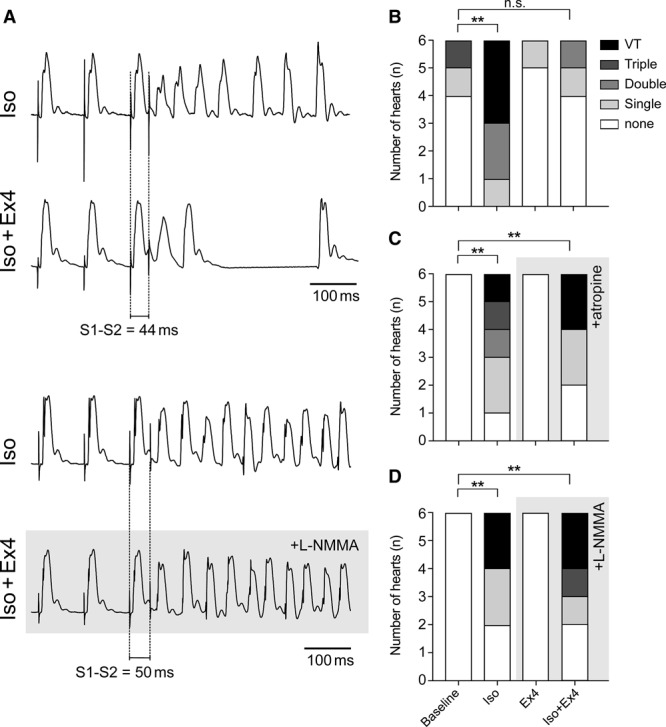
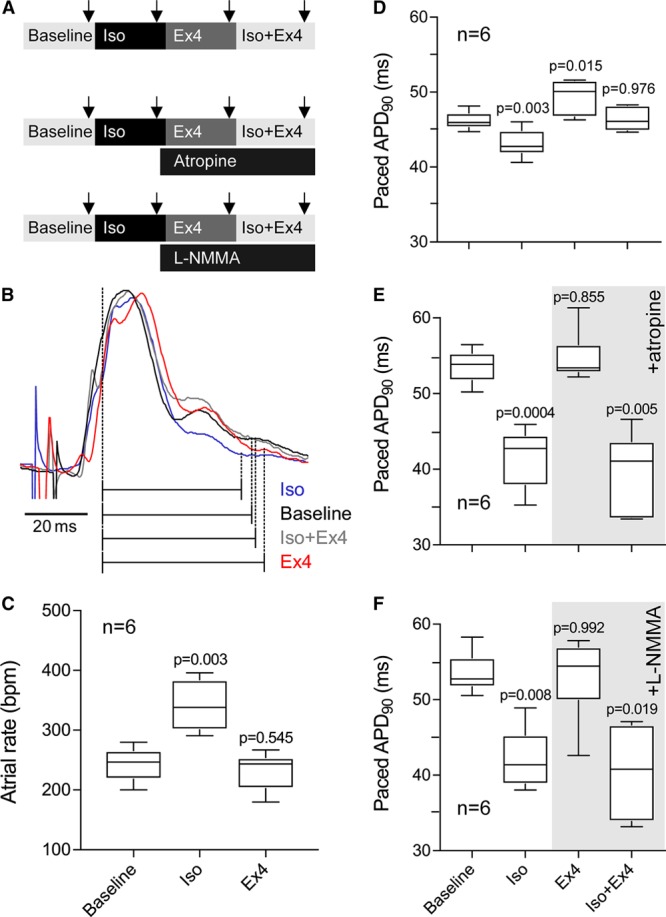
In vivo, systemic administration of Ex4 (5 μg/kg intravenously) increased heart rate, and this effect was abolished by β-adrenoceptor blockade. Despite causing sympathetic activation, Ex4 increased APD at 90% repolarization during ventricular pacing by 7% ( P=0.044; n=6) and reversed the effect of β-adrenoceptor agonist dobutamine on APD at 90% repolarization. In isolated perfused hearts, Ex4 (3 nmol/L) increased APD at 90% repolarization by 14% ( P=0.015; n=6) with no effect on heart rate. Ex4 also reduced ventricular arrhythmia inducibility in conditions of β-adrenoceptor stimulation with isoproterenol. Ex4 effects on APD and ventricular arrhythmia susceptibility were prevented in conditions of muscarinic receptor blockade or inhibition of nitric oxide synthase.
These data demonstrate that GLP-1R activation effectively opposes the effects of β-adrenoceptor stimulation on cardiac ventricular excitability and reduces ventricular arrhythmic potential. The effect of GLP-1R activation on the ventricular myocardium is indirect, mediated by acetylcholine and nitric oxide and, therefore, can be explained by stimulation of cardiac parasympathetic (vagal) neurons.
胰高血糖素样肽-1 受体(GLP-1R)激动剂可改善 2 型糖尿病患者的心血管结局。然而,这些药物的全身作用会引起交感神经激活,而交感神经激活通常被认为对心血管疾病有害。尽管人们对 GLP-1 的心血管生物学有浓厚的研究兴趣,但 GLP-1R 在心室内肌细胞中的存在仍然是一个有争议的问题,而且这种肽对完整心室心肌电特性的影响尚不清楚。我们试图确定 GLP-1R 激动剂 exendin-4(Ex4)对体内和离体大鼠心脏窦性节律和心室起搏时心室动作电位时程(APD)和易发性室性心律失常的影响。
在体内麻醉(尿烷)大鼠和离体灌注大鼠心脏中记录心室单相动作电位,在窦性节律和心室起搏时进行记录。
在体内,静脉内给予 Ex4(5μg/kg)可增加心率,而这种作用被β-肾上腺素能受体阻断所消除。尽管 Ex4 引起了交感神经激活,但它使心室起搏时的 APD90%复极增加了 7%(P=0.044;n=6),并逆转了β-肾上腺素能激动剂多巴酚丁胺对 APD90%复极的作用。在离体灌注心脏中,Ex4(3nmol/L)使 APD90%复极增加了 14%(P=0.015;n=6),而对心率没有影响。Ex4 还降低了异丙肾上腺素刺激下β-肾上腺素能受体时的室性心律失常易感性。在毒蕈碱受体阻断或一氧化氮合酶抑制的情况下,Ex4 对 APD 和室性心律失常易感性的作用被阻止。
这些数据表明,GLP-1R 激活可有效拮抗β-肾上腺素能受体刺激对心脏心室兴奋性的影响,并降低心室心律失常的潜在风险。GLP-1R 激活对心室心肌的作用是间接的,通过乙酰胆碱和一氧化氮介导,因此可以通过刺激心脏副交感(迷走)神经元来解释。