Department of Medicine, Lunenfeld-Tanenbaum Research Institute, Mt. Sinai Hospital, University of Toronto, Canada.
Ted Rogers Centre for Heart Research, Department of Physiology, University of Toronto, Canada.
Mol Metab. 2017 Nov;6(11):1339-1349. doi: 10.1016/j.molmet.2017.08.010. Epub 2017 Sep 1.
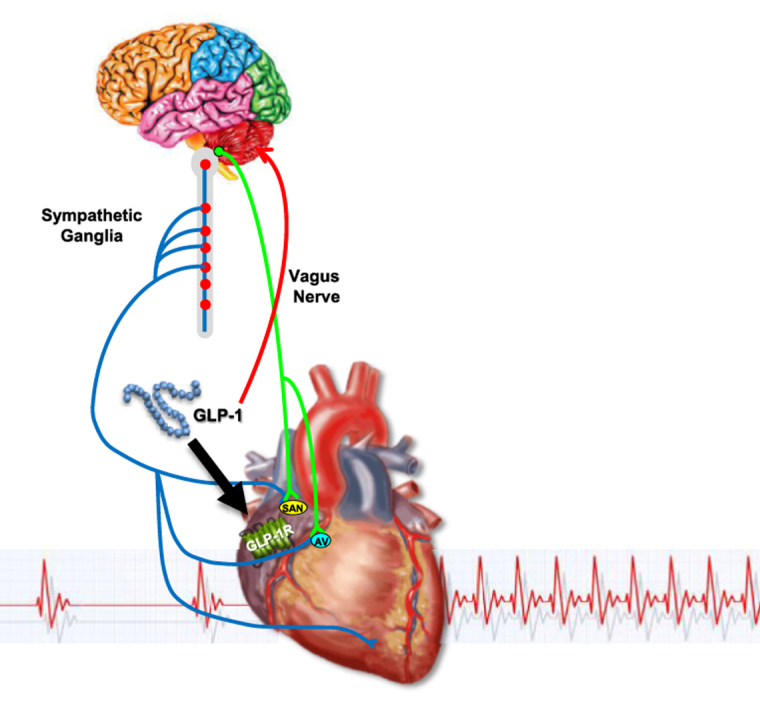
Glucagon-like peptide-1 (GLP-1) is secreted from enteroendocrine cells and exerts a broad number of metabolic actions through activation of a single GLP-1 receptor (GLP-1R). The cardiovascular actions of GLP-1 have garnered increasing attention as GLP-1R agonists are used to treat human subjects with diabetes and obesity that may be at increased risk for development of heart disease. Here we studied mechanisms linking GLP-1R activation to control of heart rate (HR) in mice.
The actions of GLP-1R agonists were examined on the control of HR in wild type mice (WT) and in mice with cardiomyocyte-selective disruption of the GLP-1R (Glp1r). Complimentary studies examined the effects of GLP-1R agonists in mice co-administered propranolol or atropine. The direct effects of GLP-1R agonism on HR and ventricular developed pressure were examined in isolated perfused mouse hearts ex vivo, and atrial depolarization was quantified in mouse hearts following direct application of liraglutide to perfused atrial preparations ex vivo.
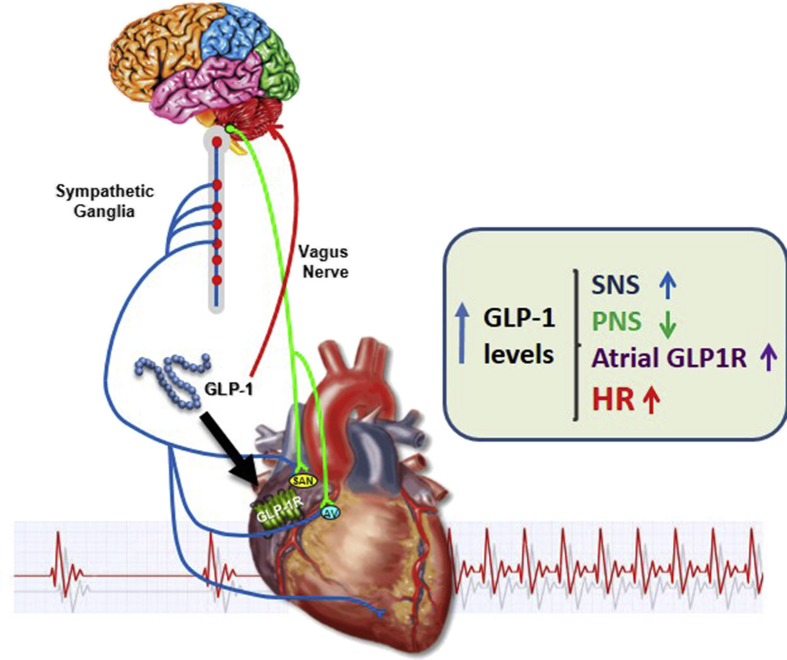
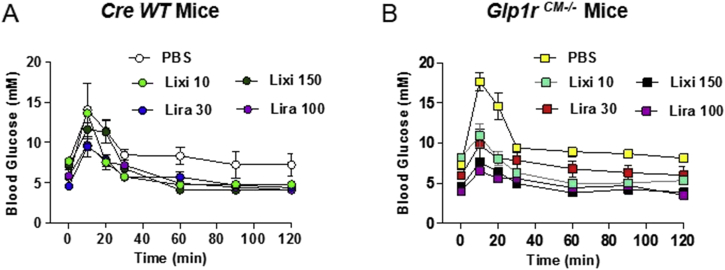
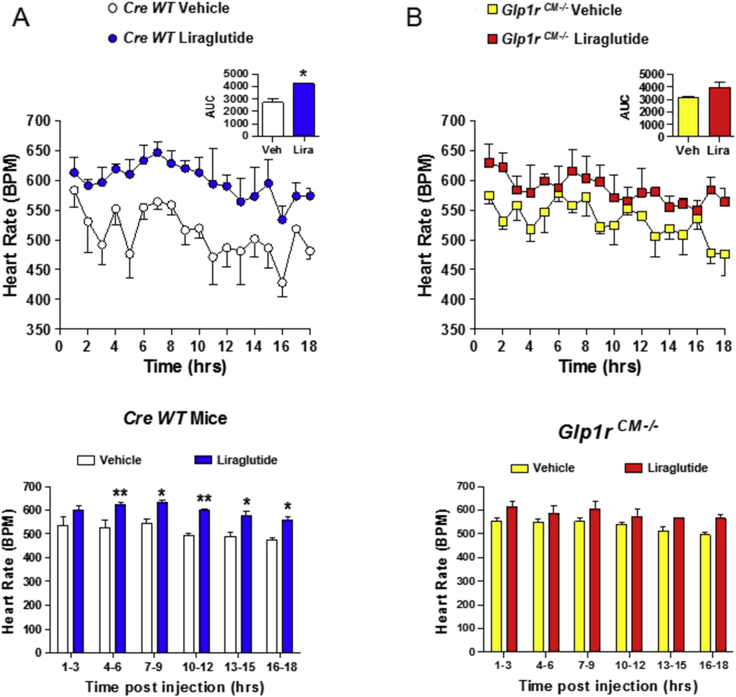
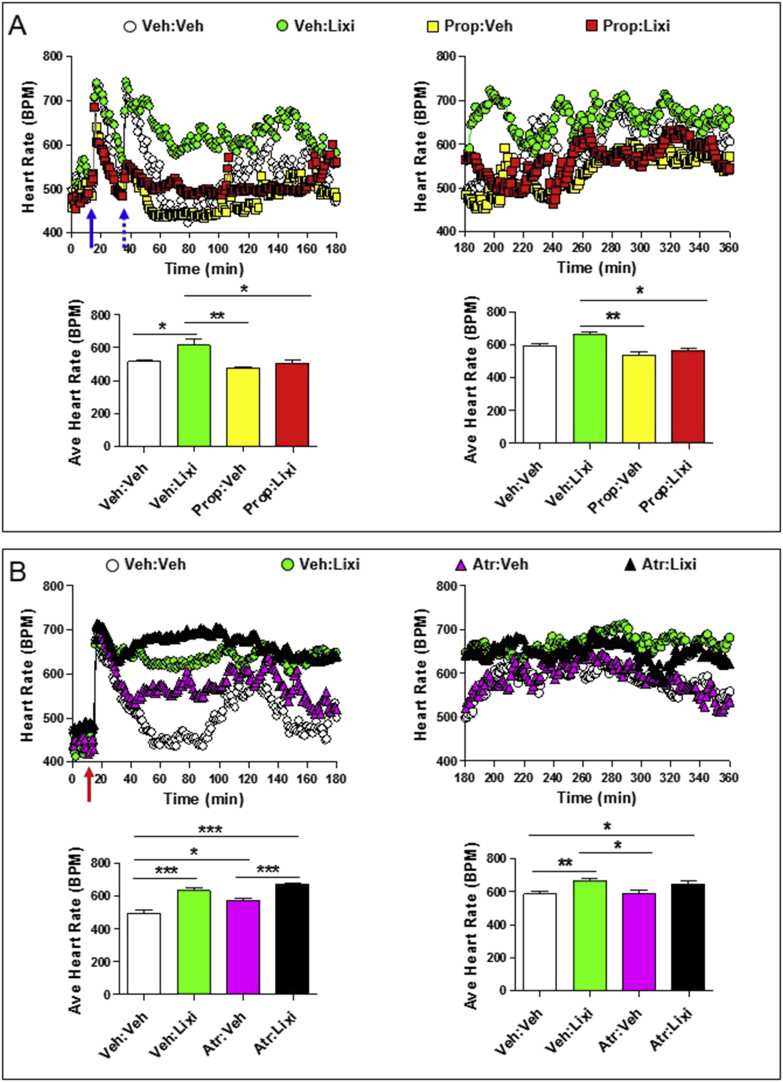
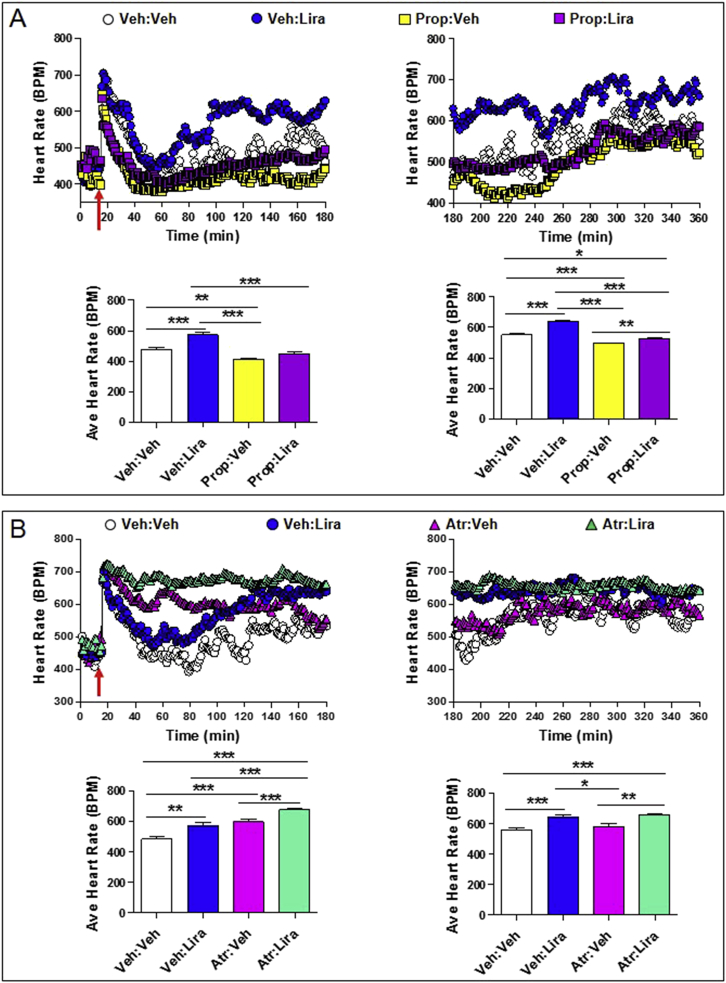
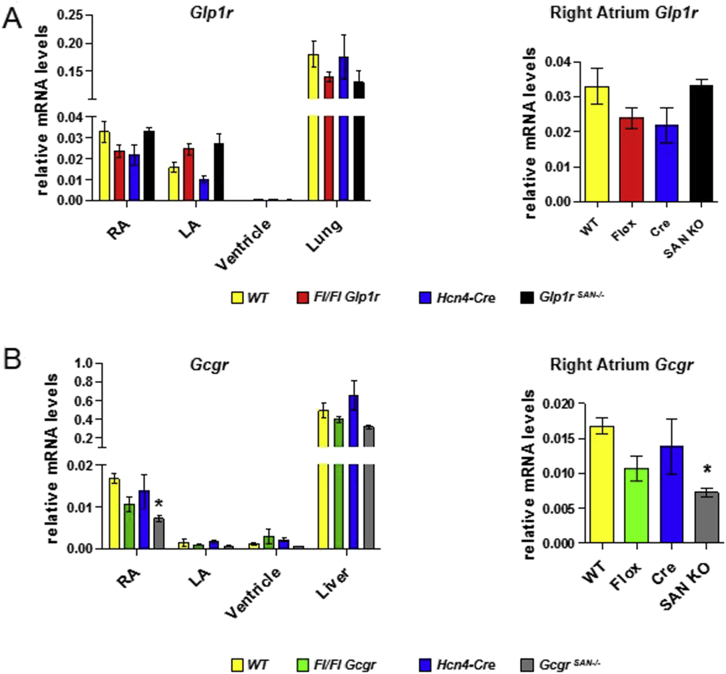
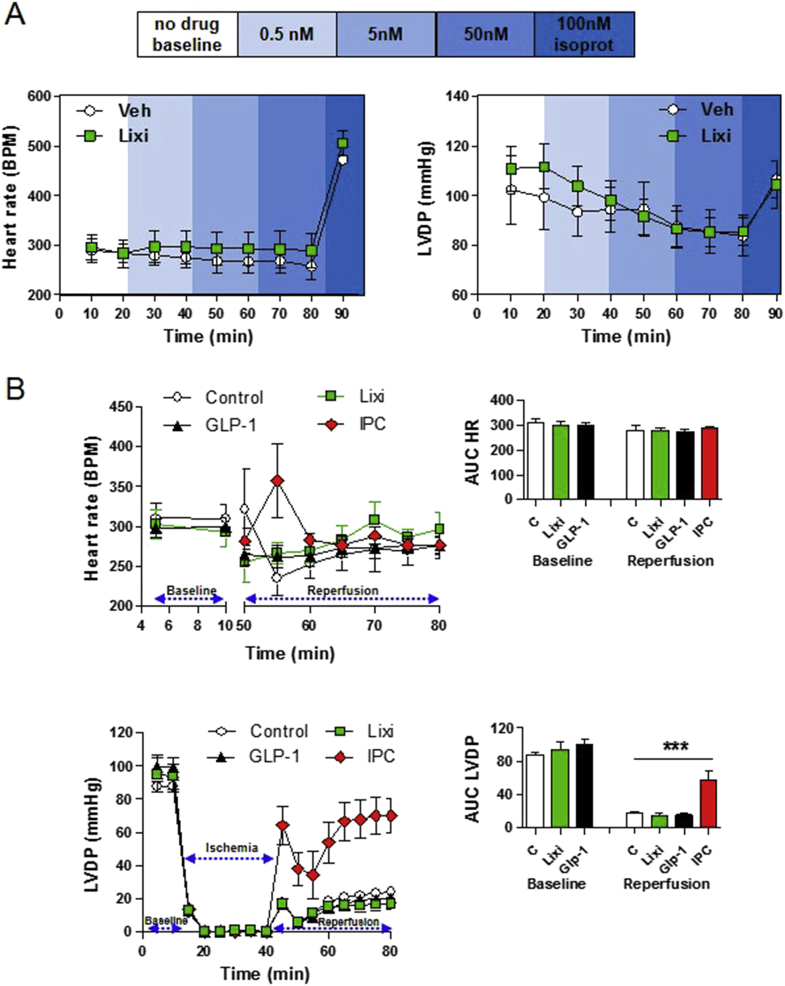
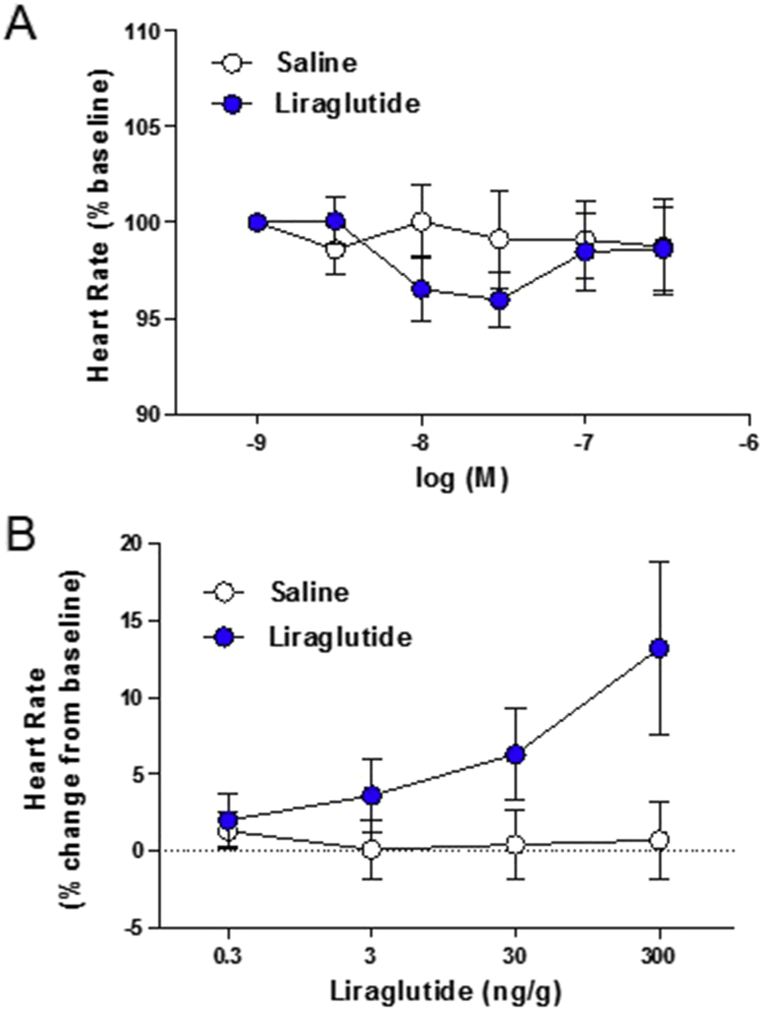
Doses of liraglutide and lixisenatide that were equipotent for acute glucose control rapidly increased HR in WT and Glp1r mice in vivo. The actions of liraglutide to increase HR were more sustained relative to lixisenatide, and diminished in Glp1r mice. The acute chronotropic actions of GLP-1R agonists were attenuated by propranolol but not atropine. Neither native GLP-1 nor lixisenatide increased HR or developed pressure in perfused hearts ex vivo. Moreover, liraglutide had no direct effect on sinoatrial node firing rate in mouse atrial preparations ex vivo. Despite co-localization of HCN4 and GLP-1R in primate hearts, HCN4-directed Cre expression did not attenuate levels of Glp1r mRNA transcripts, but did reduce atrial Gcgr expression in the mouse heart.
GLP-1R agonists increase HR through multiple mechanisms, including regulation of autonomic nervous system function, and activation of the atrial GLP-1R. Surprisingly, the isolated atrial GLP-1R does not transduce a direct chronotropic effect following exposure to GLP-1R agonists in the intact heart, or isolated atrium, ex vivo. Hence, cardiac GLP-1R circuits controlling HR require neural inputs and do not function in a heart-autonomous manner.
胰高血糖素样肽-1(GLP-1)由肠内分泌细胞分泌,通过激活单一的 GLP-1 受体(GLP-1R)发挥广泛的代谢作用。由于 GLP-1R 激动剂可用于治疗糖尿病和肥胖症患者,这些患者患心脏病的风险可能增加,因此 GLP-1 的心血管作用越来越受到关注。在这里,我们研究了将 GLP-1R 激活与控制小鼠心率(HR)相关的机制。
在野生型小鼠(WT)和心肌细胞选择性敲除 GLP-1R(Glp1r)的小鼠中,研究了 GLP-1R 激动剂对 HR 控制的作用。补充研究检查了 GLP-1R 激动剂在同时给予普萘洛尔或阿托品的小鼠中的作用。在离体灌注的小鼠心脏中,研究了 GLP-1R 激动剂对 HR 和心室发展压的直接影响,并在离体灌注心房制剂中直接应用利拉鲁肽后,量化了小鼠心脏的心房去极化。
在体内,与急性葡萄糖控制等效的利拉鲁肽和利西那肽剂量迅速增加 WT 和 Glp1r 小鼠的 HR。与利西那肽相比,利拉鲁肽增加 HR 的作用更持久,并且在 Glp1r 小鼠中减弱。GLP-1R 激动剂的急性变时作用被普萘洛尔减弱,但不受阿托品影响。内源性 GLP-1 或利西那肽均未增加离体灌注心脏的 HR 或发展压。此外,利拉鲁肽对离体小鼠心房制剂中的窦房结放电率没有直接影响。尽管 HCN4 和 GLP-1R 在灵长类心脏中存在共定位,但 HCN4 定向 Cre 表达并未减弱 Glp1r mRNA 转录本的水平,但确实减少了小鼠心脏中的心房 Gcgr 表达。
GLP-1R 激动剂通过多种机制增加 HR,包括调节自主神经系统功能和激活心房 GLP-1R。令人惊讶的是,在完整心脏或离体心房中,暴露于 GLP-1R 激动剂后,分离的心房 GLP-1R 不会传递直接的变时作用。因此,控制 HR 的心脏 GLP-1R 回路需要神经输入,并且不以心脏自主的方式发挥作用。