From the Institute of Biomedical Research of Salamanca, University Hospital of Salamanca (C.R., M.E.R.-A., I.S.-M., M.D.-E., J.C.G.-S., J.P.B., A.A.), University of Salamanca, Consejo Superior de Investigaciones Científicas (CSIC), Spain.
Institute of Functional Biology and Genomics (C.R., M.E.R.-A., M.D.-M., I.S.-M., M.D.-E., J.P.B., A.A.), University of Salamanca, Consejo Superior de Investigaciones Científicas (CSIC), Spain.
Stroke. 2018 Oct;49(10):2437-2444. doi: 10.1161/STROKEAHA.118.022529.
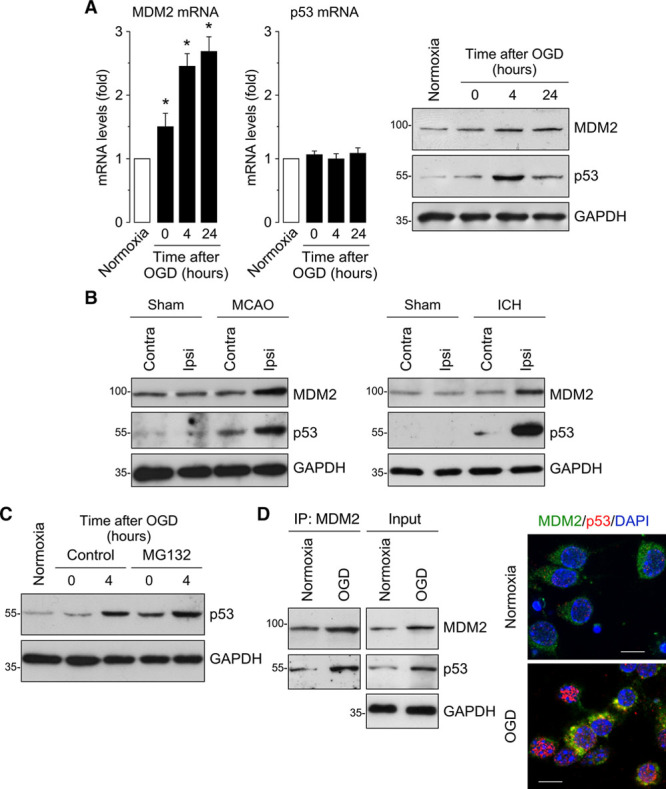
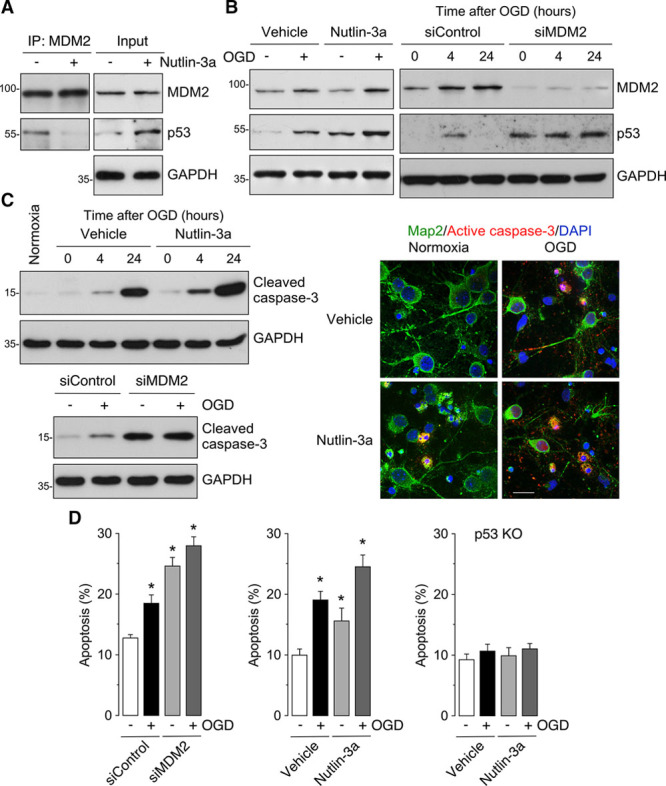
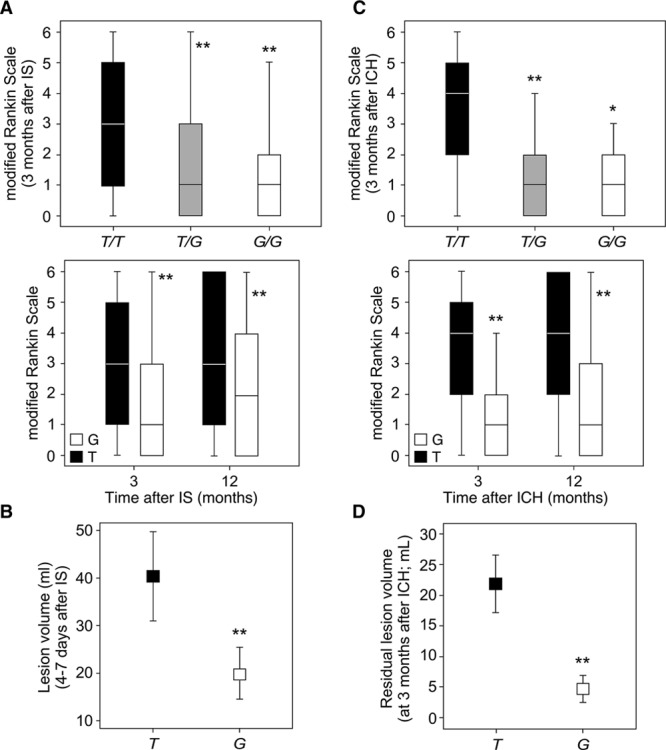
Background and Purpose- The E3 ubiquitin ligase MDM2 (murine double minute 2) is the main negative regulator of the p53 protein-a key player in neuronal apoptosis after ischemia. A functional single-nucleotide polymorphism in the human MDM2 gene promoter (rs2279744) regulates MDM2 protein expression. We investigated whether the MDM2 SNP309, by controlling p53-mediated apoptosis, determines functional outcome after stroke. Methods- Primary cortical neurons were subjected to oxygen and glucose deprivation. Mice were subjected to ischemic (transient middle cerebral artery occlusion) or hemorrhagic (collagenase injection) stroke models. Protein and mRNA levels of MDM2 and p53 were measured in both neuronal and brain extracts. The interaction of MDM2 with p53 was disrupted by neuronal treatment with nutlin-3a. siRNA was used to knockdown MDM2 expression. We analyzed the link between the MDM2 SNP309 and functional outcome, measured by the modified Rankin Scale scores, in 2 independent hospital-based stroke cohorts: ischemic stroke cohort (408 patients) and intracerebral hemorrhage cohort (128 patients). Results- Experimental stroke and oxygen and glucose deprivation induced the expression of MDM2 in the brain and neurons, respectively. Moreover, oxygen and glucose deprivation promoted MDM2 binding with p53 in neurons. Disruption of the MDM2-p53 interaction with nutlin-3a, or MDM2 knockdown by siRNA, triggered p53 accumulation, which increased neuronal susceptibility to oxygen and glucose deprivation-induced apoptosis. Finally, we showed that patients harboring the G allele in the MDM2 promoter had higher MDM2 protein levels and showed better functional outcome after stroke than those harboring the T/T genotype. The T/T genotype was also associated with large infarct volume in ischemic stroke and increased lesion volume in patients with intracerebral hemorrhage. Conclusions- Our results reveal a novel role for the MDM2-p53 interaction in neuronal apoptosis after ischemia and show that the MDM2 SNP309 determines the functional outcome of patients after stroke.
背景与目的-E3 泛素连接酶 MDM2(鼠双微体 2)是 p53 蛋白的主要负调节因子,p53 蛋白是缺血后神经元凋亡的关键因子。人类 MDM2 基因启动子中的一个功能性单核苷酸多态性(rs2279744)调节 MDM2 蛋白的表达。我们研究了 MDM2 SNP309 是否通过控制 p53 介导的细胞凋亡来决定中风后的功能结局。
方法-原代皮质神经元进行氧葡萄糖剥夺处理。小鼠进行缺血性(短暂性大脑中动脉闭塞)或出血性(胶原酶注射)中风模型处理。在神经元和脑组织提取物中测量 MDM2 和 p53 的蛋白和 mRNA 水平。用 nutlin-3a 处理神经元以破坏 MDM2 与 p53 的相互作用。用 siRNA 敲低 MDM2 的表达。我们分析了 MDM2 SNP309 与 2 个独立的基于医院的中风队列(缺血性中风队列 408 例和脑出血队列 128 例)的功能结局(改良 Rankin 量表评分)之间的联系。
结果-实验性中风和氧葡萄糖剥夺分别诱导大脑和神经元中 MDM2 的表达。此外,氧葡萄糖剥夺促进 MDM2 与神经元中的 p53 结合。用 nutlin-3a 破坏 MDM2-p53 相互作用,或用 siRNA 敲低 MDM2,触发 p53 积累,增加神经元对氧葡萄糖剥夺诱导的细胞凋亡的易感性。最后,我们发现 MDM2 启动子中的 G 等位基因携带者具有更高的 MDM2 蛋白水平,并在中风后具有更好的功能结局,而 T/T 基因型的携带者则具有更高的 MDM2 蛋白水平。T/T 基因型也与缺血性中风中的大梗死体积和脑出血患者的病变体积增加有关。
结论-我们的结果揭示了 MDM2-p53 相互作用在缺血后神经元凋亡中的新作用,并表明 MDM2 SNP309 决定了中风后患者的功能结局。