Mahmood Humaira, Shepherd Duncan E T, Espino Daniel M
Department of Mechanical Engineering, University of Birmingham, B15 2TT, Birmingham, UK.
BMC Musculoskelet Disord. 2018 Oct 24;19(1):384. doi: 10.1186/s12891-018-2305-2.
Changes in bone mineral density have been implicated with the onset of osteoarthritis, but its role in inducing failure of articular cartilage mechanically is unclear. This study aimed to determine the effect of substrate density, as the underlying bone, on the surface damage of cartilage-off-bone, at frequencies associated with gait, and above.
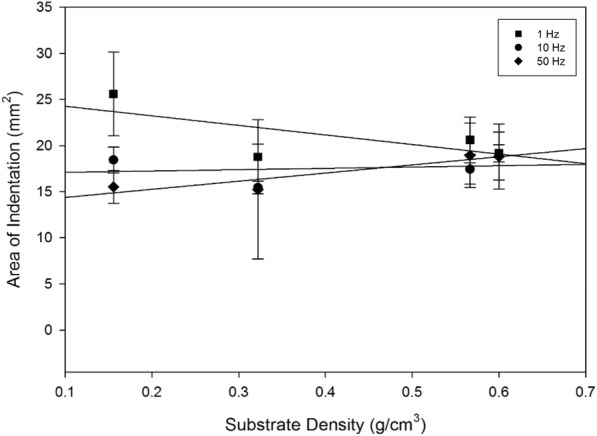
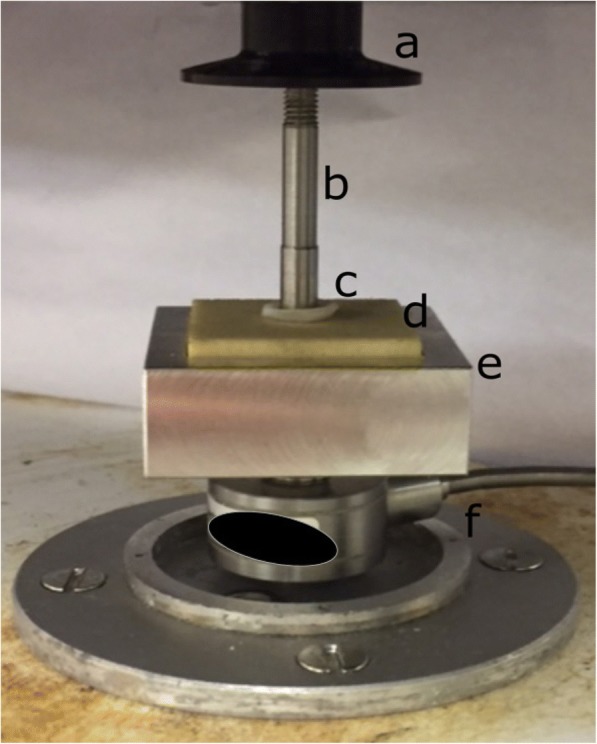
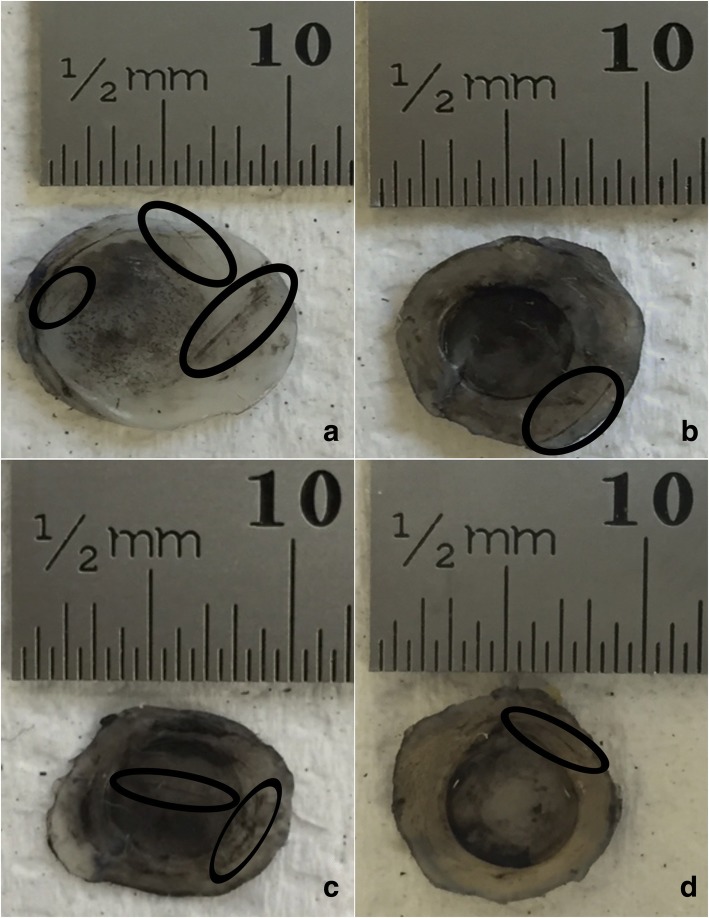
Bovine articular cartilage samples were tested off-bone to assess induced damage with an indenter under a compressive sinusoidal load range of 5-50 N at frequencies of 1, 10 and 50 Hz, corresponding to normal and above normal gait respectively, for up to 10,000 cycles. Cartilage samples were tested on four underlying substrates with densities of 0.1556, 0.3222, 0.5667 and 0.6000 g/cm. India ink was applied to identify damage as cracks, measured across their length using ImageJ software. Linear regression was performed to identify if statistical significance existed between substrate density, and surface damage of articular cartilage-off-bone, at all three frequencies investigated (p < 0.05).
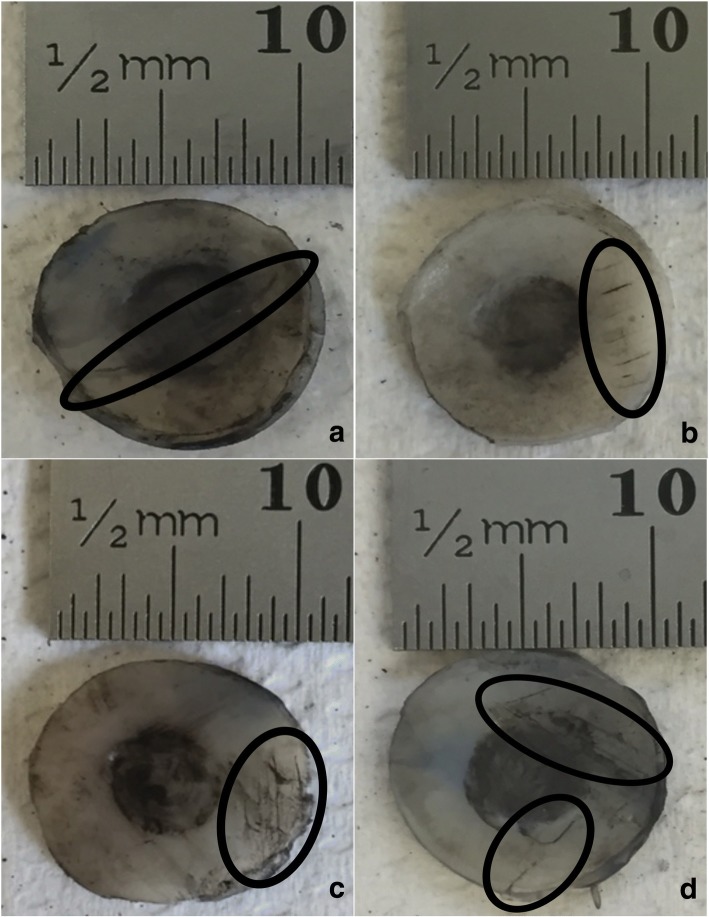
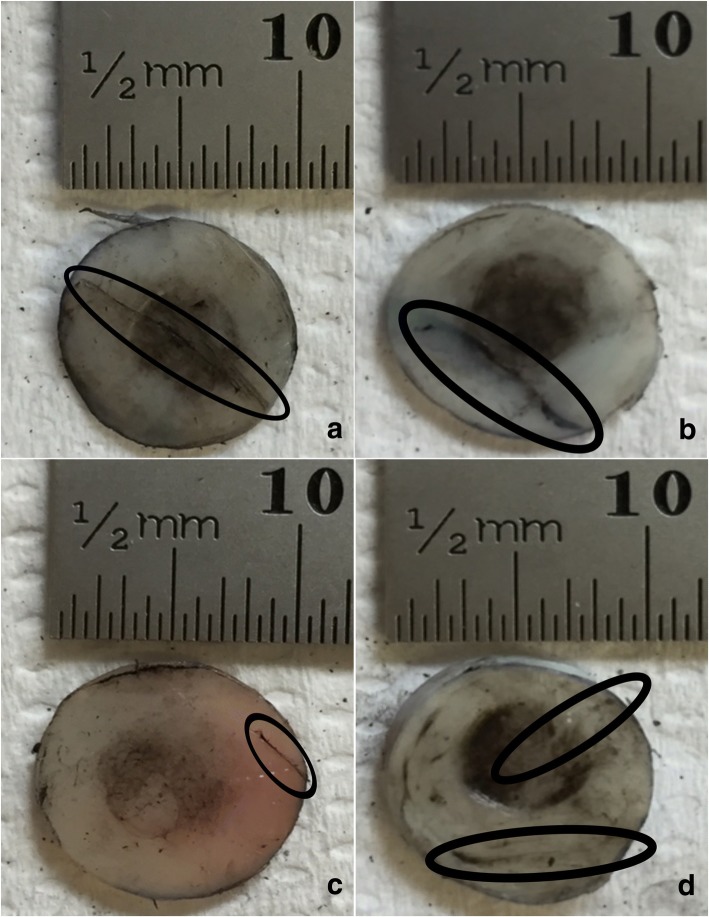
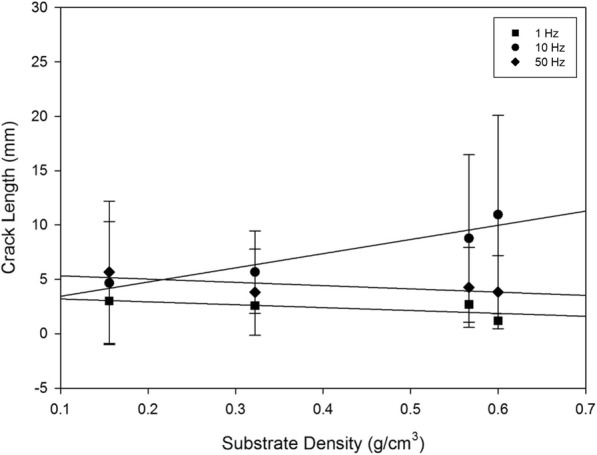
Surface damage significantly increased (p < 0.05) with substrate density at 10 Hz of applied frequency. Crack length at this frequency reached the maximum of 10.95 ± 9.12 mm (mean ± standard deviation), across all four substrates tested. Frequencies applied at 1 and 50 Hz failed to show a significant increase (p > 0.05) in surface damage with an increase in substrate density, at which the maximum mean crack length were 3.01 ± 3.41 mm and 5.65 ± 6.54 mm, respectively. Crack formation at all frequencies tended to form at the periphery of the cartilage specimen, with multiple straight-line cracking observed at 10 Hz, in comparison to single straight-line configurations produced at 1 and 50 Hz.
The effect of substrate density on the surface damage of articular cartilage-off-bone is multi-factorial, with an above-normal gait frequency. At 1 Hz cartilage damage is not associated with substrate density, however at 10 Hz, it is. This study has implications on the effects of the factors that contribute to the onset of osteoarthritis.
骨矿物质密度的变化与骨关节炎的发病有关,但其在机械诱导关节软骨失效中的作用尚不清楚。本研究旨在确定作为基础骨的基质密度对脱骨软骨表面损伤的影响,该影响与步态及更高频率相关。
对牛关节软骨样本进行脱骨测试,在5 - 50 N的压缩正弦载荷范围内,分别以1、10和50 Hz的频率(分别对应正常及高于正常步态)使用压头评估诱导损伤,测试周期长达10,000次。软骨样本在四种密度分别为0.1556、0.3222、0.5667和0.6000 g/cm的基础基质上进行测试。使用印度墨水识别损伤为裂纹,通过ImageJ软件测量其长度。进行线性回归以确定在所研究的所有三个频率下(p < 0.05),基质密度与脱骨关节软骨表面损伤之间是否存在统计学意义。
在施加频率为10 Hz时,表面损伤随基质密度显著增加(p < 0.05)。在该频率下,所有四种测试基质上的裂纹长度达到最大值10.95 ± 9.12 mm(平均值 ± 标准差)。在1和50 Hz施加频率时,随着基质密度增加,表面损伤未显示出显著增加(p > 0.05),此时最大平均裂纹长度分别为3.01 ± 3.41 mm和5.65 ± 6.54 mm。在所有频率下,裂纹形成倾向于在软骨样本周边形成,与1和50 Hz时产生的单条直线状裂纹相比,在10 Hz时观察到多条直线状裂纹。
基质密度对脱骨关节软骨表面损伤的影响是多因素的,与高于正常的步态频率有关。在1 Hz时,软骨损伤与基质密度无关,然而在10 Hz时,两者相关。本研究对导致骨关节炎发病的因素的影响具有启示意义。