Department of Epidemiology, University of North Carolina, Chapel Hill, North Carolina, USA.
Hope Clinic of the Emory Vaccine Center, Division of Infectious Diseases, Department of Medicine, School of Medicine, Emory University, Decatur, Georgia, USA.
J Virol. 2019 Jan 4;93(2). doi: 10.1128/JVI.01813-18. Print 2019 Jan 15.
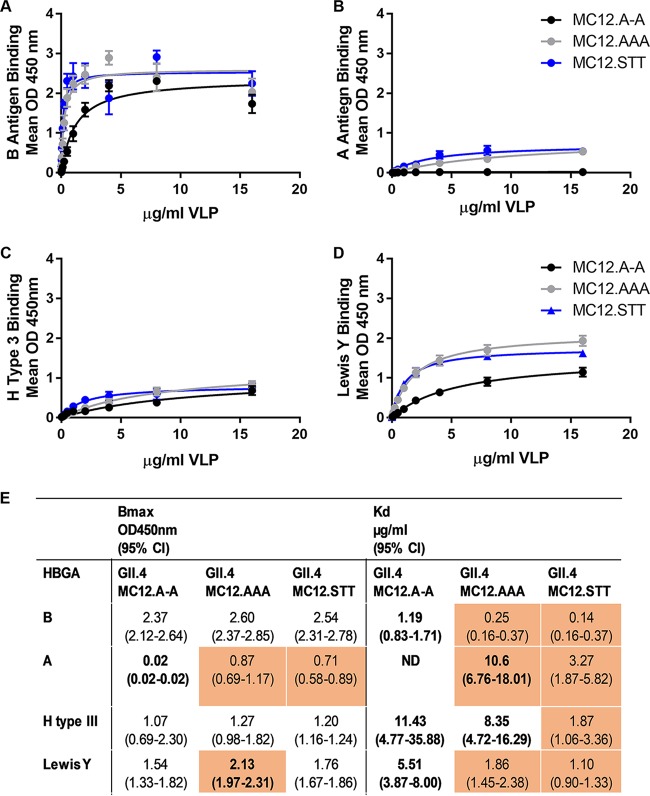
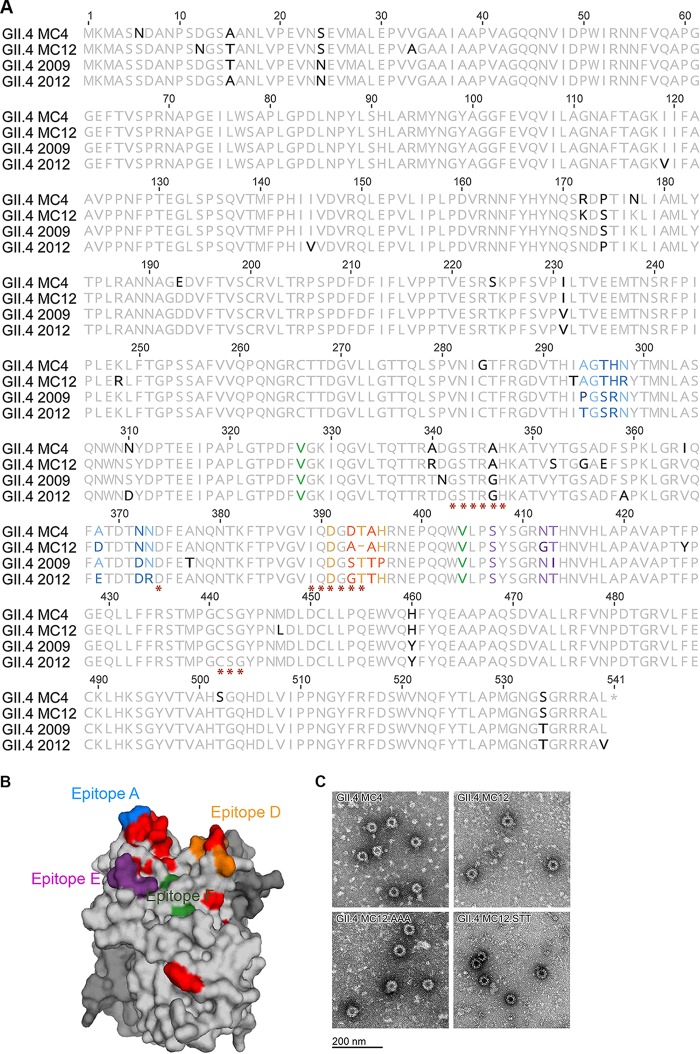
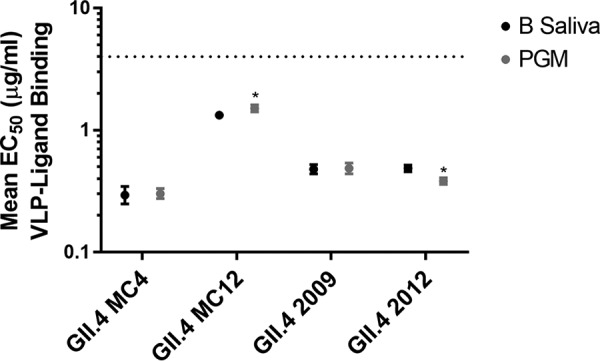
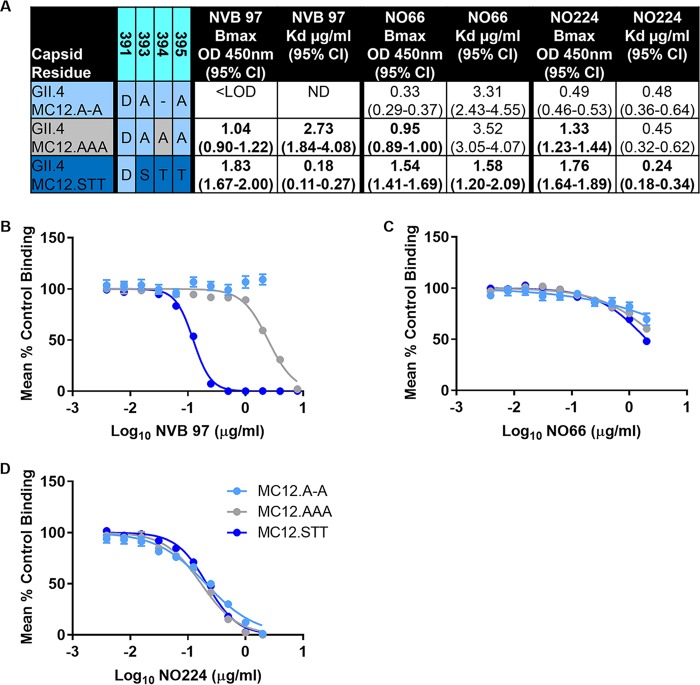
Emergent strains of human norovirus seed pandemic waves of disease. These new strains have altered ligand binding and antigenicity characteristics. Study of viral variants isolated from immunosuppressed patients with long-term norovirus infection indicates that initial virus evolution occurs at the same antigenic sites as in pandemic strains. Here, cellular ligand binding and antigenicity of two cocirculating strains isolated from a patient with long-term norovirus infection were characterized. The isolated GII.4 viruses differed from previous strains and from each other at known blockade antibody epitopes. One strain had a unique sequence in epitope D, including loss of an insertion at residue 394, corresponding to a decreased relative affinity for carbohydrate ligands. Replacement of 394 with alanine or restoration of the contemporary strain epitope D consensus sequence STT improved ligand binding relative affinity. However, monoclonal antibody blockade of binding potency was only gained for the consensus sequence, not by the alanine insertion. In-depth study of unique changes in epitope D indicated that ligand binding, but not antibody blockade of ligand binding, is maintained despite sequence diversity, allowing escape from blockade antibodies without loss of capacity for binding cellular ligands. Human norovirus causes ∼20% of all acute gastroenteritis and ∼200,000 deaths per year, primarily in young children. Most epidemic and all pandemic waves of disease over the past 30 years have been caused by type GII.4 human norovirus strains. The capsid sequence of GII.4 strains is changing over time, resulting in viruses with altered ligand and antibody binding characteristics. The carbohydrate binding pocket of these strains does not vary over time. Here, utilizing unique viral sequences, we study how residues in GII.4 epitope D balance the dual roles of variable antibody binding site and cellular ligand binding stabilization domain, demonstrating that amino acid changes in epitope D can result in loss of antibody binding without ablating ligand binding. This flexibility in epitope D likely contributes to GII.4 strain persistence by both allowing escape from antibody-mediated herd immunity and maintenance of cellular ligand binding and infectivity.
人诺如病毒的新兴毒株引发了疾病的大流行浪潮。这些新毒株改变了配体结合和抗原性特征。对长期感染诺如病毒的免疫抑制患者分离的病毒变异株的研究表明,病毒的早期进化发生在与大流行株相同的抗原部位。在这里,我们对从长期诺如病毒感染患者中分离出的两种循环流行株的细胞配体结合和抗原性进行了特征分析。分离出的 GII.4 病毒与之前的毒株以及彼此之间在已知的阻断抗体表位上存在差异。一种毒株在表位 D 具有独特的序列,包括在残基 394 处缺失一个插入序列,这对应于对碳水化合物配体的相对亲和力降低。用丙氨酸替换 394 或恢复当代株的表位 D 共识序列 STT 可提高配体结合的相对亲和力。然而,只有共识序列才能阻断单克隆抗体对结合效力的阻断,而不是通过丙氨酸插入。对表位 D 中独特变化的深入研究表明,尽管存在序列多样性,但配体结合仍然得以维持,而不会阻断抗体对配体结合的阻断,从而在不丧失与细胞配体结合能力的情况下逃避阻断抗体。人诺如病毒导致全球每年约 20%的急性胃肠炎和 20 万人死亡,主要发生在幼儿中。在过去 30 年中,大多数的疫情和所有的大流行浪潮都是由 GII.4 型人诺如病毒株引起的。GII.4 株的衣壳序列随时间变化,导致具有改变的配体和抗体结合特性的病毒。这些株的碳水化合物结合口袋不会随时间变化。在这里,我们利用独特的病毒序列研究 GII.4 表位 D 中的残基如何平衡可变抗体结合位点和细胞配体结合稳定域的双重作用,证明表位 D 中的氨基酸变化可导致抗体结合丧失,而不会破坏配体结合。这种表位 D 的灵活性可能通过允许逃避抗体介导的群体免疫和维持细胞配体结合和感染性,从而有助于 GII.4 株的持续存在。