Su Lynn, Huang Wanzhi, Neill Frederick H, Estes Mary K, Atmar Robert L, Palzkill Timothy
Department of Pharmacology and Chemical Biology, Baylor College of Medicine, Houston, TX, 77030, USA.
Department of Molecular Virology and Microbiology, Baylor College of Medicine, Houston, TX, 77030, USA.
NPJ Vaccines. 2023 Jun 6;8(1):87. doi: 10.1038/s41541-023-00683-1.
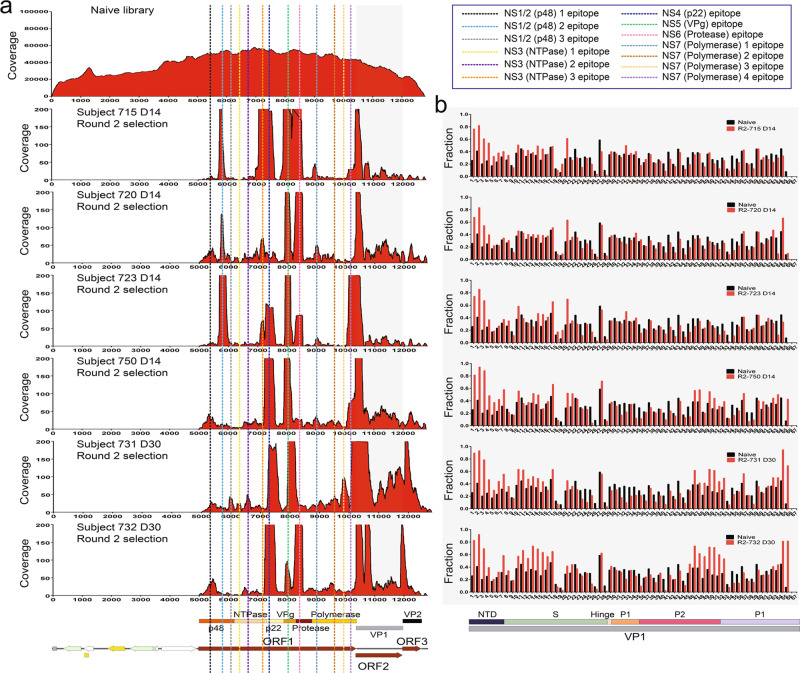
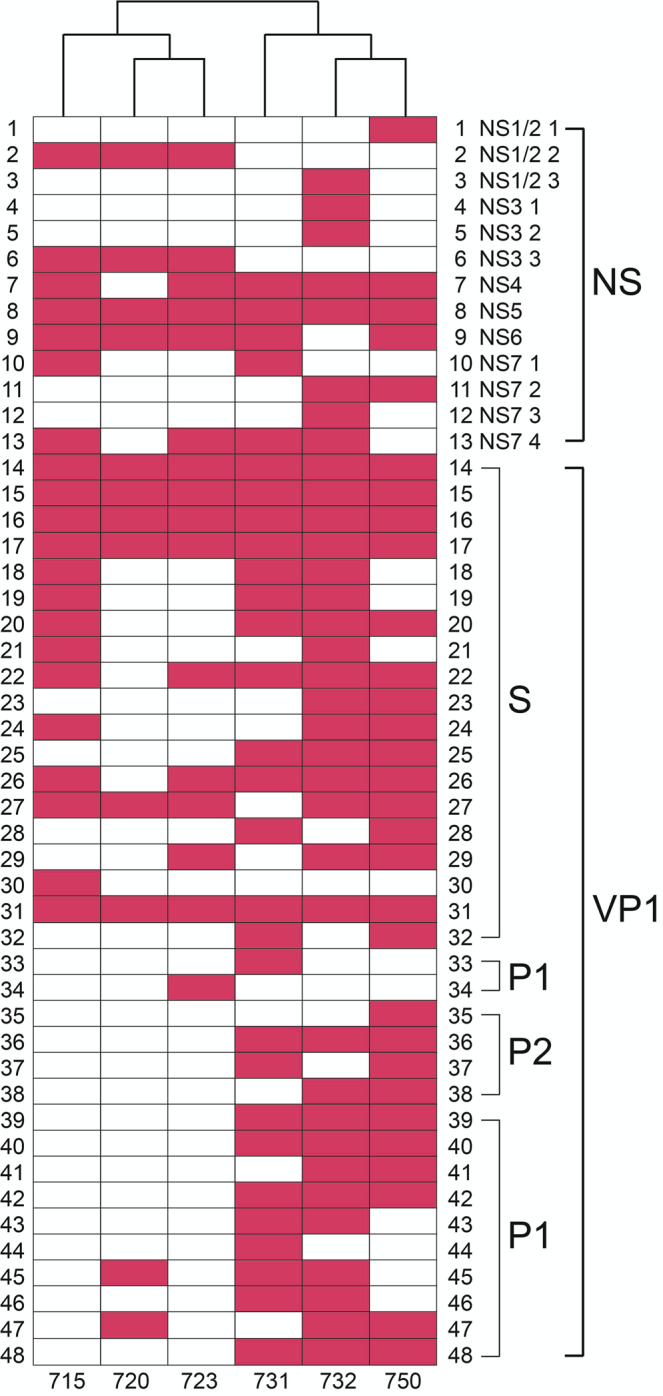
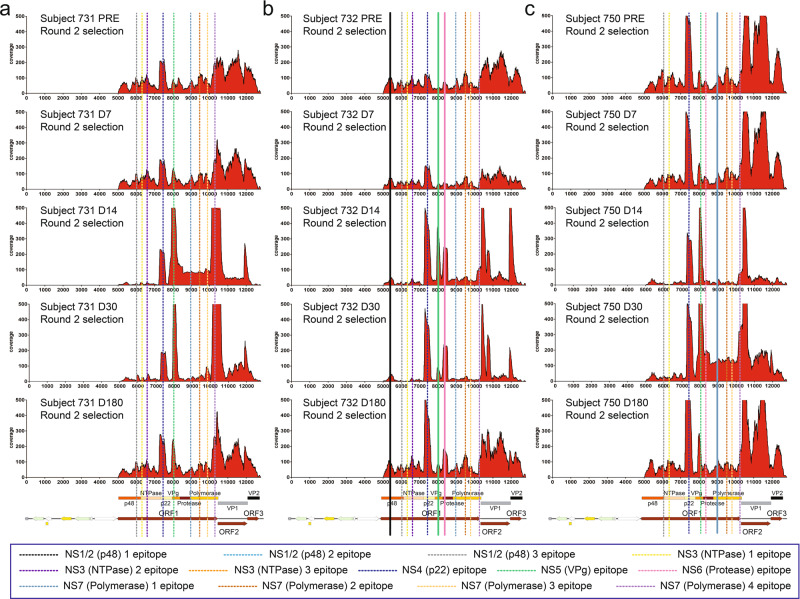
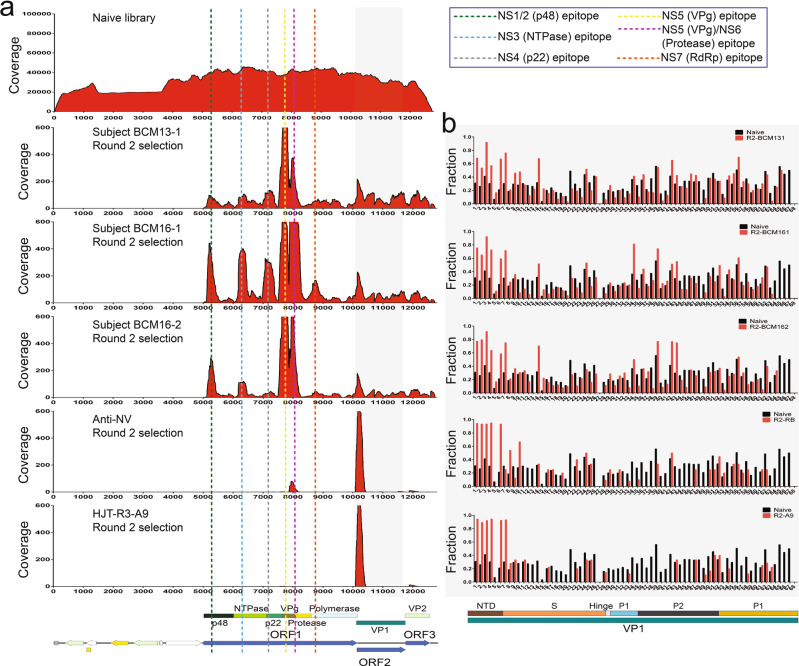
Human noroviruses (HuNoV) are the leading cause of acute gastroenteritis worldwide. The humoral immune response plays an important role in clearing HuNoV infections and elucidating the antigenic landscape of HuNoV during an infection can shed light on antibody targets to inform vaccine design. Here, we utilized Jun-Fos-assisted phage display of a HuNoV genogroup GI.1 genomic library and deep sequencing to simultaneously map the epitopes of serum antibodies of six individuals infected with GI.1 HuNoV. We found both unique and common epitopes that were widely distributed among both nonstructural proteins and the major capsid protein. Recurring epitope profiles suggest immunodominant antibody footprints among these individuals. Analysis of sera collected longitudinally from three individuals showed the presence of existing epitopes in the pre-infection sera, suggesting these individuals had prior HuNoV infections. Nevertheless, newly recognized epitopes surfaced seven days post-infection. These new epitope signals persisted by 180 days post-infection along with the pre-infection epitopes, suggesting a persistent production of antibodies recognizing epitopes from previous and new infections. Lastly, analysis of a GII.4 genotype genomic phage display library with sera of three persons infected with GII.4 virus revealed epitopes that overlapped with those identified in GI.1 affinity selections, suggesting the presence of GI.1/GII.4 cross-reactive antibodies. The results demonstrate that genomic phage display coupled with deep sequencing can characterize HuNoV antigenic landscapes from complex polyclonal human sera to reveal the timing and breadth of the human humoral immune response to infection.
人诺如病毒(HuNoV)是全球急性胃肠炎的主要病因。体液免疫反应在清除HuNoV感染中起重要作用,阐明感染期间HuNoV的抗原格局有助于确定抗体靶点,为疫苗设计提供信息。在此,我们利用Jun-Fos辅助的HuNoV基因组1型(GI.1)文库噬菌体展示和深度测序,同时绘制6名感染GI.1 HuNoV个体血清抗体的表位图谱。我们发现了独特和共同的表位,它们广泛分布于非结构蛋白和主要衣壳蛋白中。重复出现的表位图谱表明这些个体中存在免疫显性抗体印记。对3名个体纵向采集的血清分析显示,感染前血清中存在现有表位,表明这些个体曾感染过HuNoV。然而,新识别的表位在感染后7天出现。这些新的表位信号在感染后180天与感染前表位一起持续存在,表明持续产生识别既往和新感染表位的抗体。最后,用感染GII.4病毒的3人的血清对GII.4基因型基因组噬菌体展示文库进行分析,发现了与GI.1亲和筛选中鉴定的表位重叠的表位,表明存在GI.1/GII.4交叉反应抗体。结果表明,基因组噬菌体展示与深度测序相结合,可以从复杂的多克隆人血清中表征HuNoV的抗原格局,揭示人类对感染的体液免疫反应的时间和广度。